私たちが地球から見上げる夜空の向こう側に広がる宇宙空間は、単なる「何もない場所」ではありません。そこは地球の大気圏を超え、天体と天体の間に横たわる広大な領域であり、極めて希薄な粒子や電磁放射線、そして未知のエネルギーが充満するダイナミックな環境です。
宇宙の大部分は、水素やヘリウムのプラズマ(電離したガス)からなるほぼ完全な真空状態で構成されています。また、観測可能な宇宙の質量エネルギーの多くは、正体が分かっていない「ダークマター(暗黒物質)」と「ダークエネルギー(暗黒エネルギー)」によって占められていると考えられています。
Key Facts
- 温度: ビッグバンによる背景放射の影響で、基本温度は約2.7ケルビン(マイナス270度)という極低温である。
- 境界線: 一般的に海抜100kmの「カーマンライン」が宇宙の始まりとされる。
- 組成: 非常に低密度のプラズマ、宇宙線、ニュートリノ、磁場、塵などで構成されている。
- 法的地位: 1967年の宇宙条約により、特定の国家による領有権の主張は禁止されている。
宇宙の構造と環境
真空と物質の分布
宇宙空間は、物質がほとんど存在しないため、非常に高い透過性を持ちます。これにより、遠方の銀河から届く赤い光(赤方偏移した光)を遮られることなく観測することが可能です。
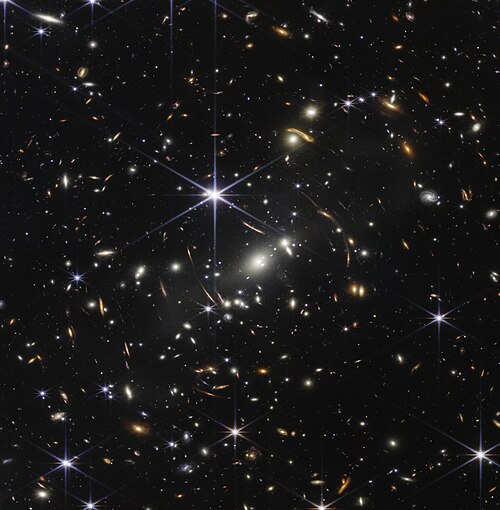
銀河間の空間には、1立方メートルあたり水素原子が1個未満という極めて低い密度でプラズマが存在しており、これが宇宙のバリオン物質(通常の物質)の約半分を占めていると推測されています。一方で、星や銀河といった物質の密集地帯であっても、その内部のほとんどは空虚な空間です。
宇宙の進化とダイナミクス
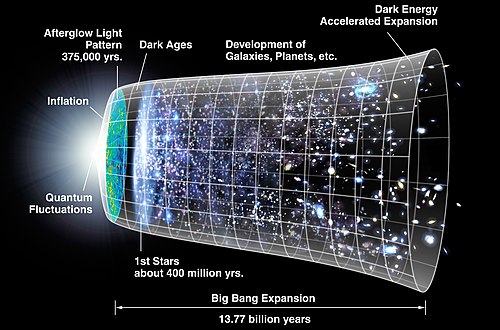
宇宙は誕生直後のインフレーションと呼ばれる急激な膨張を経て、現在も加速しながら拡大を続けています。この膨張のプロセスが、現在の宇宙の構造を形作りました。
地球から見た宇宙の視覚的特性
地上から夜空を眺めると、天の川だけでなく、惑星間の塵によって生じる「黄道光」などの現象が見えることがあります。これは宇宙空間が完全に空っぽではなく、微細な粒子が存在している証拠です。
![A wide field view of outer space as seen from Earth's surface at night. The interplanetary dust cloud is visible as the horizontal band of zodiacal light, including the false dawn[28] (edges) and gegenschein (center), which is visually crossed by the Milky Way](/images/77/14/7714bde43aafb137ced64a4d13312afb09fb19a29922793e99ab66ae2fd89d4f.jpg)
地球近傍の領域と境界
どこからが「宇宙」なのか
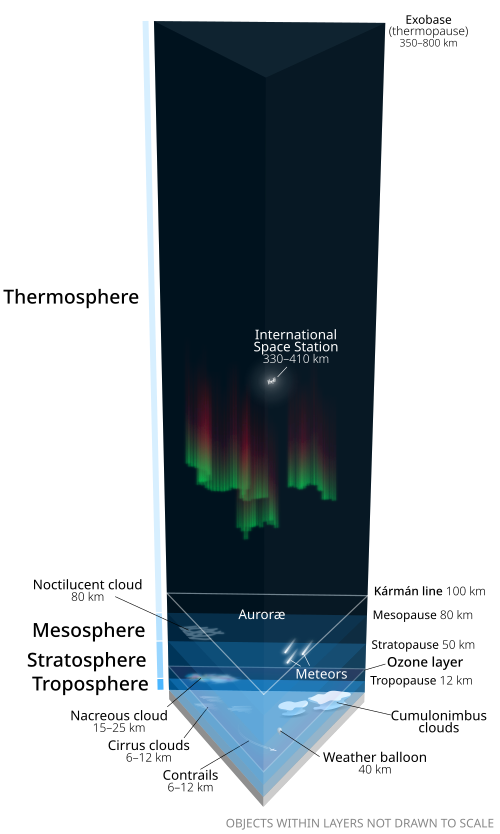
地球の大気は徐々に薄くなっていきますが、明確な境界線があるわけではありません。しかし、航空宇宙の記録や国際的な条約では、高度100kmのカーマンラインが便宜上の境界として採用されています。また、成層圏上層から中間圏の一部は「近宇宙(ニアスペース)」と呼ばれることもあります。
地球周回軌道の分類
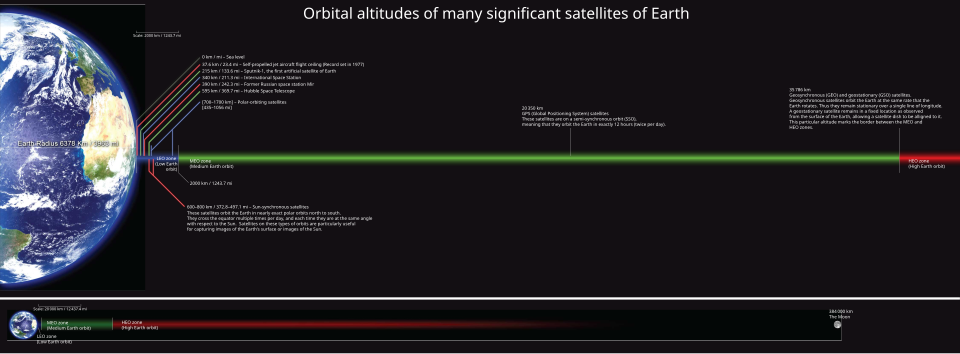
地球の周囲には、用途に応じて異なる高度の軌道が存在します。低軌道(LEO)、中軌道(MEO)、そして静止軌道を含む高軌道(HEO)に分けられ、それぞれに人工衛星が配置されています。
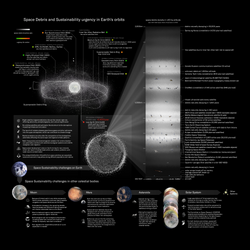
これらの軌道上には、運用を終えた衛星や破片などの「スペースデブリ(宇宙ゴミ)」が大量に蓄積しており、持続可能な宇宙利用に向けた大きな課題となっています。
![A computer-generated map of objects orbiting Earth, as of 2005. About 95% are debris, not working artificial satellites[136]](/images/3c/3f/3c3fd2860daa2b35ace026a1dbf5a95b6ae42d83247258f3c843b181a6fd8dae.jpg)
人間が宇宙に挑むための条件
過酷な物理環境への対策
宇宙空間は真空であるため、人間がそのままさらされると生命を維持できません。そのため、宇宙飛行士は機外活動時に、気圧を維持するための加圧宇宙服を着用する必要があります。
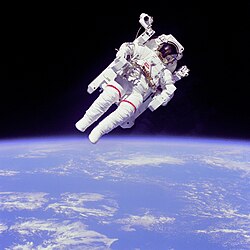
また、地球の磁場による保護がない領域では、強力な宇宙放射線にさらされるリスクがあり、これが人体に深刻な影響を及ぼす可能性があります。
無重量状態のメカニズム
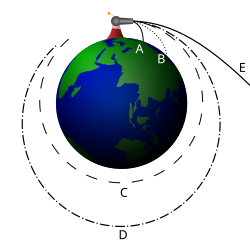
宇宙での「無重力」状態は、実際には地球の重力がなくなったわけではなく、物体が地球の周囲を適切な速度で「落下」し続けることで、慣性と重力が釣り合っている状態(自由落下)を指します。
宇宙の法的地位と持続可能性
国際法による統治
1967年に発効した宇宙条約は、宇宙空間の利用に関する基本原則を定めています。この条約により、宇宙は全人類に開かれた領域であり、いかなる国家も主権を主張できないことが明記されています。
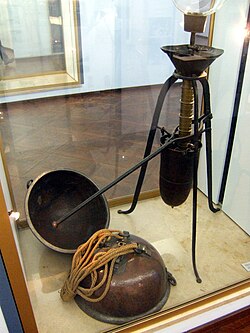
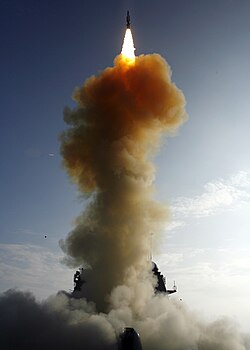
しかし、現実には人工衛星を破壊する兵器(ASAT)の試験が行われるなど、平和的利用という理念と軍事的な緊張の間に矛盾が生じています。こうした兵器の使用は、さらなるデブリを発生させ、宇宙環境を悪化させます。
持続可能な宇宙開発
宇宙ゴミの削減や、軌道上の交通管理など、宇宙環境を次世代に引き継ぐための「宇宙の持続可能性」が議論されています。また、宇宙空間を利用した太陽光発電などの革新的なエネルギー利用への期待も高まっています。
![Concept for a space-based solar power system to beam energy down to Earth[224]](/images/1a/32/1a3282c9039b3cb06d6e50df52aa2fff22c6e5a56a62f7d8feebf638f1c3e7d8.jpg)
宇宙の広がり:惑星間から銀河間へ
惑星間空間と星間空間
太陽系内の惑星の間にある「惑星間空間」には、太陽風によって運ばれるプラズマや塵が存在します。さらに遠く、太陽系の影響圏を抜けた先には「星間空間」が広がっています。
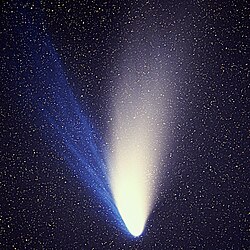
星間空間では、若い星が周囲のガスと衝突して形成される衝撃波(ボウショック)などの現象が見られます。
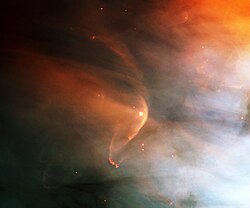
銀河間空間と深宇宙
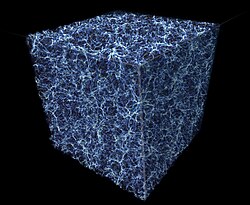
銀河と銀河の間に広がる「銀河間空間」は、宇宙で最も体積が大きい領域です。ここには超高温の希薄なガスが分布しており、宇宙の巨大な構造(コスミックウェブ)を形成しています。
人類は、月や地球の近傍である「シスルナ空間」から、さらに遠い深宇宙へと探査範囲を広げています。
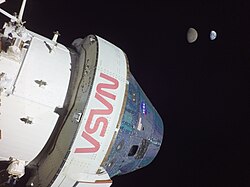
かつての宇宙飛行士たちが撮影した「地球の出(アースライズ)」や、最初の人による地球写真などの記録は、私たちに宇宙の中での地球の孤独さと尊さを教えてくれました。
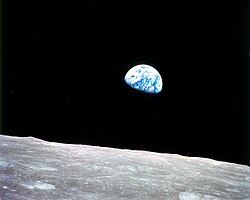
![South is up in the first image of Earth taken by a person,[209] probably by Bill Anders (during the 1968 Apollo 8 mission)](/images/cf/c3/cfc34bf8f66bb473ecd7004c628b670a154654ae5ed4a8f3d6979b61e7583b68.jpg)
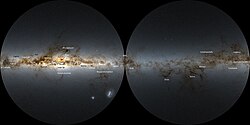
また、国際宇宙ステーション(ISS)からは、地球の電離層が発する淡い光(大気光)を背景に、壮大な天の川を観測することができます。
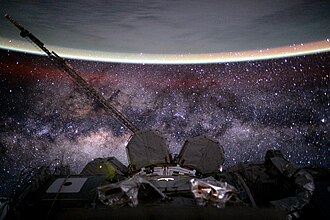
宇宙環境のまとめ
| 項目 | 特性・内容 | 備考 |
|---|---|---|
| 基本温度 | 約2.7 K(−270 °C) | 宇宙背景放射による |
| 主要成分 | 水素・ヘリウムプラズマ、ダークマター等 | ほぼ完全な真空状態 |
| 宇宙の境界 | 高度100km(カーマンライン) | 慣習的な定義 |
| 法的原則 | 国家による領有禁止 | 宇宙条約(1967年)に基づく |
| 主なリスク | 真空、放射線、スペースデブリ | 宇宙服や遮蔽が必要 |
Frequently Asked Questions
宇宙は完全に空っぽなのでしょうか?
いいえ、完全な空虚ではありません。非常に密度は低いですが、水素やヘリウムのプラズマ、宇宙線、ニュートリノ、微細な塵などが存在しています。また、正体不明のダークマターやダークエネルギーが空間の大部分を占めていると考えられています。
宇宙の始まり(境界線)はどこにありますか?
物理的に明確な線はありませんが、国際的な合意として海抜100kmの「カーマンライン」が宇宙の始まりとして利用されています。これより低い高度は、一般的に地球の大気圏内として扱われます。
宇宙で体が浮くのはなぜですか?
重力がゼロになったわけではなく、宇宙船や宇宙飛行士が地球の周囲を高速で移動しながら「自由落下」しているためです。遠心力と重力が釣り合うことで、無重量状態が実現しています。
宇宙空間に誰かの所有権は認められていますか?
認められていません。1967年の宇宙条約により、月を含む宇宙空間のいかなる部分も、国家が主権を主張したり、領有したりすることは禁止されています。宇宙は全人類に開かれた共有財産とされています。
宇宙服を着ないとどうなりますか?
宇宙空間は真空であるため、体内の気圧と外部の気圧差によって深刻な影響が出ます。また、極端な温度変化や有害な宇宙放射線に直接さらされるため、生命を維持するためには加圧機能と温度調節機能を備えた宇宙服が不可欠です。
References
- "Applicable definitions of outer space, space, and expanse", Merriam-Webster dictionary, retrieved 2024-06-17,
Outer space (n.) space immediately outside the earth's atmosphere.
Space (n.) physical space independent of what occupies it. The region beyond the earth's atmosphere or beyond the solar system.
Expanse (n.) great extent of something spread out. - Roth, A. (2012), Vacuum Technology, Elsevier, p. 6, .
- Chuss, David T. (June 26, 2008), Cosmic Background Explorer, NASA Goddard Space Flight Center, archived from the original on 2013-05-09, retrieved 2013-04-27.
- Gupta, Anjali; et al. (May 2010), "Detection and Characterization of the Warm-Hot Intergalactic Medium", Bulletin of the American Astronomical Society, 41: 908, :2010AAS...21631808G.
- , pp. 573, 599–601, 650–653.
- Trimble, V. (1987), "Existence and nature of dark matter in the universe", , 25: 425–472, :1987ARA&A..25..425T, :10.1146/annurev.aa.25.090187.002233, 123199266.
- "Dark Energy, Dark Matter", NASA Science, archived from the original on June 2, 2013, retrieved May 31, 2013,
It turns out that roughly 68% of the Universe is dark energy. Dark matter makes up about 27%.
- 1 2 O'Leary 2009, p. 84.
- "Where does space begin?", Aerospace Engineering, archived from the original on 2015-11-17, retrieved 2015-11-10.
- Harper, Douglas (November 2001), Space, The Online Etymology Dictionary, archived from the original on 2009-02-24, retrieved 2009-06-19.
📸 フォトギャラリー