現代のトルコ共和国の国旗として世界的に知られる「赤地に白の三日月と星」。この象徴的なデザインは、かつて広大な領土を誇ったオスマン帝国の歴史の中で徐々に形作られたものです。単一のデザインが最初からあったわけではなく、時代や用途、そして国家の近代化という政治的背景に合わせて、その姿を変えてきました。
主要な事実(Key Facts)
- 公式採用: 1844年に五角星と三日月のデザインが正式な国旗として採用された。
- 近代化の象徴: 国旗の制定は、欧州諸国の制度に合わせた近代化改革「タンジマート」の一環であった。
- 多様な前身: 初期は旗よりも「トゥグ(馬尾の旗)」と呼ばれる軍事標準が主流だった。
- 継承: 1923年の共和国宣言後も、基本デザインは現在のトルコ国旗へと引き継がれた。
- 宗教的要素: 軍旗にはコーランの句や「シャハーダ(信仰告白)」が記される伝統があった。
初期の軍事象徴と旗の誕生
近代的な「国旗」という概念が普及する前、オスマン帝国の軍隊は旗ではなく、トゥグ(tugh)と呼ばれる馬の尾を付けた標準を用いていました。これは19世紀まで併用され続けた伝統的な軍事象徴です。
16世紀頃になると、戦場での視認性を高めるための軍旗が登場します。特に16世紀から17世紀にかけては、二股に分かれた剣「ズルフィカール」を描いた旗が多用されました。このデザインは西洋の記録において、誤って「ハサミ」のように描写されることもありました。
![Flag used by the Ottoman Empire between c. 1480 and 1780.[8][9][10][11][12][13][14][15][16][17][18][19][20][21]](/images/b2/48/b248434e6c28840faf8f0362e05c6f8049f6b56963a85807417b3898dcdb5a2d.png)
三日月シンボルの浸透と多様な展開
三日月のシンボルは、1453年のコンスタンティノープル征服以前から、アジアのトルコ系部族の間で用いられていたという説があります。また、征服後の首都イスタンブール(旧ビザンツ帝国)においても、三日月は古くから都市の象徴として親しまれていました。
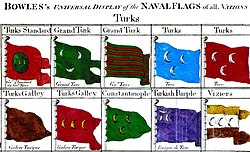
15世紀後半から18世紀にかけて、三日月のみを描いたシンプルな旗が広く使われるようになります。一方で、海軍では所有者の階級や拠点となる地域によってデザインが異なる多様な旗が使用されており、色や形状にバリエーションがありました。
![Flag of the Ottoman Empire (1590–1646)[23][24]](/images/10/45/10453bb3ab373c9269ce2b2355641d690cfa39ead93eb766dc45344462999323.png)
また、帝国の権威を示すために、アジア・アフリカ・ヨーロッパの3大陸への支配を象徴する「3つの三日月」を描いた緑色の軍旗なども存在しました。
![An Ottoman war banner in green, with the three crescents representing the sovereignty and dominion of the Empire over the continents where it held power: Asia, Africa, and Europe.[25]](/images/ba/e0/bae07a16ef8bb09fdcb4cfcfc413d9e7513612bf68d29e17e33c7000e9799153.webp)
18世紀後半になると、海軍の旗に関する詳細な記録が残るようになり、地域や役職に応じた複雑な旗の体系が構築されていたことが分かっています。
「三日月と星」の公式化と近代化
三日月に星を組み合わせたデザインは、16世紀の戦いなどの記録に断片的に現れますが、体系的に使用されるようになったのは18世紀末以降です。1793年の勅令により、海軍艦船に赤地に白の三日月と星の旗を掲げることが義務付けられました。
その後、1844年に五角星を用いたデザインが正式な国家の旗として採用されます。これは、オスマン帝国が欧州の近代的な国家制度を取り入れようとしたタンジマート(恩恵改革)の一環であり、国家のアイデンティティを明確にするための措置でした。
![The official eight-pointed star flag used by the Ottoman Empire between 1793 and 1844 as the official state flag.[42][43]](/images/f4/8a/f48a2e381078106f9159cfc290fd93e54d0a79656b5e3c012385afbdb473f7b3.webp)
この時期のデザインは、後のトルコ共和国の国旗の直接的な原型となりました。1936年のトルコ国旗法によって、赤色の色調や幾何学的な比率が厳格に規定されるまで、星の細さや位置には多少の個体差がありました。
帝国の権威と宗教的象徴
国家としての国旗とは別に、スルタン(皇帝)個人の権威を示す「帝国標準」が存在しました。これらは多くの場合、スルタンの署名であるトゥグラが描かれたピンクや鮮やかな赤色の背景を持っていました。
また、軍隊が使用する連隊旗には、イスラム教の信仰告白である「シャハーダ」やコーランの聖句が金色の文字で刺繍されていました。この伝統は第一次世界大戦まで続き、戦場における精神的な支柱となっていました。
![Adopted in 1882, the coat of arms of the Ottoman Empire featured a green flag at left (representing the Rumelia Eyalet and other European eyalets) and red flag at right (representing the Anatolia Eyalet and the other Asian eyalets).[56]](/images/35/f2/35f29f30be087799b6a16e365a871d30729b0a130d2729da2c4fb513f1227922.webp)
オスマン帝国国旗の概要まとめ
| 時代・区分 | 主な特徴・デザイン | 主な用途・背景 |
|---|---|---|
| 初期〜19世紀 | トゥグ(馬尾の標準)、ズルフィカール剣 | 軍事的な識別・伝統的な象徴 |
| 15世紀〜18世紀 | シンプルな三日月(赤や緑の地) | 軍旗、海軍旗としての普及 |
| 1793年〜 | 赤地に白の三日月と星(海軍で義務化) | 海軍の標準化 |
| 1844年〜1923年 | 赤地に白の三日月と五角星(公式採用) | タンジマートによる国家の近代化 |
| 帝国標準 | スルタンのトゥグラ(署名)入り | 皇帝個人の権威表示 |
Frequently Asked Questions
三日月と星のシンボルはどこから来たのですか?
諸説あります。アジアのトルコ系部族に古くから伝わっていたという説や、ビザンツ帝国のコインや盾に描かれていた象徴をコンスタンティノープル征服後に取り入れたという説があります。最終的にはこれらの伝統が融合し、帝国の象徴となったと考えられています。
現在のトルコ国旗とオスマン帝国の国旗は同じですか?
基本的には同じデザインです。1844年に採用された赤地に白の三日月と星のデザインが継承されました。ただし、現代のトルコ国旗は1936年の法律によって、色や比率が厳密に標準化されています。
なぜ1844年に正式な国旗が制定されたのですか?
当時のオスマン帝国が進めていた「タンジマート」という近代化改革の一環です。欧州の近代国家と同様に、法的な基準に基づいた国家の象徴(国旗)を持つことで、国際的な規範に合わせようとしました。
軍旗に書かれていた「シャハーダ」とは何ですか?
イスラム教における「神以外に神はなく、ムハンマドは神の使徒である」という信仰告白のことです。オスマン帝国の軍旗では、この聖句が金色の刺繍で記され、兵士たちの信仰心と忠誠心を高める役割を果たしていました。
「トゥグ」とはどのようなものですか?
旗が普及する前、あるいは普及後も併用されていた軍事標準で、槍の先に馬の尾を付けたものです。これは指揮官の地位や権威を示すための伝統的なシンボルでした。
References
- "Türk Bayrağı Kanunu" [Law on Turkish Flag] (PDF). Tbmm.gov.tr. Retrieved 12 December 2017.
- Lors des campagnes, la marche du Grand Vizir (1er ministre nommé par le Sultan de Constantinople) est précédée par trois Étendards ou Queues de cheval terminées chacune par une pomme dorée, ils sont l'enseigne militaire des Othomans appelée Thou ou Thouy. On dit qu'un Général de cette nation, ne sachant comment rallier ses troupes qui avaient perdu tous ses Étendards, s'avisa de couper la queue d'un cheval et de l'attacher au bout d'une lance; les soldats coururent à ce nouveau signal et remportèrent la victoire... cited after Marc Pasquin, 22 November 2004, crwflags.com; cf. also a facsimile image hosted at the website of the .
- For example: , Tableau des pavillons que la pluspart des nations arborent à la mer (1756).
-
Ramchandani, Indu (2000). (ed.). Students' Britannica India. Vol. 1 A to C (Abd Allah ibn al-Abbas to Cypress). Encyclopaedia Britannica (India). p. 373. Retrieved 18 March 2020.
the crescent ... appeared on the standards of [Ottoman] infantry under Sultan Orhan (1324-1360)
-
Chwalkowski, Farrin (2016). Symbols in Arts, Religion and Culture: The Soul of Nature. Newcastle upon Tyne: Cambridge Scholars Publishing. p. 85. . Retrieved 18 March 2020.
The city of Byzantium, also known as Constantinople and, in modern times, as Istanbul, was dedicated to Diana, goddess of the hunt, and the crescent was the symbol of Diana. In 330 AD, the Emperor Constantine rededicated the city to the Virgin Mary whose star symbol was added to the previous crescent. When the Turks took possession of Constantinople, they found many crescent flags and adopted the crescent as a symbol of the Ottoman Empire in about 1453 AD.
-
Bordeleau, André G. (2013). "Moon-Bearing Flags". Flags of the Night Sky: When Astronomy Meets National Pride. SpringerLink : Bücher. New York: Springer Science & Business Media. p. 233. . Retrieved 18 March 2020.
The city of Byzantium (later known as Constantinople and then Istanbul) adopted the crescent moon as its symbol long before the birth of Islam. ... When the Turks conquered Constantinople in 1453, they adopted the city's existing flag and symbol.
- Nozomi Karyasu & António Martins, 8 October 2006 on Flags of the World.
- año 1590, Joan Riezo figlo de mastro dominico [Olives] in missina (1590), English: 1590 Portolan chart of the Mediterranean Sea and Europe, retrieved 2025-11-17
{{}}: CS1 maint: numeric names: authors list () - English: 1559 Portolan chart of the Aegean Sea and the Sea of Marmara by Diogo Homem, 1559, retrieved 2025-11-17
- Sailko (2017-01-23), Italiano: Palazzo dei Diamanti (Ferrara), retrieved 2025-11-17


,_1501-02_(bibl._estense)_04.jpg#mw-jump-to-license)
📸 フォトギャラリー