人類の歴史において、生存戦略の根本的な転換点となったのが新石器時代(Neolithic)です。紀元前10,000年頃から紀元前2,000年頃にかけて、アジア、ヨーロッパ、アフリカの各地で展開したこの時代は、単なる石器の進化にとどまらず、社会構造そのものを変える巨大な変革をもたらしました。
この時代の最大の特徴は、狩猟採集という不安定な食料調達から、計画的な食料生産へと移行した「新石器革命」にあります。人々は植物を栽培し、動物を飼い慣らすことで、移動生活を捨てて一つの場所に留まる「定住」という新しい生き方を選択しました。
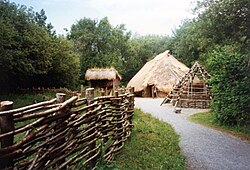
Key Facts
- 新石器革命:農耕の開始、動物の家畜化、そして定住生活への移行を指す。
- 時期:概ね紀元前10,000年から紀元前2,000年まで(地域により異なる)。
- 技術革新:磨製石器の普及に加え、土器の製作や初期の冶金術(金属加工)が登場した。
- 社会の変化:定住による人口増加と、それに伴う集落の形成、社会組織の複雑化が進んだ。
新石器時代の始まりと世界的な広がり
新石器時代の幕開けは、西アジアのレバント地方(現在のシリア、パレスチナ、レバノン付近)に位置する肥沃な三日月地帯から始まったと考えられています。紀元前12,500年から9,500年頃のナトゥーフィアン文化において、野生の穀物への依存が高まり、気候変動(ヤンガードリアス期)などの影響を受けて、人類は意図的に種をまく農耕へと踏み出しました。
![Approximate centers of origin of agriculture in the Neolithic Revolution and its spread in prehistory: the Fertile Crescent (12,000 BP), the Yangtze river and Yellow River basins (9,000 BP) and the New Guinea Highlands (9,000–6,000 BP), Central Mexico (5,000–4,000 BP), Northern South America (5,000–4,000 BP), sub-Saharan Africa (5,000–4,000 BP, exact location unknown), eastern North America (4,000–3,000 BP).[9]](/images/d9/ce/d9cea234c74ef8c9b3e8112a568b37fe09e29d16e1cefb4569543de55a676ab4.webp)
この革新は単一の場所から広がっただけでなく、世界の異なる地域で独立して発生しました。中国の長江・黄河流域やニューギニア高地、中米、南米、サハラ以南のアフリカなど、各地で独自の農耕文化が花開いたことが分かっています。
地域別の展開と特徴
- 近東(西アジア):世界最古の都市の一つであるジェリコなどが誕生し、石壁や塔などの大規模な建築物が作られました。
- ヨーロッパ:紀元前7千年紀に南東部から農耕社会が浸透しました。近年の遺伝子解析により、単なる文化伝播ではなく、アナトリアからの農耕民の移動が深く関わっていたことが判明しています。
- アジア:中国では早いうちから稲作などの農耕が始まり、韓国のムナムリ遺跡では東アジア最古級の農地跡が発見されています。インド南部では紀元前3,000年頃から新石器時代が始まり、儀礼的な焼却跡である「灰丘(Ash mounds)」が特徴的です。
- 南北アメリカ:中米や南米でも紀元前4,500年頃(あるいはそれ以前)に作物栽培と定住が始まりましたが、地域的に「形成期(Formative stage)」などの異なる呼称で分類されることが一般的です。
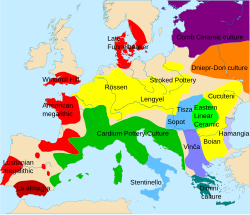
文化と技術の進化
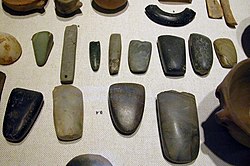
食料生産の安定は、物質文化の飛躍的な発展を促しました。まず、食料の保存や調理を可能にする土器の製作が始まりました。また、石を磨いて鋭利に仕上げる磨製石器の技術により、森林の開墾や効率的な農作業が可能になりました。
住居と社会組織
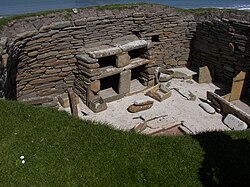
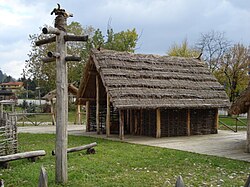
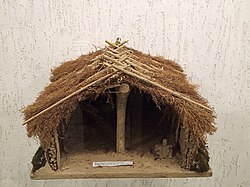
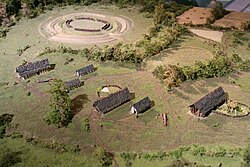
定住生活に伴い、住居は一時的なキャンプから恒久的な建築物へと変化しました。トルコのチャタル・ヒュユクのような大規模な集落では、家々が密集して建てられ、高度なコミュニティが形成されていました。また、スコットランドのスカラ・ブレイのように、内部に棚などの家具を備えた洗練された住居も見られます。
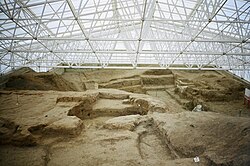
精神世界と芸術
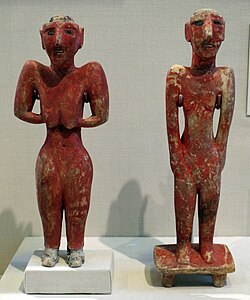
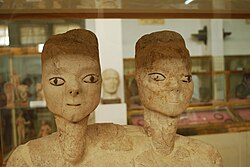
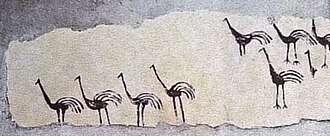
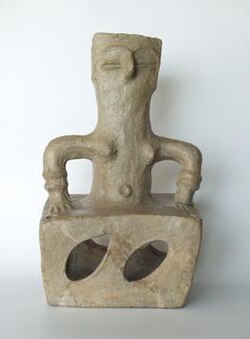
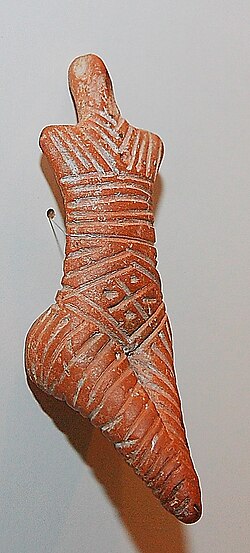
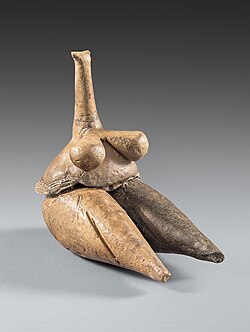
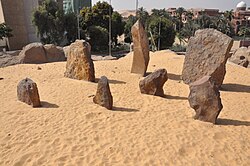
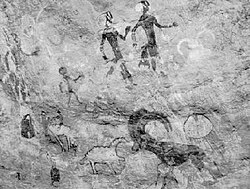
定住と人口増加は、宗教的な儀礼や芸術の発展ももたらしました。人間を模した小像(フィギュア)や壁画が数多く作られ、豊穣への祈りや祖先崇拝のような精神文化が育まれたと考えられています。また、巨大な石を組み上げた巨石記念物(メガリス)の建設は、集団的な労働力と組織力の象徴となりました。
![The Urfa Man c. 9000 BC.[16][17][18] Şanlıurfa Archaeology and Mosaic Museum.](/images/3c/40/3c40479dd20538b0a6561fd3d1e653d55aca42b338c84ebee16a2013b00a7123.jpg)
対立と暴力の側面
一方で、定住による土地や資源の所有概念の誕生は、集団間の衝突を招きました。ライン川沿いの線帯文土器文化の集落に見られる防壁や、集団的な殺戮の跡がある遺構などは、新石器時代において組織的な暴力や戦争が、それ以前の旧石器時代よりも一般的であった可能性を示唆しています。
![The neolithization of Northwestern Africa corresponded to the arrival of European migration circa 5500 BC (■), and a wave of Levantine migration circa 5000 BC (■), with some local admixture (■).[42]](/images/08/f9/08f9c0047550974c34d71bf861aaf585ed0ecba0ff8adcf5b266fc3418949856.png)
新石器時代の主要な遺構と文化
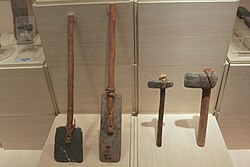
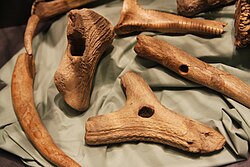
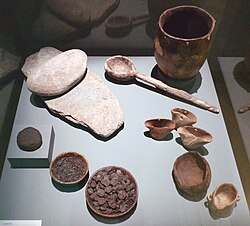
世界各地で発見された遺跡は、当時の生活様式を鮮明に伝えています。中国の遺物や、ヨーロッパで見つかった石臼、炭化したパン、穀物などは、当時の食生活を具体的に証明しています。
| 遺跡・文化名 | 主な地域 | 時期(目安) | 特徴 |
|---|---|---|---|
| ジェリコ | パレスチナ | 紀元前9,500年〜 | 世界最古の都市の一つ、巨大な石塔と壁 |
| チャタル・ヒュユク | トルコ | 紀元前7,500年〜 | 密集した住居群を持つ大規模集落 |
| 線帯文土器文化 | 中央ヨーロッパ | 紀元前5,500年〜 | 特徴的な土器と防壁を持つ村落 |
| スカラ・ブレイ | スコットランド | 紀元前3,500年〜 | 石造りの住居と家具が保存された集落 |
| ヘムドゥ文化 | 中国 | 紀元前5,000年〜 | 大規模な稲作の展開 |
Frequently Asked Questions
新石器時代と旧石器時代の決定的な違いは何ですか?
最大の違いは「食料の調達方法」です。旧石器時代は野生の動植物を追いかける狩猟採集生活でしたが、新石器時代は農耕と家畜化による食料生産へと移行し、それに伴い移動生活から定住生活へと変化しました。
「新石器革命」は一度に世界中で起きたのですか?
いいえ。西アジアの肥沃な三日月地帯で最初期に始まりましたが、その後、中国やアメリカ大陸など、世界の異なる地域でそれぞれ独立して、異なる時期に農耕や定住が始まりました。
土器はなぜ新石器時代に重要だったのですか?
土器の登場により、煮炊きによる食料の効率的な調理が可能になり、また穀物などの余剰食料を保存できるようになりました。これが人口増加と定住生活をさらに後押ししました。
新石器時代はどのようにして終わったのですか?
地域によって異なりますが、石器に加えて銅などの金属を使い始めた「銅石器時代(Chalcolithic)」へと移行し、その後、青銅器時代、鉄器時代へと続いていきました。
新石器時代の人々は平和に暮らしていたのでしょうか?
かつては平和な農耕社会と考えられていましたが、近年の研究では、防壁のある集落や武器による外傷を持つ人骨が見つかっており、土地や資源を巡る集団間の激しい衝突や戦争が存在していたことが分かっています。
References
- "Neolithic". (online ed.). Oxford University Press. (Subscription or participating institution membership required.)
- Sowada, Karin (2009). Egypt in the Eastern Mediterranean During the Old Kingdom: An Archaeological Perspective. Saint-Paul. .
- van der Spek, R.J.; de Blois, Lukas (2019). An Introduction to the Ancient World. Routledge. p. 14. :10.4324/9781351245463. .
- "Neolithic Periods Overview". egyptianmuseum.org. Retrieved 20 April 2022.
- Chang, K. C., ed. (1986). Studies of Shang archaeology: selected papers from the International Conference on Shang Civilization. Yale University Press. pp. 6–7. . 85010044. 1245817074. 3029505M.
- Encyclopedia Britannica, "Stone Age"
- Cavalli-Sforza, Luigi Luca; Menozzi, Paolo; Piazza, Alberto (1994). The History and Geography of Human Genes. Princeton, NJ: Princeton University Press. p. 351.
at first European contact .... [New Guineans] represented ... modern examples of Neolithic horticulturalists
- Hampton, O. W. (1999). Culture of Stone: Sacred and Profane Uses of Stone Among the Dani. College Station, TX: Texas A&M University Press. p. 6.
- Diamond, Jared; Bellwood, Peter (25 April 2003). "Farmers and Their Languages: The First Expansions". Science. 300 (5619): 597–603. :2003Sci...300..597D. :10.1126/science.1078208. 12714734.
- Scanes, Colin G. (2018). "The Neolithic Revolution, Animal Domestication, and Early Forms of Animal Agriculture". Animals and Human Society. pp. 103–131. :10.1016/B978-0-12-805247-1.00006-X. .
📸 フォトギャラリー