月:地球の唯一の天然衛星が持つ神秘と科学的特性
夜空に浮かぶ静かな光、月は単なる天体ではなく、地球の歴史と密接に結びついたダイナミックなパートナーです。地球の唯一の天然衛星である月は、その特異な軌道や地質学的構造を通じて、太陽系の形成過程に関する重要な手がかりを私たちに提供し続けています。
Key Facts
- 形成過程:火星サイズの仮想惑星「テイア」が地球に衝突したことで誕生したという説が有力です。
- 潮汐固定:自転周期と公転周期が一致しているため、地球からは常に同じ面(表側)しか見えません。
- 重力特性:地球の約6分の1の重力しかなく、これが宇宙飛行士の跳躍などの現象に影響します。
- 表面構造:玄武岩でできた暗い「海」と、クレーターが密集する明るい「高地」で構成されています。
- 水と氷:極地方の永久影領域などに氷の状態での水の存在が確認されています。
月の誕生と進化の歴史
月の起源について最も広く支持されているのが「ジャイアント・インパクト説」です。これは、初期の地球にテイアと呼ばれる火星ほどの大きさを持つ惑星が衝突し、その際に飛散した破片が地球の周囲に集まって月になったという理論です。
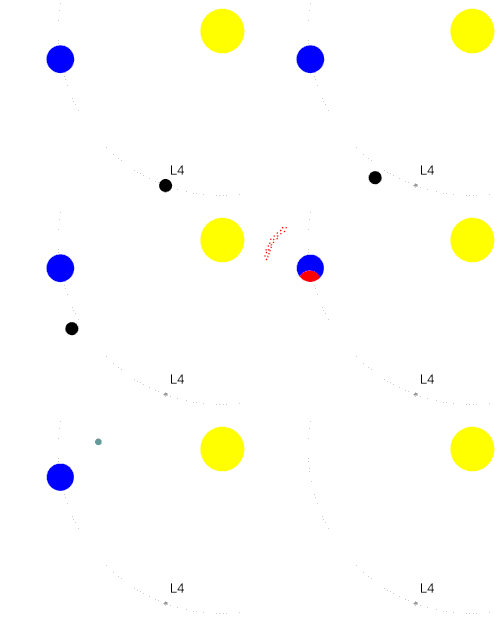
誕生直後の月は現在よりもはるかに地球に近く、空に現れるその姿は今よりもずっと巨大でした。約40億年前、後期重爆撃期を過ぎた頃の月は、現在の約3分の1の距離を周回していたと考えられています。
![Artist's depiction of the Moon in Earth's sky as it might have appeared around 4 billion years ago, after the Late Heavy Bombardment. At that time the Moon orbited the Earth at a third of its current distance, making it appear 2.8 times larger in apparent size than it does today.[63]](/images/4b/52/4b5204a76bb7804069345e20af57e33d36dd5bcb365f28a175d82404f7e23b64.png)
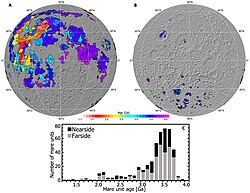
その後、月は数十億年にわたり火山活動を経験しました。低地へ流れ出した溶岩が冷え固まり、現在私たちが目にする暗い色の「月の海(マリア)」が形成されました。これらの地域の年代を分析することで、月の地質学的変遷を辿ることができます。
物理的特性と内部構造
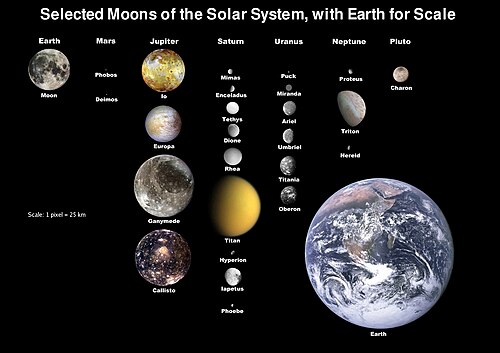
月は太陽系の中でも比較的大きな衛星であり、地球の約27%の半径を持ちます。内部は、鉄を主成分とする固体の核(コア)、液状の外核、そして硬化したマントルと地殻という層構造になっています。
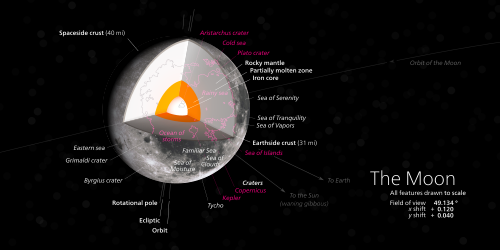
地殻の厚さは場所によって異なり、地球に面した側は比較的薄くなっています。この構造的な差異が、表側に多くの「海」が集中している要因の一つとされています。
![Map of the Moon colored by the thickness of the crust, with main regions marked.The KREEP rich magma terrane (hatched), with its most prominent part labeled on the near side (left), the Mare Procellarum KREEP Terrane (PKT).The South Pole–Aitken Terrane (SPAT) is marked on the far side (right, largest circle).The 24 crater basins with crustal thinning greater than 200 km (120 mi) are marked (black circles) across both hemispheres.The rest is the high-thickness Felspathic Highlands Terrane (FHT; red and white).[131]](/images/d2/86/d286bbea21bfad651f6306920748fd7c932859b8a60087d97907b92e85ec28cb.jpg)
また、月の重力は地球の約16.5%に過ぎません。この低重力環境は、月面での移動や活動に大きな影響を与え、宇宙飛行士が軽やかに跳ねるような動作を可能にしました。
![Astronaut John Young jumping on the Moon, illustrating that the gravitational pull of the Moon is approximately 1/6 of Earth's. The jumping height is limited by the combined weight of Young and his EVA space suit on the Moon of about 27 kg (60 lb) and by the suit's pressurization resisting the bending of the suit, as needed for jumping.[89][90]](/images/c8/2b/c82bfb88102e7ea09fde52f1a44752189b2f0b9f2f9b74be50c44316e0343cda.gif)
月面の地質と環境
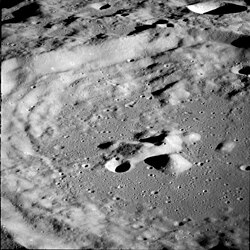
月の表面は、絶え間ない隕石の衝突によって形成されたクレーターで覆われています。特に「海」が形成されなかった高地では、激しい衝突の痕跡が色濃く残っています。
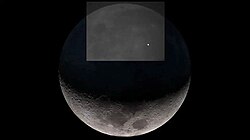
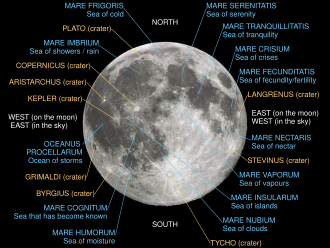
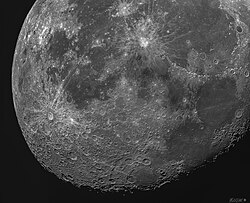
一部の巨大なクレーターは深さが数キロメートルに達し、その内部構造は天文学的な価値を持っています。また、過去の溶岩流が作り出したしわ状の隆起(しわ状嶺)や、溶岩チューブによる洞窟のような地形も確認されています。
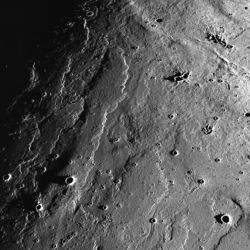
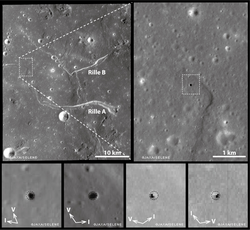
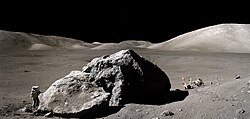
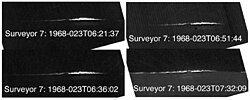
月面を覆う微細な塵「レゴリス」は非常に研磨性が高く、鋭利な形状をしています。これは宇宙飛行士の宇宙服を摩耗させるだけでなく、吸い込むことで人体に悪影響を及ぼす危険性がある物質です。
![Astronaut Charles Duke working on the Moon with his suit covered in lunar dust. Lunar dust is highly abrasive and can cause damage to human lungs and nervous and cardiovascular systems.[117]](/images/54/8b/548bc634b242fcedd87b46a9274045488000184185230bcc98baca351f282c5a.jpg)
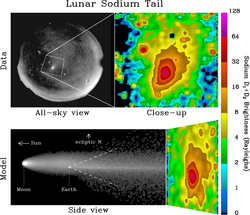
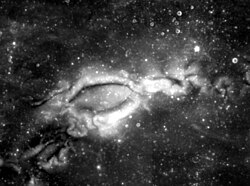
さらに、月には極めて希薄な大気(外圏)が存在し、ナトリウムなどの成分が含まれています。また、特定の地域では磁気的な異常を示す「ルナ・スワール」と呼ばれる不思議な模様が見られます。
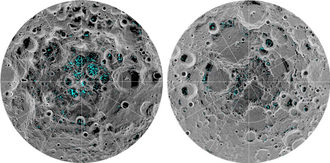
近年の探査では、北極や南極の太陽光が届かない永久影領域に氷が存在することが判明しました。これは将来の有人探査における貴重な資源として期待されています。
![The Venus of Laussel (c. 25,000 BP) holding a crescent shaped horn. The 13 notches on the horn may symbolize the average number of days from menstruation to an ovulation, or the approximate number of full menstrual cycles and lunar cycles per year (although these two phenomena are unrelated).[361][254]](/images/7a/2b/7a2ba0f44382e1c4358b24e97b725fb18d5e7391a0aec2d04f3dbd8f890f24f8.jpg)
地球と月のダイナミックな関係
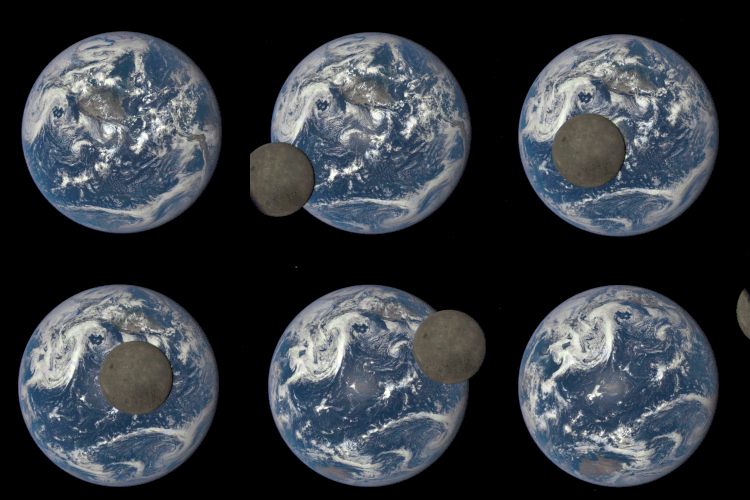
月は「潮汐固定」という状態にあり、自転と公転の周期がほぼ等しいため、地球からは常に同じ面しか見えません。しかし、実際には「秤動(ひょうどう)」と呼ばれるわずかな揺れがあるため、実際には表面の約59%を観測することが可能です。

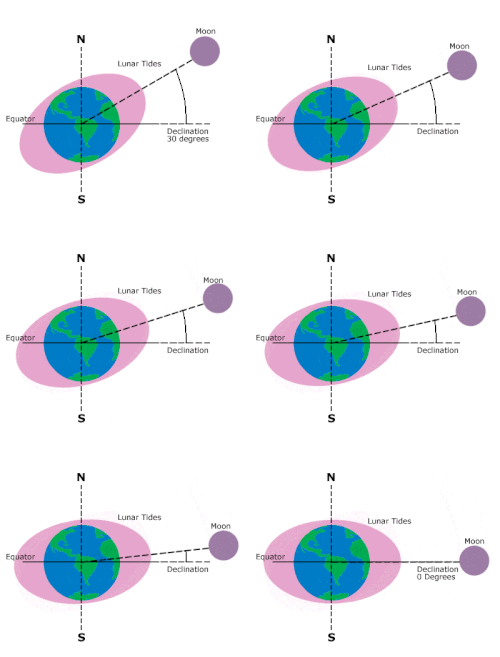
月の重力は地球の海水を引き寄せ、潮汐現象を引き起こします。この相互作用により、地球の自転速度は徐々に低下し、月は地球から年間数センチメートルずつ遠ざかっています。
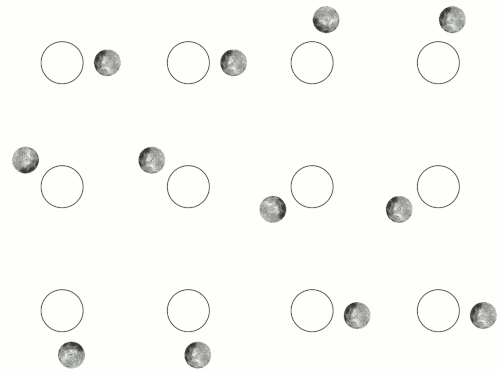
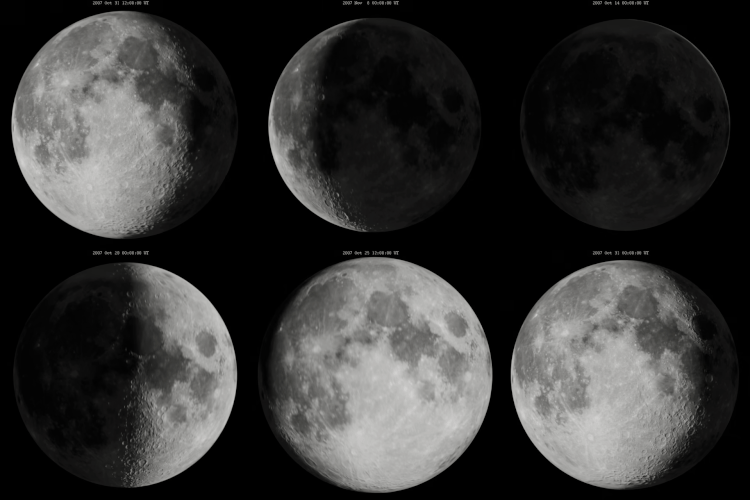
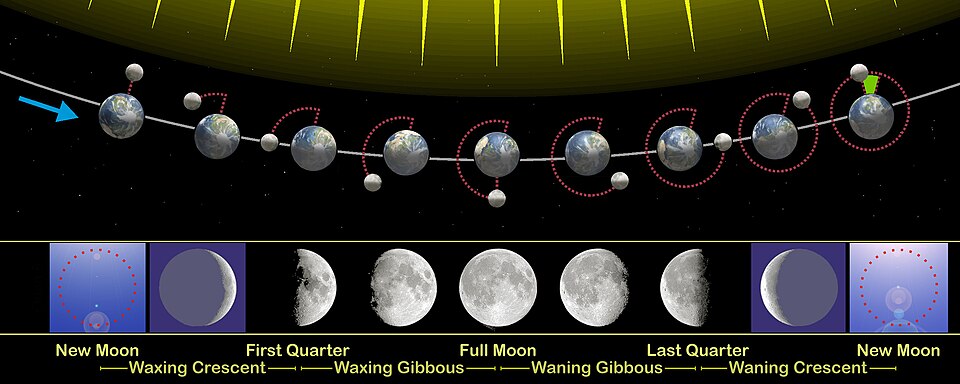
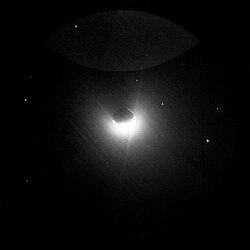
また、太陽光の当たる角度によって、私たちは新月から満月まで変化する「月相」を観察します。地球の大気を通る光の屈折により、月が赤っぽく見えたり、色調が変化したりすることもあります。
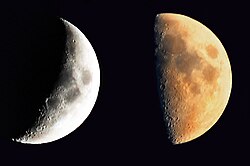
人類による探査の歩み
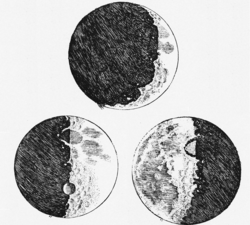
人類は古くから月を観察し、暦や文化に取り入れてきました。17世紀にガリレオ・ガリレイが望遠鏡で月の凹凸を初めて描写して以来、科学的な探査が始まりました。

![The Nebra sky disc (c. 1800–1600 BCE), found near a possibly astronomical complex, most likely depicting the Sun or full Moon, the Moon as a crescent, the Pleiades and the summer and winter solstices as strips of gold on the side of the disc,[262][263] with the top representing the horizon[264] and north.](/images/0c/f0/0cf024ffb5ad25cfa6e20ead64cd0506020b50236cac75e68ff126628aa83601.jpg)
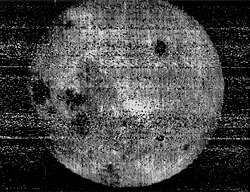
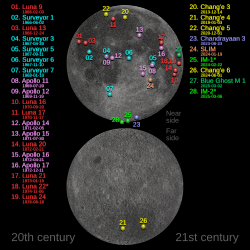
20世紀に入ると、ソ連のルナ計画によって初めて月の裏側の写真が撮影され、その後、アメリカのアポロ計画によって人類が初めて月面に足を踏み入れました。
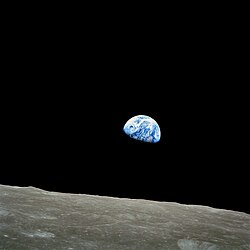
![An example of the robotic and human exploration of the Moon in the first visit of a separate mission beyond Low Earth Orbit (1969),[288] Apollo 12 astronaut Pete Conrad checking on Surveyor 3 at their shared lunar base, with the Apollo 12 Intrepid lander and S-band antenna in the distant background](/images/60/82/6082ac98259c94a194c71a6a092a0cf7155df4ccd774c41ee64ad9b3f0532750.jpg)
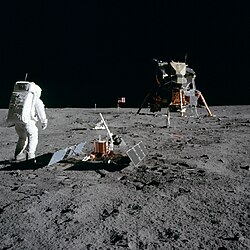
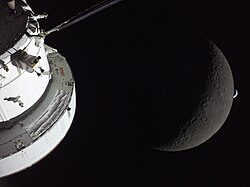
月面では様々な科学実験が行われ、多くの岩石サンプルが地球に持ち帰られました。現在も、アルテミス計画などの新しいプロジェクトを通じて、再び人類が月へ降り立ち、持続可能な拠点を築くための挑戦が続いています。
![Artifacts of human activity, Apollo 17's Lunar Surface Experiments Package[321]](/images/7e/79/7e798ed094472261a8697a6a2ef1b67bcf6d957de4f7d47c01baf68cd32ae87d.jpg)
また、月は地球の電磁波的なノイズから遮断されているため、宇宙の深淵を観測するための絶好の天文台としての可能性を秘めています。
月に関する主要データまとめ
| 項目 | 数値・特性 |
|---|---|
| 平均半径 | 1,737.4 km (地球の約27%) |
| 平均密度 | 3.344 g/cm³ |
| 表面重力 | 1.622 m/s² (地球の約16.5%) |
| 平均軌道半径 | 384,784 km |
| 公転周期(恒星月) | 約27.32日 |
| 表面温度 | 100 K 〜 390 K (赤道付近) |
Frequently Asked Questions
なぜ月の裏側は見えないのですか?
月が「潮汐固定」という状態にあるためです。月の自転周期と地球の周りを回る公転周期がほぼ同じであるため、地球からは常に同じ面だけが向き合うことになります。
月の「海」には水があるのですか?
いいえ、月の海は水ではなく、過去に噴出した玄武岩質の溶岩が冷えて固まった平原のことです。ただし、極地方のクレーターなどの暗い領域には、氷の状態での水が存在することが確認されています。
月面でジャンプすると高く跳べるのはなぜですか?
月の表面重力が地球の約6分の1と非常に小さいためです。同じ筋力で跳んだ場合、地球よりもはるかに高い位置まで上昇し、ゆっくりと落下することになります。
月には大気がないのでしょうか?
完全な真空ではありませんが、地球のような厚い大気層は存在しません。極めて希薄な「外圏(エクソスフィア)」と呼ばれるガス層が存在しますが、気圧は極めて低く、生命が生存できる環境ではありません。
月は将来的にどうなりますか?
潮汐摩擦の影響で、月は地球からゆっくりと遠ざかり続けています。また、内部の冷却に伴い、地質学的な活動はさらに減少していくと考えられています。
📸 フォトギャラリー