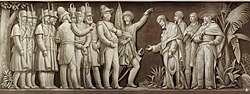
An Osage The boundaries of Comancheria – the Comanche homeland.
← ホームへ戻る

米墨戦争北米の国境線を塗り替えた激突の歴史

🗓 2026年8月15日

19世紀半ば、北米大陸では二つの国家が領土と野心をぶつけ合う激しい衝突が起こりました。1846年から1848年にかけて展開された米墨戦争(Mexican-American War)は、単なる国境紛争ではなく、アメリカ合衆国が掲げた「マニフェスト・デスティニー(明白な天命)」、すなわち西海岸まで領土を拡大することが神から与えられた使命であるという信念に基づいた拡張主義の産物でした。

主要な事実(Key Facts)

  • 期間:1846年4月25日 〜 1848年2月2日
  • 結果:アメリカ合衆国の勝利
  • 最大の成果:メキシコ割譲による広大な領土の獲得(現在のカリフォルニア、ネバダ、ユタなどの大部分)
  • 主要指導者:(米)ジェームズ・ポーク大統領、(墨)アントニオ・ロペス・デ・サンタ・アンナ大統領
  • 人的損失:アメリカ側は約18,000人(うち病死が多数)、メキシコ側は約35,000人の損害

戦争への道:領土的野心と政治的不安定

戦争の背景には、テキサス共和国の合衆国への併合と、それに伴う国境線の不一致がありました。当時、メキシコは国内の政治的混乱にあり、自由主義的な改革を推進したバレンティン・ゴメス・ファリアスのような人物と、軍事的な権力を持つサンタ・アンナの間で権力争いが続いていました。
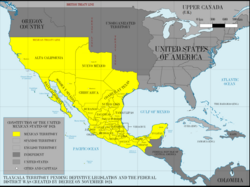
Mexico in 1824 with the boundary line with the U.S. from the 1818 Adams-Onís Treaty that Spain negotiated with the U.S.
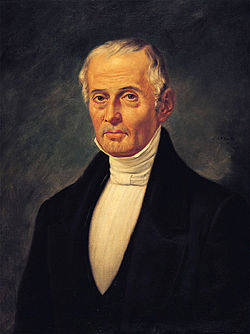
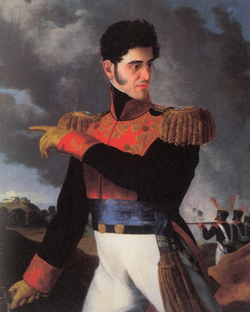
General Antonio López de Santa Anna was a military hero who became president of Mexico on multiple occasions. The Mexican Army's intervention in politics was an ongoing issue during much of the mid-nineteenth century.
Liberal Valentín Gómez Farías, who served as Santa Anna's vice president and implemented a liberal reform in 1833, was an important political player in the era of the Mexican–American War.

一方、アメリカではジェームズ・ポーク大統領が強力に西進を推進しました。特にカリフォルニアへの関心は高く、外交的な交渉が失敗に終わると、国境地帯での小競り合いが全面的な戦争へと発展しました。また、この地域にはコマンチ族などの先住民族が独自の勢力圏(コマンチェリア)を持っており、国家間の争いに複雑な影響を与えていました。
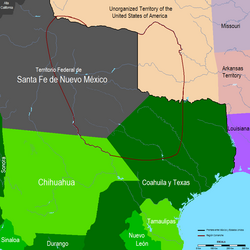
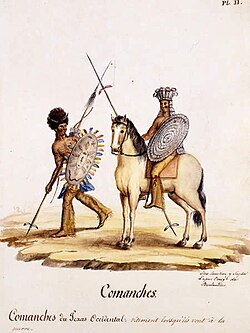
An Osage The boundaries of Comancheria – the Comanche homeland.
Comanches of West Texas in war regalia, c. 1830

テキサス共和国の併合後、アメリカとメキシコの間には「ヌエセス・ストリップ」と呼ばれる係争地が存在し、ここでの軍事的緊張が火種となりました。
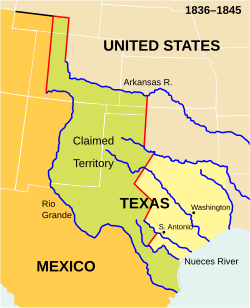
The Republic of Texas: The present-day outlines of the individual U.S. states are superimposed on the boundaries of 1836–1845.

戦況の展開:多方面での軍事作戦

戦争は主に4つの戦域で展開されました。まずテキサス戦域では、パロアルトの戦いやレサカ・デ・ラ・パルマの戦いなどの初期衝突を経て、アメリカ軍が主導権を握りました。
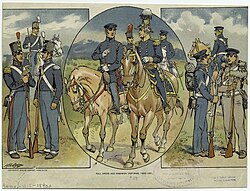
U.S. Army full dress and campaign uniforms, 1835–1851
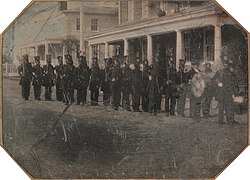
Volunteers leaving for the Mexican War, Exeter, New Hampshire, daguerreotype by E. Punderson, ca.1846

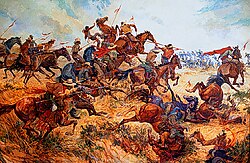
同時に、アメリカ軍はニューメキシコとカリフォルニアへの侵攻を開始しました。スティーブン・カーニー将軍らによる作戦により、サンタフェなどの主要拠点が次々と制圧されました。カリフォルニアでは、アンドレス・ピコ将軍率いるカリフォルニオ(メキシコ系住民)軍がサン・パスカルの戦いで勝利を収めるなどの抵抗を見せましたが、最終的にはリオ・サン・ガブリエルやラ・メサの戦いでアメリカ軍が決定的な勝利を収めました。
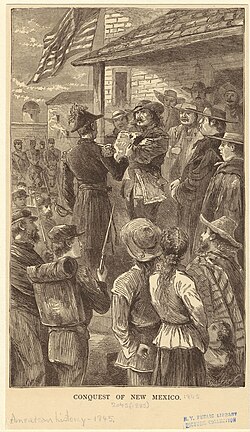
Gen. Kearny's annexation of New Mexico Territory, August 15, 1846.
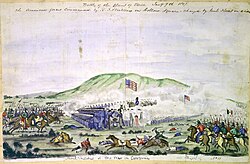
Battle of San Pasqual, a Californio victory led by General Andrés Pico against a superior American force led by General Stephen W. Kearny.
The Battle of Río San Gabriel was a decisive victory of American forces against the Californios during the U.S. conquest of California.
The Battle of La Mesa was the last battle fought between the Americans and Californio forces.

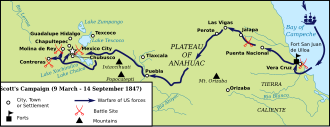
その後、戦火はメキシコ本土へと移ります。ウィンフィールド・スコット将軍率いる軍がベラクルスに上陸し、激戦を繰り広げながらメキシコシティへと進撃しました。モンテレイやブエナ・ビスタでの激戦を経て、チャプルテペクの戦いを経てついに首都メキシコシティを占領しました。
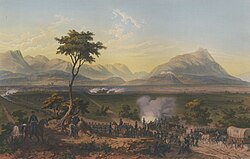
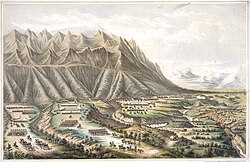
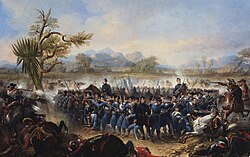
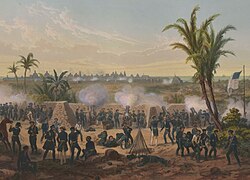
The Battle of Monterrey September 20–24, 1846, after a painting by Carl Nebel
Battle of Buena Vista
The bombardment of Veracruz
Scott's campaign
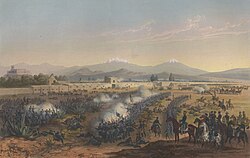
The Battle of Molino del Rey
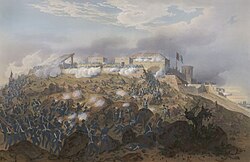
The Battle of Chapultepec
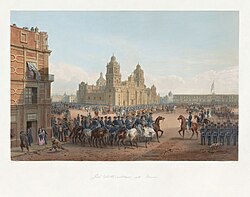
U.S. Army occupation of Mexico City in 1847. The U.S. flag flying over the National Palace, the seat of the Mexican government. Carl Nebel.
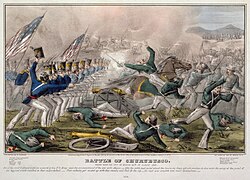
Battle of Churubusco by J. Cameron, published by Nathaniel Currier. Hand tinted lithograph, 1847. Digitally restored.

戦いの中の人々:多様な視点と貢献

この戦争には、正規軍だけでなく多くの志願兵や民間人が関わりました。特に注目すべきは、メキシコ側で戦ったアイルランド系カトリック兵で構成される「サン・パトリシオ大隊」の存在です。彼らは後に反逆罪として厳しい処遇を受けました。
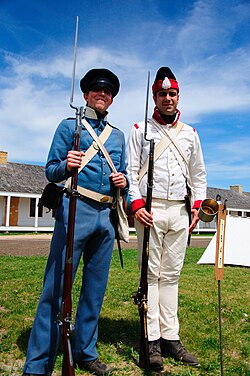
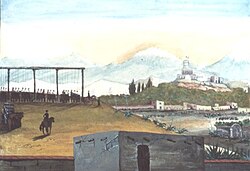
Reenactors in U.S. (left) and Mexican (right) uniforms of the period
The mass hanging of Irish Catholic soldiers who joined the Mexican side, forming the Saint Patrick's Battalion

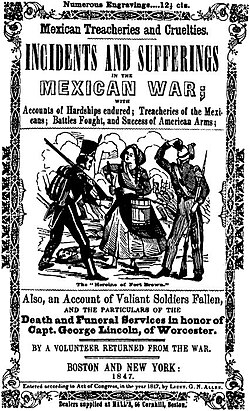
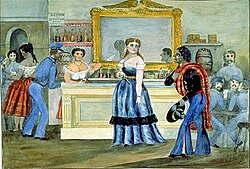
また、女性たちの貢献も無視できません。メキシコのマリア・ホセファ・ゾサヤは敵味方双方の負傷兵を看護し、アメリカのサラ・A・ボーマンは軍への支援を通じて「フォート・ブラウンの英雄」として称えられました。
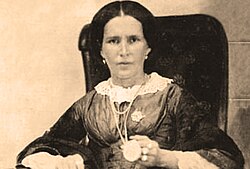
María Josefa Zozaya was a Mexican woman who aided wounded and ill troops of both the American and Mexican armies during the War.
Sarah A Bowman was an American woman, that during the war operated an inn in Franklin, Texas (now El Paso, Texas) before settling near Arizona City (now Yuma, Arizona).
Sarah A. Bowman "The Great Western", depicted as the Heroine of Fort Brown. At her death, she was buried with full military honors.

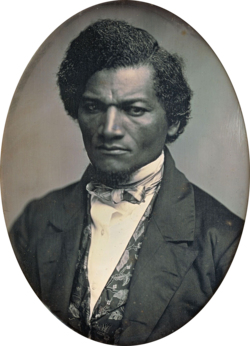
一方で、アメリカ国内ではこの戦争に反対する声もありました。後の大統領となるエイブラハム・リンカーンや、奴隷制廃止論者のフレデリック・ダグラスらは、この戦争の正当性に疑問を呈していました。
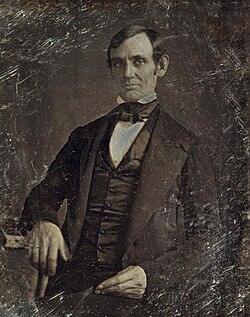
Abraham Lincoln in his late 30s as a Whig member of the U.S. House of Representatives, when he opposed the Mexican–American War. The photo was taken by one of Lincoln's law students around 1846.
Ex-slave and prominent anti-slavery advocate Frederick Douglass opposed the Mexican–American War.

終結と遺産:塗り替えられた地図

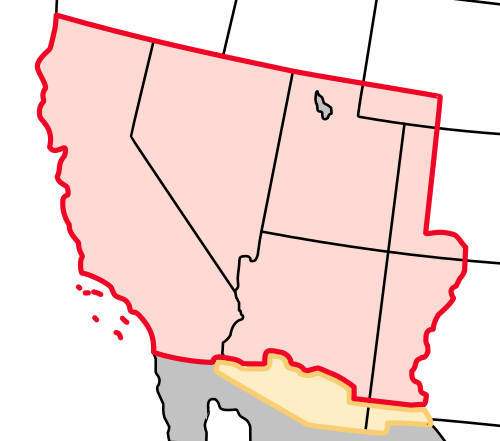
1848年、グアダルーペ・イダルゴ条約の締結により戦争は終結しました。メキシコは広大な領土をアメリカに割譲し、引き換えに一定の対価を受け取りました。その後、さらにガズデン購入を経て、現在のアメリカ南西部の国境線が確定しました。
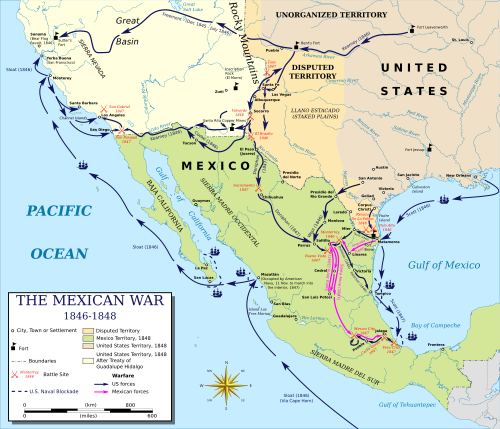
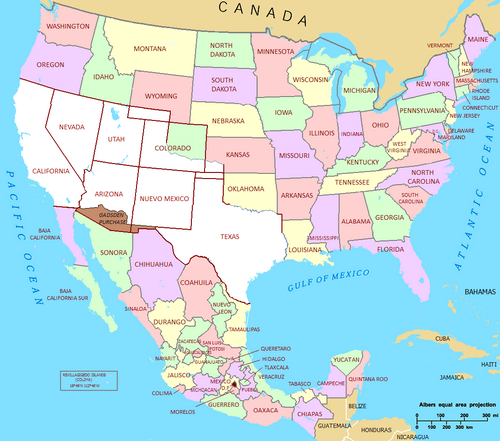
Overview map of the war Disputed territory United States territory, 1848 Mexican territory, 1848 After treaty of Guadalupe Hidalgo
Mexican territorial claims relinquished in the Treaty of Guadalupe Hidalgo in white
The Mexican Cession, shown in red, and the later Gadsden Purchase, shown in yellow

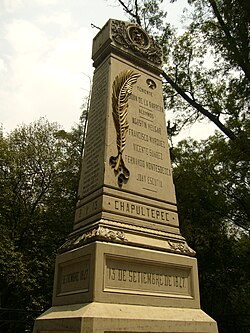
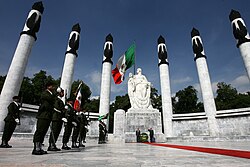
この戦争で経験を積んだユリシーズ・S・グラントなどの若き将校たちは、後の南北戦争で重要な役割を果たすことになります。また、メキシコ側ではチャプルテペクの戦いで戦った若き士官たち(ニニョス・エロエス)が、国家の誇りと犠牲の象徴として記憶されています。
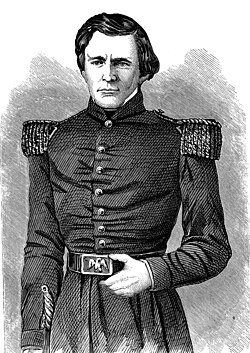
 Engraving of young Grant in uniform
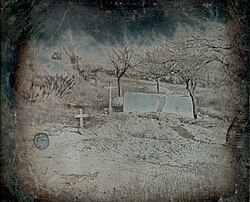
Burial site of Lieutenant Colonel Henry Clay, Jr., taken by an unknown photographer during the Mexican–American war, c. 1847
Obelisk to the Niños Héroes, Mexico City, 1881
Memorial to the Mexican cadets killed in the Battle of Chapultepec, 1952
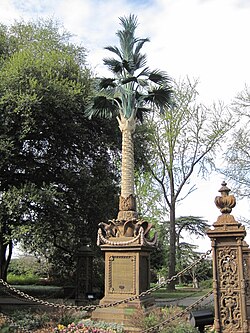
Palmetto Regiment Monument, State House grounds, Columbia, S.C. Wrought iron 1858. Sculptor: Christopher Werner
"American Army Entering the City of Mexico" by Filippo Costaggini, 1885. Architect of the Capitol

戦争後の政治的影響として、獲得した新領土に奴隷制を導入するか否かという論争が激化し、これがアメリカ国内の分断を深め、南北戦争への導火線の一つとなりました。
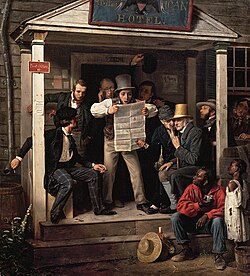
War News from Mexico (1848)
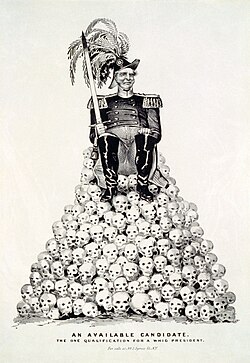
"An Available Candidate: The One Qualification for a Whig President." Political cartoon about the 1848 presidential election, referring to Zachary Taylor or Winfield Scott, the two leading contenders for the Whig Party nomination in the aftermath of the Mexican–American War. Published by Nathaniel Currier in 1848, digitally restored.

戦争の概要まとめ

米墨戦争の基本データ
項目 アメリカ合衆国 メキシコ合衆国
主要指導者 ジェームズ・ポーク アントニオ・ロペス・デ・サンタ・アンナ
動員兵力 約 78,718人 約 82,000人
総死傷者数 約 18,130人 約 35,000人
主な結果 領土の劇的な拡大 広大な北部の領土喪失

よくある質問(FAQ)

米墨戦争が起こった最大の原因は何ですか?

主な原因は、アメリカの領土拡大意欲(マニフェスト・デスティニー)と、テキサスの併合に伴う国境線の争いです。特にリオ・グランデ川を境界とするか、ヌエセス川とするかという対立が決定的な要因となりました。

メキシコ割譲」とは具体的にどのような内容ですか?

グアダルーペ・イダルゴ条約に基づき、メキシコが現在のカリフォルニア州、ネバダ州、ユタ州の大部分を含む広大な北西部領土をアメリカに譲り渡したことを指します。

サン・パトリシオ大隊とはどのような集団でしたか?

アメリカ軍に所属していたものの、宗教的・政治的な理由からメキシコ側に寝返ったアイルランド系を中心とする兵士たちの部隊です。

この戦争が後のアメリカ史に与えた影響は?

領土拡大を実現した一方で、新領土における奴隷制の是非を巡る対立が激化し、結果として南北戦争へとつながる政治的緊張を高めることになりました。

メキシコ側にとってこの戦争はどのような意味を持ちましたか?

国家的に甚大な領土喪失を経験した悲劇的な出来事であると同時に、チャプルテペクの戦いなどの抵抗の歴史は、後のメキシコのナショナリズム形成に大きな影響を与えました。

References

  1. From June 14 to July 9, 1846
  2. (: guerra de Estados Unidos-México, guerra mexicano-estadounidense). Variations include U.S.–Mexican War, the US–Mexico War.
  3. : Intervención estadounidense en México or Intervención norteamericana en México, : American Intervention in Mexico. In Mexico, it may also be called the War of United States–Mexico (Guerra de Estados Unidos–México).

📸 フォトギャラリー

An Osage The boundaries of Comancheria – the Comanche homeland.
Comanches of West Texas in war regalia, c. 1830
Mexico in 1824 with the boundary line with the U.S. from the 1818 Adams-Onís Treaty that Spain negotiated with the U.S.
The Republic of Texas: The present-day outlines of the individual U.S. states are superimposed on the boundaries of 1836–1845.
General Antonio López de Santa Anna was a military hero who became president of Mexico on multiple occasions. The Mexican Army's intervention in politics was an ongoing issue during much of the mid-nineteenth century.
Liberal Valentín Gómez Farías, who served as Santa Anna's vice president and implemented a liberal reform in 1833, was an important political player in the era of the Mexican–American War.
U.S. Army full dress and campaign uniforms, 1835–1851
María Josefa Zozaya was a Mexican woman who aided wounded and ill troops of both the American and Mexican armies during the War.
Sarah A Bowman was an American woman, that during the war operated an inn in Franklin, Texas (now El Paso, Texas) before settling near Arizona City (now Yuma, Arizona).
Sarah A. Bowman "The Great Western", depicted as the Heroine of Fort Brown. At her death, she was buried with full military honors.
Overview map of the war Disputed territory United States territory, 1848 Mexican territory, 1848 After treaty of Guadalupe Hidalgo
Abraham Lincoln in his late 30s as a Whig member of the U.S. House of Representatives, when he opposed the Mexican–American War. The photo was taken by one of Lincoln's law students around 1846.
Ex-slave and prominent anti-slavery advocate Frederick Douglass opposed the Mexican–American War.
Volunteers leaving for the Mexican War, Exeter, New Hampshire, daguerreotype by E. Punderson, ca.1846
War News from Mexico (1848)
Gen. Kearny's annexation of New Mexico Territory, August 15, 1846.
Battle of San Pasqual, a Californio victory led by General Andrés Pico against a superior American force led by General Stephen W. Kearny.
The Battle of Río San Gabriel was a decisive victory of American forces against the Californios during the U.S. conquest of California.
The Battle of La Mesa was the last battle fought between the Americans and Californio forces.
Reenactors in U.S. (left) and Mexican (right) uniforms of the period
The Battle of Monterrey September 20–24, 1846, after a painting by Carl Nebel
Battle of Buena Vista
The bombardment of Veracruz
Scott's campaign
The Battle of Molino del Rey
The Battle of Chapultepec
U.S. Army occupation of Mexico City in 1847. The U.S. flag flying over the National Palace, the seat of the Mexican government. Carl Nebel.
Battle of Churubusco by J. Cameron, published by Nathaniel Currier. Hand tinted lithograph, 1847. Digitally restored.
The mass hanging of Irish Catholic soldiers who joined the Mexican side, forming the Saint Patrick's Battalion
Mexican territorial claims relinquished in the Treaty of Guadalupe Hidalgo in white
The Mexican Cession, shown in red, and the later Gadsden Purchase, shown in yellow
 Engraving of young Grant in uniform
"An Available Candidate: The One Qualification for a Whig President." Political cartoon about the 1848 presidential election, referring to Zachary Taylor or Winfield Scott, the two leading contenders for the Whig Party nomination in the aftermath of the Mexican–American War. Published by Nathaniel Currier in 1848, digitally restored.
Burial site of Lieutenant Colonel Henry Clay, Jr., taken by an unknown photographer during the Mexican–American war, c. 1847
Obelisk to the Niños Héroes, Mexico City, 1881
Memorial to the Mexican cadets killed in the Battle of Chapultepec, 1952
Palmetto Regiment Monument, State House grounds, Columbia, S.C. Wrought iron 1858. Sculptor: Christopher Werner
"American Army Entering the City of Mexico" by Filippo Costaggini, 1885. Architect of the Capitol