化学の世界において、金属と非金属のどちらにも属さない、あるいはその中間的な性質を持つ元素が存在します。これらは準金属(メタロイド)と呼ばれ、周期表上で金属領域と非金属領域の境界線上に位置しています。彼らのユニークな物理的・化学的特性は、現代のハイテク産業を支える不可欠な基盤となっています。
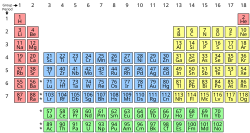
Key Facts
- 中間的な性質: 金属のような光沢を持ちながら、非金属のような脆さや化学的挙動を示す。
- 半導体特性: 電気伝導率が金属より低く非金属より高い。温度上昇に伴い導電性が増す傾向がある。
- 産業的価値: シリコンやゲルマニウムなどの準金属は、現代の電子デバイスの心臓部である半導体材料として不可欠。
- 多様な形態: 結晶構造や同素体によって、その物理的性質が大きく変化する。
準金属を定義する物理的・化学的特徴
準金属の最大の特徴は、その「曖昧さ」にあります。外見上は金属のような強い光沢を持つことが多いですが、物理的な衝撃を加えると金属のように伸びることなく、非金属のように脆く砕け散ります。
電気的な性質においては、半導体としての挙動が顕著です。これは、電気を全く通さない絶縁体と、自在に通す導電体のちょうど中間に位置することを意味します。例えば、セレンのような元素は光が当たると導電性が飛躍的に向上する光導電性を持ち、古くから光センサーに応用されてきました。
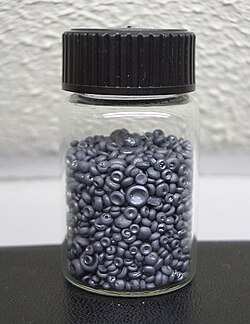
代表的な準金属の外観と性質
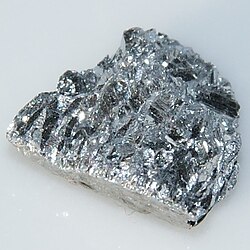
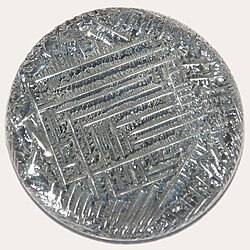
個別の元素を見ると、その多様性が際立ちます。ホウ素は熱力学的に安定したβ-菱面体晶などの構造を持ち、シリコンは青灰色の金属光沢を放ちます。また、アンチモンやテルルも強い光沢を持ち、特にテルルはメンデレーエフによって金属と非金属の移行領域にあると定義されました。
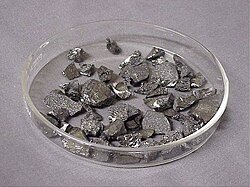
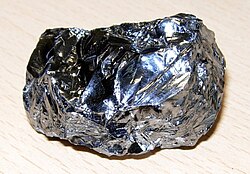
産業への応用と実用例
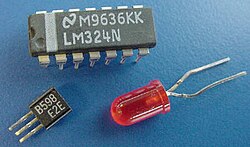
準金属の特性は、単なる学術的な興味に留まらず、実用的なテクノロジーに変換されています。最も顕著な例が電子部品です。トランジスタや集積回路(IC)、LEDなどの半導体デバイスには、シリコン(Si)やゲルマニウム(Ge)が主材料として使用され、ホウ素(B)やアンチモン(Sb)、テルル(Te)などがドーピング剤として電気的特性を制御するために加えられます。
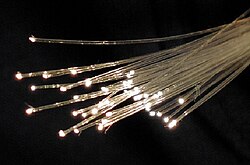
また、光学分野でも準金属は活躍しています。光ファイバーの芯材には高純度の二酸化ケイ素(シリコンの酸化物)が使われますが、感度を高めるために二酸化ゲルマニウムなどの添加物が導入されます。
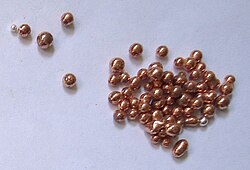
さらに、合金としての利用も重要です。例えば、銅とゲルマニウムの合金を銀に組み合わせることで、変色しにくい高品質なスターリングシルバー(純銀合金)を製造することが可能です。
特殊な用途と化学的側面
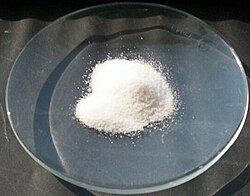
準金属の中には、毒性が強いものや特殊な反応を示すものもあります。ヒ素は三酸化ヒ素などの形態で知られ、歴史的に毒物としてだけでなく、一部の抗白血病治療などの医学的用途にも利用されてきました。また、硫黄や硝酸ナトリウムと共にヒ素三硫化物を混合したものは、かつての青色信号火に利用されていました。

準金属と近接元素の比較
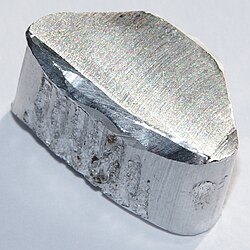
準金属の理解を深めるには、純粋な金属や非金属との比較が有効です。例えば、高純度のアルミニウムは非常に柔らかく、一般的な合金とは異なる感触を持ちます。一方で、炭素(グラファイト)は非金属でありながら、層間の電子の動きによって金属のような外見を呈することがあります。また、スズのような金属も、温度によって「白スズ」と「灰スズ」という異なる形態に変化し、外見上の特性が変わります。
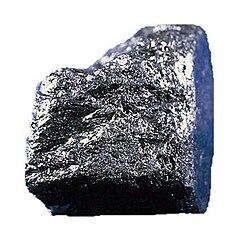
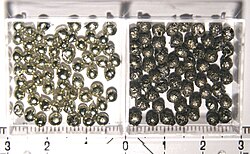
ハロゲン元素であるヨウ素も興味深い例です。結晶状態では金属光沢を持ち、特定の方向に対して半導体としての性質を示します。その導電率はセレンより高く、準金属の中で最も導電率が低いとされるホウ素よりも高い値を示します。
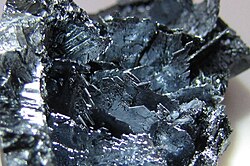
また、ヒ素のように酸化を防ぐために密閉容器で保管される元素もあり、化学的な安定性は元素によって大きく異なります。
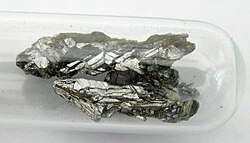
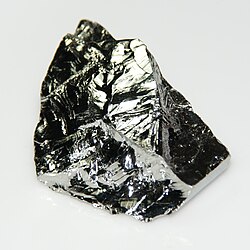
準金属の特性まとめ
| 元素名 | 主な物理的特徴 | 代表的な用途 |
|---|---|---|
| ホウ素 (B) | 硬く脆い、低い導電率 | 半導体ドーピング、耐熱ガラス |
| シリコン (Si) | 青灰色、金属光沢 | CPU、太陽電池、光ファイバー |
| ゲルマニウム (Ge) | 金属的な外見 | 高速チップ、赤外線光学系 |
| ヒ素 (As) | 毒性あり、半導体特性 | GaAs半導体、医薬品 |
| アンチモン (Sb) | 強い光沢、脆い | 難燃剤、合金添加剤 |
| テルル (Te) | 金属と非金属の中間的 | 熱電素子、CD/DVD記録層 |
| セレン (Se) | 光導電性を持つ | 光センサー、コピー機 |
Frequently Asked Questions
準金属と半導体は何が違うのですか?
準金属は周期表上の「元素の分類(化学的性質)」を指す言葉であり、半導体は「電気伝導性の特性(物理的性質)」を指す言葉です。多くの準金属が半導体としての性質を持ちますが、すべての半導体が準金属であるとは限りません(化合物半導体などが存在するため)。
なぜ準金属は電子デバイスに多用されるのですか?
電気を通すか通さないかを、不純物の添加(ドーピング)や電圧、温度などの外部条件で精密に制御できるためです。この「スイッチング機能」がコンピュータの演算処理に不可欠だからです。
準金属は自然界にどのような形で存在しますか?
多くの場合、単体ではなく酸化物や硫化物などの化合物として鉱石の中に存在します。例えばシリコンは地球上で非常に豊富に存在する二酸化ケイ素(石英など)として見つかります。
金属のような光沢があるのに、なぜ金属と呼ばれないのですか?
光沢という外見上の特徴だけでなく、延性(引き伸ばせる性質)や展性(叩いて広げられる性質)がなく、化学的な反応性が非金属に近い側面を持っているため、区別して「準金属」と呼ばれます。
References
- For a related commentary see also: Vernon RE 2013, 'Which Elements Are Metalloids?', Journal of Chemical Education, vol. 90, no. 12, pp. 1703–1707, :10.1021/ed3008457
- Definitions and extracts by different authors, illustrating aspects of the generic definition, follow:
- "In chemistry a metalloid is an element with properties intermediate between those of and ."
- "Between the and in the periodic table we find elements ... [that] share some of the characteristic properties of both the and , making it difficult to place them in either of these two main categories"
- "Chemists sometimes use the name metalloid ... for these elements which are difficult to classify one way or the other."
- "Because the traits distinguishing and are qualitative in nature, some elements do not fall unambiguously in either category. These elements ... are called metalloids ..."
- "elements that ... are somewhat of a cross between and "; or
- "weird in-between elements".
- , for example, has mixed properties but is still recognised as "king of ". Besides metallic behaviour (such as high electrical conductivity, and formation), gold shows nonmetallic behaviour:
- It has the electrode potential
- It has the third-highest among the (after and )
- It has the highest
- Its of 2.54 is highest among the and exceeds that of some ( 2.2; 2.19; and 2.2)
- It forms the Au− auride , acting in this way like a
- It sometimes has a tendency, known as "", to bond to itself.
- Mann et al. refer to these elements as "the recognized metalloids".
- The lack of a standard division of the elements into metals, metalloids, and nonmetals is not necessarily an issue. There is more or less a continuous progression from the metallic to the nonmetallic. A specified subset of this continuum could serve its particular purpose as well as any other.
- The packing efficiency of boron is 38%; silicon and germanium 34; arsenic 38.5; antimony 41; and tellurium 36.4. These values are lower than in most metals (80% of which have a packing efficiency of at least 68%), but higher than those of elements usually classified as nonmetals. (Gallium is unusual, for a metal, in having a packing efficiency of just 39%.) Other notable values for metals are 42.9 for bismuth and 58.5 for liquid mercury.) Packing efficiencies for nonmetals are: graphite 17%, sulfur 19.2, iodine 23.9, selenium 24.2, and black phosphorus 28.5.
- More specifically, the Goldhammer– criterion is the ratio of the force holding an individual atom's in place with the forces on the same electrons from interactions between the atoms in the solid or liquid element. When the interatomic forces are greater than, or equal to, the atomic force, valence electron itinerancy is indicated and metallic behaviour is predicted. Otherwise nonmetallic behaviour is anticipated.
- As the ratio is based on classical arguments it does not accommodate the finding that polonium, which has a value of ~0.95, adopts a metallic (rather than ) , on grounds. Even so it offers a first order rationalization for the occurrence of metallic character amongst the elements.
- Atomic conductance is the electrical conductivity of one mole of a substance. It is equal to electrical conductivity divided by molar volume.
- Selenium has an ionization energy (IE) of 225 kcal/mol (941 kJ/mol) and is sometimes described as a semiconductor. It has a relatively high 2.55 electronegativity (EN). Polonium has an IE of 194 kcal/mol (812 kJ/mol) and a 2.0 EN, but has a metallic band structure. Astatine has an IE of 215 kJ/mol (899 kJ/mol) and an EN of 2.2. Its electronic band structure is not known with any certainty.
📸 フォトギャラリー