The house in which Brown was born, in Torrington, Connecticut, was photographed in 1896 and destroyed by fire in 1918.[17][18][19]
← ホームへ戻る

ジョン・ブラウン奴隷制廃止のために戦った急進的革命家

🗓 2026年8月16日

アメリカ合衆国の歴史において、ジョン・ブラウンほど評価が分かれる人物は稀でしょう。ある者は彼を自由のために命を捧げた聖なる殉教者と呼び、またある者は法を無視したテロリストと見なします。しかし、彼が抱いたキリスト教廃止論(信仰に基づき奴隷制を絶対的な悪として排除しようとする思想)への情熱が、後の南北戦争への導火線となったことは否定できません。

Key Facts

  • 信念: 奴隷制を根絶するためには、平和的な手段ではなく武力行使が必要であると確信していた。
  • 主要活動: カンザスでの親奴隷派との衝突や、ハーパーズ・フェリーの連邦兵器庫襲撃を主導。
  • 結末: バージニア州に対する反逆罪および殺人罪で有罪となり、絞首刑に処された。
  • 影響: 彼の死は北部の廃止論者に強い衝撃を与え、南部の警戒心を最大化させ、南北戦争を加速させた。

初期の人生と信念の形成

ブラウンはコネチカット州トリンガトンで生まれました。幼少期から強い信仰心を持ち、社会的な不正に対する激しい怒りを抱いて育ちました。

The house in which Brown was born, in Torrington, Connecticut, was photographed in 1896 and destroyed by fire in 1918.[17][18][19]

青年期にはペンシルベニア州で製革業に従事し、自らのビジネスを築きますが、常に心にあったのは奴隷制という制度への嫌悪感でした。
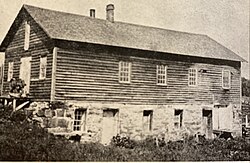
John Brown's Tannery, in 1885

彼は家族と共にオハイオ州やマサチューセッツ州、ニューヨーク州へと拠点を移しながら、奴隷解放のための活動を広げていきました。特にマサチューセッツ州スプリングフィールド時代には、地下鉄道(逃亡奴隷を支援する秘密ネットワーク)の急進的な対抗組織である「サブテラニアン・パスウェイ」に関わり、武力による解放の準備を始めていました。
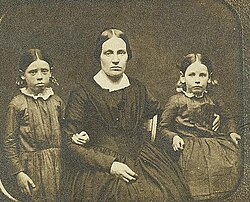
Mary Ann Brown (née Day), wife of John Brown, married in 1833, with Annie (left) and Sarah (right) in 1851
A daguerreotype of Brown taken by African-American photographer Augustus Washington in Springfield, Massachusetts, c. 1846–1847. Brown is holding the hand-colored flag of Subterranean Pass Way, his militant counterpart to the Underground Railroad.[88]

ニューヨーク州ノースエルバに定住したブラウンは、そこで農場を経営しながら、自身の信念を揺るぎないものにしていきました。
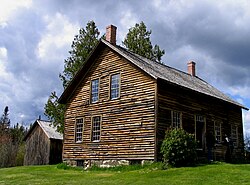
John Brown's farmhouse, North Elba, New York, now a historic site and National Historic Landmark

カンザスでの激突と「血のカンザス」

1850年代、カンザス準州では奴隷制を認めるか否かを巡り、激しい対立が起きていました。ブラウンはこの地へ赴き、親奴隷派に対する武力闘争を展開します。ポッタワトミーでの虐殺事件など、彼の過激な行動は地域を混乱に陥れましたが、同時に奴隷制反対派には強力なリーダーとして映りました。
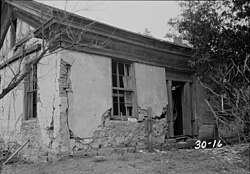
William Maxon's house, near Springdale, Iowa, where John Brown's associates lived and trained, 1857–1859. Brown lived at the home of John Hunt Painter, less than a mile away.

彼はパルミラやオサワトミーといった地で戦い、自由な州としてのカンザスを確立させるために奔走しました。この時期の活動は、単なる政治的対立を超えた「聖戦」としての性格を帯びていました。
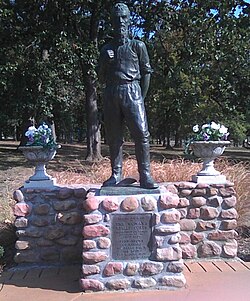
A statue of Brown is in front of the John Brown Museum in Osawatomie, Kansas.

ハーパーズ・フェリー襲撃:運命の計画

ブラウンの最終的な目標は、南部全域で大規模な奴隷反乱を巻き起こすことでした。そのための拠点として彼が選んだのが、バージニア州のハーパーズ・フェリーにある連邦兵器庫でした。武器を奪取し、奴隷たちに配ることで解放戦争を開始させるという大胆な計画です。

この計画には、北部の有力な廃止論者たち(シークレット・シックス)からの資金援助や、カナダでの憲法制定会議を通じた政治的な裏付けがありました。
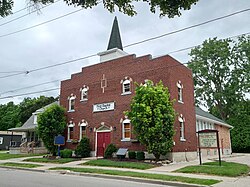
First Baptist Church in Chatham, Ontario, where John Brown's 1858 convention took place

しかし、1859年10月の襲撃は失敗に終わります。米海兵隊による激しい攻撃を受け、ブラウンと彼の仲間たちは追い詰められました。
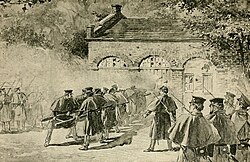
1897 illustration of U.S. Marines attacking John Brown's "Fort"
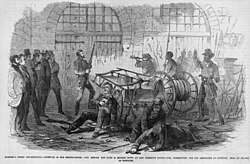
Illustration of the interior of the Fort immediately before the door is broken down. Note hostages on the left.

最終的にブラウンは捕らえられ、バージニア州知事ヘンリー・A・ワイズらによる厳しい尋問を受けました。
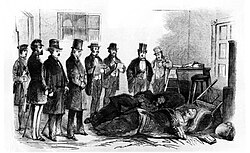
Brown has just been captured and is interrogated by Virginia Gov. Henry A. Wise and others, October 18, 1859.

裁判、処刑、そして伝説へ

チャールズタウンで行われた裁判で、ブラウンは反逆罪と殺人罪で死刑判決を受けました。彼は法廷を自らの信念を世に知らしめる演壇として利用し、堂々とした態度で自らの正当性を主張しました。
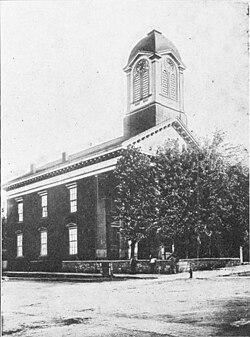
The old Court House at Charles Town, Jefferson County, Virginia, where John Brown was tried; it stands diagonally across the street from the jail (c. 1906).
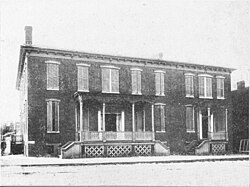
Two houses in Charles Town. The one on the right was the Jefferson County Jail, where John Brown was imprisoned during and after his trial. It has been torn down and is now the site of the Charles Town post office.

1859年12月2日、彼は絞首刑に処されました。処刑直前まで彼は冷静であり、看守に託した最後の手紙には、自らの死が奴隷制を終わらせるための犠牲となることへの確信が綴られていました。
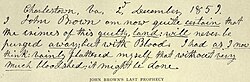
John Brown's last words, passed to a jailer on his way to the gallows. From an albumen print; location of the original is unknown.
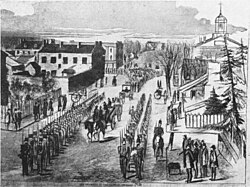
Brown sits on his coffin on his way to the gallows. Soldiers line up on both sides, to avoid a rescue.

彼の死後、遺体は故郷のニューヨーク州ノースエルバに運ばれ、静かに埋葬されました。
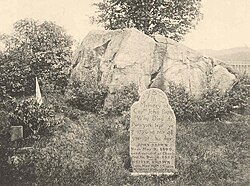
Brown's grave, 1896
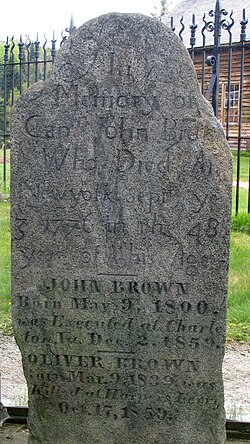
Brown's tombstone, North Elba, New York

歴史的評価と遺産

ブラウンの行動は、当時の社会に深刻な分断をもたらしました。南部の人々は彼を「狂信的なテロリスト」として恐れ、北部の多くの人々は彼を「自由の殉教者」として称えました。彼の物語は、後の歌「共和国の戦歌(Battle Hymn of the Republic)」や多くの芸術作品に影響を与えています。
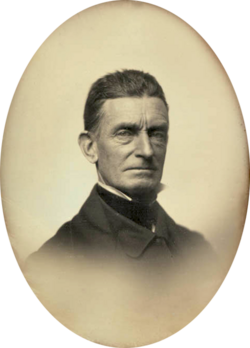
John Brown, quarter-plate daguerreotype, attributed to Southworth & Hawes, Winter 1856, Massachusetts Historical Society
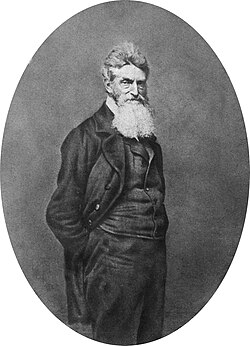
Three-quarter-length portrait of John Brown, salt print, reproduction of daguerreotype attributed to Martin M. Lawrence, May 1859
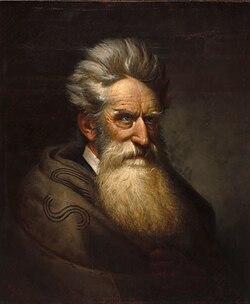
1872 portrait of Brown by Ole Peter Hansen Balling
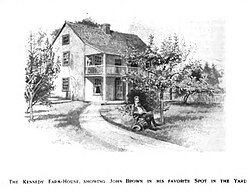
Kennedy Farmhouse, depicting Brown in his favorite spot in the yard, made posthumously in 1902
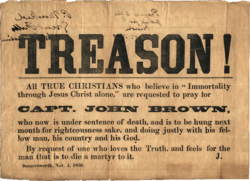
"Treason" Broadside, November 4, 1859. Somersworth.
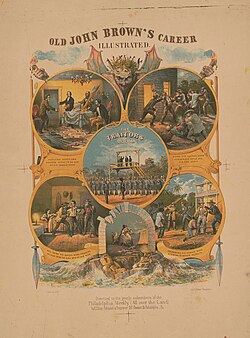
Old John Brown's Career, 1860 poster
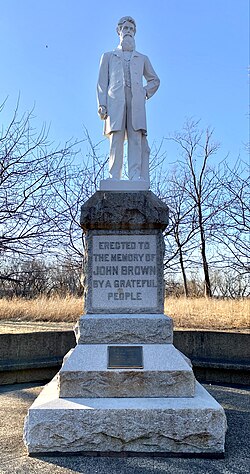
A life-sized white marble statue of John Brown is on the former campus of the Western University at the Quindaro Townsite in Kansas City, Kansas.
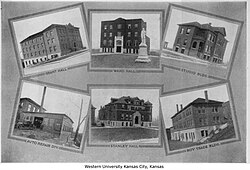
The Western University campus hosted the John Brown statue.
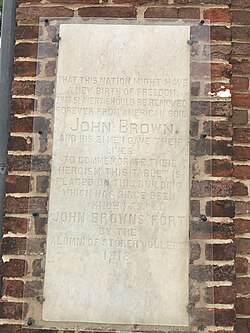
A plaque is on John Brown's Fort which says "That this nation might have; new birth of freedom that slavery should be removed forever from American soil John Brown and his 21 men gave their lives to commemorate their heroism this tablet is placed on this building which has since been known as John Brown's fort by the alumni of storer college 1918".
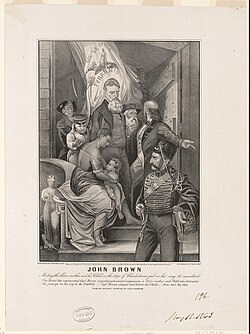
In a Currier and Ives print from 1863, John Brown is depicted as Christ-like, en route to his execution, with a black mother and her mulatto child. Above his head is the flag of Virginia, and its motto, Sic semper tyrannis.
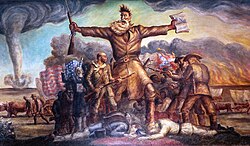
Brown is in Tragic Prelude, a mural in the Kansas State Capitol. He carries in one hand a Bible and in the other a Beecher's Bible rifle. Union and Confederate forces are fighting, with casualties. A tornado approaches in the background, as does a prairie fire, both common in Kansas.
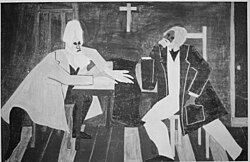
Frederick Douglass argued against John Brown's plan to attack the arsenal at Harpers Ferry is a painting by Jacob Lawrence.

また、彼が戦った地や住んでいた場所は現在、国立歴史公園や博物館として保存されており、人権と自由を求める闘いの象徴となっています。

彼がかつて目撃した、印刷機を焼く暴徒の光景のような不寛容な時代に、彼は自らの命を賭けて抗ったのでした。
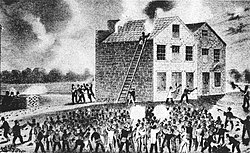
Wood engraving of the pro-slavery mob setting fire to Gilman & Godfrey's warehouse, where Elijah Parish Lovejoy hid his printing press
ジョン・ブラウンの生涯概要
項目 詳細
主な思想 キリスト教廃止論(武力による奴隷制撤廃)
主要な戦地 カンザス準州、ハーパーズ・フェリー(バージニア州)
罪状 バージニア州に対する反逆罪、殺人、奴隷反乱の扇動
没年・死因 1859年、絞首刑による処刑
埋葬地 ニューヨーク州ノースエルバ

Frequently Asked Questions

ジョン・ブラウンはなぜ武力行使を選んだのですか?

彼は、奴隷制という制度が絶対的な悪であり、平和的な説得や政治的な妥協では決して根絶できないと考えていたため、暴力的な手段こそが唯一の解決策であると信じていました。

ハーパーズ・フェリー襲撃の目的は何でしたか?

連邦兵器庫から武器を奪い、それを逃亡奴隷や反乱軍に提供することで、南部全域で大規模な奴隷解放戦争を引き起こすことを目的としていました。

彼は南北戦争に直接参加しましたか?

いいえ、南北戦争が始まる前の1859年に処刑されたため、直接的な参戦はしていません。しかし、彼の行動が南北の対立を決定的なものにし、戦争の引き金の一つとなりました。

現代において彼はどのように評価されていますか?

評価は分かれていますが、人種差別や奴隷制という巨大な悪に立ち向かった勇気ある人物として、あるいは法治主義を破壊した過激派として、歴史的な議論の対象であり続けています。

「シークレット・シックス」とは誰のことですか?

ブラウンの計画を財政的・政治的に支援した北部の有力な廃止論者6人のグループを指します。

References

  1. John Brown moved his grandfather's tombstone to in . In 1857, Brown stated that he descended from , one of the , who landed from the at , in 1620. There are some historians that believe that his ancestor was Peter Brown, who arrived in Connecticut in 1650.
  2. Brown was said by Sanbord to have been the fourth of eight children, but it's not clear who the other children of Owen and Ruth were and if the eight children included their adopted son Levi.
  3. Brown eventually listed surveyor's implements in his will.
  4. Snodgrass said that he lived in (nearby) .
  5. According to a Pennsylvania friend who visited him in jail in just before his execution, he mentioned that , was important to him because two of his children and his wife were buried there.
  6. Later, in 1852, Brown received five first prizes for his sheep and cattle at the Ohio State Fair.
  7. In the Bible, was the place where only the bravest of gathered to face an invading enemy. Brown founded the League with the words, "Nothing so charms the American people as personal bravery. [Blacks] would have ten times the number [of white friends than] they now have were they but half as much in earnest to secure their dearest rights as they are to ape the follies and extravagances of their white neighbors, and to indulge in idle show, in ease, and in luxury."
  8. Brown gave his rocking chair to the mother of his beloved black porter, Thomas Thomas, as a gesture of affection when he moved away from Springfield.
  9. Brown's wife Mary refused to relocate to Kansas.

📸 フォトギャラリー

The house in which Brown was born, in Torrington, Connecticut, was photographed in 1896 and destroyed by fire in 1918.[17][18][19]
John Brown's Tannery, in 1885
Mary Ann Brown (née Day), wife of John Brown, married in 1833, with Annie (left) and Sarah (right) in 1851
Wood engraving of the pro-slavery mob setting fire to Gilman & Godfrey's warehouse, where Elijah Parish Lovejoy hid his printing press
A daguerreotype of Brown taken by African-American photographer Augustus Washington in Springfield, Massachusetts, c. 1846–1847. Brown is holding the hand-colored flag of Subterranean Pass Way, his militant counterpart to the Underground Railroad.[88]
John Brown's farmhouse, North Elba, New York, now a historic site and National Historic Landmark
John Brown, quarter-plate daguerreotype, attributed to Southworth & Hawes, Winter 1856, Massachusetts Historical Society
Three-quarter-length portrait of John Brown, salt print, reproduction of daguerreotype attributed to Martin M. Lawrence, May 1859
William Maxon's house, near Springdale, Iowa, where John Brown's associates lived and trained, 1857–1859. Brown lived at the home of John Hunt Painter, less than a mile away.
First Baptist Church in Chatham, Ontario, where John Brown's 1858 convention took place
1872 portrait of Brown by Ole Peter Hansen Balling
1897 illustration of U.S. Marines attacking John Brown's "Fort"
Kennedy Farmhouse, depicting Brown in his favorite spot in the yard, made posthumously in 1902
Illustration of the interior of the Fort immediately before the door is broken down. Note hostages on the left.
Brown has just been captured and is interrogated by Virginia Gov. Henry A. Wise and others, October 18, 1859.
"Treason" Broadside, November 4, 1859. Somersworth.
The old Court House at Charles Town, Jefferson County, Virginia, where John Brown was tried; it stands diagonally across the street from the jail (c. 1906).
Two houses in Charles Town. The one on the right was the Jefferson County Jail, where John Brown was imprisoned during and after his trial. It has been torn down and is now the site of the Charles Town post office.
John Brown's last words, passed to a jailer on his way to the gallows. From an albumen print; location of the original is unknown.
Brown sits on his coffin on his way to the gallows. Soldiers line up on both sides, to avoid a rescue.
Brown's grave, 1896
Brown's tombstone, North Elba, New York
Old John Brown's Career, 1860 poster
A life-sized white marble statue of John Brown is on the former campus of the Western University at the Quindaro Townsite in Kansas City, Kansas.
The Western University campus hosted the John Brown statue.
A statue of Brown is in front of the John Brown Museum in Osawatomie, Kansas.
A plaque is on John Brown's Fort which says "That this nation might have; new birth of freedom that slavery should be removed forever from American soil John Brown and his 21 men gave their lives to commemorate their heroism this tablet is placed on this building which has since been known as John Brown's fort by the alumni of storer college 1918".
In a Currier and Ives print from 1863, John Brown is depicted as Christ-like, en route to his execution, with a black mother and her mulatto child. Above his head is the flag of Virginia, and its motto, Sic semper tyrannis.
Brown is in Tragic Prelude, a mural in the Kansas State Capitol. He carries in one hand a Bible and in the other a Beecher's Bible rifle. Union and Confederate forces are fighting, with casualties. A tornado approaches in the background, as does a prairie fire, both common in Kansas.
Frederick Douglass argued against John Brown's plan to attack the arsenal at Harpers Ferry is a painting by Jacob Lawrence.