古代エジプトの神々の中でも、ひときわ強い存在感を放つのがイシスです。彼女は単なる一地方の神ではなく、母性、魔術、王権、そして死後の再生を司る万能の女神として、数千年にわたり崇拝されました。その影響力はエジプトの国境を越え、ギリシャやローマの世界へと広がり、後世の宗教観にも深い足跡を残しています。
主要な事実(Key Facts)
- 正体: ゲブ(地神)とヌト(天空神)の娘であり、オシリスの妻、ホルスの母。
- 役割: 魔術、知恵、母性、王権の保護、そして死者の再生を司る。
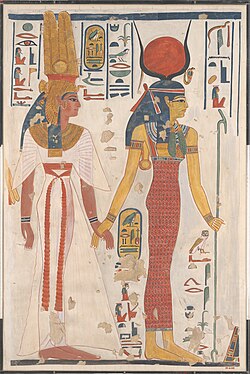
- 象徴: 「ティエト(イシスの結び目)」という独特のシンボルを持つ。
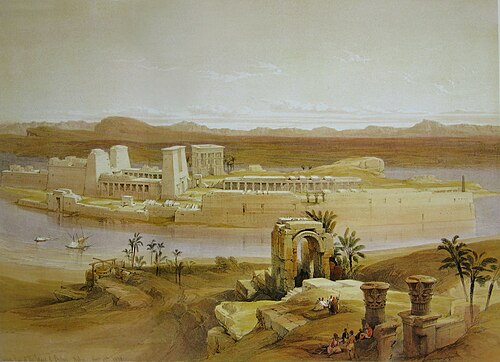
- 聖地: フィラエ神殿やベブベイト・エル・ハガルが主要な信仰の中心地であった。
- 拡散: ヘレニズム時代を経てローマ帝国全域に広まり、普遍的な女神として崇拝された。
イシスの神話的役割と多面的な性質
献身的な妻として、そして嘆き悲しむ者として
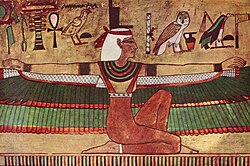
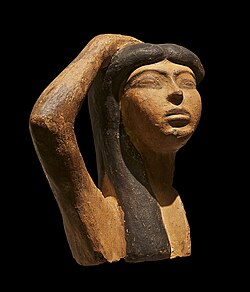
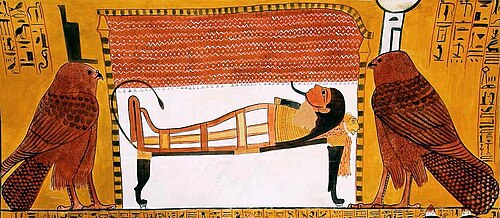
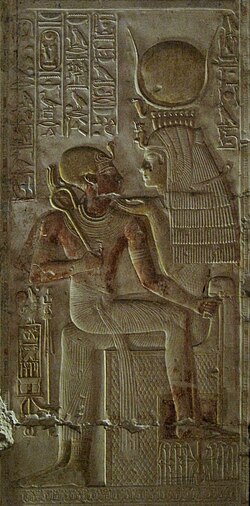
イシスの物語で最も中心となるのは、夫オシリスとの関係です。弟セトによって殺害され、バラバラにされたオシリスを、彼女は不屈の精神で探し出し、再び繋ぎ合わせました。この「死からの再生」というテーマは、彼女を死後の世界における強力な守護者たらしめました。
慈愛に満ちた母性と王権の守護
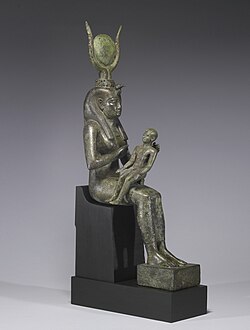
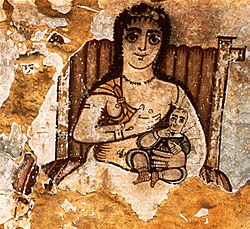
イシスは、息子ホルスをセトの脅威から守り抜き、彼を正当な王として育て上げました。このため、彼女は単なる母親ではなく、王権の正当性を保証する女神として、歴代のファラオから絶大な支持を得ました。また、乳育する姿は、あらゆる人々を包み込む普遍的な母性の象徴となりました。
魔術と知恵の権化
彼女は神々の中でも最高峰の魔術的知識を持つとされ、その知恵を用いて運命さえも変える力を持つと信じられていました。天空の女神としての側面も持ち、宇宙の秩序を維持する役割を担っていました。
信仰の変遷と世界への広がり
エジプト国内での崇拝
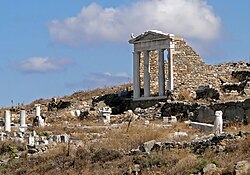
エジプトでは、王室のみならず一般市民の間でも深く信仰されていました。特にフィラエ神殿は、彼女の信仰の拠点として長く栄え、巡礼者が絶えない聖地となりました。
ギリシャ・ローマ世界への浸透
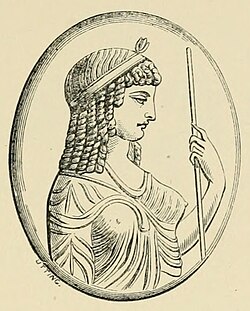
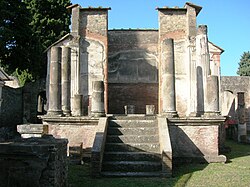
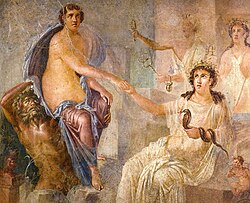
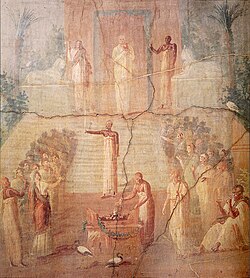
アレクサンドロス大王の遠征以降、イシスの信仰は地中海世界へと波及しました。ギリシャ・ローマの人々は、彼女をアフロディーテやデメテルといった自国の女神と習合させ、「万能の女神」として受け入れました。ポンペイなどの都市にも彼女の神殿が建てられ、秘儀的な入信儀礼を伴う個人崇拝が流行しました。
後世への影響と図像の変化
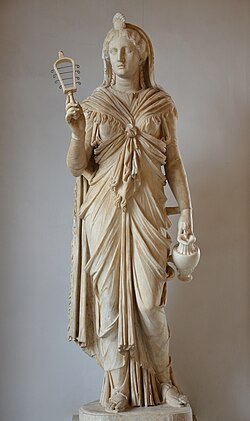
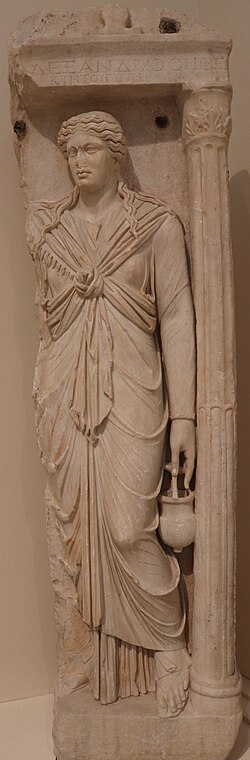
ローマ時代のイシス像は、エジプト伝統の姿から、よりギリシャ的な衣装や持ち物(シストルムという楽器や水差しなど)を持つ姿へと変化しました。また、幼い子供を抱く彼女の図像は、後のキリスト教における聖母子像の形成に影響を与えた可能性が指摘されています。
イシス神の基本データまとめ
| 項目 | 詳細 |
|---|---|
| 親 | ゲブ、ヌト |
| 配偶者 | オシリス、ミン、セラピス、ホルス(長兄) |
| 子供 | ホルス、ミン、ホルスの四息子、バステト |
| 主要シンボル | ティエト(Tyet) |
| 主要聖地 | フィラエ、ベブベイト・エル・ハガル |
よくある質問(FAQ)
イシスはどのような力を持つ女神でしたか?
彼女は強力な魔術と知恵を司り、死者を蘇らせる力や、王を保護し正当な権力を与える力を持つとされていました。また、母性的な慈愛で人々を救う万能の女神として崇拝されました。
オシリス神との関係について教えてください。
イシスはオシリスの妻であり、彼がセトに殺害された後、その遺体を回収して復活させた献身的なパートナーです。この物語はエジプト神話における再生と復活の象徴となっています。
なぜローマ帝国でまで人気が出たのですか?
彼女が持つ「救済」や「母性」という普遍的なテーマが、当時の人々にとって魅力的だったためです。また、特定の階級に限らず、女性や奴隷を含む幅広い人々が救いを求めて彼女の秘儀に惹かれました。
イシスの象徴である「ティエト」とは何ですか?
「イシスの結び目」とも呼ばれるアミュレット(お守り)で、女神の保護と生命力を象徴しています。アンク(生命の鍵)に似た形状をしており、魔除けや幸運の象徴として用いられました。
References
- : 𓊨𓏏𓆇𓁐, : Ꜣūsat; : Ⲏⲥⲉ, romanized: Ēse; : Ἶσις; : 𐦥𐦣𐦯, romanized: Wusa or Wos[a]; : 𐤀𐤎, romanized: ʾs
- The worship of a particular god, such as Isis, within ancient Egyptian religion is termed a "". The same is often true for the worship of individual gods within Greek or Roman religion. Classicists sometimes refer to the veneration of Isis, or of certain other deities who were introduced to the Greco-Roman world, as "religions" because they were more distinct from the culture around them than the cults of Greek or Roman gods. However, these cults did not form the kind of independent, self-contained communities with distinct worldviews that and groups in the Roman Empire did. and have both argued that the worship of Isis should be called a "cult", because it formed a part of the wider systems of Greek and Roman religion, rather than an independent, all-encompassing system of beliefs like Judaism or Christianity.
- Originally the first consonant in the name, ꜣ, was pronounced as r or l. By the time of the it had weakened to a sound, and the t at the end of words had disappeared from speech, so in the New Kingdom the pronunciation of Isis's name was similar to Usa. Forms of her name in other languages all descend from this pronunciation. The Meroitic forms of her name, 𐦥𐦣𐦯 Wos[a] or 𐦠𐦯 As[a], indicate the pronunciation /uːɕa/.
- These figurines, which were common in Roman Egypt, are often thought to depict Isis or Hathor combined with Aphrodite, but it is not even certain that they represent a goddess. The exposed genitals may represent fertility or be meant to ward off evil.
- Scholars have traditionally believed, based on the writings of , that Philae was closed in about 535 CE by a military expedition under . Jitse Dijkstra has argued that Procopius's account of the temple closure is inaccurate and that regular religious activity there ceased shortly after the last date inscribed at the temple, in 456 or 457 CE. Eugene Cruz-Uribe suggests instead that during the fifth and sixth centuries the temple lay empty most of the time, but Nubians living nearby continued to hold periodic festivals there until well into the sixth century.
- Tiberius's expulsion of the Egyptian cults was part of a broader reaction against religious practices that were regarded as a threat to order and tradition, including Judaism and . , a Roman-Jewish historian who gives the most detailed account of the expulsion, says the Egyptian cults were targeted because of a scandal in which a man posed as Anubis, with the help of Isis's priests, in order to seduce a Roman noblewoman. Sarolta Takács casts doubt on Josephus's account, arguing that it is fictionalized in order to convey a moral point.
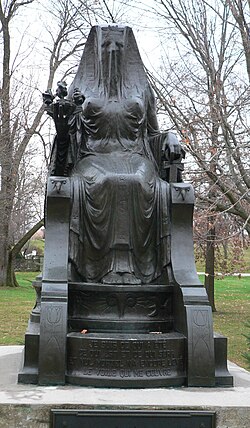
- The statue was at a temple in , Neith's cult center. She was largely conflated with Isis in Plutarch's time, and he says the statue is of "Athena [Neith], whom [the Egyptians] consider to be Isis". Proclus's version of the quotation says "no one has ever lifted my veil," implying that the goddess is virginal. This claim was occasionally made of Isis in Greco-Roman times, though it conflicted with the widespread belief that she and Osiris together conceived Horus. Proclus also adds "The fruit of my womb was the sun", suggesting that the goddess conceived and gave birth to the sun without the participation of a male deity, which would mean it referred to Egyptian myths about Neith as the mother of Ra.
- This knot is sometimes called the "Isis-knot", although it should not be confused with the tyet symbol, which is also sometimes called the "knot of Isis".
- The mystery rites may have emerged as part of the Hellenization of Isis under the Ptolemies in the third century BCE, in Greece under the influence of the cult of Demeter in the first century BCE, or as late as the first or second century CE. Even after the initiation ceremony had developed, few texts in Egypt referred to it.
- Early modern illustrations of Isis as nature often showed her with multiple breasts. Originally, the that was worshipped at was depicted with round protuberances on her chest that came to be interpreted as breasts. Early modern artists drew Isis in this form because Macrobius claimed that both Isis and Artemis were depicted this way.
📸 フォトギャラリー