古代メソポタミアの広大な大地において、最も強烈な個性を持ち、人々から崇拝されたのがイナンナ(アッカド語ではイシュタル)です。彼女は単なる愛の女神ではなく、戦いという相反する破壊的な力をも司る「天の女王」として君臨しました。金星という天体と結びつき、文明の根源的な力である「メ」を操る彼女の物語は、後のギリシャ神話のアフロディーテやローマ神話のウェヌスにも深い影響を与えています。
主要な事実(Key Facts)
- 司る領域: 愛、性愛、豊穣、そして戦争。
- 象徴: 8角星(または6角星)、ライオン、葦の結び目、バラ、鳩。
- 対応する天体: 金星(明けの明星および宵の明星)。
- 主要な聖地: ウルク、アガデ、ニネヴェ。
- 親族関係: 父はナンナ(またはアン、エンリル)、兄に太陽神ウトゥ、姉に冥界の女王エレシュキガルを持つ。
神格の形成と信仰の広がり
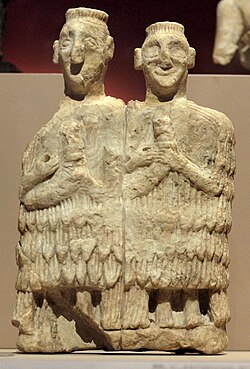
イナンナの信仰は、紀元前3100年頃のジェムデト・ナスル期から既に確認されており、ウルクなどの都市国家において重要な役割を果たしていました。当時の印章には、各地から彼女へ捧げられた供物の記録が刻まれており、都市を越えた広範な崇拝ネットワークが存在していたことが分かります。
彼女の聖域であるウルクの「エ・アンナ(天の家)」では、多くの儀式が行われました。特に、彼女に捧げられた供物を描いた「ウルクの花瓶」などの遺物は、当時の信仰の厚さを物語っています。
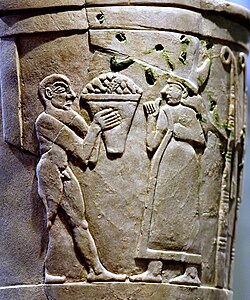
![The Uruk Vase (Warka Vase), depicting votive offerings to Inanna (3200–3000 BCE)[23]](/images/6c/85/6c852ba9ec038f0474e1c23c90de34a56bc64b600480660a7700b6461bcbd8f1.jpg)
時代が進み、シュメール文化がアッカド文化へと融合すると、彼女は「イシュタル」という名で呼ばれるようになります。この過程で、彼女の持つ「愛」と「戦い」という二面性がより強調され、王権を正当化する強力な守護神としての地位を確立しました。
![Tablet of Lugal-kisalsi. The symbol for Inanna is in the 2nd column from the right. [33]](/images/02/34/02349914e7b686211178c29fd2735489104212abb13a529714be53d386699230.jpg)
象徴的な図像と属性
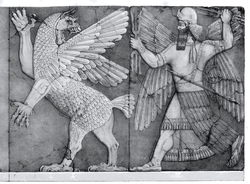
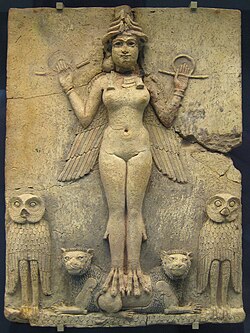
イナンナ(イシュタル)は、しばしばライオンにまたがる姿や、武器を携えた戦士のような姿で描かれます。これは彼女が持つ破壊的な権能と、王に対する支配力を象徴しています。また、彼女の奉仕者であるニンシュブールが傍らに控える構図も一般的です。
![Ancient Akkadian cylinder seal depicting Inanna resting her foot on the back of a lion while Ninshubur stands in front of her paying obeisance, c. 2334–2154 BCE[97]](/images/25/04/2504e9994240bb1cb9793e036d475ced5f108e900c6cfa056fb7d3974b01d296.jpg)
彼女の象徴である金星は、夜空で最も輝く星であり、その周期的な出現と消失は、彼女の神話的な旅(特に冥界への降下)と深く結びついていたと考えられています。
神話に見るドラマチックな物語
文明の力「メ」の強奪
イナンナは知恵の神エンキから、文明を維持するために不可欠な聖なる力「メ」(法、王権、技術、芸術などの概念)を巧みに盗み出しました。これにより、彼女は単なる女神ではなく、人間社会のあらゆる側面を支配する権限を手に入れたとされています。
ドゥムジとの愛と別れ
羊飼いの神ドゥムジとの情熱的な恋愛と結婚の物語は、古代メソポタミアで非常に人気がありました。しかし、この愛は永遠ではなく、後の悲劇へと繋がります。
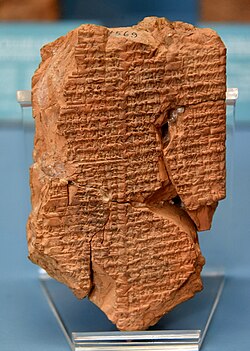
冥界への降下と再生
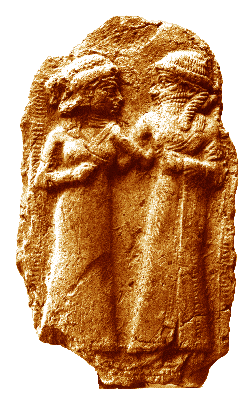
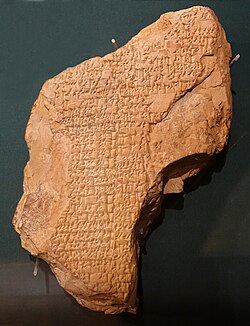
最も有名な神話の一つが、姉エレシュキガルの支配する冥界への旅です。イナンナは地上と冥界の支配権を巡り、あるいは死の理を理解するために地下世界へ降りましたが、そこで死を迎えます。最終的に彼女は救出されますが、代償としてドゥムジが冥界へ連行されることになりました。
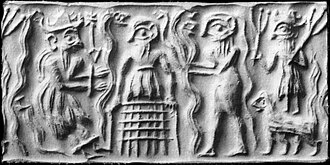
![Akkadian cylinder seal from c. 2300 BCE or thereabouts depicting the deities Inanna, Utu, Enki, and Isimud[212]](/images/5d/51/5d51e6caa8c9cd788b013b370fb53235532ca0dfd863f92d1817ea67e78bbaeb.jpg)
ギルガメシュ叙事詩における役割
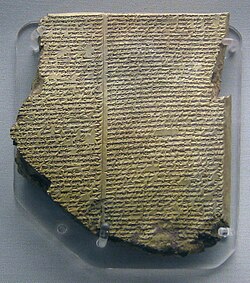
人類最古の物語とされる『ギルガメシュ叙事詩』において、イシュタルはギルガメシュに求婚しますが、拒絶されたことに激怒し、天の牡牛を地上に送り込んで街を破壊させようとします。ここには、彼女の気まぐれで激しい情熱と、拒絶に対する容赦ない報復心が見て取れます。
![Ancient Mesopotamian terracotta relief showing Gilgamesh slaying the Bull of Heaven, sent by Ishtar in Tablet VI of the Epic of Gilgamesh after he spurns her amorous advances[322]](/images/f1/41/f141d54eced2f7c9fe5c66959652ee62823036a7ba72502ad368c798fc8bf6b3.jpg)
後世への影響とシンクレティズム
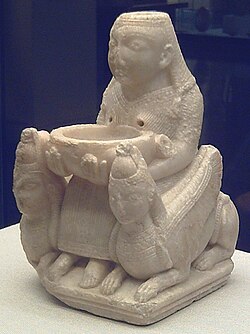
イナンナ(イシュタル)の神格は、近隣の文化圏に浸透し、さまざまな女神へと変容しました。カナン地方のアスタルテ、ギリシャのアフロディーテ、ローマのウェヌスなどは、すべて彼女の系譜を継ぐものと考えられています。
![Altar from the Greek city of Taras in Magna Graecia, dating to c. 400 – c. 375 BCE, depicting Aphrodite and Adonis, whose myth is derived from the Mesopotamian myth of Inanna and Dumuzid[360][361]](/images/49/c1/49c16373fe263481388d3c9f00556bd5e2fffd9cedb6a062fd3f588a99ec3a60.jpg)
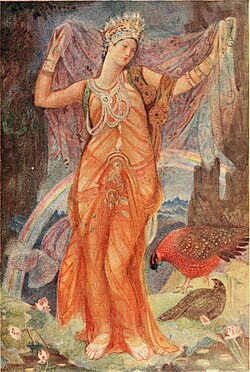
近代においても、彼女のイメージは詩や文学、そして現代のネオパガニズムなどの精神的な再構築の中で生き続けています。
![Illustration of Ishtar's Midnight Courtship from Leonidas Le Cenci Hamilton's 1884 book-length poem Ishtar and Izdubar, loosely based on George Smith's recent translation of the Epic of Gilgamesh[383]](/images/42/80/4280f4fcde12e2b8e69ce1c3a968cc3083232066c88324829f51390528f3bef7.jpg)
神格の概要まとめ
| 項目 | 詳細 |
|---|---|
| 主な役割 | 愛、性、戦争、豊穣の女神 |
| 天体 | 金星 |
| 主要シンボル | 8角星、ライオン、バラ |
| 主要聖地 | ウルク(エ・アンナ神殿) |
| 関連神 | ドゥムジ(配偶者)、エレシュキガル(姉) |
| 後世の対応神 | アスタルテ、アフロディーテ、ウェヌス |
Frequently Asked Questions
イナンナとイシュタルの違いは何ですか?
基本的に同一の神格を指します。イナンナはシュメール語での名称であり、イシュタルはアッカド語(およびバビロニア、アッシリア)での名称です。文化の融合に伴い、名称と属性が統合されました。
なぜ「愛」と「戦争」という正反対の力を司っているのですか?
古代の人々は、愛の情熱と戦争の激しさを、どちらも人間を突き動かす強烈な「衝動」や「情熱」として捉えていたためと考えられています。彼女は秩序よりも、激しい感情や変化を象徴する神でした。
「メ」とは具体的にどのようなものですか?
「メ」とは、文明を成立させるための神聖なルールや能力のことです。例えば「王権」や「法」といった社会制度から、「織物」や「執筆」といった技術まで、人間社会を機能させるあらゆる要素が含まれていました。
冥界への降下物語にはどのような意味がありますか?
この物語は、季節の移り変わり(豊穣と枯渇)や、生と死の不可避なサイクルを象徴していると解釈されています。また、最高神に近い存在であっても死の法からは逃れられないという宗教的な教訓も含まれています。
彼女はどのような動物と結びついていますか?
最も代表的なのはライオンです。ライオンは強さと勇猛さの象徴であり、戦いの女神としての彼女の権威を視覚的に表現しています。
References
- ; : 𒀭𒈹, romanized: INANA vocalized as: Inanak, also 𒀭𒊩𒌆𒀭𒈾, nin-an-na
- ; : 𒀭𒀹𒁯, romanized: ištar,
- With exception of and who use the name Ishtar, all others texts use the name/are about Inanna.
- modern-day Warka, Biblical
- é-an-na means 'sanctuary' ('house' + 'Heaven' [An] + genitive)
- "According to Graham Cunningham (1997: p. 171) incantations are connected with 'forms of symbolic identification', and it seems obvious that symbolic identitification with some goddesses relates to their divine function or domain, e.g. ... sex and love related matters with Inana and Nanaya ... ." — J.M. Asher-Greve (2013, p. 242)
- disagrees that the Akkadian poem only summarizes or distorts the Sumerian poem, although there is no doubt of the intertextual relations.
- After being discussed for a long time the meaning of me has now been clarified as 'rituals' by Annette Zgoll (2025, p. 145-149).
- Dumuzid's Dream is attested in seventy-five known sources, fifty-five of which come from , nine from , three probably from the region around , one each from , , , and .
- Abush proposes the thesis that Ishtar's proposal would be for Gilgamesh to become a worker in the world of the dead.
📸 フォトギャラリー