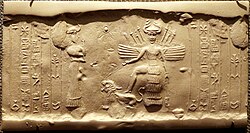
古代メソポタミアの精神世界を象徴する物語の一つに、天の女王イナンナ(アッカド語ではイシュタル)が死者の国へと降り立つ神話があります。この物語は、単なる神々の旅ではなく、権力への渇望、喪失、そして再生という普遍的なテーマを内包しています。彼女が冥界の支配者エレシュキガルに挑み、絶望的な状況からいかにして生還したのか、そのドラマチックな軌跡を辿ります。
物語の核心は、イナンナが自らの支配領域を広げるため、あるいは冥界の権力を奪うために、死者の国へと足を踏み入れる点にあります。しかし、生者の世界の女王であっても、死の国の法には抗えません。彼女は冥界の七つの門を通過するたびに、身に着けていた装飾品や衣服を一つずつ剥ぎ取られ、最終的に完全な裸体となって支配者の前に立たされることになります。
Key Facts
- 物語の主旨:天の女王イナンナが冥界へ降り、死を経験した後に生還する物語。
- 二つの主要版:より古く詳細な「シュメール語版」と、後に発見された「アッカド語版」が存在する。
- 代償の法則:冥界から脱出するためには、代わりに別の生きた人間を差し出さなければならない。
- 季節の象徴:夫ドゥムジの冥界への交代は、自然界の季節的なサイクル(冬と春)を象徴しているとされる。
神話の再構築:断片から蘇った物語
この神話は、一度に完全な形で発見されたわけではありません。1860年代にニネヴェやアッシュールで発見されたアッカド語版(約138行)が先駆けとなりました。その後、20世紀に入り、ニップルなどで出土したシュメール語版(約400行)の断片が、多くの研究者の手によってパズルのように組み合わされました。
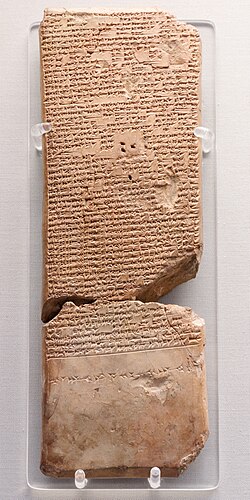
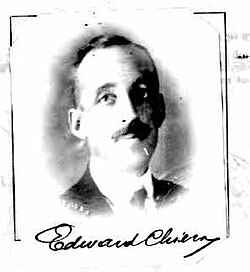
特に重要な役割を果たしたのが、エドワード・キエラによる断片の発見や、サミュエル・ノア・クレイマーによる再解釈です。かつてはギリシャ神話のオルフェウスのように「夫を救うために降りた」と考えられていましたが、研究が進むにつれ、実際には「権力拡大」が目的であり、夫のドゥムジは後から代償として連れ去られたことが判明しました。
言語による記述の違い
シュメール語版は「アンガルタ(大いなる空から)」という名称で知られ、より古風で詳細な描写が特徴です。一方のアッカド語版は、後世の文学的な洗練が見られ、死者の国の静寂や絶望感が強調されています。これらのテキストの統合により、私たちは数千年前の人間が抱いた死生観を垣間見ることができます。
登場人物と役割
物語を彩る神々は、それぞれが宇宙の秩序や自然の摂理を象徴しています。
- イナンナ / イシュタル:愛と戦いの女神。天の女王でありながら、冥界への挑戦という危うい旅に出る。
- エレシュキガル:冥界の女主人。イナンナの姉であり、死者の国の厳格な法を司る。
- エンキ:知恵の神。間接的にイナンナを救い出す策を講じる。
- ドゥムジ:イナンナの夫。生還の代償として冥界へ連行される。
- ゲシュティナンナ:ドゥムジの妹。兄を救うため、一年の半分を代わりに冥界で過ごすことを承諾する。
![The Burney Plaque, also known as Queen of the Night, most probably represents the goddess Ereshkigal.[22] British Museum, London.](/images/04/38/04386270563ab2a4c4751dfdaf1648e5c3b2ba33630203ba2d60f018e76dd175.jpg)
冥界の風景と象徴的意味
神話に描かれる冥界は、光のない暗黒の世界であり、死者は土を食らい、埃を纏って暮らす場所として描写されています。イナンナが門をくぐるたびに衣服を脱がされるプロセスは、生者が死に直面した際に、地上の地位や富、誇りといった「外装」をすべて失い、ありのままの存在になることを意味しています。
![Statuette of Ishtar in alabaster: 3rd–2nd centuries BC.[82] Musée du Louvre, Paris.](/images/08/f1/08f1ded52e0a099dcc5461c724c4817a31802dfd4f86f1fd7dd04177f8ff2365.jpg)
また、ドゥムジが冥界に囚われ、後に季節的に地上へ戻るという展開は、農作物の枯死と再生、すなわち季節の巡りを説明する自然神話としての側面を持っています。これは、後のギリシャ神話におけるペルセポネの物語とも強い類似性が見られます。
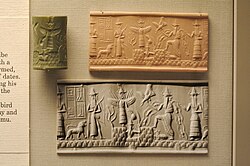
![Cylinder seal impression that could represent Dumuzi during his stay in the Underworld.[54] Emerging from a net, he is surrounded by two snakes and Gallu demons. British Museum, London.](/images/8e/4f/8e4f972f4ce4f584a6d5c586704b36c486166eb28b1081b86807951447287a0d.jpg)
文化的な影響と芸術への昇華
この物語は、聖書の一部の記述や、後世の芸術作品にも影響を与えました。例えば、19世紀の作曲家ヴァンサン・ダンディは、イナンナの冥界降下をテーマにした管弦楽組曲『イシュタル』を制作し、音楽を通じて彼女の喪失と再会を表現しました。
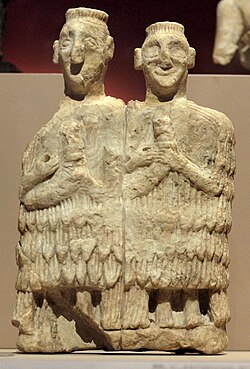
また、当時の人々にとってこの神話は、単なる物語ではなく、葬送儀礼や祈祷、祭礼と深く結びついた宗教的な指針であったと考えられています。
神話の概要まとめ
| 段階 | 出来事 | 象徴的な意味 |
|---|---|---|
| 降下 | 七つの門を通り、装飾品を失う | 社会的地位の喪失と死への準備 |
| 死 | エレシュキガルにより殺害される | 不可避な死の体験 |
| 復活 | エンキの助けで蘇る | 再生と生命の回復 |
| 代償 | 夫ドゥムジを冥界へ送る | 等価交換の法則と自然のサイクル |
Frequently Asked Questions
イナンナが冥界へ降りた本当の目的は何でしたか?
初期の解釈では夫を救うためとされていましたが、最新の研究(シュメール語版の再構築)によれば、自らの権力を拡大し、冥界の支配権に干渉することが目的であったとされています。
なぜ衣服を脱がされる必要があったのですか?
冥界の法に従い、地上の権威や所有物をすべて捨てることを意味しています。これは、死の前では誰もが平等であり、何も持たずに訪れるという死の絶対性を象徴しています。
ドゥムジはなぜ犠牲に選ばれたのですか?
冥界から生還するためには、代わりに誰かを残さなければならないというルールがありました。地上に戻ったイナンナは、自分を嘆かず祝っていたドゥムジの態度に怒り、彼を代償として指名しました。
この神話は現代の私たちに何を伝えていますか?
生と死の不可分な関係や、何かを得るためには何かを失わなければならないという代償の概念、そして冬から春への再生という自然の摂理を物語として伝えています。
シュメール語版とアッカド語版の最大の違いは何ですか?
シュメール語版はより古く、物語の分量が多く詳細です。アッカド語版は簡潔にまとめられており、文学的な表現や異なる文化的背景が反映されています。
References
- ↑ The concept of the "Me" is a uniquely Sumerian one. The "Me" is a set of capabilities, strengths, or powers that characterize the gods. They have no forms or outlines and integrate into reality through objects, laws, or even rituals. It is believed that they preside over the fate of humans and constitute the great forces that govern the cosmos, held by the gods.[41][39]
- ↑ The character of Ninshubur is sometimes identified as a masculine vizier of Inanna,[44] and at other times as a feminine assistant of the goddess.[42]
- ↑ The etymology of the term "Palace of Ganzer" remains uncertain. It has been postulated that this structure may be associated with the "Arallû," which translates to "Great Below," or the Sumerian term "Iri-Gal," which translates to "Great City."[45]
- ↑ Gugalana, or the "Bull of Heaven," is the first husband of Ereshkigal.[23]
- ↑ These include the myth of the Dream of Dumuzi, the lament of Inanna on the death of Dumuzi, and a text discovered in the ancient city of Ur.[55]
- ↑ The capture of Dumuzi can be seen as an illustration of the fears experienced by the inhabitants in the face of the threat posed by the mountain people. These were associated with demons (gallu) who were known to attack and plunder the villages of the low-lying plains of Mesopotamia.[24]
- ↑ Despite the differences between Descent of Inanna into the Underworld and Inanna and Enki, where the god Enki is hostile towards the goddess, historian Bendt Alster identifies significant "invariances" between the two myths. These include the conquest of new powers ("me") by Inanna and the journey of the goddess whose return is ensured by the magic of the god.
- ↑ Dina Katz posits that Inanna's Descent into the Underworld is a myth that draws upon well-established astronomical and seasonal phenomena. The initial section of the myth recounts Inanna's descent, which is primarily associated with the cycle of the planet Venus. Conversely, the death of Dumuzi is linked to the cycle of the seasons.
- ↑ The associated expansion refers to the introduction of supplementary material through the repetition of a phrase, which serves to extend the narrative at a specific moment and incorporates new events at the moment of Inanna's departure from the Underworld. This allows for the incorporation of new narrative elements in a seamless manner, without compromising the overall coherence of the narrative structure. In contrast, the technique of resumptive repetition is employed to resume the original narrative sequence after an interruption caused by an addition. This is achieved by repeating the phrase at the end of the insertion, thus marking the return to the original narrative and maintaining narrative coherence.
- ↑ The lamentations are of two forms: , which is a liturgical lament accompanied by cymbals and lyres, and , which is recited by mourners accompanied by a tambourine. Both forms are characterized by a repetitive composition.[68]
📸 フォトギャラリー