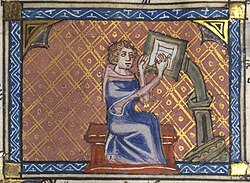
彩飾写本(さいしょくしゃほん)とは、文字の周囲に華やかな縁取りや精緻なミニチュア挿絵を施した、装飾的な手書き文書のことです。かつてはカトリック教会の祈祷書や典礼書、詩編などの宗教的な目的で主に制作されていましたが、13世紀以降は法律文書、憲章、目録、あるいは宮廷文学といった世俗的なテキストへとその範囲を広げていきました。
これらの写本は、単なる情報の記録手段ではなく、所有者の権威や信仰心を示す芸術作品としての側面を持っていました。現代の書籍のような形式であるコーデックス(冊子体)が一般的でしたが、一部では古くからの巻物形式や、希少なパピルスを用いた断片も現存しています。
Key Facts
- 素材の進化: 初期は羊皮紙が使われ、後に精製された子牛皮のヴェラムが高級写本の標準となった。
- 多様なサイズ: ポケットサイズの福音書から、複数人で運ぶ必要がある巨大な「アトランティック・バイブル」まで存在した。
- 制作体制の変化: 初期は修道士が一人で担っていたが、次第に専門の世俗ワークショップによる分業制へと移行した。
- グローバルな展開: ヨーロッパだけでなく、イスラム圏やユダヤ教の伝統においても独自の彩飾文化が発展した。
彩飾写本の歴史的展開
ラテン・ヨーロッパにおける発展
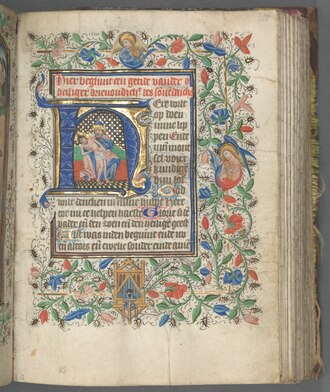
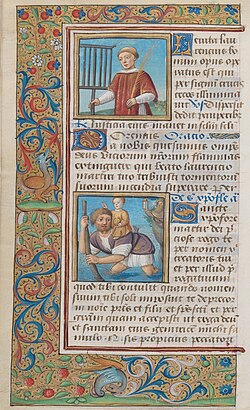
ゴシック時代に入ると、彩飾写本の生産量は飛躍的に増加しました。特に富裕層の間で個人蔵書を構築する文化が広まり、15世紀半ばのフィリップ・ル・ボールドのように、数百冊もの写本を所有した人物も現れました。中でも、個人の祈りの時間に合わせて構成された「時祷書(じとうしょ)」は、贅を尽くした装飾が施され、当時のステータスシンボルとなりました。
イスラム世界とギリシャ文化の融合
アラビア語の写本における装飾の起源は、9世紀のコーランに見られるフロントピース(扉絵)や見出しの装飾に遡ります。その後、ギリシャの科学的・技術的知見をアラビア語に翻訳する運動が起こり、天文学や医学の論文に挿絵が添えられるようになりました。12世紀から13世紀にかけては、ビザンチン美術の影響を受けたシリアやイラクの様式が融合し、独自の絵画的伝統が花開きました。
![Frontispiece of the Maqamat al-Hariri (1237 CE) depicting a ruler in Turkic dress (long braids, Sharbush fur hat, boots, fitting coat), possibly Baghdad.[16][17][18]](/images/55/50/555018bede2ebc446e9ac6d0b1b0f6101dbe95ea50c60d1793b4e226ef87e50b.jpg)
ユダヤ教の伝統と特異な表現
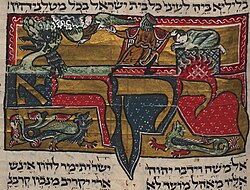
中世のユダヤ教写本には、人間が動物の頭を持つ「動物頭人(ズーセファリック)」として描かれる不思議な表現が見られます。これは偶像崇拝を禁じる教義を回避するための工夫であったという説がありますが、実際には人間の顔が描かれている例もあり、完全な理由は解明されていません。一方で、13世紀の「アンブロジアン・タナク」のように、聖書の登場人物を具体的に描写した貴重な写本も存在します。
制作工程と芸術的技法
執筆から装飾までの流れ
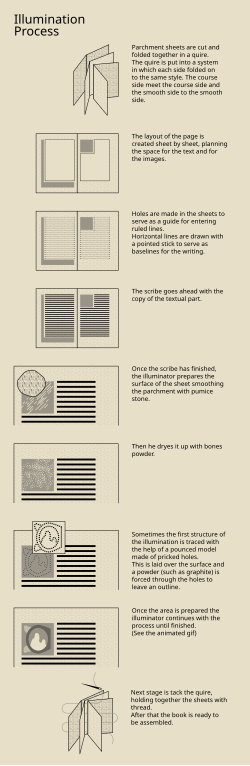
写本の制作は、まずテキストの執筆から始まり、その後に装飾が加えられるのが一般的でした。初期は修道士がすべてを担っていましたが、14世紀頃には専門の工房が登場し、分業化が進みました。複雑なデザインはあらかじめ蝋板(ろうばん)などで計画され、その後ヴェラムに転写されました。
彩飾の具体的ステップ(エングロッシング)
一枚のページを完成させるには、以下のような緻密な工程が必要でした。
- シルバーポイントによる下書きの作成。
- 金箔のドットを配置し、磨き上げる。
- ベースとなる色を塗り分ける。
- 縁取りの植物文様(リンソー)をペンで描く。
- 余白に人物や装飾的な図像を描き込み、細部を仕上げる。

色彩の源泉:天然顔料の世界
中世の絵師たちは、鉱物、植物、動物など自然界のあらゆる素材から色を抽出していました。
| 色 | 主な原材料・ソース |
|---|---|
| 赤 | 昆虫(ケルメス)、鉱物(辰砂・鉛丹)、酸化鉄(錆) |
| 黄 | 植物(ダイブダイオウ、ウコン)、鉱物(黄土) |
| 緑 | 銅の酢酸塩(緑青)、鉱物(孔雀石) |
| 青 | 植物(大青、インディゴ)、鉱物(ラピスラズリ、アズライト) |
| 白・黒 | 炭、焼いた骨や象牙、イカ墨(セピア) |
| 金・銀 | 金箔、銀箔、またはそれぞれの粉末 |
世界各地の彩飾写本コレクション
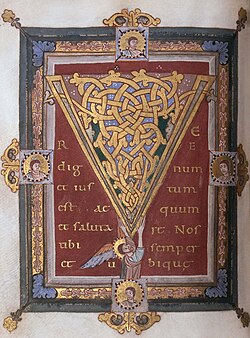
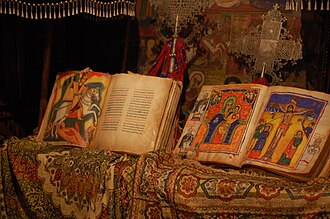
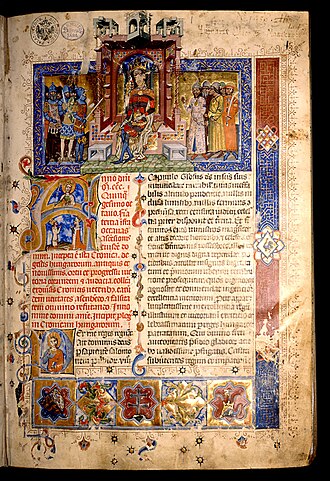
彩飾写本は、地域によって異なる美意識を反映しています。ビザンチン帝国の豪華な詩編から、エチオピア正教会の伝統的な写本、さらには日本の『平家物語』のような東洋の彩飾まで、人類の知的遺産として世界中に保存されています。
Frequently Asked Questions
羊皮紙(パーチメント)とヴェラムの違いは何ですか?
一般的に、羊皮紙は様々な動物の皮を加工したものを指し、ヴェラムは特に子牛の皮を使用した、より高品質で滑らかな素材を指します。ただし、現代の学者の間では、この二つを厳格に区別しない傾向があります。
なぜ「彩飾(Illuminated)」と呼ばれているのですか?
金箔や銀箔などの金属的な素材が使用されており、光を反射してページが「照らされた(Illuminate)」ように見えることから、このように呼ばれています。
写本は誰が作っていたのでしょうか?
初期の中世では、主に修道院の修道士たちが信仰心を持って制作していました。しかし、需要の増加に伴い、14世紀以降は都市部の世俗的な専門工房が主流となり、高度な分業体制で制作されるようになりました。
ユダヤ教の写本に動物の頭を持つ人間が描かれているのはなぜですか?
偶像崇拝を禁じる宗教的な制約(アニコニズム)を避けるための手法であったという説が有力ですが、人間として描かれている例も併存しているため、完全な理由は分かっていません。
時祷書(じとうしょ)とはどのような本ですか?
一日の特定の時間に行うべき祈りの内容をまとめた個人用の祈祷書です。非常に豪華な装飾が施されることが多く、中世後期の富裕層に絶大な人気を博した「ベストセラー」的な書籍でした。
References
- Kauffmann, Martin (26 July 2018). "Decoration and illustration". In Kwakkel, Erik; Thomson, Rodney (eds.). The European book in the twelfth century. Cambridge University Press. pp. 43–67. :10.1017/9781316480205.005. .
- Berenbeim, Jessica (2015). Art of documentation: documents and visual culture in medieval England. Text, image, context. Toronto: Pontifical Institute of Mediaeval Studies. .
- (1977). Late Antique and Early Christian book illumination. London: Chatto & Windus. .
- Laura Sînziana Cuciuc Romanescu (2020). "ILLUMINATED PAGES. A MIDDLE AGES TRIP IN THE FIELD OF COLOR". Revista Română de Studii Eurasiatice. 16 (1–2): 7–18. 1841-477X.
- Herodotus (5 March 1998), "Histories", in Waterfield, Robin; Dewald, Carolyn (eds.), Oxford World's Classics: Herodotus: The Histories, Oxford University Press, :10.1093/oseo/instance.00271233, , retrieved 12 December 2024
- Davenport, Cyril (1912). "Illuminated Manuscripts". Journal of the Royal Society of Arts. 60 (3087): 245–251. 0035-9114. 41339989.
- De Hamel, Christopher (2001). The British Library guide to manuscript illumination: History and techniques. Toronto: University of Toronto Press. .
- Brown, Michelle Patricia; Teviotdale, Elizabeth Cover; Turner, Nancy K. (2018). Understanding illuminated manuscripts: a guide to technical terms. Los Angeles: The J. Paul Getty Museum. .
- Mark, Joshua J. (30 January 2018). "Book of Kells". World History Encyclopedia. Retrieved 12 April 2024.
- "The Psalter as Scripture - Response - Seattle Pacific University". spu.edu. Retrieved 12 April 2024.
📸 フォトギャラリー