Lyman Spitzer played a major role in the birth of the Hubble Space Telescope project.
← ホームへ戻る
ハッブル宇宙望遠鏡NASA天文学宇宙観測深宇宙

ハッブル宇宙望遠鏡:宇宙の深淵を照らす人類の眼

🗓 2026年8月10日

地球の大気に邪魔されることなく、宇宙の真の姿を捉える。そんな人類の夢を具現化したのがハッブル宇宙望遠鏡(HST)です。1990年の打ち上げ以来、この望遠鏡は私たちが知る宇宙の概念を根本から塗り替え、数々の驚異的な発見をもたらしてきました。

その名付け親であり、宇宙の膨張を証明した天文学者エドウィン・ハッブルの精神を受け継ぎ、この観測装置は可視光だけでなく、紫外線や近赤外線という幅広い波長を用いて、遠方の銀河から太陽系内の詳細な現象までを鮮明に描き出しています。
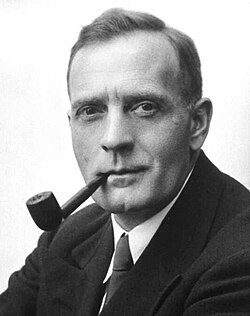
American astronomer Edwin P. Hubble (pictured in 1931), for whom the telescope is named.

Key Facts

  • 運用期間:1990年4月24日の打ち上げから36年以上にわたり現役で稼働中。
  • 観測能力:口径2.4メートルの主鏡を持ち、紫外線、可視光、近赤外線を観測可能。
  • 軌道:高度約470kmから480kmの低地球軌道を約95分で周回。
  • 特筆すべき功績:宇宙の年齢の推定、ブラックホールの存在証明、初期宇宙の銀河観測など。
  • メンテナンス:スペースシャトルによる5回のサービスミッションで機器の更新と修理を実施。

構想から誕生まで:困難を乗り越えたエンジニアリング

ハッブルの構想は、ライマン・スピッツァーら先駆的な科学者たちの情熱から始まりました。地上の望遠鏡では、大気の揺らぎや吸収によって光が歪んでしまいますが、宇宙空間に設置すれば、極めてシャープな画像が得られることが期待されていました。
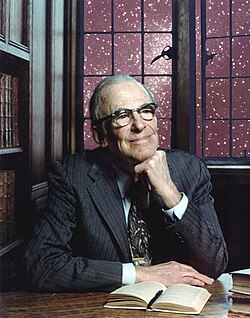
Lyman Spitzer played a major role in the birth of the Hubble Space Telescope project.

プロジェクトの推進には、ナンシー・グレース・ローマンのような強力なリーダーシップが不可欠でした。彼女の尽力により、予算の確保と設計の具体化が進み、最終的にロッキード・マーティン社が宇宙機を、パーキン・エルマー社が光学系を担当して製造されました。
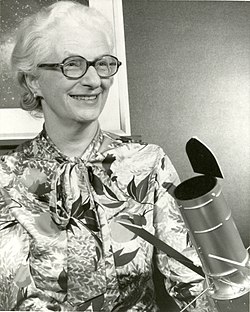
Nancy Grace Roman with a model of the Large Space Telescope that was eventually developed as the Hubble Space Telescope. While listed as a 1966 photo, this design was not the standard until the mid-1970s.

しかし、その道のりは平坦ではありませんでした。1986年のチャレンジャー号事故により打ち上げが大幅に遅延し、多くの技術的な調整を余儀なくされました。最終的に1990年4月24日、スペースシャトル・ディスカバリー号(STS-31)によって軌道へと運ばれました。
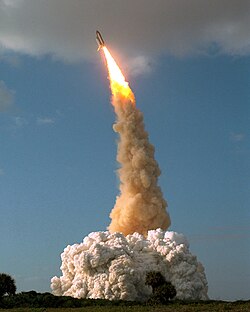
STS-31 lifts off, carrying Hubble into orbit

軌道投入後、ディスカバリー号から慎重に展開されたハッブルは、人類にとって史上最大の「眼」として活動を開始しました。
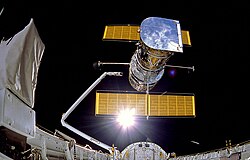
Hubble being deployed from Discovery in 1990.

光学的な危機と劇的な復活

運用開始直後、世界に衝撃が走りました。届いた画像が期待していたほど鮮明ではなかったのです。原因は、主鏡の形状にわずかな誤差(球面収差)があったことでした。これにより、光が一点に集中せず、ぼやけた像となっていました。
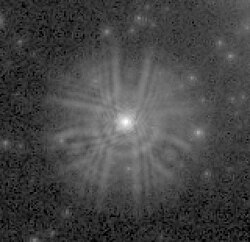
An extract from a WF/PC image shows the light from a star spread over a wide area instead of being concentrated on a few pixels.

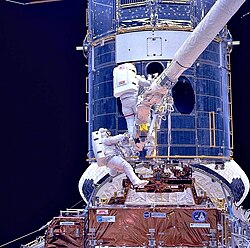
この致命的な欠陥を修正するため、NASAは「宇宙での視力矯正」という大胆な計画を立てました。1993年の第1回サービスミッション(SM1)において、宇宙飛行士たちがCOSTARと呼ばれる補正光学系を設置し、主鏡の誤差を打ち消すことに成功したのです。
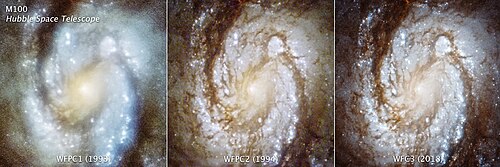
Spiral galaxy M100 as seen before corrective optics (left) and after
Astronauts Musgrave and Hoffman install corrective optics during SM1.

この修正により、ハッブルは本来の性能を取り戻し、それまで見たこともないほど鮮明な宇宙の姿を地球に送り届けることができるようになりました。その後も計5回のサービスミッションが行われ、最新のカメラや分光器へとアップデートされ続けました。
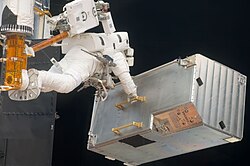
COSTAR being removed by astronaut Andrew J. Feustel during SM4 in 2009
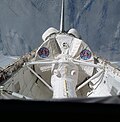
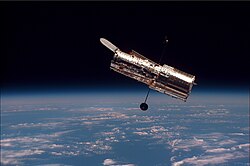
Hubble, as seen from Discovery during its second servicing mission

宇宙の謎を解き明かした主要な成果

ハッブルがもたらしたデータは、現代天文学の教科書を書き換えるほどの影響を与えました。特に、宇宙の膨張速度(ハッブル定数)の精密な測定により、宇宙の年齢をより正確に特定することが可能になりました。

また、銀河の中心に超大質量ブラックホールが存在することを実証し、暗黒物質(ダークマター)の分布や、遠方にある初期宇宙の銀河の形態を明らかにしました。太陽系内においても、木星に衝突したシューメーカー・レヴィ9彗星の衝撃跡を捉えるなど、ダイナミックな現象を記録しています。
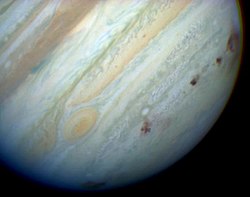
Brown spots mark Comet Shoemaker–Levy 9 impact sites on Jupiter's southern hemisphere

さらに、「ハッブル・ディープフィールド」などのプロジェクトでは、何もないように見える暗黒の空を長時間露光することで、数千もの遠方銀河がひしめき合っていることを証明し、宇宙の奥行きを視覚的に提示しました。
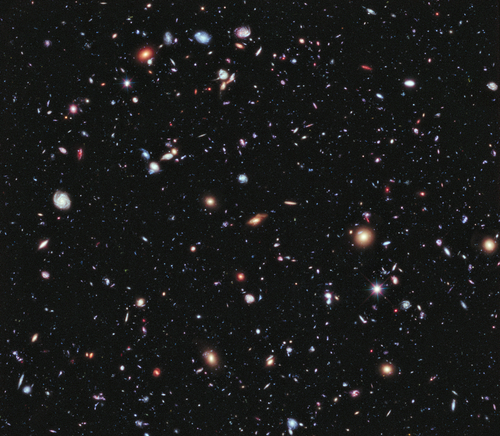
Hubble Extreme Deep Field image of space in the constellation Fornax

象徴的な画像である「創造の柱」は、星が誕生するガスと塵の柱を捉えたもので、宇宙のダイナミズムを世界中に知らしめることとなりました。
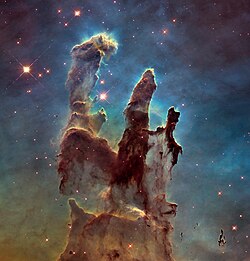
One of Hubble's most famous images, Pillars of Creation, shows stars forming in the Eagle Nebula.

技術仕様と観測システム

ハッブルはリッチー・クレチアン式反射望遠鏡を採用しており、2.4メートルの主鏡で光を集め、焦点距離57.6メートルという極めて高い精度で観測を行います。機体は全長13.2メートル、重量は約11トンに及びます。
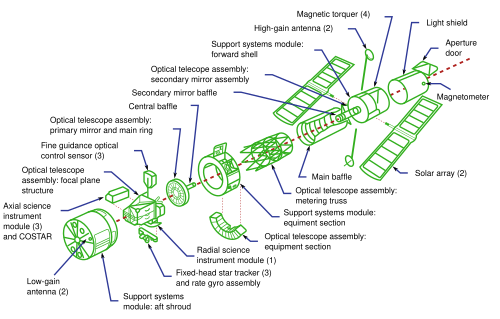
Exploded view of the Hubble Space Telescope

観測に使用される機器は時代とともに進化しました。初期のWFPC(広視野惑星カメラ)から、現在のWFC3(広視野カメラ3)に至るまで、より高感度で広範囲な波長を捉えることが可能になっています。
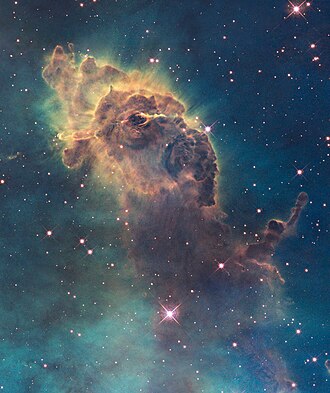
Some of the Carina nebula by WFC3

また、精密な姿勢制御を行うためのジャイロスコープや、電力を供給するニッケル水素電池などのシステムが、過酷な宇宙環境での長期運用を支えています。
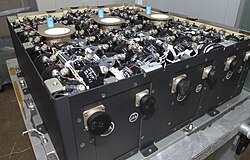
Nickel–hydrogen battery pack for Hubble
ハッブル宇宙望遠鏡の主要諸元
項目 詳細仕様
主鏡口径 2.4 m
観測波長 紫外線、可視光、近赤外線
打ち上げ日 1990年4月24日
軌道高度 約472km 〜 475km
全長 / 直径 13.2 m / 4.2 m
打ち上げ重量 11,110 kg

次世代への継承と未来

ハッブルの成功は、その後の宇宙望遠鏡開発の礎となりました。特に、より長い赤外線波長を観測するために設計されたジェイムズ・ウェッブ宇宙望遠鏡(JWST)は、ハッブルの後継として、さらに遠い宇宙の始まりに迫ろうとしています。

Hubble and JWST mirrors(4.0 m2 and 25m2 respectively)

ハッブルは今後も運用が期待されていますが、いずれは軌道が減衰し、大気圏に再突入することが予想されています。しかし、彼が残した膨大なアーカイブデータは、今後も多くの天文学者によって解析され、新たな発見を生み出し続けるでしょう。
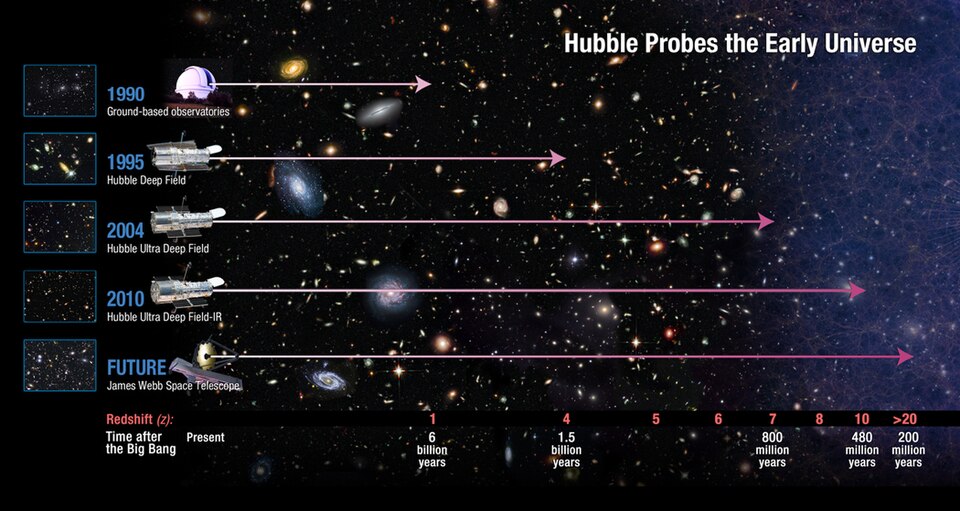
Depiction of progress in the detection of the early Universe

その他の観測成果と画像

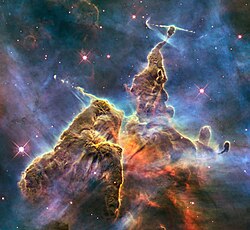
アンドロメダ銀河の巨大なモザイク画像や、カリーナ星雲の「神秘の山」など、ハッブルは芸術的な美しさと科学的な価値を兼ね備えた画像を数多く提供してきました。

Largest Mosaic of Andromeda by Hubble with details: (a) Clusters of bright blue stars embedded within the galaxy, background galaxies seen much farther away, and photo-bombing by a couple bright foreground stars that are actually inside our Milky Way; (b) NGC 206 the most conspicuous star cloud in Andromeda; (c) A young cluster of blue newborn stars; (d) The satellite galaxy M32, that may be the residual core of a galaxy that once collided with Andromeda; (e) Dark dust lanes across myriad stars.[144]
A pillar of gas and dust in the Carina Nebula. This Wide Field Camera 3 image, dubbed Mystic Mountain, was released in 2010 to commemorate Hubble's 20th anniversary in space.

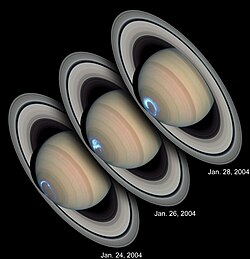
また、フォーマルハウト系のような恒星系や、土星のオーロラなど、太陽系内の詳細な観測においても比類なき成果を上げています。
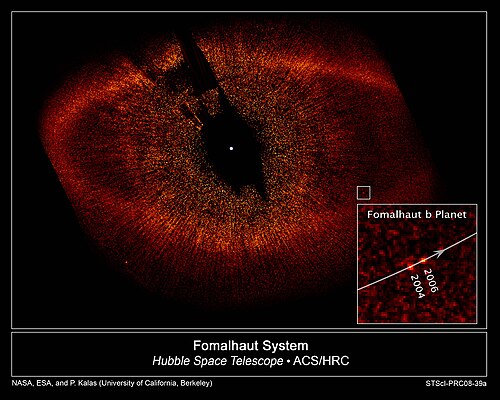
Hubble views the Fomalhaut system. This false-color image was taken in October 2004 and July 2006 with the Advanced Camera for Surveys.
Hubble's STIS UV and ACS visible light combined to reveal Saturn's southern aurora

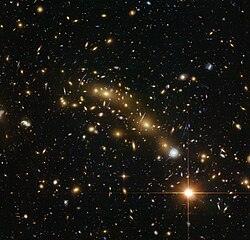
さらに、Pismis 24のような星団や、遠方の銀河団MACS0416.1-2403の観測を通じて、宇宙の構造形成の謎に迫っています。
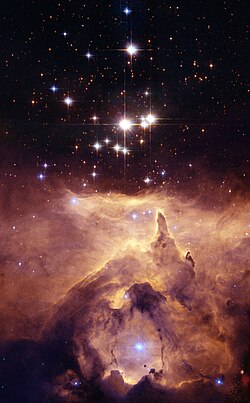
Star cluster Pismis 24 with nebula
Color image of galaxy cluster MCS J0416.1–2403, studied by the Hubble Frontier Fields program

地上からでも、条件が良ければオリオン座付近などで、その白い機体が点のように見えることがあります。
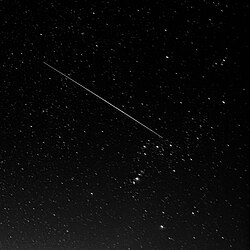
The HST is sometimes visible from the ground, as in this 39-second exposure when it is in Orion. Maximum brightness is about magnitude 1.

また、エドウィン・ハッブルの故郷であるミズーリ州マーシュフィールドには、彼の功績を称え、望遠鏡の4分の1スケールモデルが設置されています。
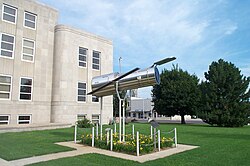
One-quarter scale model at the courthouse in Marshfield, Missouri, a hometown of Edwin Hubble

このように、ハッブルは単なる機械ではなく、人類の知的好奇心の象徴として、今も宇宙の深淵を見つめ続けています。
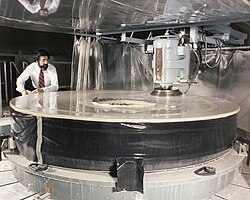
Grinding of Hubble's primary mirror at Perkin-Elmer, March 1979
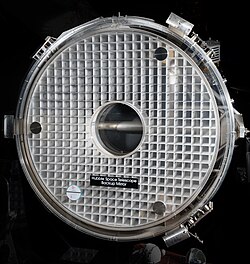
The backup mirror, by Kodak; its inner support structure can be seen because it is not coated with a reflective surface.
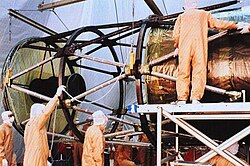
The OTA, metering truss, and secondary baffle are visible in this image of Hubble during early construction.
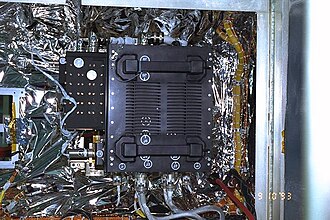
DF-224 in Hubble, before it was replaced in 1999
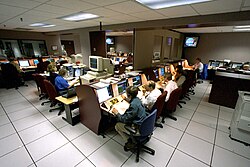
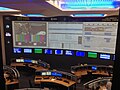
Hubble Control Center at Goddard Space Flight Center, 1999
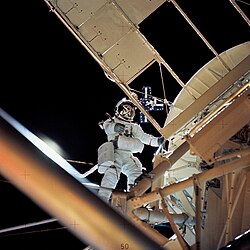
Astronaut Owen Garriott working next to Skylab's crewed solar space observatory, 1973
SVG recreation of the logo for the OPAL program, representing the Outer Planets of the Solar System, the ones observed by it.
Hubble and ALMA image of MACS J1149.5+2223[199]
Hubble precision stellar distance measurement has been extended ten times further into the Milky Way.[218]
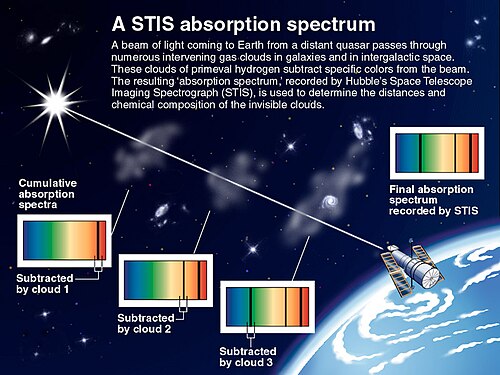
Data analysis of a spectrum revealing the chemistry of hidden clouds
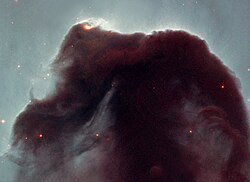
In 2001, NASA polled internet users to find out what they would most like Hubble to observe; they overwhelmingly selected the Horsehead Nebula.
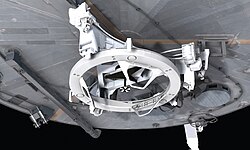
Illustration of the Soft Capture Mechanism (SCM) installed on Hubble
ภาพประกอบบทความ
ภาพประกอบบทความ
ภาพประกอบบทความ
ภาพประกอบบทความ
ภาพประกอบบทความ
ภาพประกอบบทความ
ภาพประกอบบทความ
ภาพประกอบบทความ
ภาพประกอบบทความ

Frequently Asked Questions

なぜハッブル望遠鏡は宇宙に設置されたのですか?

地球の大気は光を屈折させ、また一部の波長(特に紫外線)を吸収してしまいます。宇宙空間に設置することで、これらの影響を完全に排除し、極めて鮮明で正確な観測が可能になるためです。

主鏡の欠陥はどのようにして直したのですか?

宇宙飛行士がスペースシャトルでハッブルに接近し、COSTARという補正光学系を装着しました。これは、眼鏡のように光の屈折を調整することで、主鏡の形状誤差を補正し、ピントを合わせる仕組みです。

ハッブル望遠鏡は現在も使われているのですか?

はい、現在も運用されています。数回のサービスミッションによる機器更新により、打ち上げ当時よりも高性能な観測が可能になっており、今も貴重なデータを地球に送り続けています。

ジェイムズ・ウェッブ宇宙望遠鏡(JWST)との違いは何ですか?

ハッブルは主に可視光と紫外線を観測しますが、JWSTは赤外線に特化しています。赤外線を用いることで、ハッブルよりもさらに遠くの、宇宙初期の天体や、塵に隠れた星形成領域を観測することができます。

ハッブル望遠鏡はいつまで運用される予定ですか?

正確な期限は決まっていませんが、2030年代には軌道が徐々に低下し、最終的に大気圏に再突入して燃え尽きると推定されています。

References

  1. "Hubble Marks 30 Years in Space with Tapestry of Blazing Starbirth". HubbleSite.org. . April 24, 2020. Archived from the original on May 10, 2020. Retrieved April 24, 2020.
  2. "Hubble Essentials: Quick Facts". HubbleSite.org. . Archived from the original on July 6, 2016.
  3. Ryba, Jeanne. "STS-31". NASA. Archived from the original on May 7, 2017. Retrieved May 7, 2017. Public Domain This article incorporates text from this source, which is in the .
  4. Harwood, William (May 30, 2013). "Four years after final service call, Hubble Space Telescope going strong". CBS News. Archived from the original on October 30, 2019. Retrieved June 3, 2013.
  5. "Hubble Space Telescope – Orbit". Heavens Above. August 15, 2018. Archived from the original on August 17, 2018. Retrieved August 16, 2018.
  6. Nelson, Buddy (2009). "Hubble Space Telescope: Servicing Mission 4 Media Reference Guide" (PDF). NASA/Lockheed Martin. pp. 1–5. Archived (PDF) from the original on August 27, 2011. Retrieved May 31, 2018.
  7. NASA. "FAQ for Scientists Webb Telescope". Archived from the original on February 10, 2022. Retrieved February 15, 2022.
  8. "Hubble Essentials". HubbleSite.org. . Archived from the original on March 3, 2016. Retrieved March 3, 2016. Public Domain This article incorporates text from this source, which is in the .
  9. Canright, Shelley. "NASA's Great Observatories". NASA. Archived from the original on June 20, 2015. Retrieved April 26, 2008. Public Domain This article incorporates text from this source, which is in the .
  10. "NASA Announces New James Webb Space Telescope Target Launch Date". NASA. July 16, 2020. Archived from the original on July 18, 2020. Retrieved September 10, 2020. Public Domain This article incorporates text from this source, which is in the .

📸 フォトギャラリー

Lyman Spitzer played a major role in the birth of the Hubble Space Telescope project.
Nancy Grace Roman with a model of the Large Space Telescope that was eventually developed as the Hubble Space Telescope. While listed as a 1966 photo, this design was not the standard until the mid-1970s.
American astronomer Edwin P. Hubble (pictured in 1931), for whom the telescope is named.
Astronaut Owen Garriott working next to Skylab's crewed solar space observatory, 1973
Grinding of Hubble's primary mirror at Perkin-Elmer, March 1979
The backup mirror, by Kodak; its inner support structure can be seen because it is not coated with a reflective surface.
The OTA, metering truss, and secondary baffle are visible in this image of Hubble during early construction.
DF-224 in Hubble, before it was replaced in 1999
Exploded view of the Hubble Space Telescope
Hubble Control Center at Goddard Space Flight Center, 1999
STS-31 lifts off, carrying Hubble into orbit
Hubble being deployed from Discovery in 1990.
An extract from a WF/PC image shows the light from a star spread over a wide area instead of being concentrated on a few pixels.
Spiral galaxy M100 as seen before corrective optics (left) and after
COSTAR being removed by astronaut Andrew J. Feustel during SM4 in 2009
Astronauts Musgrave and Hoffman install corrective optics during SM1.
Hubble, as seen from Discovery during its second servicing mission
Nickel–hydrogen battery pack for Hubble
One of Hubble's most famous images, Pillars of Creation, shows stars forming in the Eagle Nebula.
SVG recreation of the logo for the OPAL program, representing the Outer Planets of the Solar System, the ones observed by it.
Color image of galaxy cluster MCS J0416.1–2403, studied by the Hubble Frontier Fields program
Largest Mosaic of Andromeda by Hubble with details: (a) Clusters of bright blue stars embedded within the galaxy, background galaxies seen much farther away, and photo-bombing by a couple bright foreground stars that are actually inside our Milky Way; (b) NGC 206 the most conspicuous star cloud in Andromeda; (c) A young cluster of blue newborn stars; (d) The satellite galaxy M32, that may be the residual core of a galaxy that once collided with Andromeda; (e) Dark dust lanes across myriad stars.[144]
Star cluster Pismis 24 with nebula
The HST is sometimes visible from the ground, as in this 39-second exposure when it is in Orion. Maximum brightness is about magnitude 1.
Hubble Extreme Deep Field image of space in the constellation Fornax
Hubble's STIS UV and ACS visible light combined to reveal Saturn's southern aurora
Brown spots mark Comet Shoemaker–Levy 9 impact sites on Jupiter's southern hemisphere
Hubble and ALMA image of MACS J1149.5+2223[199]
Depiction of progress in the detection of the early Universe
Some of the Carina nebula by WFC3
Hubble precision stellar distance measurement has been extended ten times further into the Milky Way.[218]
Data analysis of a spectrum revealing the chemistry of hidden clouds
In 2001, NASA polled internet users to find out what they would most like Hubble to observe; they overwhelmingly selected the Horsehead Nebula.
One-quarter scale model at the courthouse in Marshfield, Missouri, a hometown of Edwin Hubble
A pillar of gas and dust in the Carina Nebula. This Wide Field Camera 3 image, dubbed Mystic Mountain, was released in 2010 to commemorate Hubble's 20th anniversary in space.
Hubble views the Fomalhaut system. This false-color image was taken in October 2004 and July 2006 with the Advanced Camera for Surveys.
Illustration of the Soft Capture Mechanism (SCM) installed on Hubble
Hubble and JWST mirrors(4.0 m2 and 25m2 respectively)
ภาพประกอบบทความ
ภาพประกอบบทความ
ภาพประกอบบทความ
ภาพประกอบบทความ
ภาพประกอบบทความ
ภาพประกอบบทความ
ภาพประกอบบทความ
ภาพประกอบบทความ
ภาพประกอบบทความ