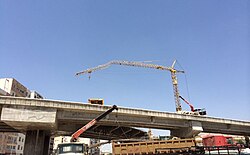
Diagram of a modern crawler crane with outriggers. The latticed boom is fitted with a jib.
← ホームへ戻る

クレーンの歴史とメカニズム古代の揚重機から現代の超大型クレーンまで

🗓 2026年8月14日

クレーンは、ブーム、ホイスト、ワイヤーロープやチェーン、そして滑車を組み合わせることで、重量物を垂直および水平方向に移動させる機械です。レバーや滑車といった単純機械の原理を利用して「機械的利得」を生み出し、人間だけでは不可能な重量の吊り上げを実現しています。現代では、物流における貨物の積み下ろし、建設現場での資材運搬、製造業での大型設備組み立てなど、社会インフラを支える不可欠なツールとなっています。

主要な事実(Key Facts)

  • 起源:紀元前3000年頃のメソポタミアで使われていた「シャドゥーフ」が原型とされる。
  • 原理:滑車とレバーによる機械的利得を利用し、少ない力で大きな荷重を動かす。
  • 進化:古代ギリシャ・ローマの滑車システムから、中世の踏み車、産業革命後の油圧式へと発展。
  • 多様性:用途に応じて、移動式のクローラークレーンから固定式のタワークレーン、海上用の浮クレーンまで多岐にわたる。
  • 安全性:転倒荷重に対する定格荷重の制限(例:クローラー式は転倒荷重の75%まで)など、厳格な国際基準で運用される。

クレーンの歴史的変遷

古代文明における始まり

最古の揚重装置は、紀元前3000年頃のメソポタミアで灌漑用に発明された「シャドゥーフ」というレバー式の装置でした。その後、紀元前2000年頃にはエジプトでも導入されました。建築用クレーンへの転換は紀元前6世紀後半の古代ギリシャで起こり、神殿の石材に見られる吊り上げ用の穴(ルイス穴など)がその証拠となっています。
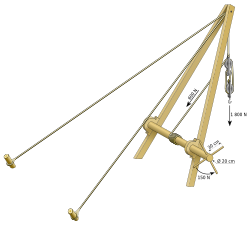
Greco-Roman Trispastos ("Three-pulley-crane"), a simple crane type (1800 N load)

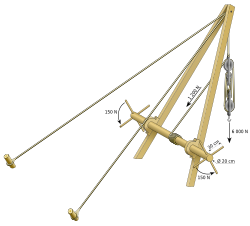
Greco-Roman Pentaspastos ("Five-pulley-crane"), a medium-sized variant (c. 6000 N load)

ローマ帝国による技術革新

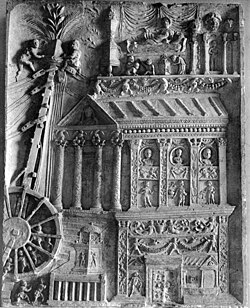
ローマのエンジニアは、滑車の数を増やすことで吊り上げ能力を飛躍的に向上させました。最もシンプルな「トリスパストス」は3つの滑車を持ち、1人の作業員で約150kgを吊り上げることができました。さらに発展した「ペンタスパストス(5つの滑車)」や、最大級の「ポリスパストス(15個の滑車)」が登場し、踏み車(トレッドホイール)を動力源とすることで数トンの荷重を扱えるようになりました。
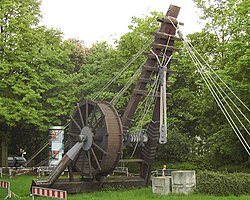
Reconstruction of a 10.4 m high Roman Polyspastos powered by a treadwheel at Bonn, Germany

Roman relief from the Tomb of the Haterii showing a construction crane with a pulley system

しかし、バールベックのジュピター神殿にある100トンを超える石材や、トラヤヌス柱の53トン以上の頂部ブロックなどの遺構は、当時のローマ人が単一のクレーンを遥かに超える高度な揚重システムを運用していたことを示唆しています。

中世から近世への展開

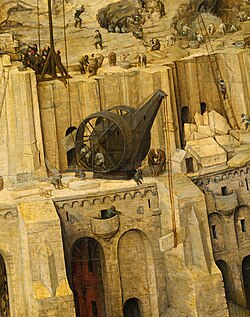
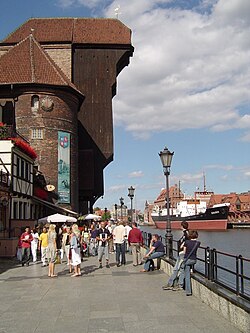
西ローマ帝国の崩壊後、一時的に衰退した踏み車クレーンの技術は、中世盛期にヨーロッパで再導入されました。13世紀頃からフランスやベルギー、ドイツなどの港湾都市で大型の港湾クレーンが記録されており、特にブルージュやグダニスクの事例は有名です。
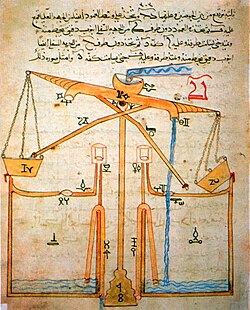
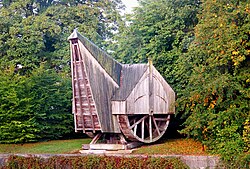
Diagram of a water-raising device from Al-Jazari's Book of Knowledge of Ingenious Mechanical Devices (1206 CE)

Interior of a medieval treadwheel crane in Bruges, Belgium, showing the wooden wheel mechanism powered by human walking

Double treadwheel crane in Pieter Bruegel's The Tower of Babel

The Gdańsk Crane, a medieval treadwheel crane built in 1442–1444, one of the largest and best-preserved harbor cranes from the Middle Ages

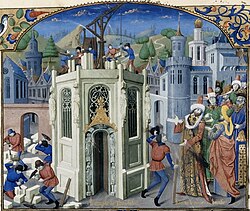
Single treadwheel crane working from top of the building

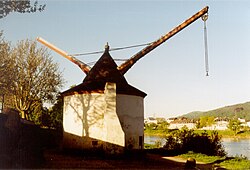
Tower crane at the inland harbour of Trier from 1413

近世に入ると、18世紀には大型帆船の帆柱を設置するための専用クレーンなどが開発され、より専門的な用途へと分化していきました。
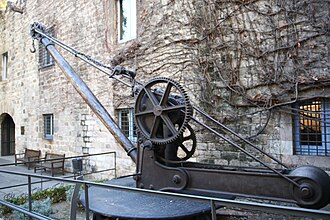
Manual crane from the late 19th century used for unloading small loads from ships at the Port of Barcelona, Spain

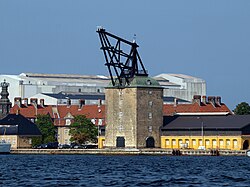
A crane constructed in 1742, used for mounting masts to large sailing vessels. Copenhagen, Denmark

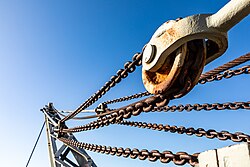
Detail view of a (small) crane in the harbour, V&A Waterfront

産業革命と近代化

19世紀、サー・ウィリアム・アームストロングによる油圧クレーンの発明が転換点となりました。これにより、人力や蒸気力を超える効率的な揚重が可能になり、鉄道や港湾の近代化が加速しました。彼の設立したエルスウィック工場では、短期間で生産能力が飛躍的に向上し、世界中に油圧機械が普及しました。
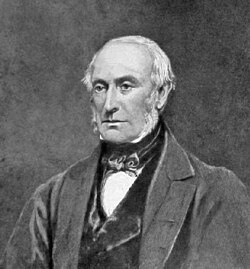
Sir William Armstrong, inventor of the hydraulic crane

クレーンの種類と用途

建設用クレーン

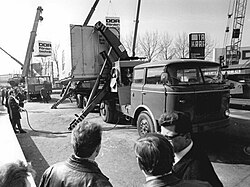
建設現場では、機動力と吊り上げ能力のバランスが重視されます。トラック搭載型や、不整地走行が可能なラフテレーンクレーン、オールテレーンクレーンなどが活用されています。また、無限軌道を装備したクローラークレーンは、高い安定性と重量物への対応力が特徴です。
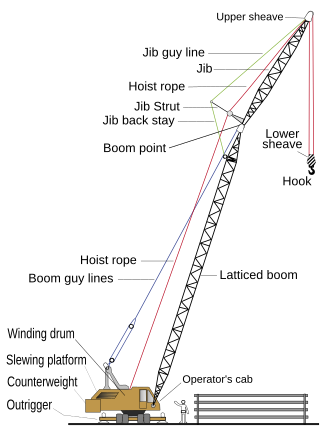
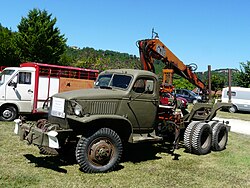
Diagram of a modern crawler crane with outriggers. The latticed boom is fitted with a jib.

HIAB knuckle-boom crane mounted on bed of a 1942 US Army truck

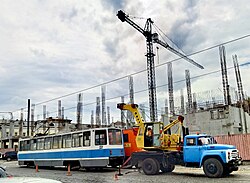
A crane vehicle in Dnipro, Ukraine.

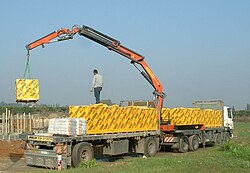
Loader crane using a jib extension

A telescopic mobile crane with truss luffing jib

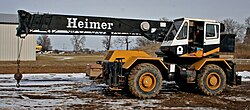
Rough terrain crane

All terrain crane

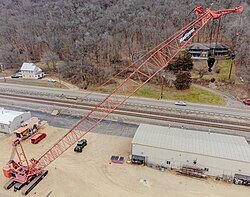
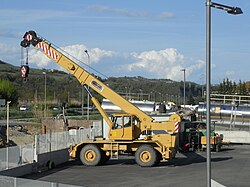
Crawler crane

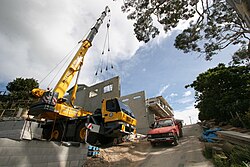
A pick-and-carry crane

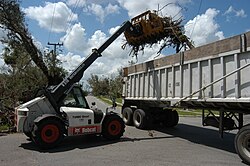
Bobcat Telescopic handler

高層建築にはタワークレーンが不可欠です。自立式や、建物と共に上昇するクライミングクレーン、設置が容易なセルフエレクト型などがあります。

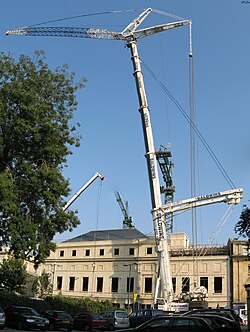
Modern cranes used as part of the reconstruction of the Houses of Parliament, in Cape Town CBD

A self-erecting tower crane folds and unfolds itself

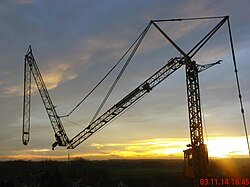
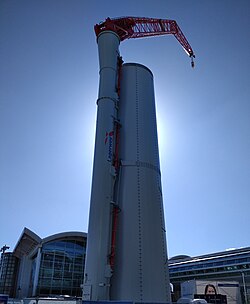
Climbing crane, at WindEnergy expo, 2018

貨物輸送・産業用クレーン

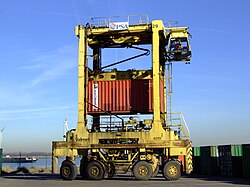
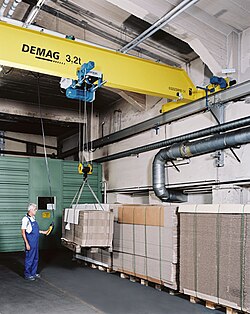
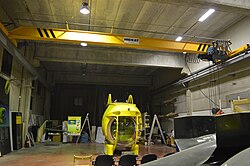
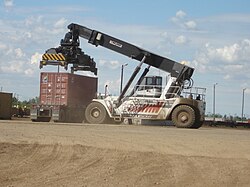
港湾や物流センターでは、コンテナを効率的に扱うためのリーチスタッカーやストラドルキャリア、ガントリークレーンが使用されます。工場内では、天井走行クレーン(オーバーヘッドクレーン)やジブクレーンが、重量部品の組み立てに利用されています。
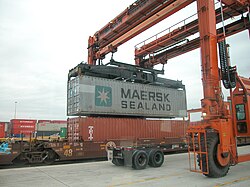
Rubber-tyred gantry crane loading a 40 foot container in a well car for an intermodal train

Reach stacker

Sidelift crane

Straddle-carrier

An overhead crane being used in typical machine shop. The hoist is operated via a wired pushbutton station to move system and the load in any direction.

An EOT overhead crane is used to move and build the Ictineu 3 submersible, in a warehouse of Sant Feliu de Llobregat.

Gantry crane

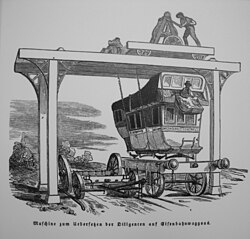
A gantry crane to put a stagecoach on a flat car

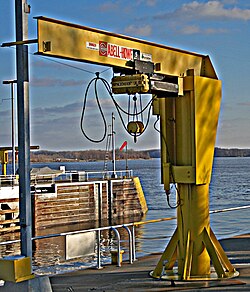
Jib crane

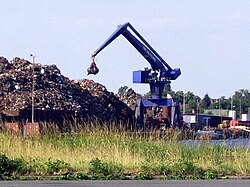
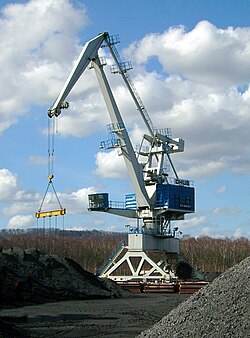
Bulk-handling crane

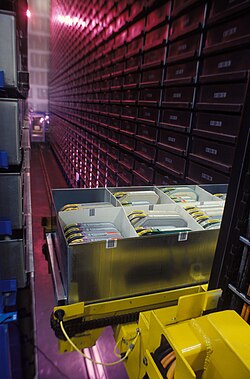
Stacker crane

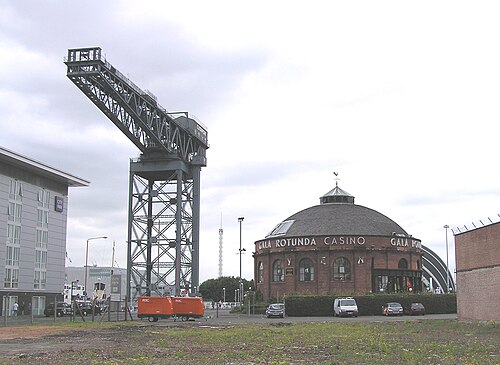
また、造船所などで使われるハンマーヘッドクレーンは、戦艦の装甲板や砲身などの超重量物を設置するために発展しました。
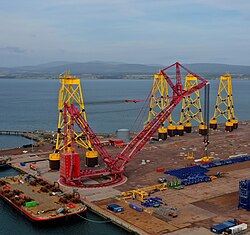
Ring crane

Hammerhead crane (Finnieston Crane) in Glasgow

Level luffing crane

海洋・特殊クレーン

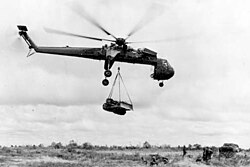
橋梁建設や沈没船の引き揚げには、ポンツーンやバージに搭載された浮クレーンが使用されます。また、ヘリコプターを用いた空中クレーン(エアリアルクレーン)など、特殊な環境に対応した形式も存在します。
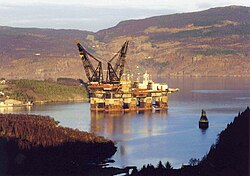
Floating crane

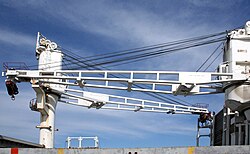
Deck crane

CH-54 Tarhe aerial crane

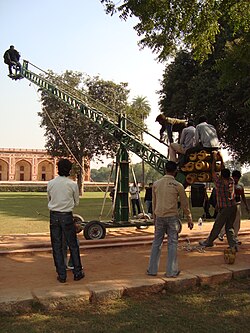
Shooting a film from crane

工学的原理と安全性

動的荷重係数(DLF)と安定性

クレーンの設計において重要なのが動的荷重係数(DLF)です。これは、静止した重量物に対し、移動や振動によって加わる追加の力を考慮した係数です。例えば、ジブクレーンでは約1.3、ガントリークレーンでは約1.6とされます。特に海上では、波による船体の揺れ(ヒーブ、ピッチ、ロール)が加わるため、より厳しい基準が適用されます。
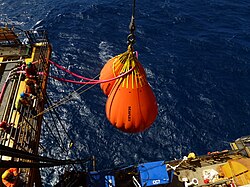
Water-filled crane test bags suspended over the sea during offshore crane load testing operations on a vessel.

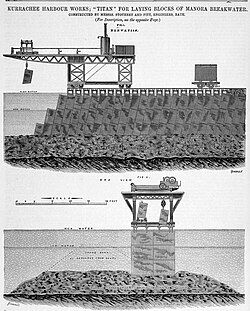
Parkes' Titan and the Manora breakwater, Karachi

This crane's main jib failed due to an overload.

安全基準と設計寿命

米国(ASME)や欧州(EN)などの規格では、転倒荷重に対する定格荷重の比率が厳格に定められています。一般的に、定格容量の10%〜25%の安全余裕を持たせて設計されますが、常に限界に近い荷重で運用すると部品の摩耗が進み、寿命が短くなります。標準的な設計寿命は20年、または200万回の荷重サイクルとされています。

性能比較まとめ

古代ローマのクレーン性能比較
クレーン形式 滑車数 動力源 最大能力 (kg)
トリスパストス 3 作業員1名(ウィンチ) 150
ペンタスパストス 5 - 250
ポリスパストス(小) 15 (3×5) 作業員4名(ウィンチ) 3,000
ポリスパストス(大) 15 (3×5) 作業員2名(踏み車) 6,000

Frequently Asked Questions

クレーンの「機械的利得」とは何ですか?

滑車やレバーなどの単純機械を組み合わせることで、小さな力で大きな重量物を動かせる仕組みのことです。例えば、滑車の数を増やすことで、吊り上げるのに必要な力は減少しますが、その分、引くべきロープの長さは増えるというトレードオフの関係にあります。

タワークレーンはどのようにして自力で高くなるのですか?

「クライミングクレーン」と呼ばれる形式では、クレーン自身が自身の構造を押し上げ、その隙間に新しいセクションを挿入することで、建物の高さに合わせて自らを高くしていくことができます。

海上での吊り上げが陸上より危険な理由は?

船体やプラットフォームが波によって常に動いているためです。この動的な加速度(垂直・前後・左右)が荷重に加わり、静止状態よりもはるかに大きな力がクレーン構造にかかるため、より高い耐荷重能力と厳格な計算が必要となります。

クレーンの定格荷重を超えるとどうなりますか?

構造材の疲労や変形が進むだけでなく、最悪の場合はバランスを崩して転倒したり、ブームが折損したりする重大な事故につながります。そのため、国際的な安全基準によって、転倒荷重に対する厳格な制限が設けられています。

References

  1. "Simple machine". Encyclopedia Britannica. Archived from the original on 6 September 2025. Retrieved 24 November 2025.
  2. "How Are Cranes Powered?". Bryn Thomas Cranes. 22 February 2017. Retrieved 20 November 2017.
  3. Encyclopædia Britannica. "Crane." Britannica.com. Accessed 19 November 2025.
  4. Dynamics and Control of Industrial Cranes. Advances in Industrial Control. 2019. :10.1007/978-981-13-5770-1.  .
  5. , p. 368.
  6. Singer, Charles; Holmyard, E.J.; Hall, A.R. (1954). A History of Technology, Volume I: From Early Times to Fall of Ancient Empires. Oxford University Press. pp. 691–695.
  7. Paipetis, S. A.; Ceccarelli, Marco (2010). The Genius of Archimedes -- 23 Centuries of Influence on Mathematics, Science and Engineering: Proceedings of an International Conference held at Syracuse, Italy, June 8–10, 2010. . p. 416.  .
  8. Chondros, Thomas G. (1 November 2010). "Archimedes life works and machines". Mechanism and Machine Theory. 45 (11): 1766–1775. :10.1016/j.mechmachtheory.2010.05.009.  0094-114X.
  9. Sayed, Osama Sayed Osman; Attalemanan, Abusamra Awad (19 October 2016). The Structural Performance of Tower Cranes Using Computer Program SAP2000-v18 (Thesis). . Archived from the original on 14 December 2019. Retrieved 1 August 2019. The earliest recorded version or concept of a crane was called a Shaduf and used over 4,000 years by the Egyptians to transport water.
  10. Faiella, Graham (2006). The Technology of Mesopotamia. . p. 27.  .

📸 フォトギャラリー

Diagram of a modern crawler crane with outriggers. The latticed boom is fitted with a jib.
Manual crane from the late 19th century used for unloading small loads from ships at the Port of Barcelona, Spain
Modern cranes used as part of the reconstruction of the Houses of Parliament, in Cape Town CBD
Greco-Roman Trispastos ("Three-pulley-crane"), a simple crane type (1800 N load)
Greco-Roman Pentaspastos ("Five-pulley-crane"), a medium-sized variant (c. 6000 N load)
Reconstruction of a 10.4 m high Roman Polyspastos powered by a treadwheel at Bonn, Germany
Roman relief from the Tomb of the Haterii showing a construction crane with a pulley system
Diagram of a water-raising device from Al-Jazari's Book of Knowledge of Ingenious Mechanical Devices (1206 CE)
Interior of a medieval treadwheel crane in Bruges, Belgium, showing the wooden wheel mechanism powered by human walking
Double treadwheel crane in Pieter Bruegel's The Tower of Babel
The Gdańsk Crane, a medieval treadwheel crane built in 1442–1444, one of the largest and best-preserved harbor cranes from the Middle Ages
Single treadwheel crane working from top of the building
Tower crane at the inland harbour of Trier from 1413
A crane constructed in 1742, used for mounting masts to large sailing vessels. Copenhagen, Denmark
Detail view of a (small) crane in the harbour, V&A Waterfront
Sir William Armstrong, inventor of the hydraulic crane
HIAB knuckle-boom crane mounted on bed of a 1942 US Army truck
Water-filled crane test bags suspended over the sea during offshore crane load testing operations on a vessel.
A crane vehicle in Dnipro, Ukraine.
Loader crane using a jib extension
A telescopic mobile crane with truss luffing jib
Rough terrain crane
All terrain crane
Crawler crane
A pick-and-carry crane
Bobcat Telescopic handler
Parkes' Titan and the Manora breakwater, Karachi
This crane's main jib failed due to an overload.
A self-erecting tower crane folds and unfolds itself
Climbing crane, at WindEnergy expo, 2018
Rubber-tyred gantry crane loading a 40 foot container in a well car for an intermodal train
Reach stacker
Sidelift crane
Straddle-carrier
Ring crane
Hammerhead crane (Finnieston Crane) in Glasgow
Level luffing crane
An overhead crane being used in typical machine shop. The hoist is operated via a wired pushbutton station to move system and the load in any direction.
An EOT overhead crane is used to move and build the Ictineu 3 submersible, in a warehouse of Sant Feliu de Llobregat.
Gantry crane
A gantry crane to put a stagecoach on a flat car
Jib crane
Bulk-handling crane
Stacker crane
Floating crane
Deck crane
CH-54 Tarhe aerial crane
Shooting a film from crane