世界で最も古く、かつ多様な形態を持つ宗教の一つであるヒンドゥー教は、単一の教祖や固定された教義を持たず、数千年にわたる精神的な探求の積み重ねによって形成されてきました。自らをサナータナ・ダルマ(永遠の法)と呼ぶこの信仰体系は、個人の精神的な成長から宇宙の根源的な真理まで、幅広い視点から人生の意味を問い続けています。
現代においても、ヒンドゥー教は世界人口の約14.9%にあたる約11.7億人が信仰しており、その中心地であるインドのみならず、ネパールや東南アジア、さらには欧米諸国へと広がっています。
![Hinduism by country, worldmap (estimate 2010).[172]](/images/c5/5e/c55ea7e20e6ed51e2a0a22a73658278d163db7f491d6e0c493dda37f7fc0b4b3.webp)
Key Facts
- 世界的な普及:約11.7億人が信仰し、インド(約11.1億人)とネパール(約2,350万人)に集中している。
- 主要な宗派:ヴィシュヌ派(67.6%)、シヴァ派(26.6%)、シャクティ派(3.2%)などが存在する。
- 聖典の基礎:神聖な啓示とされる「シュルティ」(ヴェーダなど)と、伝統的な伝承である「スムリティ」に分かれる。
- 究極の目的:生と死のサイクル(サンサーラ)から脱し、解脱(モクシャ)に至ることを目指す。
信仰の構造と多様な宗派
ヒンドゥー教の最大の特徴は、多様な神々への信仰が共存している点にあります。特に重要なのが、創造のブラフマー、維持のヴィシュヌ、破壊のシヴァからなるトリムルティ(三位一体)の概念です。また、サラスヴァティー、ラクシュミー、パールヴァティーといった女神たち(トリデヴィ)も深く崇拝されています。
信仰の形態は大きく分かれ、ヴィシュヌ神を至高とするヴィシュヌ派、シヴァ神を主神とするシヴァ派、そして宇宙の根源的なエネルギーである女神を崇拝するシャクティ派などが代表的です。これらに加え、近代的な改革派や無神論的なアプローチを含む多様な伝統が共存しています。
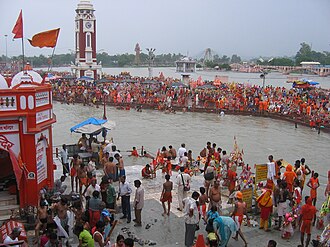
人生の目的と精神的な実践
ヒンドゥー教では、人間が人生で追求すべき4つの目的(プルシャールタ)が定義されています。それは、物質的な繁栄(アルタ)、快楽(カーマ)、道徳的な義務(ダルマ)、そして最終的な精神的解放であるモクシャ(解脱)です。これらの目的を達成するため、人生を4つの段階(アシュラマ)に分け、学生時代から隠遁生活まで、段階的に精神性を高めていくことが推奨されます。
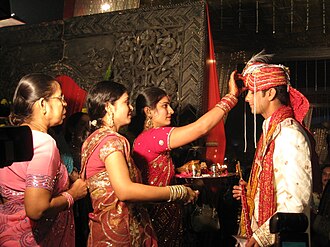
日々の実践としては、神への献身的な愛を示す「バクティ」や、瞑想、そして心身を調和させるヨガ(ハタヨガ、ラージャヨガ、ジュニャーナヨガなど)が重要視されます。また、人生の節目に行われる儀礼(サンスカーラ)は、誕生から結婚、そして葬儀に至るまで、個人の魂を浄化し導く役割を果たします。
聖典と哲学的な基盤
ヒンドゥー教の知恵は、膨大な聖典に記録されています。最も権威ある「シュルティ」には、宇宙の真理を説くヴェーダや、哲学的な考察を深めたウパニシャッドが含まれます。また、叙事詩である『ラーマーヤナ』や『マハーバーラタ』(その一部である『バガヴァッド・ギーター』を含む)、そして神話的な物語を伝えるプラーナなどが、道徳的な指針として広く親しまれています。
哲学面では、宇宙の根本原理であるブラフマンと、個人の魂であるアートマンの同一性を説くアドヴァイタ(不二一元論)など、高度な形而上学的な議論が展開されてきました。これらは、行為の結果が次なる生を決定するという「カルマ(業)」の法則や、現象世界を幻とする「マーヤー」の概念と密接に結びついています。
ヒンドゥー教の基本データまとめ
| 項目 | 詳細内容 |
|---|---|
| 推定信者数 | 約11.7億人(世界人口の約14.9%) |
| 主要分布国 | インド、ネパール、バングラデシュ、パキスタン、インドネシアなど |
| 主要聖典 | ヴェーダ、ウパニシャッド、バガヴァッド・ギーター、プラーナ |
| 核心概念 | ダルマ(法)、カルマ(業)、サンサーラ(輪廻)、モクシャ(解脱) |
| 神聖言語 | サンスクリット語(および一部の地域でタミル語など) |
Frequently Asked Questions
ヒンドゥー教に唯一の聖典はありますか?
いいえ、単一の聖典はありません。啓示とされる「シュルティ」(ヴェーダなど)と、伝統的な教えである「スムリティ」(叙事詩や法典など)という大きな分類があり、その中に数多くの経典が存在します。
「カルマ」とは具体的にどのような意味ですか?
カルマとは「行為」を意味し、個人の行動がその結果として未来の運命や、次の生における状況を決定するという因果応報の法則を指します。
ヨガは宗教的な修行だけを指すのでしょうか?
元来は精神的な解放を目指す修行法ですが、ヒンドゥー教にはバクティ(献身)、カルマ(行為)、ジュニャーナ(知識)など、目的やアプローチに応じた多様なヨガの形態が存在します。
カースト制度と宗教的な関係はありますか?
伝統的な社会構造として、バラモン(司祭)、クシャトリヤ(王・武士)、ヴァイシャ(商人)、シュードラ(労働者)というヴァルナ(階層)の概念が存在し、宗教的な役割分担と結びついてきました。
ヒンドゥー教の神々はすべて異なる神なのですか?
多くの神々が存在しますが、多くの信者はそれらを唯一の至高の現実(ブラフマン)の異なる側面や現れであると考えています。
References
- , p. 6) adds: "(...) 'Hindu', or 'Hindoo', was used towards the end of the eighteenth century by the British to refer to the people of 'Hindustan', the people of northwest India. Eventually 'Hindu' became virtually equivalent to an 'Indian' who was not a Muslim, Sikh, Jain or Christian, thereby encompassing a range of religious beliefs and practices. The '-ism' was added to Hindu in around 1830 to denote the culture and religion of the high-caste in contrast to other religions, and the term was soon appropriated by Indians themselves in the context of building a national identity opposed to colonialism, though the term 'Hindu' was used in Sanskrit and Bengali hagiographic texts in contrast to 'Yavana' or Muslim as early as the sixteenth century".
- , p. 229): For more than 100 years the word Hindu (plural) continued to denote the Indians in general. But when, from AD 712 onwards, Muslims began to settle permanently in the and to make converts among low-caste Hindus, Persian authors distinguished between Hindus and Muslims in India: Hindus were Indians other than Muslim. We know that Persian scholars were able to distinguish a number of religions among the Hindus. But when Europeans started to use the term Hindoo, they applied it to the non-Muslim masses of India without those scholarly differentiations.
- Despite the commonplace use of the term "Hindu" for the followers of the Hindu religion, the term also continues to designate a cultural identity, the ownership of India's millennia-old cultural heritage. notes that the exclusivist conception of religion was foreign to India, and Indians did not yield to it during the centuries of Muslim rule but only under the British colonial rule. Resistance to the exclusivist conception led to 's Hindutva, where Hinduism was seen both as a religion and a culture. Hindutva is a national Hindu-ness, by which a Hindu is one born in India and behaves like a Hindu. even spoke of "Hindu Muslims", meaning "Hindu by culture, Muslim by religion".
- , p. 3): The Indo-Aryan word Sindhu means "river", "ocean".
- Prince , Jahangir son, mounted a challenge to the emperor within the first year of his reign. The rebellion was put down and all the collaborators executed. (Pashaura Singh, 2005, pp. 31–34)
- According to Ram Bhagat, the term was used by the in post-1871 census of colonial India that included a question on the individual's religion, especially in the aftermath of the .
- , p. 29: "When it comes to early sources written in Indian languages (and also Persian and Arabic), the word 'Hindu' is used in a clearly religious sense in a great number of texts at least as early as the sixteenth century. (...) Although al-Biruni's original Arabic text only uses a term equivalent to the religion of the people of India, his description of Hindu religion is in fact remarkably similar to those of nineteenth-century European orientalists. For his part Vidyapati, in his Apabhransha text Kirtilata, makes use of the phrase 'Hindu and Turk dharmas' in a clearly religious sense and highlights the local conflicts between the two communities. In the early sixteenth century texts attributed to Kabir, the references to 'Hindus' and to 'Turks' or 'Muslims' (musalamans) in a clearly religious context are numerous and unambiguous."
- See also "Aurangzeb, as he was according to Mughal Records"; more links at the bottom of that page. For Muslim historian's record on major Hindu temple destruction campaigns, from 1193 to 1729 AD, see Richard Eaton (2000), Temple Desecration and Indo-Muslim States, Journal of Islamic Studies, Vol. 11, Issue 3, pages 283–319
📸 フォトギャラリー