世界で最も古い宗教の一つとされるヒンドゥー教は、単なる信仰の体系ではなく、生活のあり方や宇宙の真理を追求する包括的な精神文化です。サナータナ・ダルマ(永遠の法)とも呼ばれるこの伝統は、多様な宗派や哲学、そして数多くの神々が共存する極めて寛容な構造を持っています。
その根幹には、個人の魂(アートマン)が宇宙の究極的な実在(ブラフマン)と一体となること、そして生と死の絶え間ないサイクルから解放されるという深い精神的探求があります。

Key Facts
- 世界第3位の信者数:世界人口の約14.9%が信仰しており、特にネパールやインドで高い比率を占める。
- 多様な神格:創造のブラフマー、維持のヴィシュヌ、破壊のシヴァからなる「トリムルティ」を中心に、無数の神々が存在する。
- 聖典の権威:最古の聖典であるヴェーダ(シュルティ)を頂点とし、叙事詩やプラーナなどの伝承(スムリティ)が体系を成す。
- 人生の目的:道徳的義務(ダルマ)、物質的繁栄(アルタ)、快楽(カーマ)、そして最終的な解脱(モクシャ)の4つを追求する。
宇宙観と人生の哲学
ヒンドゥー教の核心は、サンスカーラ(人生の節目に行われる儀礼)やアシュラマ(人生の4段階)といった、個人の成長と社会的な役割を調和させる仕組みにあります。人は、学生時代、家主としての生活、隠居、そして出家という段階を経て、精神的な成熟を目指します。
また、行為の結果が次なる生を決定するというカルマ(業)の法則と、死後の転生を繰り返すサンスカーラ(輪廻)の概念が、倫理的な行動の指針となっています。このサイクルから脱却し、苦しみから解放されることが人生の究極の目標である「モクシャ(解脱)」です。
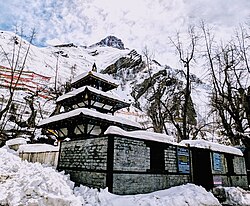
精神的な調和を目指すヨガと瞑想
解脱に至る道は一つではなく、個人の性質に合わせた多様なアプローチ(ヨガ)が提示されています。献身的な愛による「バクティ・ヨガ」、知識による「ジュニャーナ・ヨガ」、無私な行動による「カルマ・ヨガ」、そして身体と精神の制御を目指す「ラージャ・ヨガ」などが代表的です。
神々の体系と信仰の形態
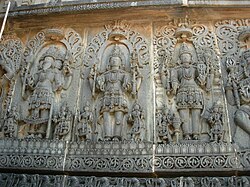
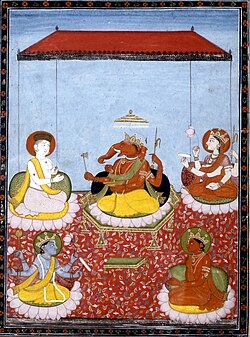
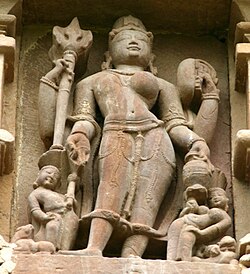
ヒンドゥー教の神々は、単一の絶対的な真理が異なる姿で現れたものと考えられています。特に重要なのが、宇宙の維持を司るヴィシュヌ、破壊と再生を司るシヴァ、そして創造のブラフマーの三柱です。彼らはしばしば、一つの壁画や彫刻の中で調和して描かれます。
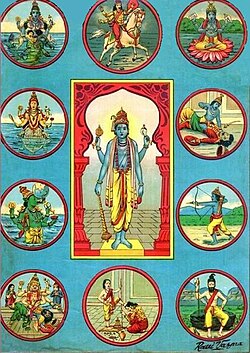
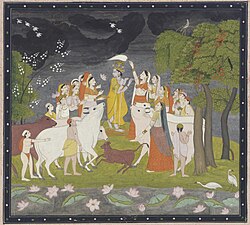
ヴィシュヌ神は、世界に危機が訪れるたびに異なる姿で降臨するアヴァターラ(化身)を持つことで知られており、ラーマやクリシュナはその代表的な例です。
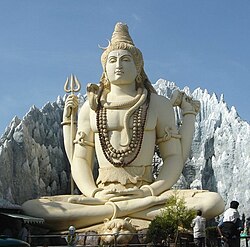
一方で、シヴァ神は瞑想する修行者の姿や、踊る破壊神としての姿を持ち、内省と変容の象徴とされています。また、女性的な神聖さであるシャクティ(女神)への信仰も根強く、ドゥルガーやカーリーといった強力な女神たちが崇拝されています。
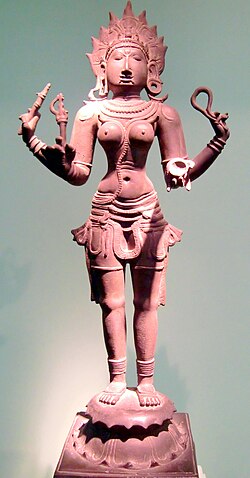
これらの神々は、個別の宗派(ヴァイシュナヴァ派、シャイヴァ派、シャクティ派など)を通じて深く信仰されていますが、多くの信者は複数の神々を同時に敬う傾向にあります。
聖典と伝統の継承
ヒンドゥー教の知識体系は、神聖な啓示である「シュルティ(聞かれたもの)」と、人間による伝承である「スムリティ(記憶されたもの)」に大別されます。最古の聖典であるリグヴェーダをはじめとする4つのヴェーダは、サンスクリット語で記され、今なお儀式や哲学の基礎となっています。
![The Rigveda is the first among four Vedas[note 22] and is one of the oldest religious texts. This Rigveda manuscript is in Sanskrit.](/images/cd/ef/cdefa77cae12979c407bb1c5a6190f8b9f4fda10378b55e613bef9120014a7a2.jpg)
また、『ラーマーヤナ』や『マハーバーラタ』といった叙事詩は、物語を通じて道徳的な教訓やダルマ(正義)のあり方を人々に伝えてきました。特に『バガヴァッド・ギーター』は、人生の葛藤に対する精神的な指針として世界的に知られています。
礼拝の実践と文化的な彩り
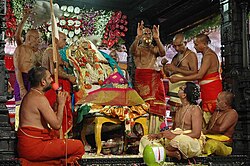
日々の信仰は、家庭内や寺院でのプージャ(礼拝)を通じて行われます。神像(ムルティ)に花や灯明を捧げ、マントラを唱えることで、神との精神的な繋がりを深めます。
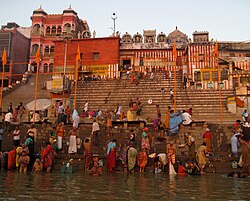
また、聖なる川ガンジス川での沐浴は、罪を洗い流し、精神的な浄化を得るための重要な巡礼行為です。
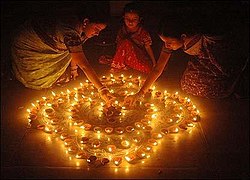
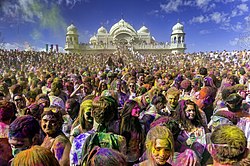
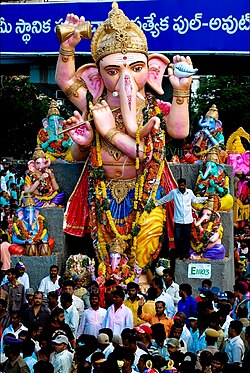
祝祭もヒンドゥー文化の大きな特徴です。光の祭典「ディワリ」や、色彩の祭典「ホーリー」、象神ガネーシャを祝う「ガネーシュ・チャトゥルティ」など、季節や神話に基づいた多彩なイベントが世界中で祝われています。
世界へ広がる精神性
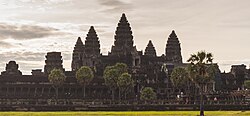
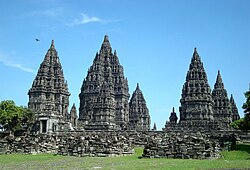
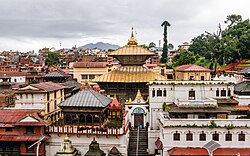
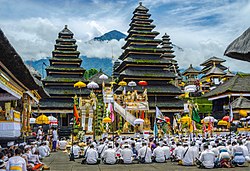
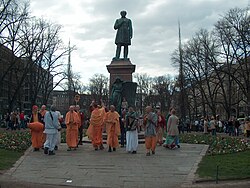
ヒンドゥー教の影響はインド亜大陸に留まらず、東南アジアのアンコールワットやボロブドゥールなどの壮大な寺院建築にその足跡を残しています。また、近代ではスワミ・ヴィヴェーカナンダのような指導者が、ヴェーダンタ哲学やヨガを西洋に紹介し、世界的な精神運動へと発展させました。
![Swami Vivekananda was a key figure in introducing Vedanta and Yoga in Europe and the United States,[162] raising interfaith awareness and making Hinduism a world religion.[163]](/images/58/4c/584cd1adde55e7e8f5528ce764632d56f95337227704b7f0ae1262e6ed56175a.webp)
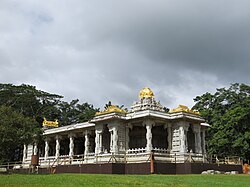
社会構造と生活様式
伝統的な社会構造として、職業や役割に基づいたヴァルナ(階級)制度が存在します。これは本来、社会的な分業を目的としたものでしたが、歴史的に複雑な社会階層を生み出しました。また、精神的な指導者であるサドゥ(聖者)は、世俗を捨てて真理を追究する生き方を体現しています。
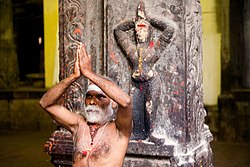
食生活においても、アヒンサー(非暴力)の精神に基づき、多くの信者が菜食主義を実践しています。これは、すべての生命に神聖な魂が宿っているという信念に基づいています。
![A wedding is the most extensive personal ritual an adult Hindu undertakes in their life. A typical Hindu wedding is solemnised before Vedic fire ritual (shown).[346]](/images/db/c5/dbc5d971384e5fb1e5a560f1d2a813f7177a4953a58eb3fb2d98b88768a96322.jpg)
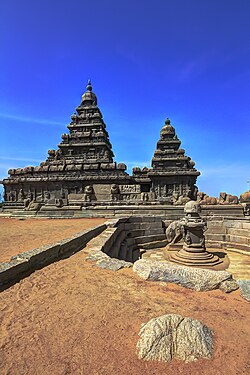
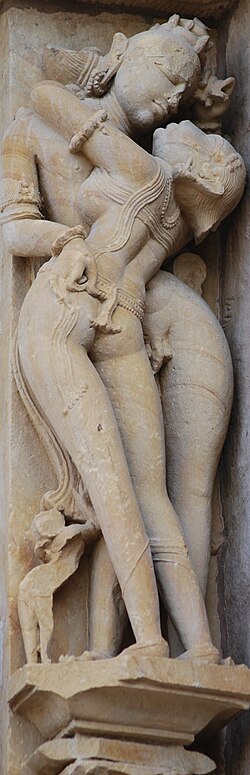

![Global percentage of adherents by religion. Hindus comprise about 14.9% of the world's population, comprising the third largest by percentage.[546]](/images/67/7b/677b41aa7fc77cb6e6710b46060278be06de50437a9eb9c479a615ae9d0fd0cc.webp)
また、ヒンドゥー教の建築様式(ヴァーストゥ・シャストラ)は、宇宙のエネルギーの流れを建物に反映させることで、住む人や訪れる人に調和をもたらすことを目的としています。
![Srirangam Ranganathaswamy Temple, dedicated to the Hindu deity Vishnu, is said to be worshiped by Ikshvaku (and the descendants of Ikshvaku Vamsam).[94][95][96]](/images/62/71/6271425c0b9ba468213702ae3739cea84ce6a10f029316b611e1a8c8a0deb765.jpg)
| 概念 | 意味・目的 | 関連キーワード |
|---|---|---|
| ダルマ (Dharma) | 宇宙の秩序、道徳的義務、正義 | 倫理、社会役割 |
| カルマ (Karma) | 行為とその結果(因果応報) | 運命、転生 |
| サンスカーラ (Samsara) | 生と死の絶え間ない輪廻サイクル | 転生、苦しみ |
| モクシャ (Moksha) | 輪廻からの解放、究極の自由 | 解脱、ニルヴァーナ |
| アートマン (Atman) | 個々の生命に宿る不滅の真我 | 魂、ブラフマン |
Frequently Asked Questions
ヒンドゥー教は多神教なのですか?
表面上は多くの神々が存在するため多神教に見えますが、哲学的には、それらすべての神々は唯一の究極的な実在である「ブラフマン」の異なる現れであると考える一神教的、あるいは汎神論的な側面を併せ持っています。
「ヨガ」とは単なるエクササイズのことですか?
現代では身体的なポーズ(アーサナ)が注目されていますが、本来のヨガは「結びつける」という意味であり、身体・精神・魂を統合し、最終的に解脱へと導くための包括的な精神修行体系を指します。
カースト制度とヒンドゥー教の関係は?
ヴァルナ制度という社会的な役割分担の概念が聖典に見られますが、これが歴史的に固定的な階級制度(カースト)へと変質しました。現代では、多くの指導者や改革者がこの差別的な構造を否定し、精神的な平等を目指しています。
なぜ菜食主義の人が多いのですか?
「アヒンサー(非暴力)」という教えが根底にあるためです。すべての生き物に神聖な魂が宿っていると考え、不必要な殺生を避けることが精神的な浄化に繋がると信じられています。
ヴェーダとウパニシャッドの違いは何ですか?
ヴェーダの初期部分は主に神々への賛歌や儀式の手順を記していますが、その後のウパニシャッドでは、より哲学的な問い(「私は誰か」「宇宙の正体は何か」)へと焦点が移り、瞑想や知恵による解脱が説かれるようになりました。
References
- Hinduism is variously defined as a "religion", "set of religious beliefs and practices", "religious tradition", "way of life" (, pp. 12–13), etc. For a discussion on the topic, see: "Establishing the boundaries" in , pp. 1–17.
- There are several views on the earliest mention of 'Hindu' in the context of religion:
- , p. 6 states: "In Arabic texts, Al-Hind is a term used for the people of modern-day India and 'Hindu', or 'Hindoo', was used towards the end of the eighteenth century by the British to refer to the people of 'Hindustan', the people of northwest India. Eventually 'Hindu' became virtually equivalent to an 'Indian' who was not a Muslim, Sikh, Jain, or Christian, thereby encompassing a range of religious beliefs and practices. The '-ism' was added to Hindu in around 1830 to denote the culture and religion of the high-caste Brahmans in contrast to other religions, and the term was soon appropriated by Indians themselves in the context of building a national identity opposed to colonialism, though the term 'Hindu' was used in Sanskrit and Bengali hagiographic texts in contrast to 'Yavana' or Muslim as early as the sixteenth century."
- and other scholars state that the 7th-century Chinese scholar , whose 17-year travel to India and interactions with its people and religions were recorded and preserved in the Chinese language, uses the transliterated term In-tu whose "connotation overflows in the religious".() Xuanzang describes of the early 7th century CE, worship of deity and , his debates with scholars of Samkhya and Vaisheshika schools of Hindu philosophies, monks and monasteries of Hindus, Jains and Buddhists (both Mahayana and Theravada), and the study of the Vedas along with Buddhist texts at . See also , pp. 88–99, , pp. 5–12, , pp. 321–324.
- also mentions the use of the word Hindu in Islamic texts such as those relating to the 8th-century Arab invasion of Sindh by Muhammad ibn Qasim, Al Biruni's 11th-century text Tarikh Al-Hind, and those of the Delhi Sultanate period, where the term Hindu retains the ambiguities of including all non-Islamic people such as Buddhists and of being "a region or a religion".
- states, citing Richard Eaton: "one of the earliest occurrences of the word 'Hindu' in Islamic literature appears in 'Abd al-Malik Isami's Persian work, Futuhu's-Salatin, composed in the Deccan in 1350. In this text, 'Isami uses the word 'hindi' to mean Indian in the ethno-geographical sense and the word 'hindu' to mean 'Hindu' in the sense of a follower of the Hindu religion".(, p. 33)
- , pp. 32–33 also mentions other non-Persian texts such as Prithvíráj Ráso by ~12th century Canda Baradai, and epigraphical inscription evidence from Andhra Pradesh kingdoms who battled military expansion of Muslim dynasties in the 14th century, where the word 'Hindu' partly implies a religious identity in contrast to 'Turks' or Islamic religious identity.
- , p. 15 states that one of the earliest uses of word 'Hindu' in religious context, in a European language (Spanish), was the publication in 1649 by Sebastiao Manrique.
- See:
- , p. 1: "probably the oldest religion in the world."
- , p. 1: The "oldest living major religion" in the world.
- : "There are almost a billion Hindus living on Earth. They practice the world's oldest religion..."
- : "it [Hinduism] is the oldest religion".
- : "Hinduism, the world's oldest surviving religion, continues to provide the framework for daily life in much of South Asia."
Animism has also been called "the oldest religion."(: "Animism is by far the oldest religion in the world. Its antiquity seems to go back at least as far as the period of the Neanderthals some 60,000 to 80,000 years ago.")
Australian , discovered that regarding the origin of the Crater Lakes might be dated as accurate back to 10,000 years ago (). found archaeological evidence that the mulla-mullung ritual, described in the 19th century, dates back at least 12,000 years.
See also:- , , , for some of the oldest forms of religion
- Indian tribal religions such as , , and , connected to the earliest migrations into India
- Sanatāna Dharma:
- , p. xiii: "In modern Indian usage, sanātana dharma is often equated with 'Hinduism' as a name, stressing the eternal foundation of it."
- , p. 5: "Many describe Hinduism as sanatana dharma, the eternal tradition or religion. This refers to the idea that its origins lie beyond human history."
- , p. 117: " The phrase sanatana dharma, eternal tradition, used often by Hindus to describe their religion, implies antiquity, but its usage is modern."
- , p. 3: "Some Indians object to having a foreign term for their religion, preferring the Sanskrit expression sanātana dharma, "eternal law or truth," despite the fact that this expression was not applied to any religious system in ancient texts."
- , p. 50: "The encounters that resulted from Aryan migration brought together several very different peoples and cultures, reconfiguring Indian society. Over many centuries a fusion of and occurred, a complex process that historians have labeled the Indo-Aryan synthesis."
, p. 52: "Hinduism can be seen historically as a synthesis of Aryan beliefs with Harappan and other Dravidian traditions that developed over many centuries." - , p. 12: "A period of consolidation, sometimes identified as one of 'Hindu synthesis', 'Brahmanic synthesis', or 'orthodox synthesis', takes place between the time of the late Vedic Upanishads (c. 500 BCE) and the period of Gupta imperial ascendency (c. 320–467 CE)."
- See:
- , p. 194: "The Brahmanical pattern"
- , p. 16: "The tradition of brahmanical orthopraxy has played the role of 'master narrative'"
- , p. 12: "Brahmanical synthesis"
- See also:
- , pp. 3–4: "He [J. H. Hutton, the Commissioner of the Census of 1931] considers modern Hinduism to be the result of an amalgam between pre-Aryan Indian beliefs of Mediterranean inspiration and the religion of the Rigveda. 'The Tribal religions present, as it were, surplus material not yet built into the temple of Hinduism'."
- , pp. 218–219.
- , p. 43. Quote: [Tyler (1973). India: An Anthropological Perspective. p. 68.]; "The Hindu synthesis was less the dialectical reduction of orthodoxy and heterodoxy than the resurgence of the ancient, aboriginal Indus civilization. In this process the rude, barbaric Aryan tribes were gradually civilised and eventually merged with the autochthonous Dravidians. Although elements of their domestic cult and ritualism were jealously preserved by Brahman priests, the body of their culture survived only in fragmentary tales and allegories embedded in vast, syncretistic compendia. On the whole, the Aryan contribution to Indian culture is insignificant. The essential pattern of Indian culture was already established in the third millennium B.C., and ... the form of Indian civilization perdured and eventually reasserted itself."
- .
- , p. 16: "Contemporary Hinduism cannot be traced to a common origin [...] The many traditions which feed into contemporary Hinduism can be subsumed under three broad headings: the tradition of Brahmanical orthopraxy, the renouncer traditions and popular or local traditions. The tradition of Brahmanical orthopraxy has played the role of 'master narrative', transmitting a body of knowledge and behaviour through time, and defining the conditions of orthopraxy, such as adherence to varnasramadharma."
- .
- .
- , pp. 8–9.
- , p. 50.
- .
- , p. 79: "The religion that the Aryans brought with them mingled with the religion of the native people, and the culture that developed between them became classical Hinduism."
- .
- Among its roots are the of the late (, p. 16) and its emphasis on the status of Brahmans (, pp. 48–53), but also the religions of the (, p. 11; , p. 52; , p. 3; , p. xviii) the or renouncer traditions of (, p. 16; , p. 42), with possible roots in a non-Vedic Indo-Aryan culture (); and "popular or " (, p. 16) and prehistoric cultures "that thrived in South Asia long before the creation of textual evidence that we can decipher with any confidence.", p. 66)
- The Indo-Aryan word Sindhu means "river", "ocean". It is frequently being used in the . The Sindhu-area is part of , "the land of the Aryans".
📸 フォトギャラリー