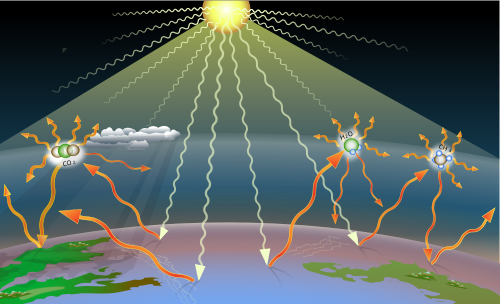
地球の表面温度を適切に保ち、生命が生存可能な環境を作り出しているのが温室効果ガスです。これらのガスは、太陽から届いたエネルギーで温まった地表が放出する赤外線を吸収し、再び地表へ戻すことで熱を閉じ込める役割を果たしています。もし大気中にこれらのガスが存在しなければ、地球の平均気温は約−18℃まで低下し、現在の15℃という温暖な環境は維持できません。
しかし、産業革命以降、人間活動によってこれらのガスの濃度が急激に上昇し、自然なバランスが崩れています。特に2015年から2024年にかけては、10年あたり0.27±0.1℃という前例のない速度で温暖化が進行しています。これは、過去10年間の温室効果ガス排出量が年間53.6±5.2 Gt CO2eという極めて高い水準にあることに加え、冷却効果を持つエアロゾルの減少が影響しています。
Key Facts
- 主要なガス: 水蒸気、二酸化炭素(CO2)、メタン(CH4)、一酸化二窒素(N2O)、オゾン(O3)が代表的です。
- 温暖化の主因: 人為的な温暖化の約4分の3は二酸化炭素によるもので、残りの多くをメタンが占めています。
- 濃度の上昇: 産業革命以降、CO2は50%以上、メタンは150%以上増加しました。
- 危険な閾値: 現在の排出ペースが続けば、2040年から2070年の間に、IPCCが「危険」とする2.0℃の気温上昇に達する可能性があります。
- 緊急の対策: 1.5℃に抑えるには、2025年までに排出量をピークさせ、2030年までに43%削減する必要があります。
温室効果の科学的メカニズム
放射強制力と熱の吸収
温室効果ガスは、特定の波長の電磁波を吸収する性質を持っています。地表から放射される熱エネルギーの波長と、ガスが吸収する波長が重なることで、熱が宇宙空間へ逃げるのを妨げます。この熱を蓄積させる能力を放射強制力と呼び、この値が高まるほど地表の温度は上昇します。
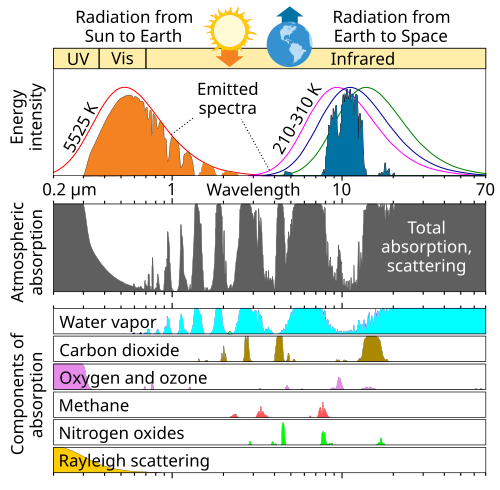
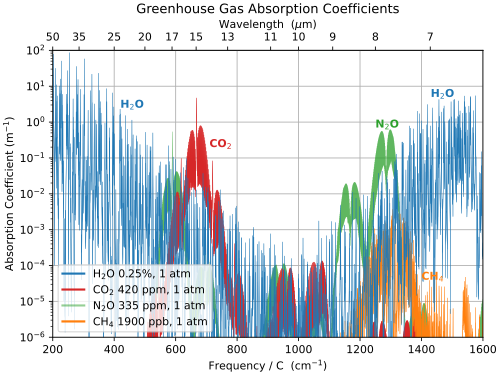
![Atmospheric gases only absorb some wavelengths of energy but are transparent to others. The absorption patterns of water vapor (blue peaks) and carbon dioxide (pink peaks) overlap in some wavelengths.[36]](/images/b6/3c/b63c8eb4f67b8d2dd360279df6670594b038fc486fc4f43e0c8a28f0740a813b.png)
水蒸気の特殊な役割
大気中で最も量が多く、温室効果の約半分を担っているのが水蒸気です。ただし、水蒸気は自ら温暖化を主導するのではなく、他の温室効果ガスによって気温が上がると蒸発量が増え、さらに温暖化を加速させるという「フィードバック」として機能します。
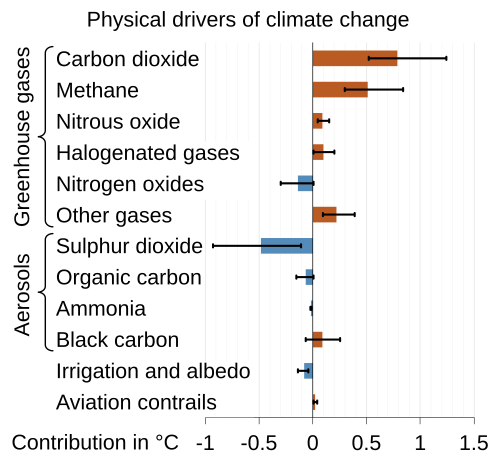
エアロゾルの影響と「ファウスト的取引」
大気中の微粒子(エアロゾル)は、太陽光を反射して地球を冷やす効果を持っています。しかし、大気汚染対策によってエアロゾルが減少した結果、皮肉にもその冷却効果が弱まり、温室効果ガスによる温暖化がより顕著に現れるという現象が起きています。これが2023年から2024年にかけての急激な気温上昇の一因と考えられています。
![Hansen et al. (2025) wrote that the IPCC had underestimated aerosols' cooling effect, causing it to also underestimate climate sensitivity (Earth's responsiveness to increases in greenhouse gas concentrations).[27] In what Hansen called a Faustian bargain, regulation of aerosols improved air quality, but aerosols' cooling effect became inadequate to temper the increasing warming effect of greenhouse gases—explaining unexpectedly large global warming in 2023–2024.[27]](/images/2a/c2/2ac273c26170a7a2ac94ffdb484a64741048af2a88484d9a38c488b6f025ea72.webp)
主要な温室効果ガスの特性と影響
ガスによって、大気中に留まる期間(寿命)や、二酸化炭素と比較した際の温室効果の強さ(地球温暖化係数:GWP)が異なります。例えば、メタンはCO2よりも短期間で分解されますが、20年という短期間で見れば、同じ質量でCO2の約84倍もの強力な温室効果を発揮します。
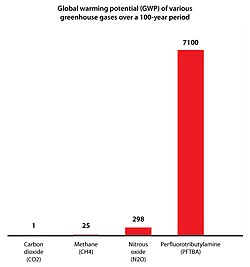
また、フッ素系温室効果ガス(PFTBAなど)は、排出量は少ないものの、極めて高いGWPを持ち、長期にわたって大気中に留まるため、無視できない影響を与えています。
![The radiative forcing (warming influence) of long-lived atmospheric greenhouse gases has accelerated, almost doubling in 40 years.[42][43]](/images/18/16/1816299492d07a398f1d6ef0d796b99584d8ee88e88d0282b61c2a662dd8ac18.webp)
ガス別特性まとめ
| ガス名称 | 大気中寿命 | 主な発生源 | 特徴 |
|---|---|---|---|
| 二酸化炭素 (CO2) | 数千年にわたる | 化石燃料の燃焼、工業、農業 | 温暖化への寄与度が最大 |
| メタン (CH4) | 平均約12年 | 農業、化石燃料生産、廃棄物 | 短期的には非常に強力な温室効果 |
| 一酸化二窒素 (N2O) | 約121年 | 農業、工業プロセス | 長期間大気中に残留 |
| フッ素系ガス | 数十年〜数万年 | 工業製品、冷媒 | 極めて高い地球温暖化係数 |
炭素サイクルと地球の歴史
地球上の炭素は、大気、陸上生態系、海洋、堆積物の間で絶えず循環しています。通常、この流れは均衡していますが、人間活動による大量のCO2排出がこのサイクルを乱しています。排出されたCO2の多くは植物や海洋などの「炭素吸収源」によって吸収されますが、吸収能力には限界があります。
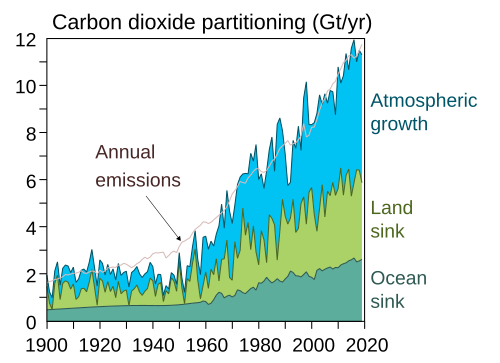
![Schematic representation of the overall perturbation of the global carbon cycle caused by anthropogenic activities, averaged from 2010 to 2019[90]](/images/ae/b4/aeb4f4b6dfad3ec13d2c504dabe6496c5de981187b021d86aa6d6bea8b5ddf6c.png)
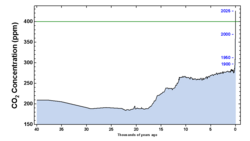
地質学的な視点で見ると、現在のCO2濃度は過去300万年、あるいは説によっては1400万年で最高水準にあります。過去の温暖期(中新世など)のデータは、現在のCO2濃度が将来的にどのような気候変動をもたらすかを予測するための重要な指標となります。
![Estimated atmospheric methane lifetime before the industrial era (shaded area); changes in methane lifetime since 1850 as simulated by a climate model (blue line), and the reconciled graph (red line).[67]](/images/65/af/65af5beea3d3cce0ee0e361090ed5796f2d176ccf6a795730b30a992c375c095.png)
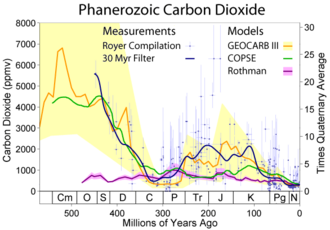
排出源と今後の展望
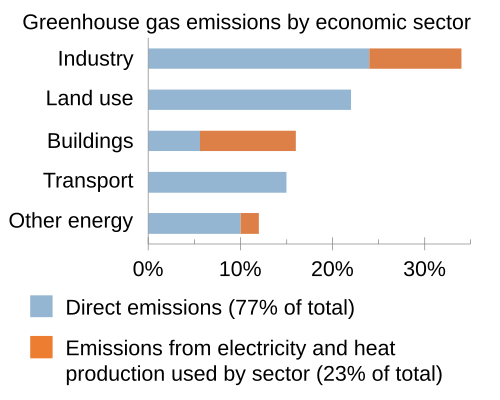
温室効果ガスの排出において、最も大きな割合を占めているのは産業部門です。これには電気や熱を得るための石炭、天然ガス、石油などの化石燃料の燃焼が含まれます。1912年の時点で既に、石炭の燃焼がCO2を増加させ気候を変えることが指摘されていました。
![This 1912 article succinctly describes how burning coal creates carbon dioxide that causes climate change.[107]](/images/d7/8d/d78d0108d5cf54bfbe072cf98a3654b399dc5edcd1d2d89f6619f823268bc026.jpg)
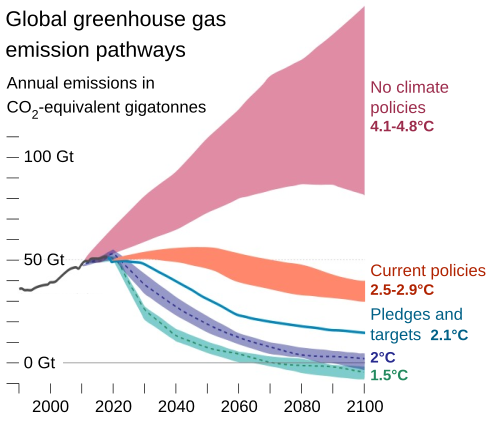
今後の気候変動を抑制するためには、世界的な排出削減シナリオの実行が不可欠です。NOAA(アメリカ海洋大気庁)が算出する「年次温室効果ガス指数(AGGI)」は、1990年を基準として、人類がどれだけ気候変動への「コミットメント(不可避な影響)」を積み上げてきたかを定量的に示しています。
Frequently Asked Questions
温室効果ガスはすべて有害なものなのですか?
いいえ。適度な温室効果ガスが存在しなければ、地球は氷に覆われた極寒の惑星となり、現在の生命は生存できません。問題は、人間活動によってその濃度が急激に高まり、気温が上がりすぎていることです。
二酸化炭素以外に注意すべきガスは何ですか?
特にメタンに注意が必要です。寿命は短いものの、熱を閉じ込める能力が非常に高く、短期間での気温上昇に大きく寄与します。また、工業的に生成されるフッ素系ガスも、極めて強力な温室効果を持つため重要視されています。
なぜCO2の削減に時間がかかるのですか?
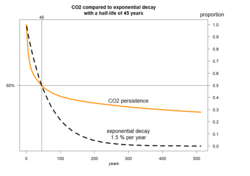
CO2は大気中に放出されると、自然な炭素サイクル(植物の吸収や海洋への溶解)で完全に吸収されるまでに数千年の時間を要するためです。一度増えてしまった濃度をすぐに下げることは困難です。
IPCCが言う「危険なレベル」とは具体的にどういうことですか?
産業革命前からの気温上昇が2.0℃を超えると、生態系の崩壊や海面上昇の加速など、取り返しのつかない深刻な気候変動が起こるリスクが高まることを意味しています。
エアロゾルが減るとなぜ温暖化が進むのですか?
エアロゾルは太陽光を反射して地表に届く熱を減らす「日傘」のような役割をしていました。大気浄化でこの日傘が取り除かれたため、温室効果ガスによる熱の蓄積がよりダイレクトに地表に影響するようになったためです。
References
- : μmol/mol = ppm = parts per million (106); nmol/mol = ppb = parts per billion (109); pmol/mol = ppt = parts per trillion (1012).
- Values are relative to year 1750. AR6 reports the effective radiative forcing which includes effects of rapid adjustments in the atmosphere and at the surface.
- The IPCC states that "no single atmospheric lifetime can be given" for CO2.: 731 This is mostly due to the rapid growth and cumulative magnitude of the disturbances to Earth's by the geologic extraction and burning of fossil carbon. As of year 2014, fossil CO2 emitted as a theoretical 10 to 100 GtC pulse on top of the existing atmospheric concentration was expected to be 50% removed by land vegetation and ocean in less than about a century, as based on the projections of referenced in the AR5 assessment. A substantial fraction (20–35%) was also projected to remain in the atmosphere for centuries to millennia, where fractional persistence increases with pulse size.
- Natural sources do exist, but these do not produce a concentration as high as 1
- Figure is combined total natural abundance of all perfluorocarbons: no data exist for individual compounds.
📸 フォトギャラリー