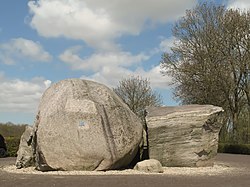
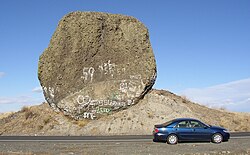
見渡す限りの平原や山頂に、周囲の岩石とは全く異なる種類の巨大な岩がぽつんと置かれていることがあります。地質学ではこれを迷い石(氷河漂礫)と呼びます。ラテン語で「彷徨う」を意味する「errare」に由来するこの岩石は、かつて巨大な氷河に飲み込まれ、数百キロメートルもの距離を旅して現在の場所に辿り着いた「旅人」のような存在です。
迷い石は単なる奇岩ではなく、過去に氷河がどこからどこへ流れたのかを証明する重要な手がかりとなります。地質学者は、迷い石の成分とそれが置かれている場所の基盤岩を比較することで、氷河の移動ルートを正確に特定することができるのです。
Key Facts
- 定義:周囲の地質とは異なる種類の岩石が、氷河などの作用で運ばれて堆積したもの。
- サイズ:小さな小石から、数万トンに及ぶ家のような巨大な岩塊まで多様。
- 役割:氷河の移動方向、過去の氷河時代の範囲、古代の湖の水位などを特定する指標となる。
- 運搬手段:氷河による直接運搬のほか、氷山に乗り合わせて海を渡る「氷山漂流」もある。
迷い石はどのようにして生まれるのか
迷い石の形成には、氷河による強力な浸食作用が深く関わっています。氷河がゆっくりと移動する際、以下のようなメカニズムで岩石を削り取り、運搬します。
氷河による浸食プロセス
- 研磨(アブレーション):氷河の底にある岩屑がヤスリのように基盤岩を削り、細かい堆積物(ティル)を作ります。
- プラッキング(引き抜き):氷河が基盤岩の割れ目に浸透し、大きな岩の塊を強引に引き剥がします。これが巨大な迷い石の正体となることが多いです。
- 氷による押し出し:氷河が底面と凍結し、凍った堆積物の層ごと押し出します。
- 剥離(スパリング):氷のレンズ形成に伴い、岩石の層が剥がれ落ちます。
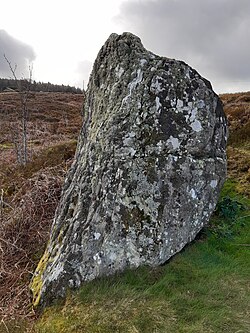
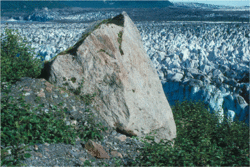
また、氷河の表面に岩崩れで落下した岩石が運ばれる「氷上運搬」というケースもあります。この場合、氷河の底で削られることがないため、岩の角が鋭い(角張っている)ことが特徴であり、似た成分の岩が密集して分布する傾向があります。
運搬ルートの多様性:陸路から海路まで
氷河による直接運搬
氷河の流れに沿って運ばれる迷い石は、モレーン(氷堆石)やエスケルなどの地形と共に、氷河の流向を決定づける証拠となります。特定の地域にしか存在しない珍しい岩石が遠く離れた場所で見つかれば、それが「出発点」となり、氷河のルートが確定します。
氷山による運搬(アイスラフティング)
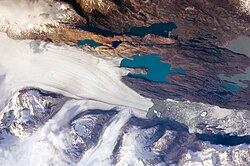
氷河が海に達して氷山となって分離すると、内部に抱えていた岩石も一緒に海へ運ばれます。氷山が溶ける際に海底に落とされた岩はドロップストーンと呼ばれ、古代の海洋温度や気候モデルを解析するための貴重なデータとなります。
また、氷山が古代の湖(氷河湖)で座礁し、溶けて岩を落とした場合、その高度を調べることで、かつての湖の最高水位を推定することが可能です。氷山の大きさと運べる岩の重量には相関関係があるため、精緻な計算が可能になります。
巨大な迷い石と特殊な事例
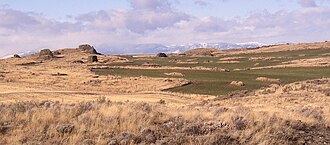
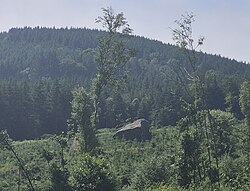
中には、単なる岩塊を超えて、基盤岩の巨大な板状の塊が運ばれた「メガブロック」と呼ばれるものがあります。これらは面積が1平方キロメートルを超えることもあり、一見すると現地の基盤岩に見えますが、掘削調査を行うと下に氷河堆積物があることが判明します。
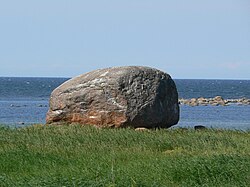
一方で、氷河以外の要因で運ばれた「非氷河性」の迷い石も存在します。例えば、大型の海藻(ケルプ)の根に絡まって運ばれた小石や、漂流木に巻き込まれた岩、さらにはアザラシなどの海棲哺乳類が胃の中に溜め込んだ石などが挙げられます。
迷い石の分布例と世界的な事例
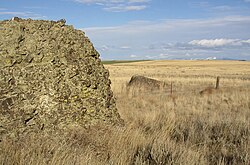
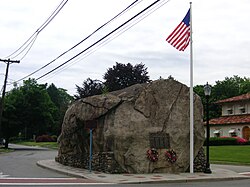
世界各地に、地域のシンボルとなっている迷い石が存在します。北米のカナダ・アルバータ州にある「ビッグロック」は、その巨大さで知られる代表例です。また、アメリカのプリマス・ロックは歴史的な象徴として有名ですが、地質学的には迷い石の一種です。
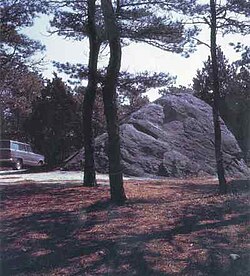
ヨーロッパでも、エストニアの「エハルキヴィ」やフィンランドの「クッカロキヴィ」など、数千トンから数万トンに及ぶ巨大な岩が点在しており、かつての北欧氷床のダイナミズムを今に伝えています。
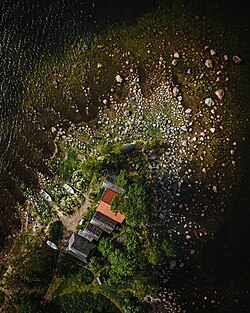
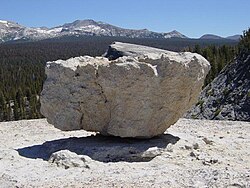
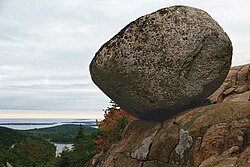
その他の地域では、アイルランドの彫刻が施された石や、アメリカ・メイン州のアカディア国立公園にある絶妙なバランスで止まっている「バブルロック」など、多様な形態で見ることができます。
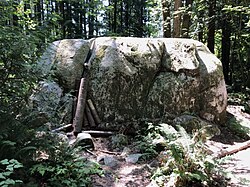
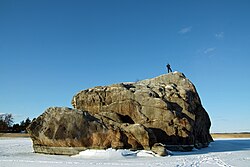
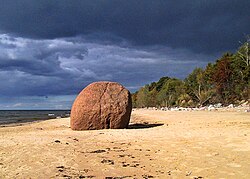
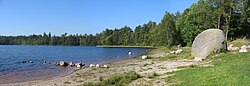
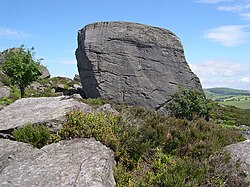
迷い石の概要まとめ
| 項目 | 氷河直接運搬 | 氷山運搬(アイスラフティング) | 氷上運搬(岩崩れ) |
|---|---|---|---|
| 主な運搬経路 | 陸上の氷河の流れ | 海洋・湖沼 | 氷河表面 |
| 岩石の形状 | 摩耗して丸みを帯びることが多い | 多様(ドロップストーン) | 角張っており鋭い |
| 地質学的意義 | 氷河の流向の特定 | 古気候・水位の推定 | 局所的な崩落履歴の特定 |
| 堆積場所 | モレーンやティル平原 | 海底・湖底・海岸線 | 氷河堆積物の最上層 |
Frequently Asked Questions
迷い石はどのようにして見分けるのですか?
その岩石自体の成分(鉱物組成)を分析し、周囲にある基盤岩の成分と比較します。周囲の地質とは明らかに異なる種類の岩石が孤立して存在している場合、それは外部から運ばれてきた迷い石であると判断されます。
氷河以外の方法で岩が運ばれることはありますか?
はい。地質学的な定義では、本来の場所から移動した物質を広く「erratic」と呼びます。氷河以外では、大型の海藻の根に絡まった岩や、漂流木に巻き込まれた石、動物が飲み込んだ石などが運搬される事例が報告されています。
迷い石がなぜ気候変動の研究に役立つのですか?
特に海に落ちたドロップストーンは、当時の氷山の量や海洋温度と密接に関係しています。これらを分析することで、数万年前の地球の気温や海面水位の変動をモデル化し、過去の気候変動を理解する手がかりになります。
迷い石のサイズに限界はありますか?
非常に多様です。小さな小石のようなものから、家一軒分ほどの大きさ、さらには数キロメートルに及ぶ巨大な岩盤の塊(メガブロック)まで存在します。カナダでは30kmを超える巨大なメガブロックが確認されています。
迷い石はいつ頃のものが多く見つかりますか?
多くは更新世( Pleistocene)などの氷河時代に運ばれたものです。例えば、北大西洋の海底には14,000年から70,000年前の氷山漂流による堆積層(ハインリッヒ層)が存在することが分かっています。
References
- Bard, Edouard (June 2004). "Effet de serre et glaciations, une perspective historique" [Greenhouse effect and ice ages: historical perspective]. Comptes Rendus Geoscience (in French). 336 (7–8): 603–638. :2004CRGeo.336..603B. :10.1016/j.crte.2004.02.005.
- (1882). "Textbook of geology". Macmillan. Retrieved 2009-12-12.
erratic glacier.
{{}}: Cite journal requires|journal=() - Bell, Robin E. (27 April 2008). "The role of subglacial water in ice-sheet mass balance". . 1 (5802): 297–304. :2008NatGe...1..297B. :10.1038/ngeo186.
- Rempel, A. W. (2008). "theory for ice-till interactions and sediment entrainment beneath glaciers". Journal of Geophysical Research. 113 (113). : F01013. :2008JGRF..113.1013R. :10.1029/2007JF000870. 11082114.
- Evenson, Edward B.; Burkhart, Patrick A.; Gosse, John C.; Baker, Gregory S.; Jackofsky, Dan; Meglioli, Andres; Dalziel, Ian; Kraus, Stefan; Alley, Richard B.; Berti, Claudio (December 2009). "Enigmatic boulder trains, supraglacial rock avalanches, and the origin of "Darwin's boulders," Tierra del Fuego". GSA Today. 19 (12). : 4–10. :10.1130/GSATG72A.1.
- Evans, David J.A.; Chris D. Clark; Wishart A. Mitchell (May 2005). "The last British Ice Sheet: A review of the evidence utilised in the compilation of the Glacial Map of Britain". Earth-Science Reviews. 70 (3–4). Copyright © 2005 Elsevier B.V: 253. :2005ESRv...70..253E. :10.1016/j.earscirev.2005.01.001. Retrieved 10 September 2013.
- Bond, Gerard; ; Broecker, Wallace; Labeyrie, Laurent; McManus, Jerry; Andrews, John; Huon, Sylvain; Jantschik, Ruediger; Clasen, Silke; Simet, Christine; Tedesco, Kathy; Klas, Mieczyslawa; Bonani, Georges; Ivy, Susan (1992). "Evidence for massive discharges of icebergs into the North Atlantic ocean during the last glacial period". Nature. 360 (6401): 245–249. :1992Natur.360..245B. :10.1038/360245a0. 4339371.
- Tripatia, Aradhna K.; Eagleb, Robert A.; Mortonc, Andrew; Dowdeswelld, Julian A.; Atkinsone, Katie L.; Bahéf, Yannick; Dawbera, Caroline F.; Khadung, Emma; Shawa, Ruth M.H.; Shorttleh, Oliver; Thanabalasundarami, Lavaniya (2007). "Evidence for glaciation in the Northern Hemisphere back to 44 Ma from ice-rafted debris in the Greenland Sea". Earth and Planetary Science Letters. 265 (1–2). Elsevier B.V.: 112–122. :2008E&PSL.265..112T. :10.1016/j.epsl.2007.09.045.
- Davisa, Niole K.; Locke III, William W.; Pierce, Kenneth L.; Finkel, Robert C. (May 2006). "Glacial Lake Musselshell: Late Wisconsin slackwater on the Laurentide ice margin in central Montana, USA". Geomorphology. 75 (3–4). Elsevier B.V.: 330–345. :2006Geomo..75..330D. :10.1016/j.geomorph.2005.07.021.
- Talbot, Christopher J. (April 1999). "Ice ages and nuclear waste isolation". Engineering Geology. 52 (3–4). Elsevier Science: 177–192. :10.1016/S0013-7952(99)00005-8.
📸 フォトギャラリー