アメリカ合衆国の形成において、ドイツからの移民は極めて重要な役割を果たしてきました。彼らは単に人口を増やしただけでなく、農業、政治、科学、そして芸術のあらゆる分野で独自の足跡を残しています。かつては全米に広がる強力な言語・文化圏を形成していたドイツ系コミュニティは、時代の荒波に揉まれながらも、現代のアメリカ社会に深く根付いています。
興味深いことに、「アメリカ」という名称自体、ドイツの地図製作者マルティン・ヴァルトゼーミュラーによって世界地図に初めて記されたことに由来しています。
![World map of German cartographer Martin Waldseemüller (Germany, 1507), which first used the name America[24]](/images/c9/69/c969a1ce5dc74bfcc59543a2ba3965bb4b7f55e236727ee37b0442bc07b13abb.jpg)
Key Facts
- 人口規模: 2020年の統計では約4,259万人(全米人口の約13.04%)がドイツ系を自認しています。
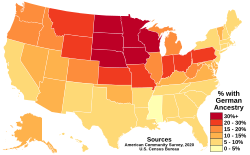
- 主要居住地: ウィスコンシン州(37.81%)やノースダコタ州(36.93%)など、中西部で高い比率を示しています。
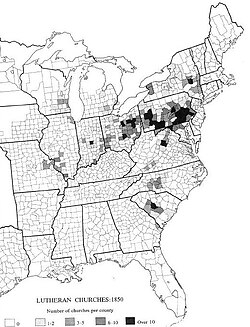
- 宗教的背景: キリスト教徒が中心で、プロテスタント(特にルター派)が51%、カトリックが26%を占めます。
- 言語の変遷: かつてはドイツ語やペンシルベニア・ダッチ語が広く話されていましたが、現在は英語への同化が進んでいます。
- 歴史的貢献: 軍事、経済、心理学、宇宙開発など、多岐にわたる分野で先駆的な人物を輩出しました。
移民の波と歴史的展開
植民地時代から独立戦争まで
初期のドイツ系移民は、ペンシルベニア州を中心に定住しました。1790年の国勢調査では、ペンシルベニア州人口の33.3%がドイツ系であり、彼らは独自の農業共同体を築きました。また、アメリカ独立戦争においては、フリードリヒ・ヴィルヘルム・フォン・シュトイベンのような軍事指導者が、大陸軍の訓練に多大な貢献をし、「アメリカ軍の父」と称されるようになりました。
![Friedrich Wilhelm von Steuben, "father of the American military"[54]](/images/48/d5/48d52ef681b4bc07091452dccc96f91028a5ba355302f5538eb35133e9c85f99.jpg)
19世紀の大移民時代
1820年から2004年までに、累計で720万人以上のドイツ人がアメリカへ渡りました。特に1850年代には約95万人、1880年代には145万人という大規模な流入がありました。彼らの多くは中西部の肥沃な土地を求め、農場を開拓しました。また、ロシア経由で移住した「ヴォルガ・ドイツ人」などのグループも、カンザス州などで独自の生活基盤を築きました。
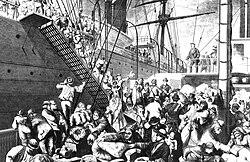
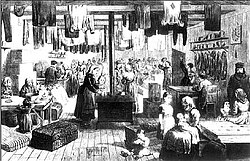
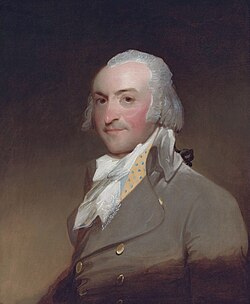
この時期、ドイツ系移民は都市部でも成功を収めました。ジョン・ジェイコブ・アスターは毛皮貿易と不動産で全米初の百万長者となり、経済的な影響力を強めました。
政治への進出と社会への統合
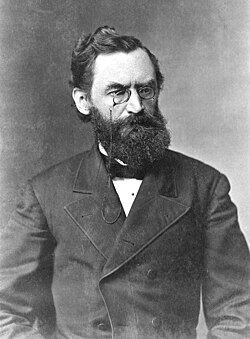
ドイツ系アメリカ人は政治の世界でも頭角を現しました。カール・シュルツはドイツ生まれの米国上院議員として初の快挙を成し遂げ、後に内務長官も務めました。彼らは教育面でも貢献し、幼稚園(Kindergarten)の概念をアメリカに導入するなど、社会制度の近代化を後押ししました。
文化的なアイデンティティと変遷
言語と宗教の維持
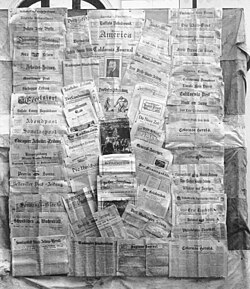
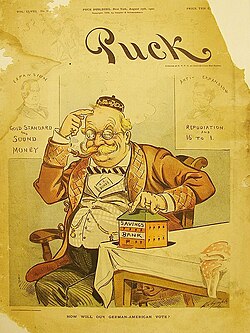
19世紀から20世紀初頭にかけて、ドイツ語はアメリカで広く話されており、多くのドイツ語新聞が発行されていました。宗教的にはルター派や再洗礼派(アミッシュやメノナイトなど)が強く、彼らの信仰心はコミュニティの結束を強める要因となりました。
世界大戦による同化の加速
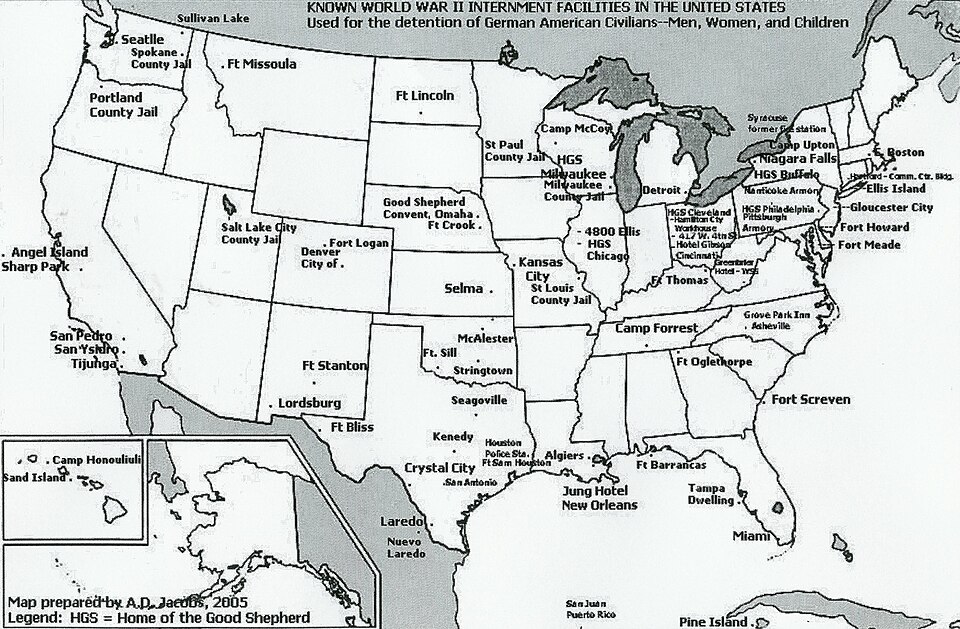
第一次および第二次世界大戦は、ドイツ系アメリカ人のアイデンティティに劇的な変化をもたらしました。対独感情の高まりにより、ドイツ語の使用が制限され、多くの人々が「ドイツ人」としての誇りを隠し、急速に英語圏の文化へ同化していきました。第二次世界大戦中には、一部のドイツ系住民が拘禁施設に収容されるという悲劇的な出来事もありました。
現代における伝統の継承
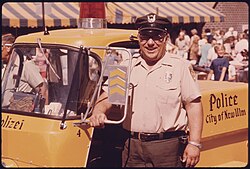
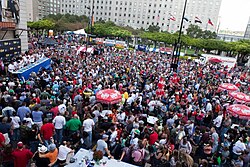
現代では、オクトーバーフェストのような祭事や、特定の地域(ミネソタ州ニューウルムなど)での伝統的なシンボルの維持を通じて、ルーツへの敬意が払われています。ニューウルムにあるヘルマン記念碑は、かつての反ドイツ感情に直面した移民たちの団結の象徴として今も残っています。
![The Hermann Heights Monument in New Ulm, Minnesota. Erected by the Sons of Hermann, it is the 3rd largest copper statue in the United States after the Statue of Liberty and Portlandia. Historians have regarded Hermann's victory over Roman troops in 9 CE as Rome's greatest defeat,[143] and in the 19th century he became a symbol of unity for German immigrants facing anti-German sentiment in the United States.[144]](/images/0d/a2/0da2e8ae93a792f8bb0a0119bb441091a8e1c959a842a15aa3408e47f89b59f5.jpg)
人口統計と地域分布
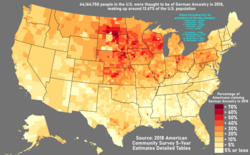
ドイツ系アメリカ人の分布は、歴史的な定住パターンを色濃く反映しています。特に中西部の州では、人口の3分の1以上がドイツ系を自認している地域もあり、今なお強い文化的影響が見られます。
| 州名 | 人口数 | 州人口に占める割合 |
|---|---|---|
| ウィスコンシン州 | 2,195,662 | 37.81% |
| ノースダコタ州 | 280,834 | 36.93% |
| サウスダコタ州 | 314,246 | 35.74% |
| アイオワ州 | 1,016,154 | 32.26% |
| ミネソタ州 | 1,753,612 | 31.31% |
| ペンシルベニア州 | 2,915,171 | 22.78% |
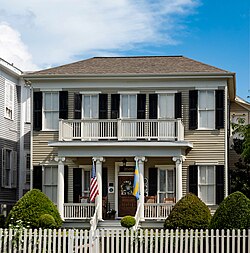
また、地域によっては今も伝統的な建築様式が残っており、ウィスコンシン州のクリーゼ・ハウスバーンなどは、当時の移民の生活様式を今に伝えています。
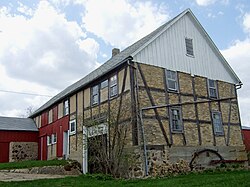
![The Wahrenberger House in Austin served as a German-American school.[75]](/images/05/7e/057e76e581f110fdf19ffa0d09c5580e3b4d2e2ea716e5cb292a8fddab181623.jpg)
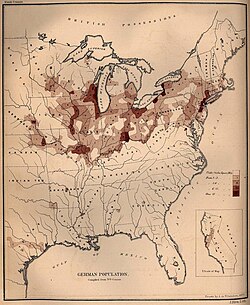
広域的な分布を見ると、中西部から東海岸にかけて広く分散していることがわかります。
![U.S. Ancestries by County, Germany in light blue, as of 2000[update] census](/images/0f/6c/0f6c24ef9f2573b4db1a99c7b0a08115d63d0504148645ecdc16188850c606a6.jpg)
多方面にわたる著名な人物
ドイツ系アメリカ人は、学術、芸術、技術、政治など、あらゆる分野で世界的な影響力を持つ人物を輩出しました。心理学の権威であるヒューゴー・ミュンスターベルクや、IBMの創設者ハーマン・ホレリス、宇宙開発の父の一人であるヴェルナー・フォン・ブラウンなどがその例です。
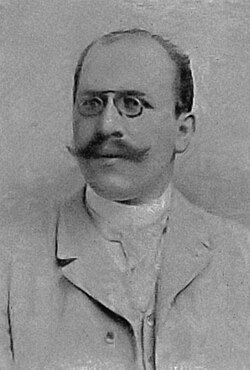
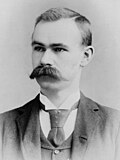
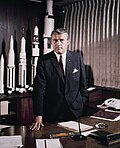
また、インフラ整備においても、ジョン・A・ローブリングによるブルックリン橋の建設など、不朽の業績を残しています。さらに、エンターテインメント界のウォルト・ディズニーや、現代の政治・文化シーンで注目されるドナルド・トランプ、俳優のサンドラ・ブロックなどもドイツ系ルーツを持っています。

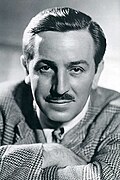
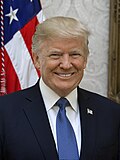

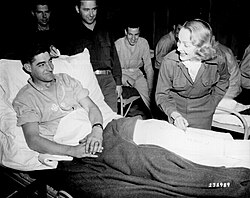
戦時中のエンターテインメントでは、マーリーン・ディートリヒが兵士たちを鼓舞し、文化的な架け橋となりました。
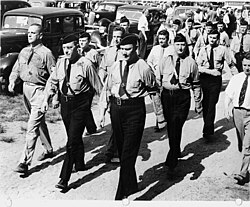
一方で、1930年代にはドイツ系アメリカ人連盟(German American Bund)のような、ナチズムに傾倒した政治団体が現れた歴史もあり、移民コミュニティ内部でも激しい思想的対立が存在しました。
Frequently Asked Questions
ドイツ系アメリカ人が最も多い州はどこですか?
割合で見た場合、ウィスコンシン州が約37.8%と最も高く、次いでノースダコタ州やサウスダコタ州などの中西部諸州で高い比率となっています。
「ペンシルベニア・ダッチ」とは何ですか?
ペンシルベニア州に定住したドイツ系移民(主にラインラント地方出身者)を指します。「ダッチ」はオランダ人(Dutch)ではなく、ドイツ語の「ドイツ人(Deutsch)」が英語風に聞こえたことに由来しています。
なぜドイツ語を話す人が急激に減ったのですか?
特に第一次世界大戦中、アメリカ国内で激しい反ドイツ感情が高まり、ドイツ語を話すことが社会的に困難になったため、多くの人々が英語への同化を選択しました。
ドイツ系アメリカ人がアメリカ社会に与えた最大の貢献は何ですか?
多岐にわたりますが、農業技術の向上、幼稚園教育の導入、そして科学技術(IBMの創設や宇宙開発など)や建築(ブルックリン橋など)における革新的な貢献が挙げられます。
現代でもドイツの伝統は受け継がれていますか?
はい。シンシナティの「Zinzinnati」のような大規模なオクトーバーフェストや、中西部のコミュニティにおける伝統的な祭事、食文化などを通じて、今も大切に受け継がれています。
References
- Similarly, W. Bruce Leslie has written that "German American invisibility in contemporary society and in history is an anomaly deserving attention. By standard statistical measurement, the Germans were the largest immigrant group. Yet historians have been far more interested in Italian, Irish, Polish, and Eastern European Jewish immigration and culture. Irish bars, Italian restaurants, and Jewish humor abound. German language is rarely studied in high schools or colleges and German restaurants are an endangered culinary species. The blending of so many millions into the American mainstream with barely a trace is one of the major untold stories in American history".: 294
- In the book that Kazal appears to be quoting here, Waters states "Many people cited various political or social events as having an effect on their consciousness and degree of ethnic identity. I have already noted Laurie Jablonski's stronger identification with her Polish than with her German ancestry, a fact she attributed to the influence her surname had on how others reacted to her. When I asked about times when the relative influence of one or the other side might be stronger, she revealed that political events in Germany and Poland had a lot to do with how she chose to identify herself".: 83 Waters goes on to state that "The association of being German with being a Nazi is still strong for Laurie, forty years after World War II. A similar story to Laurie's is related in a description by Hinda Winawer-Steiner and Norbert Wetzel of a workshop for family therapists on ethnicity and family therapy. The therapists were supposed to talk about their ethnicity and how it might influence their work. A discussion of a German-American family revealed that two of the therapists who had identified themselves as Polish-American at the beginning of the workshop were, in fact, half German. It turned out that they were suppressing their German identity because of the negative connotations associated with being German. "When asked, one explained that she simply considered herself Polish. The other, after some reflection, said that in a group that was half Jewish, she had been reluctant to acknowledge her German heritage" (Winawer-Steiner and Wetzel 1982, 253)".: 84
- Peterson himself seems not to fully agree with this, stating "Most community studies have examined very large, heterogeneous German-American urban populations that assimilated relatively quickly or, less commonly, large, homogeneous rural ones that did not. Hence, German-Americans' diversity has emerged as perhaps the crucial variable accounting for their assimilationist propensities. Otter Tail County, certainly a rural area, had German-American communities that were diverse and small, and these communities succeeded in maintaining crucial ethnic boundaries into the twentieth century. The persistence of these heterogeneous, lightly populated German-American communities suggest that place of residence was the key factor in the rate of German-American assimilation. Urban orientation may have corroded German-American ethnic boundaries more than diversity did, though the two variables were not unrelated".: 47–48
- A similar statement about the diversity of German Americans has been made by Andrew R. L. Cayton: "In the process of participating in the public culture of Ohio, some Germans struggled to keep connections with their birthplaces. A coherent community was difficult to maintain, however. Proud as they were of 'Deutschthum', or the sum of Germanness, it became increasingly vague. Germans were too diverse in terms of religion and politics. 'Wherever four Germans gathered,' observed the Deutsche Pionier in 1879, 'they will find four different ideas.'": 155 Another similar statement about the diversity of German Americans has been made by Randall M. Miller. Writing about , Miller states "During the nineteenth century, the Irish and Germans provided the largest numbers of mmigrants and gave the city its immigrant cast. The Irish and Germans differed in their ethnic cohesiveness and interactions with the host culture(s)".: 129 Miller then states that "German immigrants ... lacked sufficient cultural and social unity to impose a single powerful German imprint on the city. They were widely dispersed throughout the Second and Third Municipalities, and in Carrollton and Lafayette, and they were fragmented by differences in religion, region of origin, and class. The proliferation of German clubs, associations, and institutions bespoke the Germans' numerical significance in the city, but it also attested to their divisions, for such organizations tended to cater to very specific groups rather than bind the various German strands together. To be sure, distinct concentrations of Germans existed in various parts of the city, wherein various German cultural values survived and influenced the culture of non-Germans in their midst, and German Gemütlichkeit was easily accommodated in the city's genial public culture. But, overall, Germans were too diverse and divided to dominate the city".: 129 Miller contrasts this situation with the situation of Irish Americans in New Orleans: "Irish immigrants had greater cohesion and wider influence than the Germans. In the great waves of late antebellum immigration, the vast majority of Irish immigrants entering New Orleans came from a few select counties in Ireland. They shared a common faith, poverty, and national identity. ... New Orleans was small enough so that dispersal did not diminish Irish power; in fact, Irish immigrants everywhere shared so many common cultural and class interests that dispersion served to broaden Irish influence on the city's culture".: 129
📸 フォトギャラリー