フッ素(Fluorine)は、周期表の第17族に属するハロゲン元素であり、全元素の中で最も電気陰性度が高い(ポーリングスケールで3.98)という極めて特異な性質を持っています。この性質により、フッ素はあらゆる物質と激しく反応しようとする「最強の酸化剤」としての側面を持ち、その制御は化学史上最大の挑戦の一つでした。
常温では淡黄色のガスとして存在しますが、極低温では鮮やかな黄色の液体となり、さらに温度が下がると不透明なα相または透明なβ相の固体へと変化します。

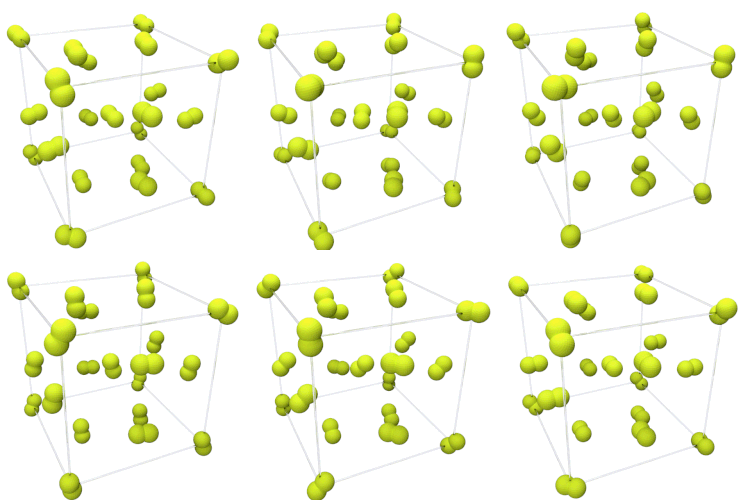
固体状態のフッ素(β相)では、単位格子の面にあるF2分子の回転が平面内に制限される一方で、頂点にある分子は自由に回転できるという複雑な結晶構造を有しています。
Key Facts
- 最強の反応性: 全元素中で最も電気陰性度が高く、ほぼ全ての元素と反応する。
- 物理的状態: 標準状態では淡黄色の気体。
- 原子番号: 9(原子量 18.998)。
- 産業的価値: 半導体、医薬品、高機能ポリマー(テフロン等)に不可欠。
- 危険性: 極めて腐食性が強く、毒性があるため厳格な取り扱いが必要。
フッ素の発見と単離の歴史
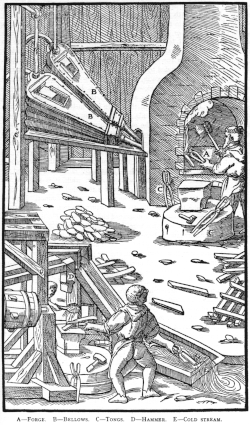
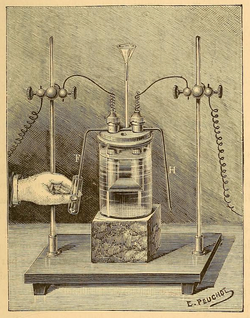
フッ素の存在は古くから鉱物(蛍石など)を通じて知られていましたが、その激しい反応性のために単離は困難を極めました。1810年にアンドレ=マリー・アンペールによってその存在が予言され、最終的に1886年にアンリ・モアッサンが電気分解法を用いて単離に成功しました。
モアッサンが開発した装置は、当時の化学の常識を覆すものであり、この功績により彼は1906年にノーベル化学賞を受賞しています。
化学的特性と反応メカニズム
フッ素の最大の特徴は、電子を引き寄せる力が極めて強いことです。これにより、水素との結合(H-F)は非常に強力になり、水素ハロゲン化物の中でも特異的に高い沸点を示します。

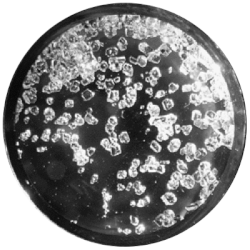
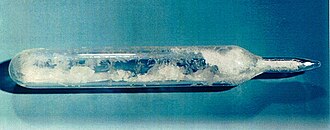
また、通常は反応しないとされる希ガス(キセノンなど)とさえ化合物を作る能力を持っており、1962年に撮影されたキセノン四フッ化物の結晶は当時の化学界に大きな衝撃を与えました。
多様な化合物と酸化状態
フッ素は主に-1の酸化状態で存在しますが、金属と結合してイオン結晶を形成したり、高分子化合物(ポリマー)を構成したりします。例えば、ナトリウムフッ化物は典型的なイオン結合を示しますが、レニウムヘプタフッ化物は分子状の構造を取ります。
産業的な製造と応用
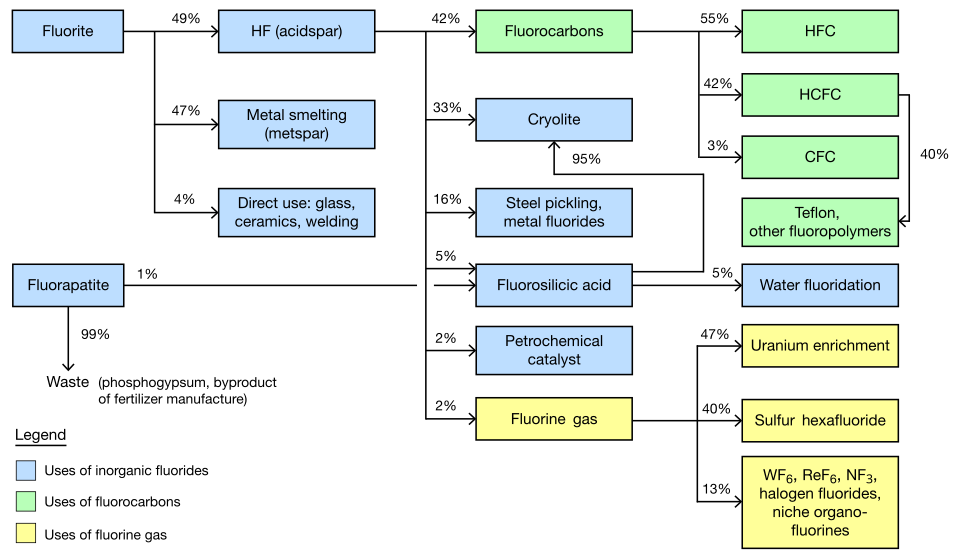
工業的なフッ素の製造は、主に蛍石(CaF2)に硫酸を反応させてフッ化水素(HF)を生成し、それをさらに電気分解することでF2ガスを得るルートが一般的です。
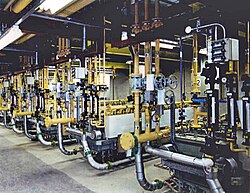
得られたフッ素化合物は、現代のテクノロジーに欠かせない多方面で利用されています。
1. 高機能材料とポリマー
フッ素樹脂(PTFEなど)は、耐熱性、耐薬品性、低摩擦性に優れています。また、燃料電池に使用されるナフィオン(Nafion)のような特殊なフッ素ポリマーも開発されています。

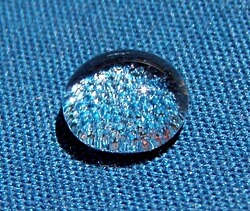
さらに、表面処理剤としてのフッ素界面活性剤は、布地などに強力な撥水・撥油性能を付与します。
2. 金属精錬と特殊化学品
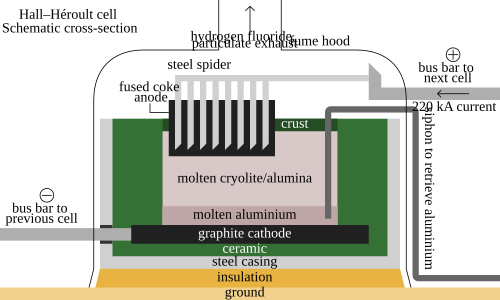
アルミニウムの抽出には氷晶石(Cryolite)が不可欠であり、フッ素なしでは現代のアルミ工業は成り立ちません。また、六フッ化ウランはウラン濃縮プロセスにおいて重要な役割を果たします。
3. 電気絶縁と消火剤
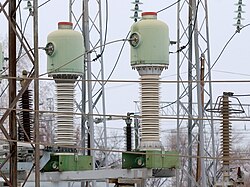
六フッ化硫黄(SF6)は極めて優れた絶縁性能を持ち、高電圧の変電設備などで広く利用されています。
医療・健康分野への貢献
フッ素は、私たちの健康維持や高度な診断技術にも寄与しています。
- 歯科ケア: フッ化物による塗布処置は、歯のエナメル質を強化し、虫歯を予防します。
- 医薬品: 抗うつ薬のフルオキセチンなど、多くの医薬品にフッ素原子が導入されており、代謝安定性の向上や薬効の調節に利用されています。
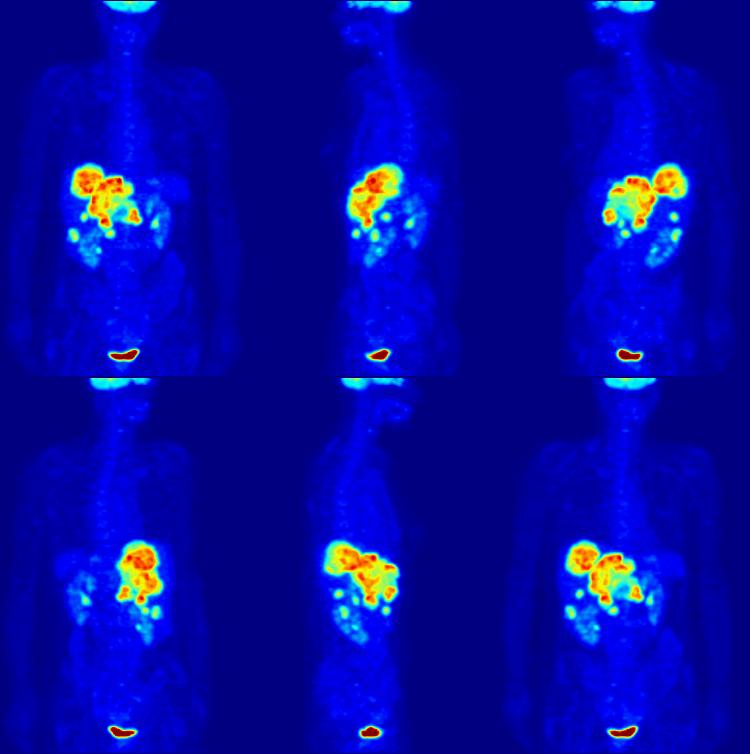
- 核医学: 放射性同位体であるフッ素18(18F)を用いたPETスキャンは、がんなどの病変部位を可視化する高度な診断法として確立しています。


安全性と環境への影響
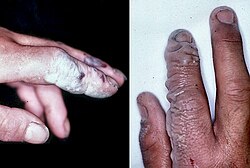
フッ素はその有用性の反面、極めて危険な物質でもあります。特にフッ化水素酸(HF)による化学火傷は、皮膚から浸透して体内のカルシウムを奪うため、外見上の症状が遅れて現れることがあり、非常に危険です。

また、三フッ化塩素のような超強力な酸化剤は、通常は不燃物とされるアスベストやコンクリートさえも燃焼させる能力を持ちます。
![Chlorine trifluoride, whose corrosive potential ignites asbestos, concrete, sand and other fire retardants[132]](/images/38/81/3881e7d4c3d0a2f0c476a8d90c02c77957d9163b1f3d18c45a6e795ba43c780b.png)
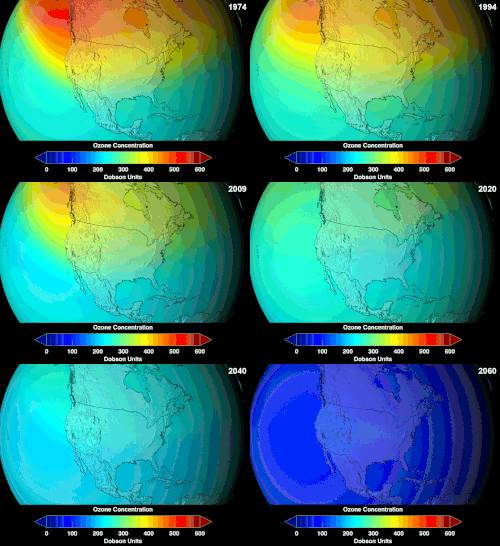
環境面では、かつて広く使われていたCFCs(クロロフルオロカーボン)によるオゾン層破壊が問題となりました。また、PFOSやPFOAなどの有機フッ素化合物は、自然界で分解されにくい「永遠の化学物質」として、生物蓄積性が懸念されています。
![Perfluorooctanesulfonic acid, a key Scotchgard component until 2000[288]](/images/8b/bc/8bbcd28a65005f3aa6d461fd5bbe349a3f99ef660b1c09cfe552a0051e09d2ba.png)
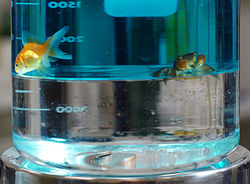
一方で、フッ素の物理的特性を利用したユニークな現象もあり、例えば高密度のパーフルオロヘプタンは水と混ざり合わず、明確な境界層を形成します。
フッ素の基本特性まとめ
| 項目 | 値 / 特徴 |
|---|---|
| 原子番号 | 9 |
| 電気陰性度 | 3.98(全元素中最高) |
| 融点 / 沸点 | -219.67 °C / -188.11 °C |
| 外観 | 淡黄色(気体)、鮮黄色(液体) |
| 主な鉱物 | 蛍石(CaF2)、氷晶石(Na3AlF6) |
| 主な用途 | フッ素樹脂、半導体エッチング、医薬品、PET診断 |
Frequently Asked Questions
なぜフッ素はこれほど反応性が高いのですか?
フッ素は原子半径が非常に小さく、原子核が外殻電子を強く引きつけるため、他の原子から電子を奪い取ろうとする力(電気陰性度)が全元素の中で最大だからです。
フッ素樹脂(テフロンなど)が汚れにくいのはなぜですか?
炭素とフッ素の結合(C-F結合)が極めて強く、安定しているためです。このため、他の物質が化学的に攻撃しにくく、表面エネルギーが低いため汚れが付着しにくい特性を持ちます。
歯科治療でフッ素が使われる理由は?
フッ素イオンが歯の表面(ヒドロキシアパタイト)に取り込まれることで、より酸に強い「フルオロアパタイト」に変化し、脱灰(歯が溶けること)を防ぐ効果があるためです。
フッ化水素酸(HF)が特に危険と言われるのはなぜですか?
単なる酸としての腐食だけでなく、フッ化物イオンが皮膚を透過して体内のカルシウムイオンと結合し、低カルシウム血症を引き起こしたり、骨組織を破壊したりする深刻な全身毒性を持つためです。
PETスキャンにおけるフッ素の役割は何ですか?
放射性同位体であるフッ素18をブドウ糖などの分子に組み込むことで、がん細胞などの代謝が活発な部位に集積させ、その放射線を検出することで体内の状態を画像化しています。
References
- Sources disagree on the radii of oxygen, fluorine, and neon atoms. Precise comparison is thus impossible.
- α-Fluorine has a regular pattern of molecules and is a crystalline solid, but its molecules do not have a specific orientation. β-Fluorine's molecules have fixed locations and minimal rotational uncertainty.
- supposedly described fluorite in the late 15th century, but because his writings were uncovered 200 years later, this work's veracity is doubtful.
- Or perhaps from as early as 1670 onwards; Partington and Weeks give differing accounts.
- Fl, since 2012, is used for .
- , , , and the Irish chemists Thomas and George Knox were injured. Belgian chemist and French chemist [de] died. Moissan also experienced serious hydrogen fluoride poisoning.
- Also honored was his invention of the .
- The metastable and have higher-order fluorine bonds, and some use it as a . is another possibility.
- ZrF4 melts at 932 °C (1,710 °F), HfF4 sublimes at 968 °C (1,774 °F), and UF4 melts at 1,036 °C (1,897 °F).
- These thirteen are those of molybdenum, technetium, ruthenium, rhodium, tungsten, rhenium, osmium, iridium, platinum, polonium, uranium, neptunium, and plutonium.
📸 フォトギャラリー