Color lines in a spectral range
← ホームへ戻る
セシウムアルカリ金属原子時計1秒の定義セシウム137

セシウムの特性と用途:時間定義を支える究極のアルカリ金属

🗓 2026年8月10日

セシウム(元素記号:Cs、原子番号:55)は、周期表の第1族に属するアルカリ金属の一種です。淡い金色を帯びた銀色の外観を持ち、非常に低い融点を持つことで知られています。その極めて高い反応性と、原子レベルでの精密な振動特性により、現代社会のインフラを支える時間計測の基準として不可欠な役割を果たしています。

Key Facts

  • 時間基準:セシウム133の超微細構造遷移が「1秒」の定義に使用されている。
  • 物理的特徴:融点が28.5℃と非常に低く、室温付近で液体になる数少ない金属の一つ。
  • 化学的性質:安定元素の中で最も電気陰性度が低く(ポーリング尺度 0.79)、極めて反応性が高い。
  • 天然存在:主にポルサイトという鉱石から抽出される。
  • 危険性:自然発火性があり、水と激しく反応するため、取り扱いには厳重な注意が必要。

セシウムの発見と歴史

セシウムは1860年、ドイツの科学者グスタフ・キルヒホフとロベルト・ブンゼンによって発見されました。彼らは自ら開発した分光計を用いて、未知の元素が放つ特有のスペクトル線を観測しました。
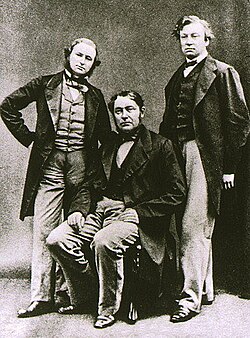
Three middle-aged men, with the one in the middle sitting down. All wear long jackets, and the shorter man on the left has a beard.

「セシウム」という名称は、ラテン語で「青灰色」を意味する「caesius」に由来しており、これは観測されたスペクトル線の色に基づいています。

Color lines in a spectral range

その後、1882年にカール・セッターベルグによって初めて単体として分離されました。

物理的・化学的特性

セシウムは非常に柔らかい金属であり、その物理的特性はルビジウムやカリウムに似ています。最大の特徴は、融点が301.7 K(28.5 °C)と極めて低いため、暖かい部屋の中では液体として存在し得ることです。
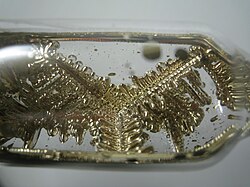
Y-shaped yellowish crystal in glass ampoule, looking like the branch of a pine tree

また、測定または計算された元素の中で最大の原子半径(約260ピコメートル)を持ち、電子を放出しやすい性質があります。このため、安定した元素の中では最も電気陰性度が低く、化学的に非常に不安定で反応性に富んでいます。例えば、水とはマイナス116℃という極低温下であっても激しく反応します。
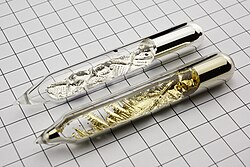
Caesium crystals (golden) compared to rubidium crystals (silvery)

合金と化合物

セシウムは他のアルカリ金属や金、水銀(アマルガム)と合金を形成します。特に、セシウム、カリウム、ナトリウムを特定の比率(モル比でCs 41%、K 47%、Na 12%)で混合した合金は、既知の金属合金の中で最低の融点(-78 °C)を持つことが知られています。

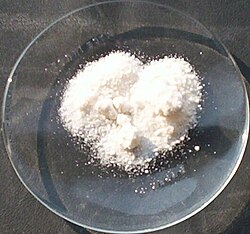
化合物としては、塩化物などのハロゲン化物や酸化物が代表的です。塩化セシウム(CsCl)は、立方晶系の構造を持つ白色粉末として存在します。
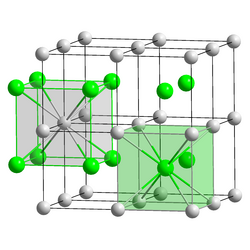
27 small grey spheres in 3 evenly spaced layers of nine. 8 spheres form a regular cube and 8 of those cubes form a larger cube. The grey spheres represent the caesium atoms. The center of each small cube is occupied by a small green sphere representing a chlorine atom. Thus, every chlorine is in the middle of a cube formed by caesium atoms and every caesium is in the middle of a cube formed by chlorine.
Some fine white powder on a laboratory watch glass

また、最新の研究では、二重壁カーボンナノチューブ内部で成長させた単原子セシウムハロゲン化物ワイヤなどのナノ構造体も報告されています。

Monatomic caesium halide wires grown inside double-wall carbon nanotubes (TEM image).[37]

主要な用途と応用分野

時間の定義と原子時計

セシウムの最も重要な応用は、時間の標準化です。国際単位系(SI)における「1秒」は、セシウム133原子の基底状態における超微細構造遷移周波数(ΔνCs)が9,192,631,770回振動する時間として定義されています。
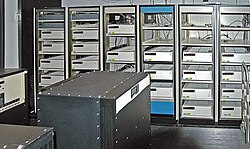
A room with a black box in the foreground and six control cabinets with space for five to six racks each. Most, but not all, of the cabinets are filled with white boxes.

この原理を利用したセシウム原子時計は、極めて高い精度を誇り、GPSなどの衛星測位システムや通信ネットワークの同期に不可欠な技術となっています。

産業およびその他の利用

石油掘削などの産業分野では、セシウムフォーメート(HCOOCs)という高密度の溶液が利用されています。また、その化学的特性を活かして、光電イメージングデバイスや、特定の条件下でのイオン推進機(燃料としてセシウムや水銀を使用)への応用も研究されています。
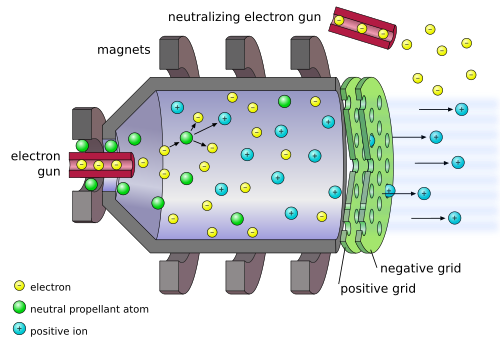
Electrons beamed from an electron gun hit and ionize neutral fuel atoms; in a chamber surrounded by magnets, the positive ions are directed toward a negative grid that accelerates them. The force of the engine is created by expelling the ions from the rear at high velocity. On exiting, the positive ions are neutralized from another electron gun, ensuring that neither the ship nor the exhaust is electrically charged and are not attracted.

同位体と放射能

セシウムには質量数112から152まで、41の同位体が知られています。天然に安定して存在するのはセシウム133のみです。

一方で、核分裂生成物として発生するセシウム137は、半減期約30年を持つ放射性同位体であり、医療用の放射線治療や工業的な放射線源として利用される一方、原子力事故による環境汚染の原因としても知られています。
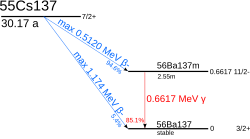
A graph showing the energetics of caesium-137 (nuclear spin: I=.mw-parser-output .sfrac{white-space:nowrap}.mw-parser-output .sfrac.tion,.mw-parser-output .sfrac .tion{display:inline-block;vertical-align:-0.5em;font-size:85%;text-align:center;margin-left:.1em;margin-right:.1em}.mw-parser-output .sfrac .num{display:block;border-bottom:1px solid}.mw-parser-output .sfrac .den{display:block;line-height:1.5em}.mw-parser-output .sr-only{border:0;clip:rect(0,0,0,0);clip-path:polygon(0px 0px,0px 0px,0px 0px);height:1px;margin:-1px;overflow:hidden;padding:0;position:absolute;width:1px}⁠7/2⁠+, half-life about 30 years) decay. With a 94.6% probability, it decays by a 512 keV beta emission into barium-137m (I=11/2-, t=2.55min); this further decays by a 662 keV gamma emission with an 85.1% probability into barium-137 (I=.mw-parser-output .sfrac{white-space:nowrap}.mw-parser-output .sfrac.tion,.mw-parser-output .sfrac .tion{display:inline-block;vertical-align:-0.5em;font-size:85%;text-align:center;margin-left:.1em;margin-right:.1em}.mw-parser-output .sfrac .num{display:block;border-bottom:1px solid}.mw-parser-output .sfrac .den{display:block;line-height:1.5em}.mw-parser-output .sr-only{border:0;clip:rect(0,0,0,0);clip-path:polygon(0px 0px,0px 0px,0px 0px);height:1px;margin:-1px;overflow:hidden;padding:0;position:absolute;width:1px}⁠3/2⁠+). Alternatively, caesium-137 may decay directly into barium-137 by a 0.4% probability beta emission.

チェルノブイリ原発事故後の放射線量への寄与度を見ると、事故から約200日後にはセシウム137が主要な放射線源となったことが示されています。
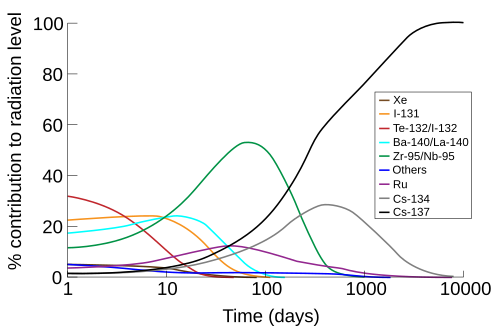
Graph of percentage of the radioactive output by each nuclide that form after a nuclear fallout vs. logarithm of time after the incident. In curves of various colours, the predominant source of radiation are depicted in order: Te-132/I-132 for the first five or so days; I-131 for the next five; Ba-140/La-140 briefly; Zr-95/Nb-95 from day 10 until about day 200; and finally Cs-137. Other nuclides producing radioactivity, but not peaking as a major component are Ru, peaking at about 50 days, and Cs-134 at around 600 days.

その他の同位体としては、非常に長い半減期(約133万年)を持つセシウム135などが存在します。また、Cs11O3のようなクラスター構造の研究も行われています。
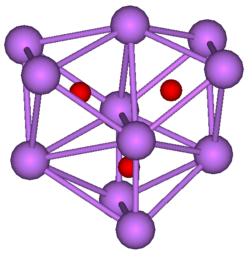
The stick and ball diagram shows three regular octahedra, which are connected to the next one by one surface and the last one shares one surface with the first. All three have one edge in common. All eleven vertices are purple spheres representing caesium, and at the center of each octahedron is a small red sphere representing oxygen.

天然存在と生産

セシウムは自然界では単体で存在せず、主にポルサイト(Pollucite)という希少な鉱物に含まれています。
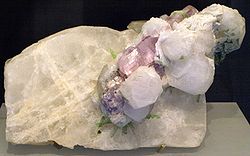
A white mineral, from which white and pale pink crystals protrude

工業的な生産では、鉱石から得られた塩化セシウムなどの化合物を、カルシウムやバリウムを用いて700〜800℃で還元し、得られたセシウム金属を蒸留することで精製します。

安全上の注意と危険性

セシウムは極めて危険な物質であり、NFPA 704の危険性指標では、火災、健康、反応性のすべてにおいて高い数値が割り当てられています。

NFPA 704 four-colored diamond

特に、空気中の酸素や水分と激しく反応して発火・爆発する性質(自然発火性)があるため、保管にはアルゴンなどの不活性ガスが充填された容器が使用されます。

セシウムの基本データまとめ

セシウム(Cs)の主要特性一覧
項目 詳細値 / 特徴
原子番号 55
標準原子量 132.905 451 96
融点 28.5 °C (301.7 K)
沸点 671 °C (944 K)
密度 (20°C) 1.886 g/cm³
電気陰性度 0.79 (ポーリング尺度)
結晶構造 体心立方格子 (bcc)
安定同位体 セシウム133 (100%)

Frequently Asked Questions

セシウムが「1秒」の定義に使われているのはなぜですか?

セシウム133原子の基底状態における超微細構造遷移という現象が、極めて安定しており、非常に高い精度で周波数を再現できるためです。この一定の振動数を基準にすることで、世界中で誤差のない正確な時間を共有することが可能になります。

セシウムは自然界にどのように存在していますか?

セシウムは反応性が非常に高いため、自然界で単体として見つかることはありません。主にポルサイトというゼオライト系の鉱物に塩として含まれており、そこから化学的な処理を経て抽出されます。

セシウム137と安定なセシウム133の違いは何ですか?

セシウム133は天然に存在する安定した同位体であり、放射能を持ちません。一方、セシウム137は核分裂によって生成される放射性同位体であり、ベータ崩壊を経てバリウム137に変化し、その過程で放射線を放出します。

セシウムを扱う際に最も注意すべき点は何ですか?

空気や水との激しい反応性です。水分に触れると爆発的に反応し、空気中では自然発火する恐れがあるため、不活性ガス中での厳格な管理が必須となります。

セシウムの見た目はどのような色をしていますか?

一般的に、淡い金色を帯びた銀色(pale gold)と表現されます。これは他の多くのアルカリ金属が純粋な銀色であるのと対照的な特徴です。

References

  1. More spelling explanation at .
  2. Bunsen quotes II, 26 by : Nostris autem veteribus caesia dicts est quae Graecis, ut Nigidus ait, de colore coeli quasi coelia.

📸 フォトギャラリー

Color lines in a spectral range
Y-shaped yellowish crystal in glass ampoule, looking like the branch of a pine tree
Caesium crystals (golden) compared to rubidium crystals (silvery)
27 small grey spheres in 3 evenly spaced layers of nine. 8 spheres form a regular cube and 8 of those cubes form a larger cube. The grey spheres represent the caesium atoms. The center of each small cube is occupied by a small green sphere representing a chlorine atom. Thus, every chlorine is in the middle of a cube formed by caesium atoms and every caesium is in the middle of a cube formed by chlorine.
Monatomic caesium halide wires grown inside double-wall carbon nanotubes (TEM image).[37]
The stick and ball diagram shows three regular octahedra, which are connected to the next one by one surface and the last one shares one surface with the first. All three have one edge in common. All eleven vertices are purple spheres representing caesium, and at the center of each octahedron is a small red sphere representing oxygen.
A graph showing the energetics of caesium-137 (nuclear spin: I=.mw-parser-output .sfrac{white-space:nowrap}.mw-parser-output .sfrac.tion,.mw-parser-output .sfrac .tion{display:inline-block;vertical-align:-0.5em;font-size:85%;text-align:center;margin-left:.1em;margin-right:.1em}.mw-parser-output .sfrac .num{display:block;border-bottom:1px solid}.mw-parser-output .sfrac .den{display:block;line-height:1.5em}.mw-parser-output .sr-only{border:0;clip:rect(0,0,0,0);clip-path:polygon(0px 0px,0px 0px,0px 0px);height:1px;margin:-1px;overflow:hidden;padding:0;position:absolute;width:1px}⁠7/2⁠+, half-life about 30 years) decay. With a 94.6% probability, it decays by a 512 keV beta emission into barium-137m (I=11/2-, t=2.55min); this further decays by a 662 keV gamma emission with an 85.1% probability into barium-137 (I=.mw-parser-output .sfrac{white-space:nowrap}.mw-parser-output .sfrac.tion,.mw-parser-output .sfrac .tion{display:inline-block;vertical-align:-0.5em;font-size:85%;text-align:center;margin-left:.1em;margin-right:.1em}.mw-parser-output .sfrac .num{display:block;border-bottom:1px solid}.mw-parser-output .sfrac .den{display:block;line-height:1.5em}.mw-parser-output .sr-only{border:0;clip:rect(0,0,0,0);clip-path:polygon(0px 0px,0px 0px,0px 0px);height:1px;margin:-1px;overflow:hidden;padding:0;position:absolute;width:1px}⁠3/2⁠+). Alternatively, caesium-137 may decay directly into barium-137 by a 0.4% probability beta emission.
A white mineral, from which white and pale pink crystals protrude
Three middle-aged men, with the one in the middle sitting down. All wear long jackets, and the shorter man on the left has a beard.
A room with a black box in the foreground and six control cabinets with space for five to six racks each. Most, but not all, of the cabinets are filled with white boxes.
Some fine white powder on a laboratory watch glass
Electrons beamed from an electron gun hit and ionize neutral fuel atoms; in a chamber surrounded by magnets, the positive ions are directed toward a negative grid that accelerates them. The force of the engine is created by expelling the ions from the rear at high velocity. On exiting, the positive ions are neutralized from another electron gun, ensuring that neither the ship nor the exhaust is electrically charged and are not attracted.
NFPA 704 four-colored diamond
Graph of percentage of the radioactive output by each nuclide that form after a nuclear fallout vs. logarithm of time after the incident. In curves of various colours, the predominant source of radiation are depicted in order: Te-132/I-132 for the first five or so days; I-131 for the next five; Ba-140/La-140 briefly; Zr-95/Nb-95 from day 10 until about day 200; and finally Cs-137. Other nuclides producing radioactivity, but not peaking as a major component are Ru, peaking at about 50 days, and Cs-134 at around 600 days.