周期表の最も左側に位置するアルカリ金属(第1族元素)は、非常に高い反応性と独特の物理的性質を持つ元素グループです。リチウムからフランシウムに至るこれらの元素は、共通して最外殻に1つの電子を持つため、化学的に非常に活性であり、自然界では単体ではなく化合物として存在しています。
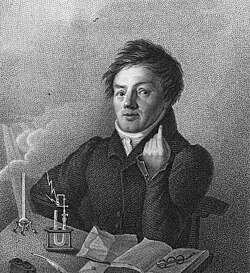
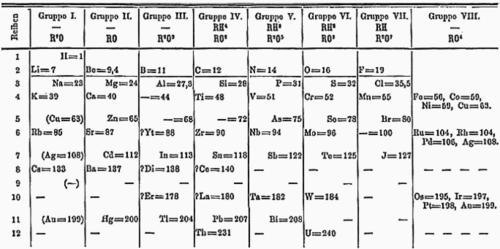
歴史的に、これらの元素の類似性はヨハン・ヴォルフガング・デーベライナーらによって初期に指摘され、後のドミトリ・メンデレーエフによる周期律の確立へと繋がりました。
Key Facts
- 高い反応性: 水や酸素と激しく反応し、容易に陽イオン(M+)になる。
- 物理的特徴: 一般に密度が低く、融点・沸点が他の金属に比べて低い。
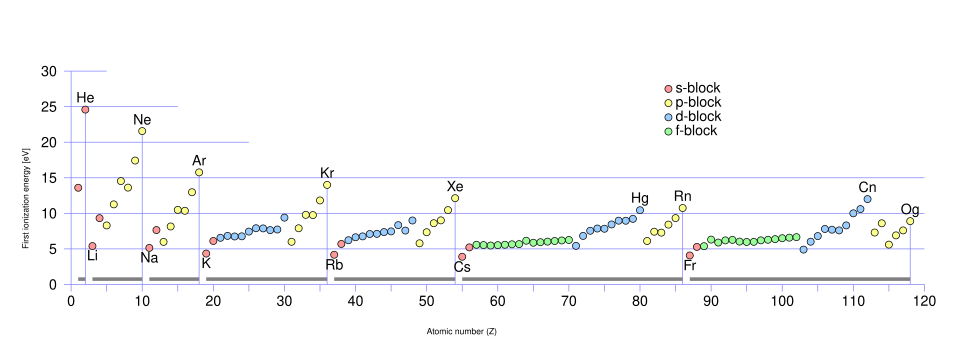
- 周期的な傾向: 原子番号が大きくなるほど、原子半径が増大し、イオン化エネルギーが低下する。
- 希少性と放射性: フランシウムは極めて希少な放射性元素であり、天然にはごくわずかしか存在しない。
アルカリ金属の物理的・化学的特性
アルカリ金属の最大の特徴は、その電子配置にあります。最外殻のs軌道に1つの電子を持つため、この電子を放出して安定した電子配置になろうとする傾向が非常に強く、これが強力な還元力と高い反応性の根源となっています。
原子構造と周期的な傾向
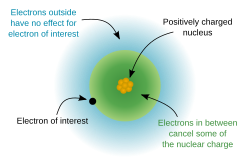
周期表を下に進むにつれて、電子殻の数が増えるため、原子半径は拡大します。これにより、核から最外殻電子までの距離が遠くなり、核による電子の拘束力が弱まります。その結果、電子を取り去るのに必要なエネルギーであるイオン化エネルギーは低下し、反応性はさらに高まります。
![Empirical (Na–Cs, Mg–Ra) and predicted (Fr–Uhp, Ubn–Uhh) atomic radius of the alkali and alkaline earth metals from the third to the ninth period, measured in angstroms[36]: 1730 [147]](/images/09/3a/093af51131abdac3e21e43c31164663392b78660432ecfa5c530b1a131a8962b.webp)
![Empirical (Na–Fr, Mg–Ra) and predicted (Uue–Uhp, Ubn–Uhh) ionisation energy of the alkali and alkaline earth metals from the third to the ninth period, measured in electron volts[36]: 1730 [147]](/images/e0/10/e010c98c850e38f3cfc6e69eff4ac62f0d7e43b4892cf0c6843e5cb253f61489.webp)
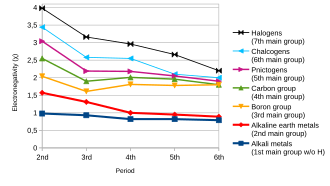
また、電子を引き寄せる強さを示す電気陰性度(ポーリング尺度)も、周期を下るほど減少する傾向にあります。
物理的性質の変動
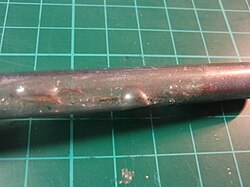
融点や沸点は、一般的に周期を下るほど低下します。密度については、リチウムが最も軽く、セシウム付近でピークを迎える傾向があります。これらの性質により、一部のアルカリ金属の合金(NaKなど)は室温で液体として存在することが可能です。
主要元素の概要と天然存在
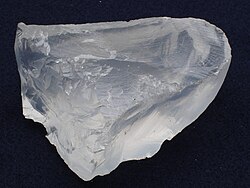
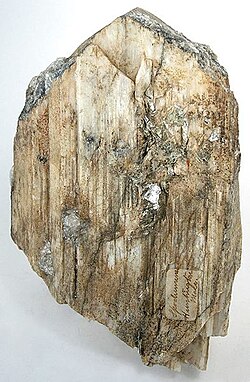
アルカリ金属は、それぞれ異なる鉱物や環境から発見・単離されてきました。例えば、リチウムはペタライトやスポジュメンなどの鉱物から、ルビジウムはレピドライトから得られます。
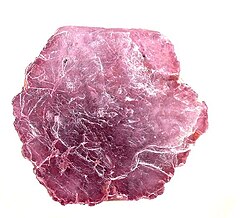
宇宙全体で見ると、水素やヘリウムに比べてリチウムなどの軽い元素は非常に稀です。これはビッグバン直後の元素合成や恒星内での核融合プロセスにおいて、これらの元素が消費されやすいためです。
![Estimated abundances of the chemical elements in the Solar System. Hydrogen and helium are most common, from the Big Bang. The next three elements (lithium, beryllium, and boron) are rare because they are poorly synthesised in the Big Bang and also in stars. The two general trends in the remaining stellar-produced elements are: (1) an alternation of abundance in elements as they have even or odd atomic numbers, and (2) a general decrease in abundance, as elements become heavier. Iron is especially common because it represents the minimum-energy nuclide that can be made by fusion of helium in supernovae.[43]](/images/13/08/13084b72d1176906ae02b24f2a7bddc02f7d4e68d246d7820d0855b8df49ae51.webp)
一方、フランシウムは天然のウラン鉱石(ウラニナイト)の中で、ウラン235の崩壊過程を経てごく少量生成される放射性元素です。
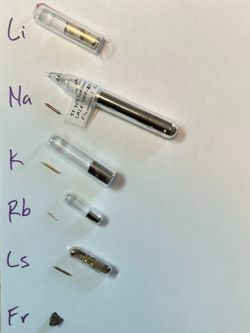
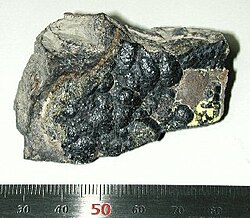
化学反応と化合物
水および酸素との反応
アルカリ金属は水と激しく反応し、水素ガスを放出するとともに強アルカリ性の水酸化物を生成します。この反応は非常に発熱的であり、時には爆発的な反応を引き起こします。
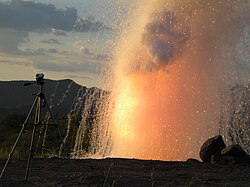
酸素との反応では、元素によって生成物が異なります。リチウムは主に酸化物を、ナトリウムは過酸化物を、カリウム以上の重い元素は超酸化物を形成しやすい傾向があります。
多様な化合物と応用
アルカリ金属は窒化物、ハロゲン化物、水素化物など多くの化合物を形成します。特に有機リチウム化合物(n-ブチルリチウムなど)は、有機合成化学において強力な塩基や試薬として不可欠です。
![Unit cell ball-and-stick model of lithium nitride.[117] On the basis of size a tetrahedral structure would be expected, but that would be geometrically impossible: thus lithium nitride takes on this unique crystal structure.[10]: 76](/images/17/cd/17cd6b77500c2408516952144525238ab2faf1c052486dda78d8c831bae99f78.png)
![Structure of the octahedral n-butyllithium hexamer, (C4H9Li)6.[137] The aggregates are held together by delocalised covalent bonds between lithium and the terminal carbon of the butyl chain.[138] There is no direct lithium–lithium bonding in any organolithium compound.[122]: 264](/images/36/b4/36b4d08940e32481e9cf270c249e6f19743eef1b2248a9681afc551d7667844e.png)
![Solid phenyllithium forms monoclinic crystals that can be described as consisting of dimeric Li2(C6H5)2 subunits. The lithium atoms and the ipso carbons of the phenyl rings form a planar four-membered ring. The plane of the phenyl groups is perpendicular to the plane of this Li2C2 ring. Additional strong intermolecular bonding occurs between these phenyllithium dimers and the π electrons of the phenyl groups in the adjacent dimers, resulting in an infinite polymeric ladder structure.[139]](/images/e9/39/e939ed325f898443928c2bd19ea56dd3452b62c184b4b1078ef1239db0dc63ac.png)
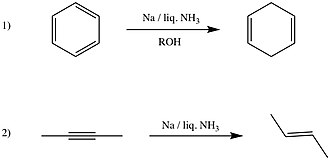
また、液体アンモニアに溶解させたアルカリ金属溶液は、バーチ還元などの特殊な還元反応に利用されます。
その他の特殊な反応
アルカリ金属は、炭素や窒素、硫黄とも反応します。例えば、リチウムは窒素と直接反応して窒化リチウムを形成しますが、他のアルカリ金属ではこの反応は困難です。
また、塩類との反応を通じて他の金属を還元することも可能です(例:四塩化チタンからチタンを回収する反応)。
アルカリ金属の特性まとめ
| 元素名 | 原子番号 | 融点 (°C) | 密度 (g/cm³) | 炎色反応 |
|---|---|---|---|---|
| リチウム (Li) | 3 | 180.54 | 0.534 | 赤 |
| ナトリウム (Na) | 11 | 97.72 | 0.968 | 黄 |
| カリウム (K) | 19 | 63.38 | 0.89 | 紫 |
| ルビジウム (Rb) | 37 | 39.31 | 1.532 | 赤紫 |
| セシウム (Cs) | 55 | 28.44 | 1.93 | 青 |
| フランシウム (Fr) | 87 | 不明 | 不明 | 不明 |
擬似アルカリ金属と関連物質
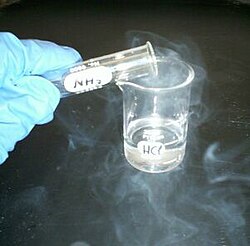
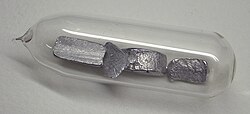
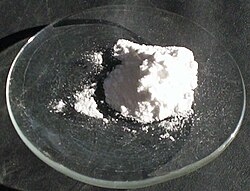
化学的性質が似ているため、水素やアンモニウムイオン、タリウム、あるいは銅・銀・金などの第11族元素が「擬似アルカリ金属」的な挙動を示すことがあります。
また、放射性同位体であるセシウム137などは、医療用放射線源として利用されますが、取り扱いを誤ると深刻な放射能汚染事故(ゴイアニア事故など)を招く危険性があります。
![Empirical (Na–Fr) and predicted (Uue) electron affinity of the alkali metals from the third to the eighth period, measured in electron volts[36]: 1730 [147]](/images/ef/94/ef941975d1d36a03d9b75c3af22b6aa8ddb4c389cb344c16e8bf4176a437e919.webp)
Frequently Asked Questions
なぜアルカリ金属は水と激しく反応するのですか?
最外殻に1つの電子を持ち、それを放出することで非常に安定した電子配置(貴ガス配置)になろうとするためです。この過程で大きなエネルギーが放出され、水素ガスが発生し、激しい反応となります。
周期表の下に行くほど反応性が高くなるのはなぜですか?
原子半径が大きくなるため、核が最外殻電子を惹きつける力が弱まり、電子を放出しやすくなる(イオン化エネルギーが低下する)ためです。
フランシウムが天然にほとんど存在しない理由は何ですか?
フランシウムは非常に不安定な放射性元素であり、半減期が短いためです。ウランの崩壊過程でわずかに生成されますが、すぐに他の元素へ崩壊してしまいます。
アルカリ金属の保存方法にはどのような注意が必要ですか?
空気中の酸素や水分と容易に反応するため、通常は灯油やパラフィンオイルなどの不活性な液体に浸して保存し、接触を遮断します。
NaK合金とは何ですか?
ナトリウム(Na)とカリウム(K)の合金で、共晶組成において室温で液体として存在します。高い熱伝導性と反応性を持ち、特殊な冷却材などに利用されますが、取り扱いには厳重な注意が必要です。
References
- The symbols Na and K for sodium and potassium are derived from their Latin names, natrium and kalium; these are still the origins of the names for the elements in some languages, such as German and Russian.
- Caesium is the spelling recommended by the (IUPAC). The (ACS) has used the spelling cesium since 1921, following Webster's Third New International Dictionary.
- In both the old IUPAC and the systems for group numbering, this group is known as group IA (pronounced as "group one A", as the "I" is a ).
- While hydrogen also has this electron configuration, it is not considered an alkali metal as it has very different behaviour owing to the lack of p-orbitals in .
- In the 1869 version of Mendeleev's periodic table, copper and silver were placed in their own group, aligned with hydrogen and , while gold was tentatively placed under and the undiscovered in the .
- The denotes an .
- The number given in refers to the . This uncertainty applies to the (s) of the number prior to the parenthesised value (ie. counting from rightmost digit to left). For instance, 1.00794(7) stands for 1.00794±0.00007, while 1.00794(72) stands for 1.00794±0.00072.
- The value listed is the conventional value suitable for trade and commerce; the actual value may range from 6.938 to 6.997 depending on the isotopic composition of the sample.
- The element does not have any stable , and a value in brackets indicates the of the longest-lived of the element.
- estimated the electronegativity of francium at 0.7 on the , the same as caesium; the value for caesium has since been refined to 0.79, although there are no experimental data to allow a refinement of the value for francium. Francium has a slightly higher ionisation energy than caesium, 392.811(4) kJ/mol as opposed to 375.7041(2) kJ/mol for caesium, as would be expected from , and this would imply that caesium is the less electronegative of the two.
📸 フォトギャラリー