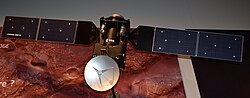
火星に生命は存在するのか。この人類最大の謎の一つに挑むため、欧州宇宙機関(ESA)とロシアのロスコスモスが共同で送り出したのがExoMars Trace Gas Orbiter(TGO)です。この探査機の主目的は、火星の大気中に漂う微量ガス、特に生命活動の指標となり得るメタンなどの検出と分析にあります。
TGOは単なる観測機ではなく、高度な分析装置を搭載した「空飛ぶ化学研究所」であり、火星の地質や大気のダイナミクスを詳細に解明することで、かつて、あるいは現在も火星に生命が存在する可能性を探っています。
Key Facts
- ミッション目的:火星大気中の微量ガス(メタン等)の検出、特定、および発生源の特定。
- 運用主体:欧州宇宙機関(ESA)およびロスコスモス。
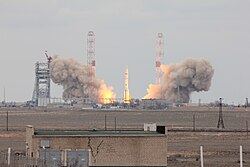
- 打ち上げ日:2016年3月14日(プロトン-Mロケットを使用)。
- 主要搭載機器:NOMAD、ACS、CaSSIS、FRENDの4つの科学計器。
- 軌道:高度約400kmの円軌道。
- 特筆すべき成果:火星の極冠の詳細画像や、大気中の化学組成の精密な分析。
TGOの設計とミッション構成
TGOは、精密な科学観測を行うための堅牢な設計がなされています。機体本体(バス)のサイズは3.2m × 2m × 2mで、打ち上げ時の総重量はランダーのスキアパレリを含めて4,332kgに達しました。電力は約2000Wを確保し、過酷な宇宙環境下でも安定した動作を維持しています。

通信面では、XバンドおよびUHFバンドのトランスポンダを搭載しており、特にElectra UHF無線機は、火星表面の探査機との通信リレーを担う重要な役割を果たしています。
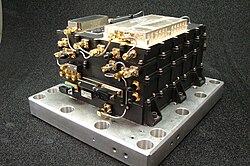
また、機体の熱制御には工夫が凝らされており、科学ペイロードが搭載された3つの面を常に低温に保つため、機体のヨー軸を制御する仕組みが採用されています。
搭載された科学計器とその役割
TGOの核心となるのは、大気と地表を分析するための4つの高度な計器です。
- NOMAD (Nadir and Occultation for Mars Discovery):大気中の微量ガスを検出・特定し、その分布を調査します。
- ACS (Atmospheric Chemistry Suite):大気の化学組成を詳細に分析し、ガスの挙動を解明します。
- CaSSIS (Colour and Stereo Surface Imaging System):高解像度のカラー・ステレオ画像により、地表の形態を詳細に捉えます。
- FREND (Fine-Resolution Epithermal Neutron Detector):中性子を用いて、地表付近の水素(水や氷)の分布を測定します。
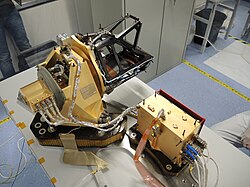
これらの計器を組み合わせることで、ガスがどこで発生し、どのように大気中を移動し、地表のどのような特徴と関連しているのかを総合的に分析することが可能です。
火星での観測成果と発見
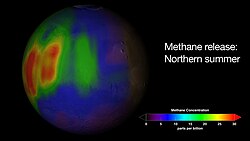
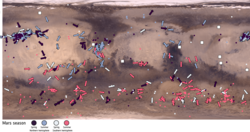
TGOは運用開始以来、数多くの重要なデータを地球に送り届けてきました。特に注目されたのがメタンの調査です。火星の北半球の夏季にメタンのプルーム(噴煙状のガス)が観測されるなど、大気の動的な変化が明らかになりました。
また、CaSSISによる高解像度撮影では、南極冠(Planum Australe)の端にある塵と氷の層状堆積物が鮮明に捉えられ、火星の気候史を紐解く手がかりとなりました。

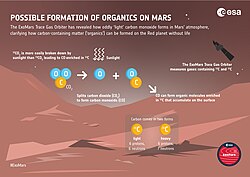
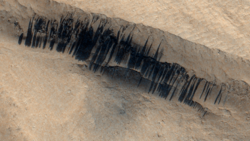
さらに、大気中の一酸化炭素の形成プロセスや、隕石衝突によって引き起こされたアポリナリス山の斜面の筋状模様、さらにはダストデビル(塵旋風)の追跡など、地質学的・気象学的な発見が続いています。
特筆すべきは、2025年10月には恒星間彗星3I/ATLASを観測するという、極めて稀な機会にも成功しており、火星軌道からの観測拠点としての有用性も証明しています。

ミッションの軌道と運用
TGOは2016年3月に地球を離れ、同年10月に火星軌道への投入に成功しました。その後、大気を利用して軌道を調整するエアロブレーキングを経て、高度400kmの安定した円軌道に到達しました。
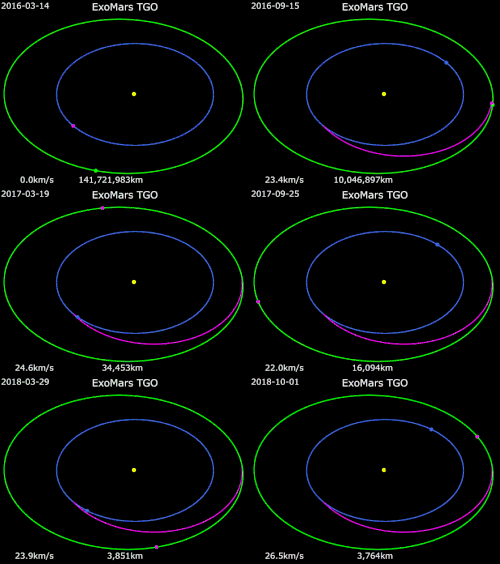
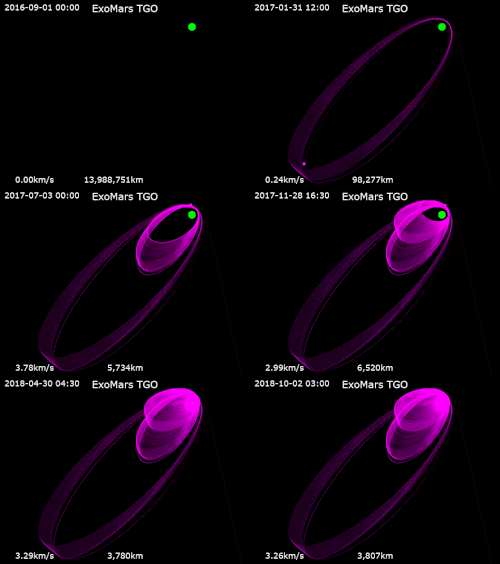
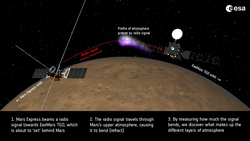
この軌道からは、Mars Expressなどの他の探査機と連携した「電波掩蔽(Radio Occultation)」観測を行い、大気の密度や組成をより精密に測定することが可能です。
| 項目 | 詳細内容 |
|---|---|
| 打ち上げ重量 | 4,332 kg (スキアパレリ含む) |
| 機体サイズ | 3.2 × 2 × 2 m |
| 軌道高度 | 約400 km (円軌道) |
| 主要計器 | NOMAD, ACS, CaSSIS, FREND |
| 運用期間 | 2016年〜(計画7年、実績10年以上) |
| 通信帯域 | Xバンド / UHFバンド |
Frequently Asked Questions
TGOの最大の目的は何ですか?
火星の大気中に存在するメタンなどの微量ガスを検出し、その発生源を特定することです。これにより、火星における生物学的、あるいは地質学的な活動の有無を調査しています。
スキアパレリ(Schiaparelli)とは何ですか?
TGOと共に打ち上げられた試験的な着陸機(ランダー)です。火星への進入・降下・着陸(EDL)技術の実証を目的としていましたが、残念ながら着陸直前に通信が途絶しました。
CaSSISは何を観測する装置ですか?
カラーおよびステレオ表面イメージングシステムであり、火星の地表を高解像度で撮影します。地質構造の分析や、氷の分布などの視覚的なデータを提供します。
TGOは現在も運用されていますか?
はい。当初の計画期間である7年を超え、10年以上にわたって運用されており、継続的に貴重な科学データを地球に送信しています。
他の火星探査機とどのように協力していますか?
Mars Expressなどの他の軌道機と連携して大気観測を行ったり、表面のローバーからのデータを地球へ中継する通信リレー拠点として機能したりしています。
References
- "ExoMars Trace Gas Orbiter and Schiaparelli Mission (2016)". . 16 October 2016. Archived from the original on 20 July 2025. Retrieved 24 October 2016.
- Allen, Mark A.; Witasse, Olivier (16 June 2011). 2016 ESA/NASA ExoMARS/Trace Gas Orbiter. Mars Exploration Program Assessment Group. Lisbon, Portugal: /. :2014/42148.
{{}}: CS1 maint: deprecated archival service () - "ExoMars 2016". . 2016-017A. Archived from the original on 31 May 2025. Retrieved 30 November 2022.
- "ExoMars Trace Gas Orbiter (TGO)". . 12 July 2012. Archived from the original on 12 July 2025. Retrieved 8 March 2014.
- Amos, Jonathan (14 March 2016). "Mars methane mission lifts off". BBC. Retrieved 14 March 2016.
- Nowakowski, Tomasz (20 October 2016). "Lost on Mars: Schiaparelli lander falls silent shortly before touchdown". Spaceflight Insider. Archived from the original on 27 October 2016. Retrieved 24 October 2016.
- Chang, Kenneth (19 October 2016). "ExoMars Spacecraft Enters Orbit Around Mars as Word From Lander Is Awaited". . Archived from the original on 19 October 2016. Retrieved 19 October 2016.
- Vago, Jorge L. (10 September 2009). ExoMars: ESA's Mission to Search for Signs of Life (PDF). Planetary Science Decadal Survey: Mars Panel Meeting. , Tempe, USA: . Archived (PDF) from the original on 2 July 2025.
- Mustard, Jack (9 July 2009). "MEPAG Report to the Planetary Science Subcommittee" (PDF). Mars Exploration Program Analysis Group. . p. 3. Archived from the original (PDF) on 4 September 2012.
- Amos, Jonathan (20 October 2016). "European Schiaparelli Mars probe's parachute 'jettisoned too early". . Archived from the original on 22 July 2025. Retrieved 20 October 2016.
📸 フォトギャラリー