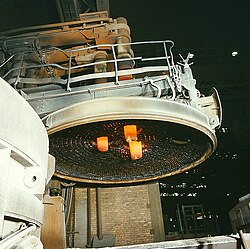
An electric arc furnace during operation, c. 1975
← ホームへ戻る

電気炉(EAF)の仕組みと産業的役割鉄鋼リサイクルの核心技術

🗓 2026年8月10日

現代の鉄鋼業において、電気炉(Electric Arc Furnace: EAFは、資源の有効活用と環境負荷の低減を実現する不可欠な設備です。電気炉とは、電極間に発生させる強力な「アーク放電(電気火花)」の熱を利用して、金属などの材料を溶解・精錬する炉のことを指します。

その規模は極めて幅広く、歯科治療や研究室で用いられる数十グラム単位の小型ユニットから、二次製鋼で活用される最大400トン級の巨大設備まで存在します。産業用炉では最高1,800°C、研究用では3,000°Cを超える超高温を生成することが可能です。
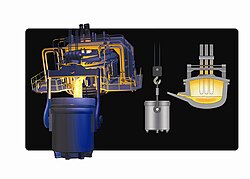
Rendering of exterior and interior of an electric arc furnace.

主要な事実(Key Facts)

  • 加熱原理: 電極から材料へ直接アークを飛ばし、その熱と電流による抵抗熱で溶解させる。
  • 環境性能: 100%スクラップを原料にでき、高炉法に比べCO2排出量を大幅に削減可能。
  • 柔軟な生産: 「ミニミル」と呼ばれる小規模工場での導入に適しており、市場需要に合わせた生産調整が容易。
  • エネルギー効率: 鋼鉄1トンあたり約400〜440kWhの電力を消費する。
  • 多様な用途: 鋼鉄だけでなく、フェロアロイやリン、炭化カルシウムの製造にも利用される。

電気炉の構造と動作メカニズム

製鋼用電気炉は、主に耐火物で裏打ちされた容器(シェル)、底部の炉床(ハース)、および可動式の屋根で構成されています。屋根の中央には電極が挿入される開口部があり、ここからグラファイト(黒鉛)製の電極が炉内に降りてきます。
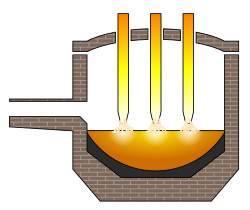
A schematic cross-section through an EAF. Three electrodes (yellow), molten bath (gold), tapping spout at left, refractory brick movable roof, brick shell, and a refractory-lined bowl-shaped hearth.

AC炉とDC炉の違い

一般的に普及しているAC(交流)炉は、三相電源を用いて3本の電極を使用します。電極と材料の間にアークが発生し、放射エネルギーと電流による加熱が同時に行われます。電極は消耗するため、セグメント状になっており、摩耗に合わせて継ぎ足しが可能です。
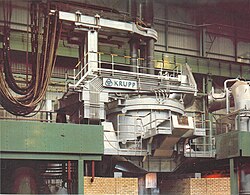
A general overview of a typical AC (Alternating Current) electric arc furnace with three electrodes. All relevant hardware (except the transformer vault to left) are visible, such as water-cooled power cables, painted copper electrode arms, swing roof, refaractory-lined cylindrical melting hearth, tap spout, tilting mechanism, and exhaust ducting.

一方、DC(直流)炉は単一の電極を使用し、炉底の導電性ライニングを通じて電流を戻します。DC炉は電極の消耗が少なく、電気的なノイズ(高調波)を抑えられるメリットがありますが、炉底のメンテナンスが課題となります。
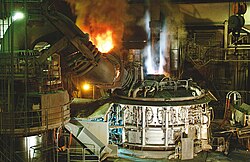
A DC arc furnace during power-on (note the single large electrode)

加熱の最適化と冷却システム

AC炉では電極間に温度差が生じやすいため、壁面に酸素燃料バーナーを設置して加熱を均一化させます。また、炉の過熱を防ぐために水冷システムが導入されており、特に効率的な「スプレー冷却」などの手法が採用されています。
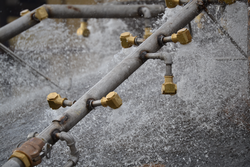
A non-pressurized cooling system

製造プロセスと運用の詳細

電気炉の運用は、まず鉄スクラップ(シュレッドや重量スクラップ)や直接還元鉄(DRI)を炉に投入することから始まります。屋根を閉じた後、電極を降ろしてアークを発生させ、溶解を開始します。
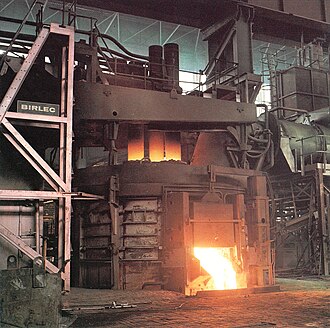
An electric arc furnace during operation, c. 1975

溶解が進むと、酸素や炭素を注入して「発泡スラグ」を形成させます。このスラグの層がアークを包み込むことで、熱効率が高まり、炉壁や屋根への放射熱によるダメージを軽減する保護膜の役割を果たします。
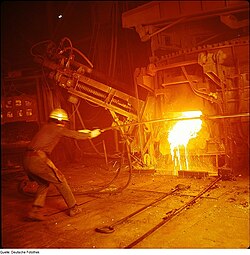
Foaming slag pours out the slag door of an EAF, while a worker checks the temperature using a long probe. Circa 1976

適切な温度と化学組成に達したところで、炉を傾けて溶鋼をレードル(運搬容器)に排出します(出鋼)。効率向上のため、次回の溶解を早める目的で少量の溶鋼を炉底に残す「ホットヒール」という手法が取られます。
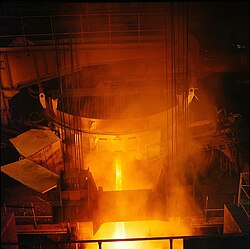
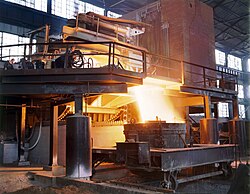
An EAF being tapped, circa 1980

An arc furnace pouring out steel into a small ladle car. The transformer vault can be seen at the right side of the picture. For scale, note the operator standing on the platform at upper left. This is a 1941-era photograph and so does not have the extensive dust collection system that a modern installation would have, nor is the operator wearing a hard hat or dust mask.

歴史的背景と産業への影響

電気アークによる金属溶解の可能性は19世紀初頭に示されましたが、実用的な炉が特許取得されたのは1889年のジェームズ・バーゲス・リードマンによるものです。その後、ポール・エルーによって商業化が進み、米国などへ普及しました。
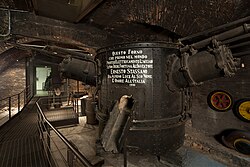
Stassano furnace exhibited at the Museo della Scienza e della Tecnologia "Leonardo da Vinci", Milan

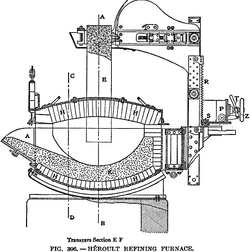
A schematic cross section through a Heroult arc furnace. E is an electrode (only one shown), raised and lowered by the rack and pinion drive R and S. The interior is lined with refractory brick H, and K denotes the bottom lining. A door at A allows access to the interior. The furnace shell rests on rockers to allow it to be tilted for tapping.

第二次世界大戦後は、設備投資コストが低い「ミニミル」の台頭を後押ししました。これにより、巨大な一貫製鉄所を持たずとも、地域需要に合わせた構造用鋼材などの「ロングプロダクト」を低コストで生産することが可能になりました。1980年代後半には、Nucor社などの先駆者により、板材などの「フラットプロダクト」市場へも進出しています。

特殊な電気炉と高度な精錬技術

レードル炉とプラズマ炉

出鋼後の溶鋼の温度保持や合金成分の調整には、レードル炉(LF)が使用されます。また、グラファイト電極の代わりにプラズマトーチを用いるプラズマアーク炉(PAF)は、チタンなどの特殊金属の溶解に特化しています。
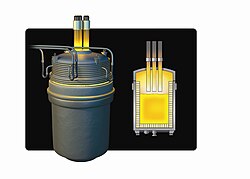
Rendering of a ladle furnace, a variation of the electric arc furnace used for keeping molten steel hot

真空アーク再溶解(VAR)

極めて高い純度が求められる鋼材の場合、真空中で再溶解させるプロセスが行われます。これにより、不純物や不要なガスを除去し、組織を最適化した超高純度鋼を製造できます。
The roof of an arc furnace removed, showing the three electrodes

電気炉のまとめと課題

電気炉(EAF)の特性まとめ
項目 詳細・数値
主原料 鉄スクラップ、直接還元鉄(DRI)、銑鉄
最高温度 産業用:約1,800°C / 研究用:3,000°C超
エネルギー消費 約400〜440 kWh / 鋼鉄1トン
CO2排出量 約0.6トン / 鋼鉄1トン(条件による)
主な製品 棒鋼、線材、構造用鋼、特殊合金鋼

電気炉は環境負荷の低いリサイクル手法である一方、騒音、粉塵、スラグの処理、および電力系統への影響(フリッカー現象など)といった課題を抱えています。そのため、現代の設備では高度な集塵システムや防音対策、電力安定化装置の導入が不可欠となっています。
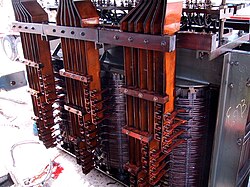
Power supply transformer and copper busbars for an arc furnace

よくある質問(FAQ)

電気炉と誘導炉は何が違うのですか?

電気炉(EAF)は電極から直接アークを飛ばして加熱しますが、誘導炉は電磁誘導によって材料内部に渦電流を発生させ、その抵抗熱で加熱します。

なぜ電気炉は環境に優しいと言われるのですか?

鉄鉱石から作る高炉法とは異なり、既存の鉄スクラップを主原料にできるため、エネルギー消費を抑えられ、CO2排出量を大幅に削減できるからです。

「ミニミル」とはどのような工場ですか?

巨大な高炉を持たず、電気炉を中心に小規模に構成された製鉄所のことです。設備投資額が低く、需要に合わせて柔軟に操業できるのが特徴です。

スラグを「発泡」させる理由は何ですか?

スラグを泡立たせることで、アークを包み込んで熱効率を高めると同時に、放射熱から炉の壁面や屋根を保護し、設備寿命を延ばすことができるためです。

DC炉の最大のメリットは何ですか?

電極が1本で済むため電極の消耗量が少なく、また交流電源特有の電気的なノイズ(高調波)が発生しにくい点にあります。

References

  1. US patent 417943.[]
  2. Toy, Arthur. THe History of Phosphorus.[]
  3. "Crucible Industries: Our History". www.crucibleservice.com. Archived from the original on 5 October 2018. Retrieved 27 November 2010.[]
  4. "Steel manufacturer announces $2.7 billion mill in Mason County". 12 January 2022.
  5. Preston, R. (1991). American Steel. New York, NY: Avon Books.[]
  6. H. W. Beaty (ed.), Standard Handbook for Electrical Engineers, 11th Ed., McGraw Hill, New York 1978,   pages 21.171–21.176
  7. Benoit Boulet, Gino Lalli and Mark Ajersch, Modeling and Control of an Electric Arc Furnace, accessed 2014-05-24
  8. "Graphite Electrodes Solutions from GrafTech". graftech.com. Archived from the original on 22 February 2016. Retrieved 24 February 2016.
  9. "Cross section of electric arc furnace". Kandi Engineering. Retrieved 16 April 2016.
  10. "Archived copy" (PDF). Archived from the original (PDF) on 26 February 2021. Retrieved 13 November 2020.{{}}: CS1 maint: archived copy as title ()

📸 フォトギャラリー

An electric arc furnace during operation, c. 1975
Rendering of exterior and interior of an electric arc furnace.
Stassano furnace exhibited at the Museo della Scienza e della Tecnologia "Leonardo da Vinci", Milan
A schematic cross section through a Heroult arc furnace. E is an electrode (only one shown), raised and lowered by the rack and pinion drive R and S. The interior is lined with refractory brick H, and K denotes the bottom lining. A door at A allows access to the interior. The furnace shell rests on rockers to allow it to be tilted for tapping.
A schematic cross-section through an EAF. Three electrodes (yellow), molten bath (gold), tapping spout at left, refractory brick movable roof, brick shell, and a refractory-lined bowl-shaped hearth.
A general overview of a typical AC (Alternating Current) electric arc furnace with three electrodes. All relevant hardware (except the transformer vault to left) are visible, such as water-cooled power cables, painted copper electrode arms, swing roof, refaractory-lined cylindrical melting hearth, tap spout, tilting mechanism, and exhaust ducting.
The roof of an arc furnace removed, showing the three electrodes
Foaming slag pours out the slag door of an EAF, while a worker checks the temperature using a long probe. Circa 1976
An EAF being tapped, circa 1980
An arc furnace pouring out steel into a small ladle car. The transformer vault can be seen at the right side of the picture. For scale, note the operator standing on the platform at upper left. This is a 1941-era photograph and so does not have the extensive dust collection system that a modern installation would have, nor is the operator wearing a hard hat or dust mask.
A DC arc furnace during power-on (note the single large electrode)
Power supply transformer and copper busbars for an arc furnace
Rendering of a ladle furnace, a variation of the electric arc furnace used for keeping molten steel hot
A non-pressurized cooling system