Representation of a diatom Central noduleStriae; pores, punctae, spots or dots in a line on the surface that allow nutrients in, and waste out, of the cellAreola; hexagonal or polygonal boxlike perforation with a sieve present on the surface of diatomRaphe; slit in the valvesPolar nodule; thickening of wall at the distal ends of the raphe [31][32]Frustule; hard and porous cell wallPyrenoid; center of carbon fixationPlastid membranes (4, secondary red)Inner membranesThylakoid; site of the light-dependent reactions of photosynthesisOil body; storage for triacylglycerols [33]Mitochondrion; creates ATP (energy) for the cellVacuoles; vesicle of a cell that contains fluid bound by a membraneCytoplasmic strand; holds the nucleusProtoplasmic bridgeEpivalveNucleus; holds the genetic materialEndoplasmic reticulum, the transport network for molecules going to specific parts of the cellGolgi apparatus; modifies proteins and sends them out of the cellEpicingulumHypocingulumHypovalveMicrotubule centre
← ホームへ戻る

珪藻(けいそう)の生態と構造地球環境を支えるガラスの単細胞生物

🗓 2026年8月10日

海や湖などの水圏に広く分布する珪藻(けいそう)は、ガラス質の細胞壁を持つユニークな単細胞藻類です。彼らは単なるプランクトンではなく、地球上の酸素供給や炭素循環において極めて重要な役割を担っています。ジュラ紀から現代に至るまで進化を続けてきたこの生物は、その精緻な構造と効率的な代謝システムで知られています。

Key Facts

  • ガラスの殻: 二酸化ケイ素(シリカ)で構成された「被殻」という硬い細胞壁を持つ。
  • 酸素の供給源: 海洋における主要な一次生産者であり、地球上の酸素の多くを生成している。
  • 多様な形態: 円形や楕円形など、種によって極めて多様な幾何学的形状を持つ。
  • 炭素の固定: 二酸化炭素を吸収し、有機物として固定することで気候変動の抑制に寄与している。
  • 産業利用: その微細な多孔質構造は、現代のナノテクノロジーや法医学などの分野で応用されている。

精緻な細胞構造と形態学

珪藻の最大の特徴は、被殻(ひかく)と呼ばれるシリカ製の細胞壁です。この殻は、まるで精巧な宝石箱のように、微細な穴(孔)や溝が規則正しく配置されています。これらの構造は、栄養分の取り込みや老廃物の排出を効率的に行うための機能的な設計となっています。

細胞内部には、光合成を行うための葉緑体や、エネルギーを生成するミトコンドリア、そしてエネルギー貯蔵のための油滴などが存在します。また、遺伝情報を保持する核や、タンパク質を輸送するゴルジ体などの細胞小器官が高度に組織化されています。

Representation of a diatom Central noduleStriae; pores, punctae, spots or dots in a line on the surface that allow nutrients in, and waste out, of the cellAreola; hexagonal or polygonal boxlike perforation with a sieve present on the surface of diatomRaphe; slit in the valvesPolar nodule; thickening of wall at the distal ends of the raphe [31][32]Frustule; hard and porous cell wallPyrenoid; center of carbon fixationPlastid membranes (4, secondary red)Inner membranesThylakoid; site of the light-dependent reactions of photosynthesisOil body; storage for triacylglycerols [33]Mitochondrion; creates ATP (energy) for the cellVacuoles; vesicle of a cell that contains fluid bound by a membraneCytoplasmic strand; holds the nucleusProtoplasmic bridgeEpivalveNucleus; holds the genetic materialEndoplasmic reticulum, the transport network for molecules going to specific parts of the cellGolgi apparatus; modifies proteins and sends them out of the cellEpicingulumHypocingulumHypovalveMicrotubule centre

形態的な分類では、大きく分けて円形に近い「中心珪藻」と、細長い形状を持つ「羽状珪藻」の2つのグループに分けられます。羽状珪藻の多くは、殻に縫合線(ほうごうせん)というスリットを持っており、これを利用して基質上を移動することができます。
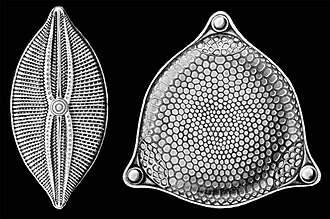
Selections from Ernst Haeckel's 1904 Kunstformen der Natur (Art Forms of Nature), showing pennate (left) and centric (right) frustules.
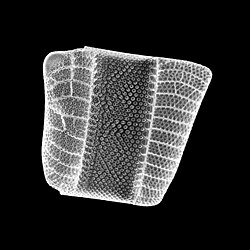
Shape classification of diatom frustules. The images are 3D models. The actual sizes of the frustules are about 10–80 μm.[40]

被殻のバリエーション

被殻の形状は種によって異なり、3Dモデルで見るとその立体的な複雑さが際立ちます。サイズは一般的に10〜80μm程度であり、光顕微鏡で観察するとその美しさが確認できます。

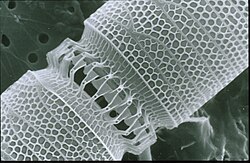
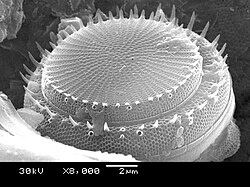
Structure of a centric diatom frustule [40]
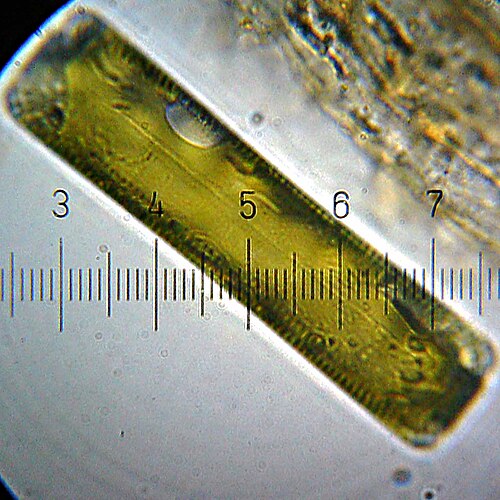
Light microscopy of a living diatom. Numbered graduations are 10 micrometres apart

生態系における役割と生存戦略

珪藻は海洋および淡水の生態系において、食物連鎖の底辺を支える一次生産者として君臨しています。特に栄養塩が豊富な海域では爆発的に増殖し、「ブルーム」と呼ばれる現象を引き起こします。これにより、大量の二酸化炭素が固定され、深海へと輸送されるため、地球規模の炭素サイクルに深く関与しています。

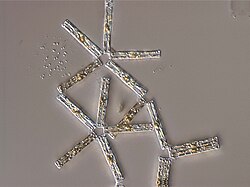
一部の種は、個々が連なって鎖状のコロニーを形成します。これにより、沈降速度を遅らせて光の届く表層に留まりやすくしたり、捕食者から身を守ったりする戦略をとっています。
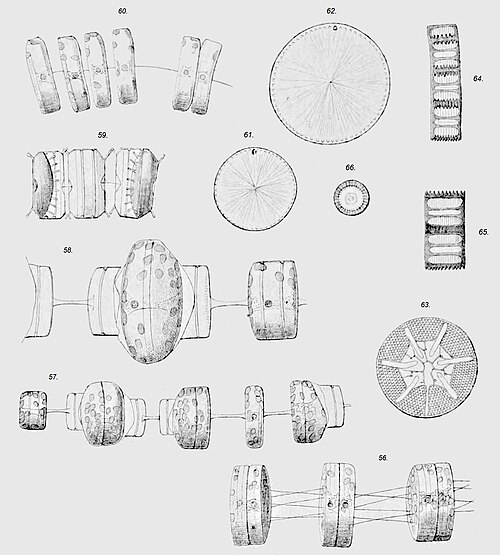
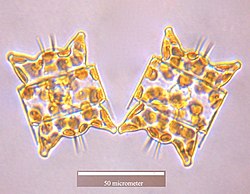
Planktonic diatoms such as Thalassiosira sp. (56–62), Asteromphalus sp. (63), Aulacoseira sp. (64–66), and Chaetoceros (see twin image above) often grow in chains, and have features such as spines which slow sinking rates by increasing drag.
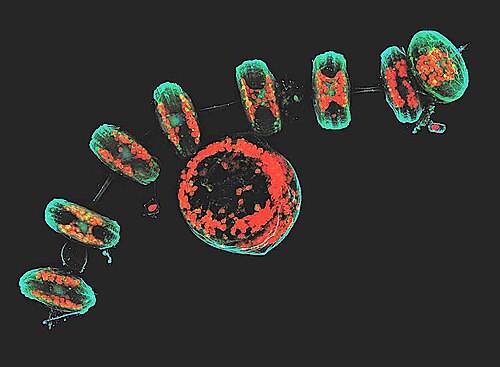
Some Thalassiosira diatoms form chain-like colonies, like these collected near the Antarctic peninsula coast by the schooner of the Tara Oceans Expedition for plankton research.This projection of a stack of confocal images shows the diatoms' cell wall (cyan), chloroplasts (red), DNA (blue), membranes and organelles (green).

分布と環境要因

珪藻の分布は、海水中のケイ酸塩濃度に強く依存します。ケイ素が十分に供給される環境では、他のプランクトンを圧倒して優占種となる傾向があります。彼らは南極の海氷の間から熱帯の海域まで、世界中のあらゆる水圏に生息しています。
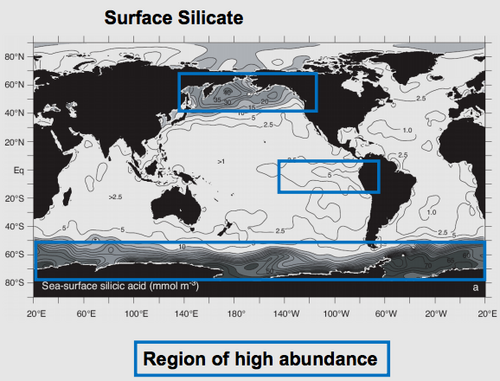
Regions of high abundance of diatoms in the ocean
Diatom dominance (as a percentage of total cell counts)versus silicate concentration [80]
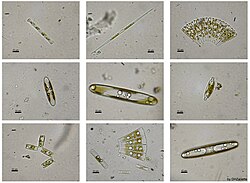
Light microscopy of several species of living freshwater diatoms

生物学的サイクルと進化

珪藻の生活環は、無性生殖と有性生殖を組み合わせています。細胞分裂による無性生殖を繰り返すと、被殻の構造上、細胞サイズが徐々に小さくなるという特異な性質があります。ある一定のサイズまで小さくなると、有性生殖によって細胞サイズをリセットし、再び元の大きさに戻ります。

また、彼らは外部から侵入する菌類などの病原体にさらされることもあり、自然界では常に生存競争と共生の関係の中にあります。

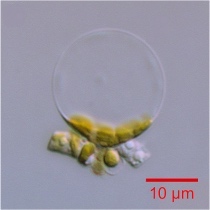
Pennate diatom from an Arctic meltpond, infected with two chytrid-like [zoo-]sporangium fungal pathogens (in false-colour red). Scale bar = 10 μm.[43]

分類と系統

現代の分類学では、オクロフィタ(黄金藻類)の一群として位置づけられています。多くのクラス(綱)に分かれており、それぞれのグループが独自の進化を遂げてきました。
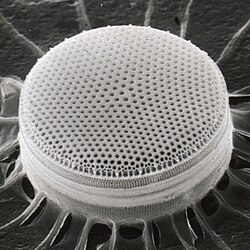
Centric diatom
Linked diatoms
ThalassiosiralesStephanodiscus hantzschii
CoscinodiscophyceaeIsthmia nervosaIsthmia nervosa
CoscinodiscophyceaeOdontella aurita

科学的応用と人類への貢献

珪藻の持つナノレベルの多孔質構造は、バイオミメティクス(生物模倣技術)の格好の素材です。光学的特性を利用したフォトニック結晶の開発や、薬剤の輸送システム、さらには環境浄化のためのフィルターなど、ナノテクノロジー分野での応用が進んでいます。

また、被殻は非常に堅牢で分解されにくいため、化石として地層に残ります。これを分析することで、数千万年前の古環境や気候変動の履歴を解明する重要な指標となります。
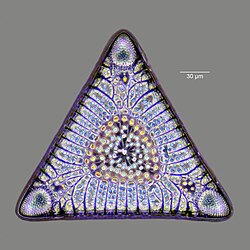
Intricate silicate (glass) shell, 32–40 million years old, of a diatom microfossil

モデル生物としての利用

ゲノム解析が進んだことで、特定の種はモデル生物として利用されています。これにより、光合成の効率化や、有用物質の生産といった遺伝子工学的なアプローチが可能になっています。
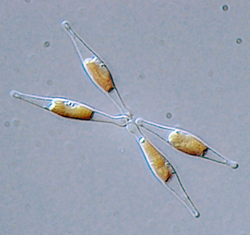
Phaeodactylum tricornutum is widely used as a model organism
Thalassiosira pseudonana was the first eukaryotic marine phytoplankton to have its genome sequenced
Tabellaria is a genus of freshwater diatoms, cuboid in shape with frustules (siliceous cell walls) attached at the corners so the colonies assume a zigzag shape.

珪藻の基本特性まとめ

珪藻の生物学的・生態学的特性
項目 詳細内容
細胞壁の主成分 二酸化ケイ素(シリカ)
主な生息地 海洋、淡水、湿地などあらゆる水圏
主要な機能 光合成による酸素供給および二酸化炭素固定
形態的分類 中心珪藻(円形)および羽状珪藻(細長形)
進化の期間 ジュラ紀から現在まで

Frequently Asked Questions

珪藻が「ガラスの生物」と呼ばれるのはなぜですか?

細胞壁(被殻)の主成分が、ガラスの原料である二酸化ケイ素(シリカ)で構成されているためです。この硬い殻が細胞を保護し、同時に微細な穴を通じて物質交換を行っています。

珪藻は地球環境にどのような影響を与えていますか?

海洋における最大の一次生産者の一つであり、膨大な量の二酸化炭素を吸収して酸素を放出しています。また、死後、殻と共に海底に沈むことで炭素を隔離し、地球の気候調節に寄与しています。

無性生殖を繰り返すとサイズが小さくなるのはなぜですか?

被殻が2つの半分(蓋と底)に分かれて分裂し、それぞれが新しい内殻を作る構造になっているため、親の殻を継承した側の細胞は、世代を重ねるごとに物理的にサイズが縮小していきます。

珪藻は産業的にどのように利用されていますか?

その微細な多孔質構造を活かしたナノ材料の開発や、ろ過剤としての利用、また法医学において水死体の遺見場所を特定するための指標(珪藻分析)などに利用されています。

References

  1. From : διατομή, diatomé, "a cutting through, a severance", from : διάτομος, diátomos, "cut in half, divided equally" from : διατέμνω, diatémno, "to cut in twain".: 718 

📸 フォトギャラリー

Representation of a diatom Central noduleStriae; pores, punctae, spots or dots in a line on the surface that allow nutrients in, and waste out, of the cellAreola; hexagonal or polygonal boxlike perforation with a sieve present on the surface of diatomRaphe; slit in the valvesPolar nodule; thickening of wall at the distal ends of the raphe [31][32]Frustule; hard and porous cell wallPyrenoid; center of carbon fixationPlastid membranes (4, secondary red)Inner membranesThylakoid; site of the light-dependent reactions of photosynthesisOil body; storage for triacylglycerols [33]Mitochondrion; creates ATP (energy) for the cellVacuoles; vesicle of a cell that contains fluid bound by a membraneCytoplasmic strand; holds the nucleusProtoplasmic bridgeEpivalveNucleus; holds the genetic materialEndoplasmic reticulum, the transport network for molecules going to specific parts of the cellGolgi apparatus; modifies proteins and sends them out of the cellEpicingulumHypocingulumHypovalveMicrotubule centre
Selections from Ernst Haeckel's 1904 Kunstformen der Natur (Art Forms of Nature), showing pennate (left) and centric (right) frustules.
Shape classification of diatom frustules. The images are 3D models. The actual sizes of the frustules are about 10–80 μm.[40]
Structure of a centric diatom frustule [40]
Pennate diatom from an Arctic meltpond, infected with two chytrid-like [zoo-]sporangium fungal pathogens (in false-colour red). Scale bar = 10 μm.[43]
Light microscopy of a living diatom. Numbered graduations are 10 micrometres apart
Planktonic diatoms such as Thalassiosira sp. (56–62), Asteromphalus sp. (63), Aulacoseira sp. (64–66), and Chaetoceros (see twin image above) often grow in chains, and have features such as spines which slow sinking rates by increasing drag.
Some Thalassiosira diatoms form chain-like colonies, like these collected near the Antarctic peninsula coast by the schooner of the Tara Oceans Expedition for plankton research.This projection of a stack of confocal images shows the diatoms' cell wall (cyan), chloroplasts (red), DNA (blue), membranes and organelles (green).
Regions of high abundance of diatoms in the ocean
Diatom dominance (as a percentage of total cell counts)versus silicate concentration [80]
Light microscopy of several species of living freshwater diatoms
Centric diatom
Linked diatoms
ThalassiosiralesStephanodiscus hantzschii
CoscinodiscophyceaeIsthmia nervosaIsthmia nervosa
CoscinodiscophyceaeOdontella aurita
Intricate silicate (glass) shell, 32–40 million years old, of a diatom microfossil
Phaeodactylum tricornutum is widely used as a model organism
Thalassiosira pseudonana was the first eukaryotic marine phytoplankton to have its genome sequenced
Tabellaria is a genus of freshwater diatoms, cuboid in shape with frustules (siliceous cell walls) attached at the corners so the colonies assume a zigzag shape.