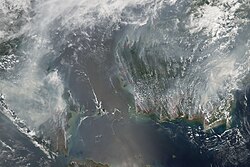
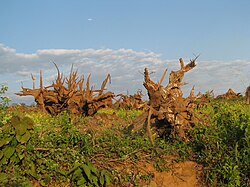
Annual deforestation
← ホームへ戻る

森林減少の現状と地球環境への深刻な影響

🗓 2026年8月11日

地球の陸地面積の約31%を占める森林は、いま深刻な危機に瀕しています。森林減少(Deforestation)とは、森林や樹木が取り除かれ、農地や牧草地、都市用地など、森林以外の用途に転換される現象を指します。かつての地球を覆っていた森林面積と比較すると、農業の拡大によって3分の1が失われ、その半数がここ1世紀の間に消失しました。現在、世界では1分間に平均2,400本もの樹木が伐採されている計算になります。

特に深刻なのが、生物多様性の宝庫であり、膨大な炭素を蓄積している「湿潤熱帯一次林」の喪失です。2019年には、全体の樹冠損失の約3分の1に相当する380万ヘクタールがこれらの地域で失われました。
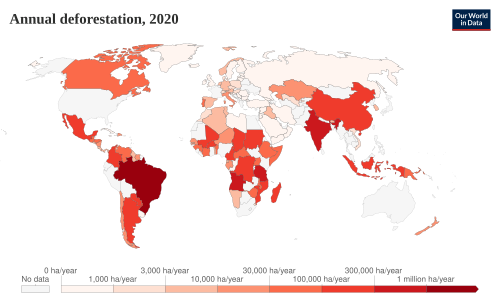
Annual deforestation

Key Facts

  • 主因は農業: 2025年時点で、世界的な森林減少の約90%が農業(耕作地の拡大や牧草地の造成)に起因しています。
  • 熱帯林の激減: かつて地球を覆っていた1,600万平方キロメートルの熱帯雨林は、現在620万平方キロメートルまで減少しました。
  • 炭素蓄積への打撃: 1990年から2020年の間に、世界の森林炭素ストックは0.9%減少しました。
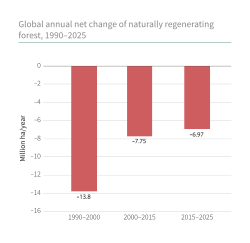
  • 減少速度の変化: 1990年代の年平均1,760万ヘクタールの喪失から、2015〜2025年には1,090万ヘクタールへと減少速度は緩やかになっています。

森林減少を加速させる主な要因

農業と畜産業の拡大

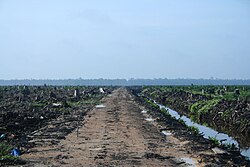
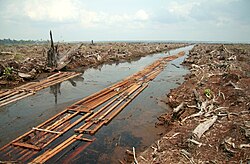
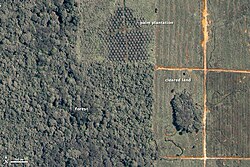
森林破壊の最大の直接的要因は農業です。コーヒー、パーム油、ゴムなどのプランテーション開発や、家畜の放牧地確保のために広大な森が切り拓かれています。特にパーム油などの商品作物への転換は、東南アジアなどで顕著です。

Drivers of deforestation and forest degradation by region, 2000–2010[13]
Deforestation in Riau province, Sumatra, Indonesia to make way for an oil palm plantation in 2007.
The last batch of sawnwood from the peat forest in Indragiri Hulu, Sumatra, Indonesia. Deforestation for oil palm plantation.
A satellite image showing deforestation for a palm oil plantation in Malaysia

産業開発と都市化

木材産業による伐採(ロギング)や、都市の拡大、鉱山開発も重要な要因です。違法な金採掘などは、南米などの熱帯雨林に深刻なダメージを与えています。
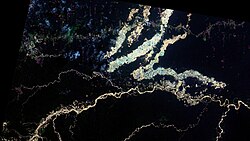
Illegal gold mining in Madre de Dios, Peru.

気候変動と人為的要因

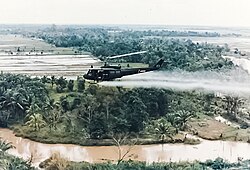
地球温暖化に伴う気候変動は、森林火災のリスクを高め、間接的に森林減少を加速させています。また、過去には戦争による化学剤(枯葉剤)の散布といった軍事的な理由で森林が破壊された事例もあります。
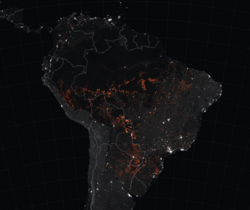
Satellite imagery of locations of the 2019 Amazon rainforest wildfires as detected by MODIS from August 15 to August 22, 2019
U.S. Army Huey helicopter spraying Agent Orange during the Vietnam War
Fires on Borneo and Sumatra, 2006. People use slash-and-burn deforestation to clear land for agriculture.

地域別の現状と傾向

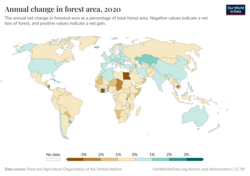
森林の喪失は地域によって大きく異なります。南米やアフリカでは依然として大きな損失が続いており、特に新興経済国の熱帯・亜熱帯林で破壊が激しい傾向にあります。一方で、ヨーロッパや北米などの地域では、森林面積が増加または維持されている傾向が見られます。
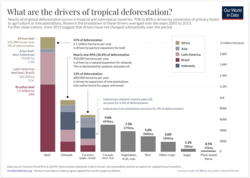
Drivers of tropical deforestration
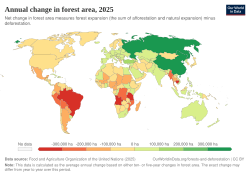
This screen shot shows a map that highlights countries based on their net change rate of forest area. Areas that appear more blue have a higher net change rate than areas that appear tan. Brown areas indicate a net loss of forest area.
Annual change in forest area
In decades since 1990, South America and Africa have shown the greatest loss of forest area, with global net loss in the 2010s still about 60% of the 1990s value.[42]
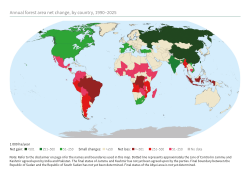
Annual forest area net change, by country, 1990–2025
Global annual net change of naturally regenerating forest, 1990–2025

特に危機的な状況にあるのが、生物多様性のホットスポットとされる地域です。インド・ビルマやニューカレドニア、フィリピンなどの地域では、元の生息地のわずか5〜7%しか残っていないと報告されています。
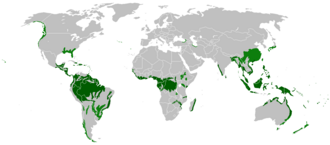
World map of rainforests Tropical rainforest Temperate/subtropical rainforest
地域別森林面積の推移(1990年 vs 2020年)
地域 1990年(百万ha) 2020年(百万ha)
ヨーロッパ(ロシア含む) 158.7 172.4
北アメリカ 136.6 140.0
アフリカ 94.3 80.9
南・東南アジア 45.8 41.5
オセアニア 33.4 33.1
中央アメリカ 5.0 4.1
南アメリカ 161.8 144.8

環境と社会への多角的な影響

生態系と生物多様性の喪失

世界の植物および陸上動物の半数以上が熱帯林に生息しています。森林の破壊は、これら種の生息地を奪い、絶滅を加速させます。また、森に依存して生活する先住民族の強制的な立ち退きという社会的問題も引き起こしています。
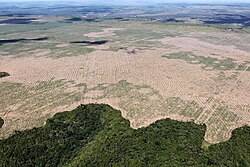
Deforestation of the Amazon rainforest in Brazil's Maranhão state, 2016
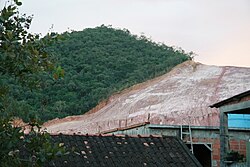
Deforestation in the city of Rio de Janeiro in Brazil's Rio de Janeiro state, 2009
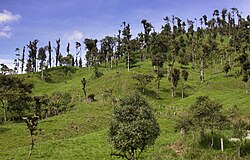
Deforestation in Ecuador.
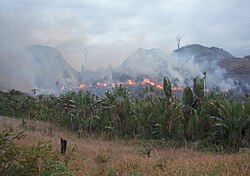
Illegal "slash-and-burn" practice in Madagascar, 2010
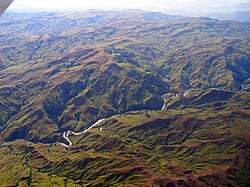
Deforestation of the Highland Plateau in Madagascar has led to extensive siltation and unstable flows of western rivers.
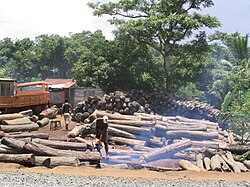
Illegal logging in Madagascar. In 2009, the vast majority of the illegally obtained rosewood was exported to China.
Deforestation around Pakke Tiger Reserve, India
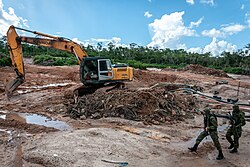
Agents from IBAMA, Brazil's environmental police, searching for illegal logging activity in Indigenous territory in the Amazon rainforest, 2018

気候変動と水循環への打撃

森林は二酸化炭素を吸収する「炭素吸収源」として機能していますが、伐採されることでその機能が失われるだけでなく、蓄えられていた炭素が放出され、地球温暖化を助長します。また、樹木は地表の流出を抑え、根を通じて水の浸透を促すことで水循環を調節していますが、森林がなくなると土壌浸食や砂漠化が進みます。
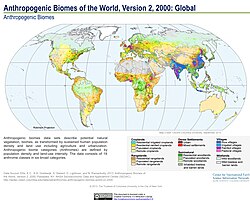
Anthropogenic biomes of the world
Biophysical mechanisms by which forests influence climate.[158]
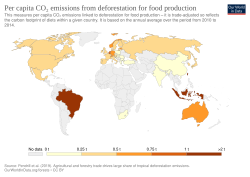
Per capita CO2 emissions from deforestation for food production
Mean annual carbon loss from tropical deforestation.[159]
Proportion of carbon stock in forest carbon pools, 2020[170]
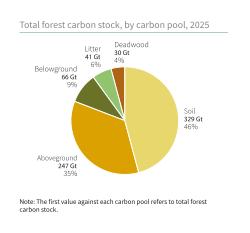
Total forest carbon stock, by carbon pool, 2025.

歴史的な教訓と現代の課題

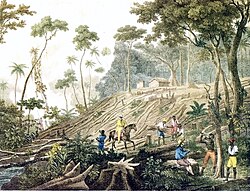
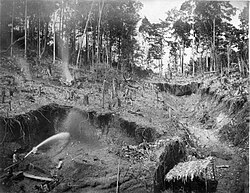
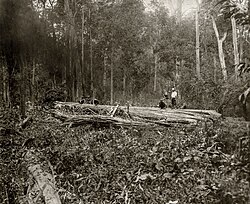
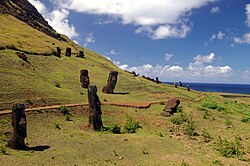
森林減少は現代だけの問題ではありません。イースター島のような歴史的な事例では、過度な伐採が文明の崩壊につながったことが示唆されています。また、植民地時代からの大規模な土地開墾が、現在の森林分布に大きな影響を与えています。
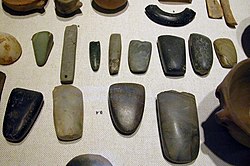
An array of Neolithic artifacts, including bracelets, ax heads, chisels, and polishing tools.
Easter Island, deforested.
Slaves clearing the Atlantic Forest in Brazil, c. 1820–1825
Deforestation in Suriname c. 1880–1900
Deforestation in Burma (now Myanmar) circa 1920, during the British colonial era

持続可能な未来への対策

森林減少を食い止めるため、国際的な取り組みが進んでいます。2030年までに森林減少をゼロにするという宣言や、パーム油などのサプライチェーンにおける森林破壊の排除、先住民族への土地権利の譲渡による保全などが有効な手段として議論されています。
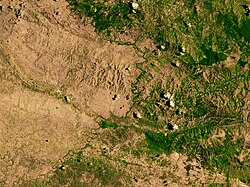
Satellite image of Haiti's border with the Dominican Republic (right) shows the amount of deforestation on the Haitian side
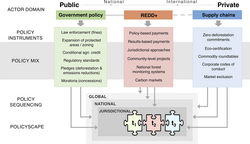
An incomplete concept of a framework of policy mix sequencing for zero-deforestation governance. Non-intervention in processes related to beef production via policies may be a main driver of tropical deforestation.
Transferring land rights to indigenous inhabitants is argued to efficiently conserve forests.

また、燃料としての木材利用を減らすために、より持続可能な代替案として竹の活用などが推奨されています。食生活の転換(ヴィーガン食の導入など)によって、必要とされる農地面積を大幅に削減できるという試算もあり、個人の消費行動の変化も期待されています。
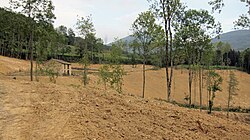
Deforestation in France.
The amount of globally needed agricultural land would be reduced by three quarters if the entire population adopted a vegan diet.[23]
Bamboo is advocated as a more sustainable alternative for cutting down wood for fuel.[301]

Frequently Asked Questions

森林減少の最大の原因は何ですか?

最大の原因は農業です。特に家畜のための牧草地造成や、パーム油、コーヒー、ゴムなどの商品作物を栽培するためのプランテーション拡大が、世界的な森林喪失の約90%を占めています。

森林がなくなると気候にどのような影響がありますか?

森林は二酸化炭素を吸収して蓄える役割を持っていますが、伐採されるとこの機能が失われ、さらに蓄積されていた炭素が放出されるため、地球温暖化が加速します。また、蒸散作用による気象調節機能が失われ、局所的な気候変動や乾燥化を招きます。

熱帯雨林の喪失が特に問題視されるのはなぜですか?

熱帯雨林は地球上の生物種の半数以上が生息する生物多様性の中心地であり、一度失われると回復に膨大な時間がかかるためです。また、炭素貯蔵量が多く、地球全体の気候安定に不可欠な役割を果たしているためです。

森林減少を止めるために個人でできることはありますか?

持続可能な方法で生産された製品(認証パーム油など)を選択することや、食肉消費を減らして農地需要を抑えること、また森林保全に取り組む団体を支援することなどが挙げられます。

再植林(Reforestation)をすれば問題は解決しますか?

再植林は重要ですが、単に木を植えるだけでは不十分です。元々の原生林が持っていた複雑な生態系や生物多様性を完全に再現することは困難であり、まずは既存の一次林を保護することが最優先事項とされています。

References

  1. SAFnet Dictionary|Definition For [deforestation] Archived 25 July 2011 at the . Dictionary of forestry.org (29 July 2008). Retrieved 15 May 2011.
  2. Deforestation|Threats|WWF. Worldwildlife.org. Retrieved 13 November 2016.
  3. ; (9 February 2021). "Forests and Deforestation". Our World in Data.
  4. "On Water". European Investment Bank. Retrieved 13 October 2020.
  5. Teja Tscharntke; Christoph Leuschner; Edzo Veldkamp; Heiko Faust; Edi Guhardja, eds. (2010). Tropical Rainforests and Agroforests Under Global Change. Springer. pp. 270–271.  .
  6. Watson, Robert T.; Noble, Ian R.; Bolin, Bert; Ravindranath, N. H.; Verardo, David J.; Dokken, David J. (2000). Land Use, Land-Use Change, and Forestry (Report). Cambridge University Press.
  7. Guy, Jack; Ehlinger, Maija (2 June 2020). "The world lost a football pitch-sized area of tropical forest every six seconds in 2019". CNN. Retrieved 2 June 2020.
  8. Weisse, Mikaela; Goldman, Elizabeth Dow (2 June 2020). "We Lost a Football Pitch of Primary Rainforest Every 6 Seconds in 2019". World Resources Institute. Retrieved 4 June 2020.
  9. "Investment and financial flows to address climate change" (PDF). unfccc.int. UNFCCC. 2007. p. 81. Archived (PDF) from the original on 10 May 2008.
  10. "Agriculture is the direct driver for worldwide deforestation". ScienceDaily. Retrieved 29 April 2018.

📸 フォトギャラリー

Annual deforestation
Deforestation of the Amazon rainforest in Brazil's Maranhão state, 2016
Deforestation in Riau province, Sumatra, Indonesia to make way for an oil palm plantation in 2007.
Deforestation in the city of Rio de Janeiro in Brazil's Rio de Janeiro state, 2009
This screen shot shows a map that highlights countries based on their net change rate of forest area. Areas that appear more blue have a higher net change rate than areas that appear tan. Brown areas indicate a net loss of forest area.
Annual change in forest area
The amount of globally needed agricultural land would be reduced by three quarters if the entire population adopted a vegan diet.[23]
In decades since 1990, South America and Africa have shown the greatest loss of forest area, with global net loss in the 2010s still about 60% of the 1990s value.[42]
Annual forest area net change, by country, 1990–2025
Global annual net change of naturally regenerating forest, 1990–2025
Satellite imagery of locations of the 2019 Amazon rainforest wildfires as detected by MODIS from August 15 to August 22, 2019
Deforestation in Ecuador.
Drivers of deforestation and forest degradation by region, 2000–2010[13]
Drivers of tropical deforestration
The last batch of sawnwood from the peat forest in Indragiri Hulu, Sumatra, Indonesia. Deforestation for oil palm plantation.
Anthropogenic biomes of the world
Illegal gold mining in Madre de Dios, Peru.
U.S. Army Huey helicopter spraying Agent Orange during the Vietnam War
Biophysical mechanisms by which forests influence climate.[158]
Per capita CO2 emissions from deforestation for food production
Illegal "slash-and-burn" practice in Madagascar, 2010
Mean annual carbon loss from tropical deforestation.[159]
Fires on Borneo and Sumatra, 2006. People use slash-and-burn deforestation to clear land for agriculture.
Proportion of carbon stock in forest carbon pools, 2020[170]
Total forest carbon stock, by carbon pool, 2025.
Deforestation of the Highland Plateau in Madagascar has led to extensive siltation and unstable flows of western rivers.
Deforestation in France.
Illegal logging in Madagascar. In 2009, the vast majority of the illegally obtained rosewood was exported to China.
World map of rainforests Tropical rainforest Temperate/subtropical rainforest
A satellite image showing deforestation for a palm oil plantation in Malaysia
Satellite image of Haiti's border with the Dominican Republic (right) shows the amount of deforestation on the Haitian side
Deforestation around Pakke Tiger Reserve, India
Agents from IBAMA, Brazil's environmental police, searching for illegal logging activity in Indigenous territory in the Amazon rainforest, 2018
An incomplete concept of a framework of policy mix sequencing for zero-deforestation governance. Non-intervention in processes related to beef production via policies may be a main driver of tropical deforestation.
Transferring land rights to indigenous inhabitants is argued to efficiently conserve forests.
Bamboo is advocated as a more sustainable alternative for cutting down wood for fuel.[301]
An array of Neolithic artifacts, including bracelets, ax heads, chisels, and polishing tools.
Easter Island, deforested.
Slaves clearing the Atlantic Forest in Brazil, c. 1820–1825
Deforestation in Suriname c. 1880–1900
Deforestation in Burma (now Myanmar) circa 1920, during the British colonial era