私たちの住む地球には、絶えず宇宙から目に見えない「粒子」が降り注いでいます。これが宇宙線(Cosmic Rays)です。宇宙線は、光速に近い猛烈なスピードで移動する高エネルギーの粒子やその集団であり、主に陽子や原子核で構成されています。これらは太陽系外の銀河系や遠方の銀河、あるいは私たちの太陽から放出され、広大な宇宙空間を旅して地球に到達します。
地球に到達した宇宙線の多くは、地球が持つ磁気圏(磁場)や太陽圏によって跳ね返されますが、一部は大気圏に突入します。大気中の分子と衝突すると、次々と新しい粒子が生成される「二次粒子シャワー」が発生し、その一部が地表まで到達します。
Key Facts
- 正体: 主に陽子や原子核からなる高エネルギー粒子。
- 起源: 超新星爆発や活動銀河核(AGN)、太陽などが主な発生源。
- 発見: 1912年にビクトール・ヘスが気球実験によって発見(1936年ノーベル物理学賞)。
- 影響: 大気中の炭素14の生成に関与し、放射性炭素年代測定の基礎となっている。
- 検出: 衛星による直接観測と、地上のチェレンコフ望遠鏡などによる間接観測が行われている。
宇宙線の歴史と発見の軌跡
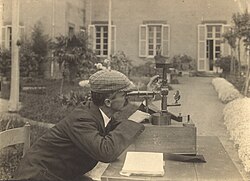
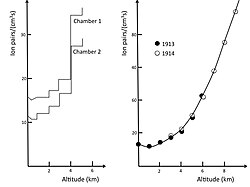
宇宙線の存在が科学的に証明されたのは20世紀初頭のことです。1912年、物理学者のビクトール・ヘスは気球を用いて高度を上げながら放射線量を測定し、地上よりも上空の方が電離放射線が増加することを発見しました。これにより、放射線の源が地球内部ではなく宇宙空間にあることが明らかになりました。

その後、1950年代後半に人工衛星が打ち上げられると、低エネルギー領域の宇宙線を直接測定することが可能になりました。現代では、フェルミ宇宙望遠鏡などの高度な観測装置により、多くの一次宇宙線が星の終焉である「超新星爆発」に由来することが示唆されています。また、2018年の観測では、巨大ブラックホールを持つ活動銀河核(ブレーザー TXS 0506+056など)も宇宙線の発生源である可能性が浮上しています。
宇宙線の種類とエネルギーメカニズム
一次宇宙線と二次宇宙線
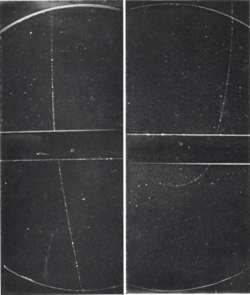
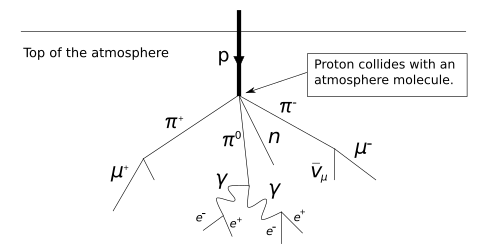
宇宙線は、その発生段階によって大きく2つのタイプに分けられます。まず、宇宙空間から直接やってくる粒子を一次宇宙線と呼びます。これらは主に陽子やヘリウム原子核などで構成されています。一方、一次宇宙線が地球大気に衝突して作り出された粒子群を二次宇宙線と呼びます。例えば、ミューオンなどの粒子が地表まで到達し、検出されます。
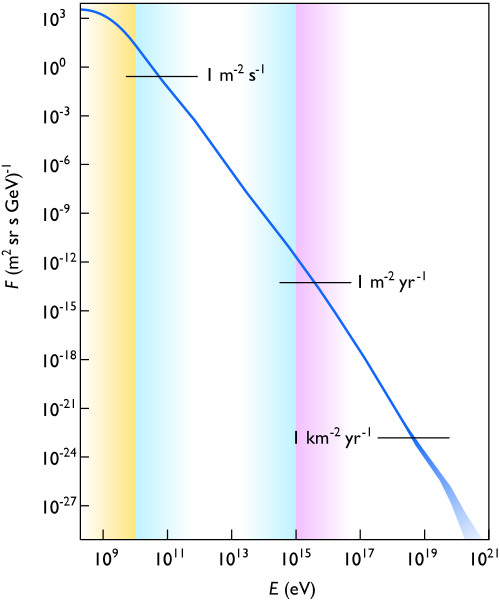
加速のメカニズムとエネルギー分布
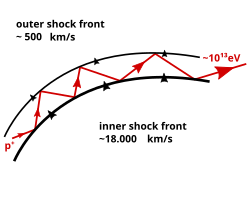
宇宙線がこれほどの高エネルギーを持つ理由は、衝撃波による加速にあります。超新星爆発などの激しい現象で発生する衝撃波の間で粒子が往復することで、エネルギーが劇的に増幅されます。
宇宙線のエネルギー密度は、星からの可視光や銀河磁場のエネルギー密度と同程度(約1 eV/cm³)であり、宇宙空間における重要なエネルギー成分の一つとなっています。
地球環境と人体への影響
大気化学と年代測定への寄与
宇宙線は地球の大気組成にも影響を与えています。特に、窒素原子への衝突によって生成される炭素14は、1950年代の核実験が始まるまで、大気中でほぼ一定量(約70トン)に保たれてきました。この性質を利用して、有機物の年代を特定する「放射性炭素年代測定」が行われています。
自然放射線としての役割
私たちが日常的にさらされている自然放射線の一部は、宇宙線に由来します。以下に、世界的な平均値と日本などの地域的な放射線量の比較をまとめます。
| 放射線源 | 世界平均 (mSv/y) | 米国 (mSv/y) | 日本 (mSv/y) |
|---|---|---|---|
| 空中(宇宙線含む) | 1.26 | 2.29 | 2.00 |
| 体内被曝 | 0.29 | 0.16 | 0.40 |
| 地殻(陸上) | 0.48 | 0.19 | 0.29 |
| 宇宙線(単独) | 0.39 | 0.31 | 0.30 |
宇宙線はまた、航空宇宙分野において重要な課題です。宇宙空間では地球の磁気圏による保護がないため、被曝量が増加します。火星探査などの長期ミッションでは、この放射線対策が不可欠です。
![Comparison of radiation doses, including the amount detected on the trip from Earth to Mars by the RAD on the MSL (2011–2013).[105][106][107]](/images/9b/89/9b89be6c55242cc136fd17e75a12a2c54a6ac0558023412f00caede206bb3499.png)
宇宙線の観測手法と研究
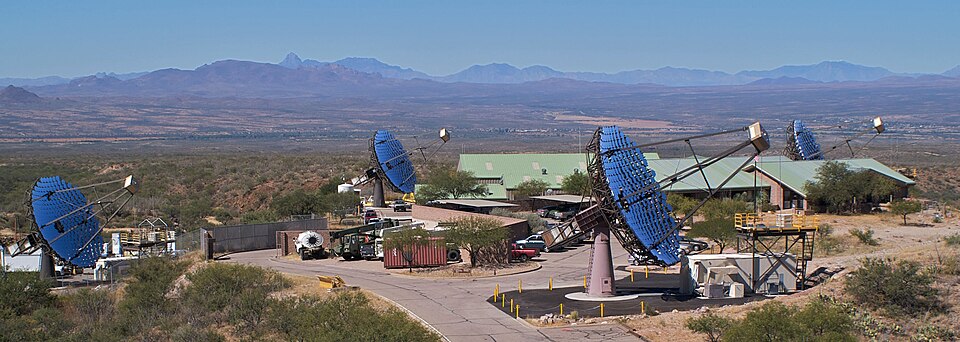
宇宙線の研究には、直接的な検出と間接的な検出の2つのアプローチがあります。直接検出では、衛星や気球に搭載した粒子検出器を用いて、粒子の種類やエネルギーを直接測定します。一方、間接検出では、宇宙線が大気中で引き起こす「大気シャワー」や、それに伴い発生するチェレンコフ光を地上の巨大な望遠鏡群で捉えます。
また、太陽活動が宇宙線の流入量に影響を与える「太陽変調」という現象もあり、太陽風と銀河宇宙線の相互作用を解明するための研究が進められています。
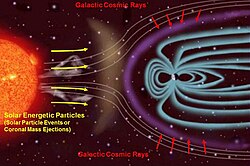
![An overview of the space environment shows the relationship between the solar activity and galactic cosmic rays.[73]](/images/60/2b/602b0ddc1c7e3da6fed3f43a75bb768181ebc7f5b1f29e022888fc1a9c15fad0.jpg)
Frequently Asked Questions
宇宙線は人体に危険なのですか?
地表に到達する宇宙線の量は非常に少なく、日常生活で健康に影響を与えるレベルではありません。しかし、高度の高い場所を飛ぶ航空機の乗務員や、宇宙飛行士はより多くの放射線にさらされるため、管理と対策が必要になります。
宇宙線はどこから来ているのですか?
主な発生源は、太陽系外の超新星爆発や、遠方の銀河にある活動銀河核(巨大ブラックホール周辺)と考えられています。一部は私たちの太陽からも放出されています。
宇宙線が電子機器に影響を与えることはありますか?
はい。高エネルギー粒子が半導体などの電子回路に衝突すると、ビット反転などの「ソフトエラー」と呼ばれる誤作動を引き起こすことがあります。そのため、宇宙機や高性能コンピューターでは放射線耐性を高める設計がなされています。
宇宙線と気候変動に関係はありますか?
一部の研究で、宇宙線が雲の形成に影響を与え、それが気候変動に関与しているという仮説が提唱されていますが、科学的な合意に至るまでにはさらなる検証が必要です。
References
- Sharma, Shatendra (2008). Atomic and Nuclear Physics. Pearson Education India. p. 478. .
- "Detecting cosmic rays from a galaxy far, far away". Science Daily. 21 September 2017. Retrieved 26 December 2017.
- "Nobel Prize in Physics 1936 – Presentation Speech". Nobelprize.org. 10 December 1936. Retrieved 27 February 2013.
- Cilek, Vaclav, ed. (2009). "Cosmic Influences on the Earth". Earth System: History and Natural Variability. Vol. I. Eolss Publishers. p. 165. .
- Ackermann, M.; Ajello, M.; Allafort, A.; Baldini, L.; Ballet, J.; Barbiellini, G.; et al. (15 February 2013). "Detection of the characteristic pion decay-signature in supernova remnants". . 339 (6424): 807–811. :1302.3307. :2013Sci...339..807A. :10.1126/science.1231160. 23413352. 29815601.
- Pinholster, Ginger (13 February 2013). "Evidence shows that cosmic rays come from exploding stars" (Press release). Washington, DC: .
- Abramowski, A.; et al. (HESS Collaboration) (2016). "Acceleration of petaelectronvolt protons in the Galactic Centre". . 531 (7595): 476–479. :1603.07730. :2016Natur.531..476H. :10.1038/nature17147. 26982725. 4461199.
- Aartsen, Mark; et al. (IceCube Collaboration) (12 July 2018). "Neutrino emission from the direction of the blazar TXS 0506+056 prior to the IceCube-170922A alert". Science. 361 (6398): 147–151. :1807.08794. :2018Sci...361..147I. :10.1126/science.aat2890. 0036-8075. 30002248. 133261745.
- Christian, Eric. "Are cosmic rays electromagnetic radiation?". NASA. Archived from the original on 31 May 2000. Retrieved 11 December 2012.
- "What are cosmic rays?". Goddard Space Flight Center. NASA. Archived from the original on 28 October 2012. Retrieved 31 October 2012."mirror copy, also archived". Archived from the original on 4 March 2016.
📸 フォトギャラリー