現代社会が直面している気候変動とは、単なる気温の上昇(地球温暖化)だけではなく、それに伴う地球全体の気候システムの広範な変化を指します。産業革命以降、人類は石炭や石油などの化石燃料を大量に消費し、それが地球の熱バランスを根本から変えてしまいました。本記事では、科学的な根拠に基づき、なぜ地球が温暖化しているのか、そしてそれが私たちの生活や生態系にどのようなリスクをもたらすのかを詳しく解説します。
Key Facts
- 主因: 産業革命以降の化石燃料の燃焼、森林破壊、農業・工業活動による温室効果ガスの排出。
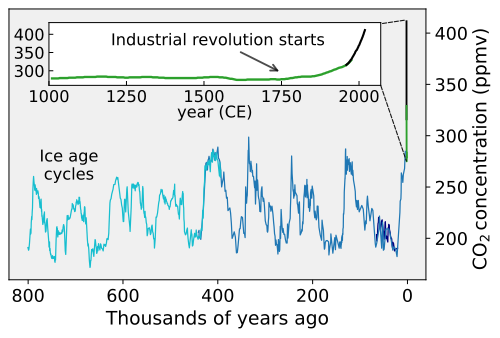
- 現状: 大気中の二酸化炭素(CO2)濃度は、産業革命前と比較して約50%増加し、数百万年ぶりの高水準に達している。
- 影響: 極端な猛暑、激甚化する嵐、海面上昇、生物多様性の喪失などが世界各地で加速している。
- 科学的合意: 気候専門家の間では、人間活動が温暖化の主因であるという合意が98.7%から100%に達している。
- リスク: 食料・水不足、健康被害、経済的損失、そして気候難民の増加が懸念されている。
地球温暖化のメカニズムと科学的根拠
温室効果の仕組み
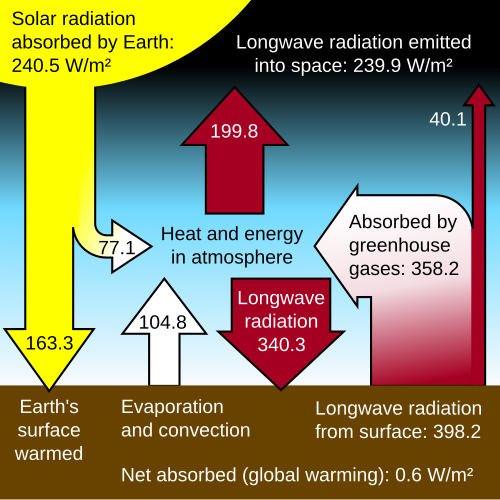
地球は太陽からの光で温められ、その熱を宇宙空間へ放射しています。しかし、大気中に存在する二酸化炭素やメタンなどの温室効果ガスが、この放射される熱の一部を吸収して地表に閉じ込めるため、下層大気が温められます。これを温室効果と呼びます。適度な温室効果は生命維持に不可欠ですが、人間活動によってガス濃度が急増したことで、過剰な加熱が起きている状態です。
気温上昇の歴史と現状
過去2000年間の気温推移を分析すると、近年の気温上昇は自然な変動の範囲を大きく超えていることが分かります。特にここ数十年の傾向として、最高気温の更新頻度が最低気温の更新を大幅に上回っており、地球表面の広範囲で温暖化が進行しています。
![Global surface temperature reconstruction over the past 2000 years using proxy data from tree rings, corals, and ice cores in blue.[44] Directly observed data is in red.[45]](/images/70/f8/70f8c43cb48bc3d68a3aa7bce5825422a2d60a785f6d75fe10d7dca80fa00f01.webp)
![In recent decades, new high temperature records have substantially outpaced new low temperature records on a growing portion of Earth's surface.[54]](/images/c7/b9/c7b949b6fc1ae8e0f767cd17032cee86084e9bc0d9fbb0789803938ef56e6a78.webp)
温暖化を加速させる要因
温暖化は単にガスが増えるだけでなく、正のフィードバックと呼ばれる悪循環によって加速します。例えば、北極の海氷が溶けると、太陽光を反射していた白い面が減り、熱を吸収しやすい暗い海面が露出します。これによりさらに海水温が上がり、さらに氷が溶けるという連鎖が起こります。
![Sea ice reflects 50% to 70% of incoming sunlight, while the ocean, being darker, reflects only 6%. As an area of sea ice melts and exposes more ocean, more heat is absorbed by the ocean, raising temperatures that melt still more ice. This is a positive feedback process.[158]](/images/25/2e/252e9c18421cdd1a76da583018ec9c87e972ad1a7bda7a459e178bf9f61873df.jpg)
温暖化の主犯:排出源と責任
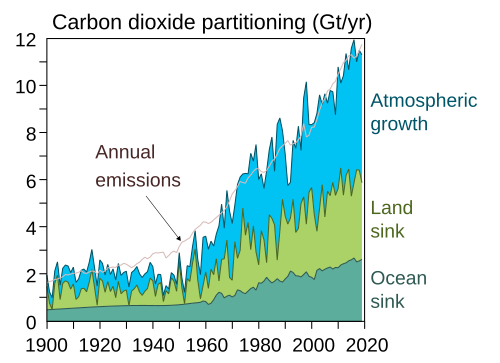
二酸化炭素の蓄積
氷床コアなどのデータから、過去80万年間のCO2濃度を調べると、現在の濃度がいかに異常であるかが明確になります。主な排出源は化石燃料の燃焼であり、次いで森林破壊による吸収源の減少が影響しています。
![The Global Carbon Project shows how additions to CO2 have been caused by different sources ramping up one after another.[114]](/images/5b/be/5bbe11065de6472aa3a79776062070da55f8c99c04b392eaa2b64b2191b4cd53.webp)
![The rate of global tree cover loss has approximately doubled since 2001, to an annual loss approaching an area the size of Italy.[128]](/images/a2/ea/a2eafd93f4f84736a4defb41417918e307541b309ae42824985905c28b3a60d3.webp)
排出量の地域的格差
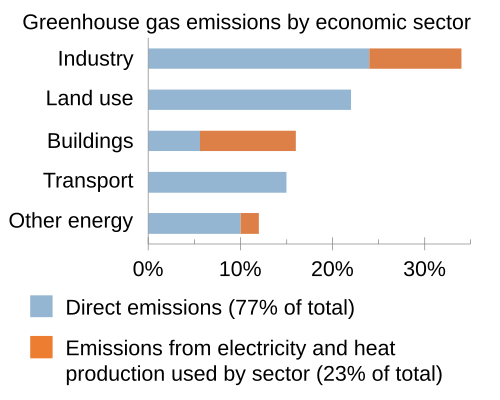
世界的に見ると、中国やその他の新興国での排出量増加が顕著ですが、一人当たりの排出量で見ると米国などの先進国が高い水準にあります。また、産業部門が直接的・間接的な排出の大部分を占めています。
![Coal, oil, and natural gas remain the primary global energy sources even as renewables have begun rapidly increasing.[298][299]](/images/64/2b/642ba8921bb1e330a71602af72d79e608813723c9e9aa514cea055c2e0cc2b8a.webp)
![Since 2000, rising CO2 emissions in China and the rest of world have surpassed the output of the United States and Europe.[382][383]](/images/51/f4/51f4500932d61bcf852197f3554bbd53b0f31e4be121c1d6aff3648690b3bde6.webp)
![Per person, the United States generates CO2 at a far faster rate than other primary regions.[382][384]](/images/fd/8a/fd8a810df9b6b60016a4e54fb4801f839d1b15697dafa0e76dc676d32b96ceb2.webp)
![Annual CO2 emissions by region. This measures fossil fuel and industry emissions. Land use change is not included.[407]](/images/0d/51/0d517f733a9f46df4b0f8624276bb90f769d8b4efdc31dfc1ccebe95f2858084.webp)
自然要因の否定
一部では太陽活動や火山活動が原因であるという主張がありますが、科学的な分析の結果、これらの自然要因だけでは現在の急激な温暖化を説明できないことが証明されています。
![The Fourth National Climate Assessment ("NCA4", USGCRP, 2017) includes charts illustrating that neither solar nor volcanic activity can explain the observed warming.[151][152]](/images/ca/31/ca31ed807f65e71084f0de1dbc48a6331913b7ad9f8f6c1881c7d26cd68cbc7d.webp)
地球環境と人類への深刻な影響
自然生態系への打撃
温暖化は、氷河の融解や永久凍土の融解を引き起こし、海面水位を上昇させます。また、海洋は温暖化による熱の90%以上を吸収しており、海水温の上昇と酸性化がサンゴ礁などの海洋生態系に壊滅的な影響を与えています。
![There has been an increase in ocean heat content during recent decades as the oceans absorb over 90% of the heat from global warming.[55]](/images/cc/b3/ccb35341d00a92c4d9f916e4a4e2e65b85c6f9d4c9054736d1b15d9c269e3d63.webp)
![Historical sea level reconstruction and projections up to 2100 published in 2017 by the U.S. Global Change Research Program[199]](/images/8d/49/8d49d161b7dd6901e7a782882aa6a5c430a6553c592b60c73f59bd40d12d4d64.webp)
極端な気象現象の増加
熱波、干ばつ、激しい豪雨や台風などの異常気象がより頻繁に、かつ強力に発生しています。これは単なる偶然ではなく、温暖化によって大気中の水蒸気量が増え、エネルギーバランスが変化した結果です。
![In virtually all countries and territories around the world, scientists in the field of extreme event attribution have concluded that human-caused global warming has increased the number of days of extreme heat events over long-term norms.[191]](/images/0c/c3/0cc34766666a311420ba70d20f96a2201018b0bd53e3daa1cab82496fd29cd78.webp)
![Extreme weather will be progressively more common as the Earth warms.[239]](/images/05/5c/055cd372967cb422cf330d50867f934ff12484afdf5dfe59729fc9fb39d073fd.webp)
社会的なリスクと不平等
気候変動は、食料安全保障の低下や感染症の拡大など、公衆衛生上の大きな脅威となります。特に、排出責任が少ない貧困地域の人々が、最も深刻な被害を受けやすく、適応能力も低いという「気候正義」の問題が浮き彫りになっています。
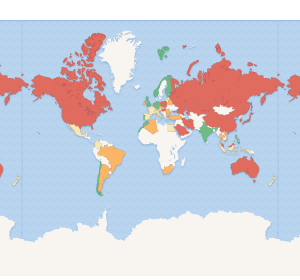
未来への展望と対策
ティッピングポイントの危険性
ある一定の温度上昇を超えると、不可逆的な変化が起こるティッピングポイント(臨界点)に達すると懸念されています。一度この点を超えると、人間の努力では止められない連鎖的な崩壊が始まる可能性があります。
![Different levels of global warming may cause different parts of Earth's climate system to reach tipping points that cause transitions to different states.[209][210]](/images/e2/7c/e27c55dbe3c9c20bf257e8e13abb07b28d8b1346f7a19f5687e21148ccaa0395.jpg)
緩和策と適応策
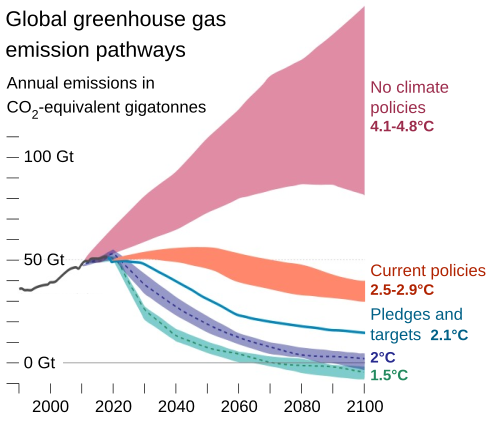
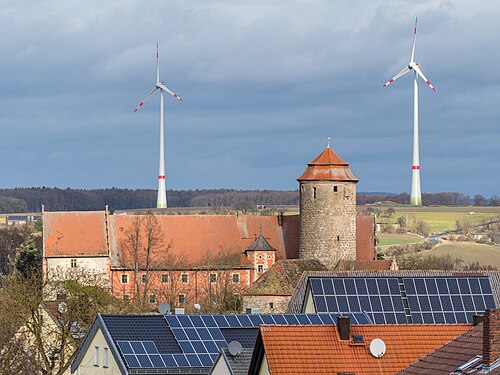
温暖化を抑える「緩和策」としては、再生可能エネルギーへの転換やエネルギー効率の向上、森林再生によるCO2吸収の促進が挙げられます。一方で、既に避けられない影響に対しては、堤防の建設や乾燥に強い作物の開発などの「適応策」が必要です。
科学的合意と誤情報
気候変動に関する科学的な合意はほぼ完璧に形成されていますが、短期間のデータだけを切り取った「チェリーピッキング」などの手法により、温暖化が起きていないかのような誤情報が流布することがあります。長期的なトレンドを正しく理解することが重要です。
![Data has been cherry picked from short periods to falsely assert that global temperatures are not rising. Blue trendlines show short periods that mask longer-term warming trends (red trendlines). Blue rectangle with blue dots shows the so-called global warming hiatus.[417]](/images/38/b2/38b2aedd1c62fb56d97f8c65d385d2542ab35fa0879acd60acdef8df77d24fc4.gif)
![The public substantially underestimates the degree of scientific consensus that humans are causing climate change (2022 data).[425] Studies from 2019 to 2021[426][5][427] found scientific consensus to range from 98.7 to 100%.](/images/e1/71/e171a42e1840f5adb1be4296d9fc38a678987ff729a6e85faa7bd78b21794c39.webp)
![Scientific consensus on causation: Academic studies of scientific agreement on human-caused global warming among climate experts (2010–2015) reflect that the level of consensus correlates with expertise in climate science.[462] A 2019 study found scientific consensus to be at 100%,[426] and a 2021 study concluded that consensus exceeded 99%.[5] Another 2021 study found that 98.7% of climate experts indicated that the Earth is getting warmer mostly because of human activity.[463]](/images/6a/a1/6aa15998407312d2e6aba3459f3723219d9e6f7e72ebb60a7be92a8643437938.webp)
歴史的な発見
温室効果の概念は比較的古く、1856年にはユニス・ニュートン・フートがCO2の熱吸収効果を示し、1912年には石炭燃焼による温暖化の可能性が指摘されていました。
![Eunice Newton Foote showed carbon dioxide's heat-capturing effect in 1856, foreseeing its implications for the planet.[448] (Carbon dioxide was called "carbonic acid gas".)](/images/d4/a0/d4a010e053585752b7fb53520d0045e612537638f90cac5e8f059236ca6655b2.png)
![This 1912 article succinctly describes the greenhouse effect, how burning coal creates carbon dioxide to cause global warming and climate change.[456]](/images/e1/14/e11494cb43f38031c498b962b78e71d91f3b0c5138489ca19d479bd9cbe7b437.jpg)
将来の予測
今後の気温上昇は、私たちがどれだけ排出量を削減できるかにかかっています。現在の軌道では、今世紀末までに深刻な温度上昇が予測されており、早急な行動が求められています。
![CMIP6 multi-model projections of global surface temperature changes for the year 2090 relative to the 1850–1900 average. The current trajectory for warming by the end of the century is roughly halfway between these two extremes.[24][88][89]](/images/70/f8/70f881ebd44b9e2b75a013b4868568b53fceebe977b1b66005ed095216055092.webp)
まとめ:気候変動の主要データ
| 項目 | 詳細・メカニズム | 主な影響・結果 |
|---|---|---|
| 温室効果ガス | CO2、メタンなどが熱を吸収し大気を加熱 | 地球平均気温の上昇、海洋温暖化 |
| 土地利用の変化 | 森林破壊によるCO2吸収能力の低下 | 大気中CO2濃度の加速的な上昇 |
| 氷圏の変化 | 海氷・氷河の融解(正のフィードバック) | 海面上昇、アルベド(反射率)の低下 |
| 社会経済的影響 | 極端な気象、資源不足 | 食料危機、健康被害、気候移民の発生 |
Frequently Asked Questions
地球温暖化は自然なサイクルではないのですか?
地球の歴史上、自然な気候変動は何度も起きてきました。しかし、現在の気温上昇は過去の自然な変動とは速度が桁違いに速く、また太陽活動や火山活動などの自然要因では説明がつかないことが科学的に証明されています。
二酸化炭素以外に影響を与えているガスはありますか?
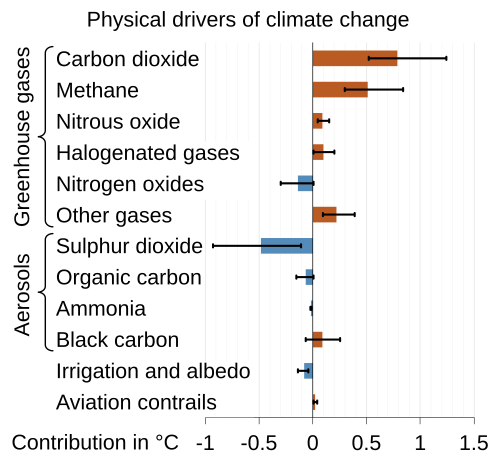
はい。メタンや一酸化二窒素などのガスも強い温室効果を持っており、温暖化に寄与しています。特に農業活動や工業プロセスから排出されるこれらのガスは、CO2よりも強力な加熱能力を持つ場合があります。
今から対策をしてももう遅いのでしょうか?
一部の影響(海面上昇など)は数世紀にわたって続くと予測されていますが、今すぐ排出量を削減することで、最悪のシナリオ(ティッピングポイントへの到達)を回避し、被害を最小限に抑えることが可能です。
個人の行動は気候変動に影響を与えますか?
個人のエネルギー消費削減やライフスタイルの変更は重要ですが、それ以上に産業構造の転換や政府による政策的な規制、国際的な協定(パリ協定など)による大規模な排出削減が不可欠です。
「気候正義」とは具体的にどういう意味ですか?
温室効果ガスの排出量が多く経済的利益を得てきた先進国が、排出量の少ないにもかかわらず深刻な被害を受けている途上国に対し、資金援助や技術提供などの責任を果たすべきであるという考え方です。
📸 フォトギャラリー