U.S. president John F. Kennedy addresses the nation on civil rights in a speech on June 11, 1963.
← ホームへ戻る

1964年公民権法アメリカ社会を変えた歴史的立法とその影響

🗓 2026年8月14日

アメリカ合衆国の歴史において、1964年公民権法(Civil Rights Act of 1964)は、制度化されていた人種差別を法的に禁じた最も重要な転換点の一つです。この法律は、単なる法改正にとどまらず、数十年におよぶ公民権運動の成果を具現化したものであり、人種、皮膚の色、宗教、性別、または出身国に基づく差別を包括的に禁止しました。

Key Facts

  • 制定日: 1964年7月2日、リンドン・B・ジョンソン大統領により署名。
  • 主な目的: 公共施設での差別禁止、雇用の平等、教育機関の統合。
  • 法的根拠: 公共法 88-352として制定され、1957年および1960年の公民権法を修正・強化。
  • 歴史的背景: ジョン・F・ケネディ大統領の提案から始まり、激しい政治的対立を経て成立。
  • 広範な影響: その後のLGBTQ+の権利や女性の権利拡大の法的基盤となった。

立法の道のりと政治的背景

この法律の原点は、1963年にジョン・F・ケネディ大統領が国民に向けて発信した公民権に関する演説にあります。ケネディは人種平等を道徳的な課題として提示し、包括的な法案の必要性を訴えました。
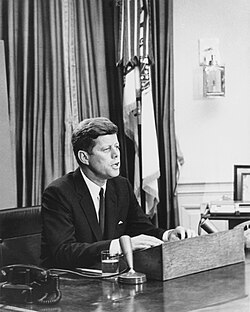
U.S. president John F. Kennedy addresses the nation on civil rights in a speech on June 11, 1963.

その後、1963年8月の「ワシントン行進」などの大規模な抗議活動が激化し、公民権リーダーたちは政府との対話を深めました。ケネディ大統領とジョンソン副大統領は、法制化に向けて指導者たちと緊密に連携しました。
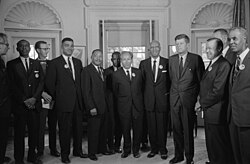
Following the March on Washington on August 28, 1963, civil rights leaders met with President Kennedy and Vice President Johnson to discuss civil rights legislation.

しかし、議会での道のりは険しく、特に上院では南部議員による激しい議事妨害(フィリバスター)が行われました。この政治的膠着状態の中で、マーティン・ルーサー・キング・ジュニアのような活動家たちが絶えず圧力をかけ続けました。ある記録では、キング牧師とマルコムXが上院の討論を傍聴するために議事堂で短時間だけ顔を合わせた場面も残っています。

Activists Martin Luther King Jr. and Malcolm X at the United States Capitol on March 26, 1964, listening to the Senate debate on the bill. The two met for only one minute.[29]

ケネディ暗殺後、後を継いだリンドン・B・ジョンソン大統領は、強いリーダーシップを発揮して法案を推進しました。彼は議会に強く訴えかけ、最終的に1964年7月2日、多くの支持者に見守られながら署名し、法案を成立させました。
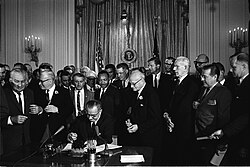
U.S. president Lyndon B. Johnson signs the Civil Rights Act of 1964. Among the guests behind him is Martin Luther King Jr.

議会における投票結果の分析

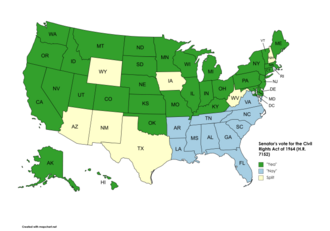
法案の可決プロセスでは、政党間よりも「地域間」の対立が鮮明に現れました。下院および上院の投票結果を見ると、北部の議員は党派を問わず圧倒的に賛成した一方、南部の議員の多くは反対に回りました。
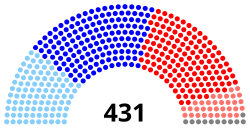
The breakdown by party of the first floor vote in the US House of the Civil Rights Act of 1964. February 10, 1964. Light colors represents members who voted nay, dark represents members who voted aye, grey represents members who voted present or did not vote.

上院での投票においても、南部民主党員の多くが反対票を投じましたが、テキサス州のラルフ・ヤボロー議員など、ごく一部の南部議員が賛成に回ったことが特筆されます。
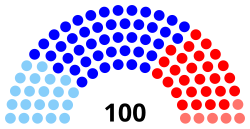
The breakdown by party of the floor vote in the Senate of the Civil Rights Act of 1964. June 19, 1964. Light colors means a nay vote, dark means aye.

下院での最終投票でも、北部議員の賛成率は極めて高く、南部の強い抵抗を押し切る形で可決されました。
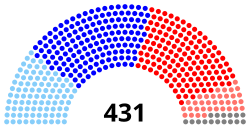
The breakdown by party of the second floor vote in the House of Representatives of the legislation. July 2, 1964. Light colors represents members who voted nay, dark represents members who voted aye, and grey represents members who voted present or did not vote.

また、上院での議事妨害を打ち切るための「クロージャー(終結投票)」においても、超党派の協力が得られたことが成立の鍵となりました。
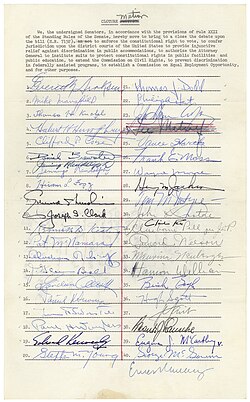
The Cloture Vote for the Civil Rights Act of 1964
Senate vote on the Civil Rights Act of 1964

法律の構成と主要な規定

1964年公民権法は複数の「タイトル(章)」で構成されており、社会のあらゆる側面で差別を排除することを目指しました。

ภาพประกอบบทความ

特に注目すべきは、人種だけでなく「性別」による差別も禁止対象に含まれたことです。これは当時の女性権利擁護活動の影響もあり、後の社会構造に大きな影響を与えました。

Engrossing copy of H.R. 7152, which added sex to the categories of persons against whom the bill prohibited discrimination, as passed by the House of Representatives[44]

以下に、主要なタイトルの内容をまとめます。

1964年公民権法の主要構成
タイトル 主な内容
タイトル I 投票権の保障と差別禁止
タイトル II ホテルやレストランなどの公共施設における差別禁止
タイトル III & IV 公共施設および公立教育機関における人種分離の撤廃
タイトル VI 連邦政府の資金援助を受けるプログラムでの差別禁止
タイトル VII 雇用における機会均等(人種、宗教、性別、出身国による差別の禁止)

ジョンソン大統領は署名後の演説で、この法律がもたらす平等な社会への期待を語りました。
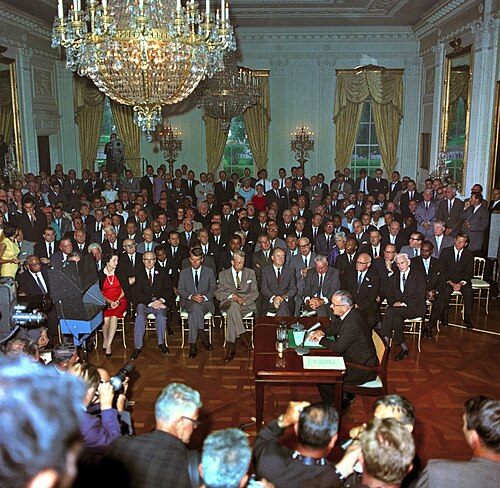
U.S. president Lyndon B. Johnson speaks to a television camera at the signing of the Civil Rights Act in 1964.

後世への影響と現代的な意義

この法律は、その後も多くの修正法(1972年平等雇用機会法や1991年公民権法など)によって強化されました。また、最高裁判所による数多くの判例を通じて、その適用範囲は拡大し、現代では性的指向やジェンダーアイデンティティに基づく差別禁止の根拠としても引用されています。

成立から60年が経過した現在でも、この法律が掲げた「平等」の理念は、アメリカ社会の根幹を成す価値観として受け継がれています。2024年には、ジョー・バイデン大統領がその60周年を祝し、改めてその重要性を強調しました。
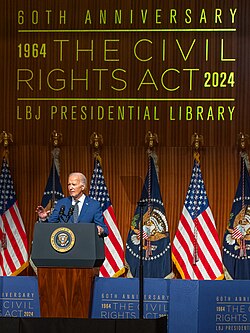
President Joe Biden speaks at an event celebrating the 60th Anniversary of the Civil Rights Act on July 29, 2024, at the Lyndon B. Johnson Presidential Library and Museum in Austin, Texas.

法案の第一ページに記された言葉は、今なお人権と平等の象徴として読み継がれています。
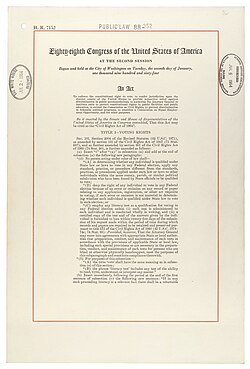
First page of the Civil Rights Act of 1964

Frequently Asked Questions

1964年公民権法によって具体的に何が変わりましたか?

公共の場所(レストラン、ホテル、劇場など)での人種隔離が法的に禁止され、雇用や教育における差別が違法となりました。これにより、制度的な人種差別を撤廃するための強力な法的手段が確立されました。

この法律の成立に最も貢献した人物は誰ですか?

提案したジョン・F・ケネディ大統領、強力な政治力で成立させたリンドン・B・ジョンソン大統領、そして草の根で運動を率いたマーティン・ルーサー・キング・ジュニア牧師ら多くの活動家たちの共同的な努力によるものです。

「タイトル VII」とはどのような内容ですか?

雇用における差別を禁止する規定です。人種、皮膚の色、宗教、性別、出身国を理由に、採用、解雇、昇進などで不当な扱いを受けることを禁じており、平等雇用機会委員会(EEOC)の設立にもつながりました。

女性の権利はこの法律でどのように保護されましたか?

法案の中に「性別(sex)」という言葉が盛り込まれたことで、雇用における女性差別が禁止されました。これは後の女性の社会進出や賃金格差の是正に向けた重要な法的ステップとなりました。

この法律は現在でも有効ですか?

はい、有効です。時代に合わせて修正法が加えられたり、最高裁判所の判決によって解釈が更新されたりしながら、現在のアメリカにおける反差別法の基礎として機能し続けています。

References

  1. Three Supreme Court rulings in June 2020 interpreted that employment discrimination on the basis of or is a form of discrimination on the basis of sex and is therefore also outlawed by the Civil Rights Act. See , and also see below for more details.

📸 フォトギャラリー

U.S. president John F. Kennedy addresses the nation on civil rights in a speech on June 11, 1963.
Following the March on Washington on August 28, 1963, civil rights leaders met with President Kennedy and Vice President Johnson to discuss civil rights legislation.
Activists Martin Luther King Jr. and Malcolm X at the United States Capitol on March 26, 1964, listening to the Senate debate on the bill. The two met for only one minute.[29]
U.S. president Lyndon B. Johnson signs the Civil Rights Act of 1964. Among the guests behind him is Martin Luther King Jr.
The breakdown by party of the first floor vote in the US House of the Civil Rights Act of 1964. February 10, 1964. Light colors represents members who voted nay, dark represents members who voted aye, grey represents members who voted present or did not vote.
The breakdown by party of the floor vote in the Senate of the Civil Rights Act of 1964. June 19, 1964. Light colors means a nay vote, dark means aye.
The breakdown by party of the second floor vote in the House of Representatives of the legislation. July 2, 1964. Light colors represents members who voted nay, dark represents members who voted aye, and grey represents members who voted present or did not vote.
The Cloture Vote for the Civil Rights Act of 1964
Senate vote on the Civil Rights Act of 1964
ภาพประกอบบทความ
Engrossing copy of H.R. 7152, which added sex to the categories of persons against whom the bill prohibited discrimination, as passed by the House of Representatives[44]
U.S. president Lyndon B. Johnson speaks to a television camera at the signing of the Civil Rights Act in 1964.
President Joe Biden speaks at an event celebrating the 60th Anniversary of the Civil Rights Act on July 29, 2024, at the Lyndon B. Johnson Presidential Library and Museum in Austin, Texas.
First page of the Civil Rights Act of 1964