現代社会のインフラを支える鉄鋼生産において、中心的な役割を果たすのが高炉(Blast Furnace)です。高炉とは、大気圧以上の圧力で燃焼空気を送り込むことで、鉄鉱石などの鉱石から金属を抽出する冶金用炉のことを指します。主に銑鉄(せんてつ)の製造に用いられますが、鉛や銅などの抽出にも利用されます。
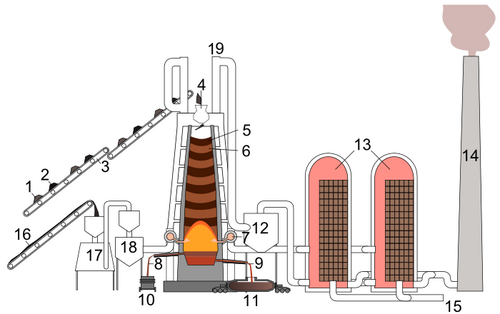
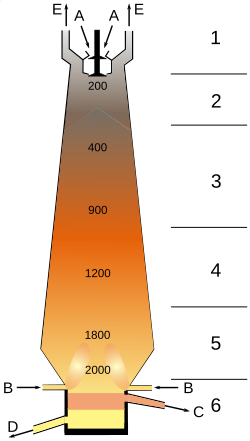
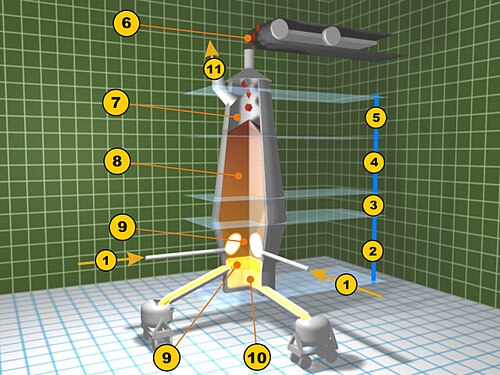
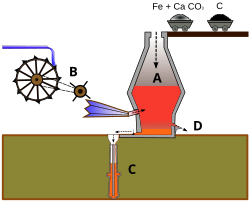
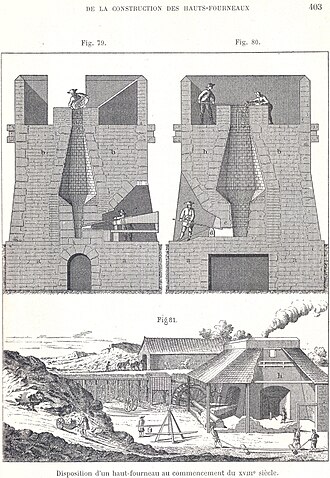
一般的な高炉では、上部から燃料となるコークス、鉄鉱石、そして不純物を取り除くためのフラックス(石灰石)を連続的に投入します。同時に、炉の下部にある風口(Tuyeres)と呼ばれる管から高温の空気を吹き込むことで、炉内で化学反応を促進させます。材料が下降し、上昇する高温ガスと接触するこの「向流交換」プロセスにより、最終的に溶融した金属(銑鉄)とスラグ(鉱滓)が底部から取り出されます。
Key Facts
- 基本機能:鉄鉱石を還元して、工業用金属である銑鉄を生産する。
- 主要原料:鉄鉱石、コークス(燃料および還元剤)、石灰石(フラックス)。
- 核心技術:高温の空気を吹き込む「送風」と、ガスによる「還元反応」。
- 歴史的転換点:木炭からコークスへの燃料転換と、熱風送風の導入。
- 現代の課題:CO2排出削減に向けたCCUS(二酸化炭素回収・利用・貯留)の導入。
高炉の化学反応とプロセスエンジニアリング
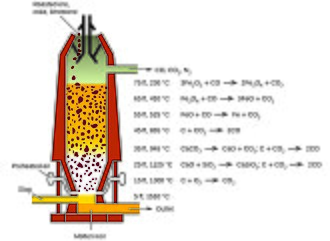
高炉内部では、温度帯に応じて段階的な化学反応が起こっています。最も重要なのは、一酸化炭素(CO)が還元剤として働き、鉄鉱石(酸化鉄)から酸素を取り除いて純粋な鉄にするプロセスです。
温度帯別の還元プロセス
炉の上部(約200〜700°C)では、酸化鉄が部分的に還元され、まず Fe3O4(四酸化三鉄)になります。さらに温度が上がり、850°C付近に達すると FeO(酸化鉄(II))へと還元が進みます。最終的に炉の底部付近で完全な還元が起こり、溶融した鉄が生成されます。
不純物の除去とガス循環
同時に投入された石灰石は熱分解して酸化カルシウム(CaO)となり、鉄鉱石に含まれるシリカ(SiO2)と反応して液体状のスラグ(CaSiO3)となって不純物を吸収します。また、反応で生じた二酸化炭素(CO2)は、コークスと反応して再び一酸化炭素(CO)に戻る「ブドゥア反応」により、効率的に還元サイクルが維持されます。
高炉の歴史的変遷
東洋と西洋における黎明期
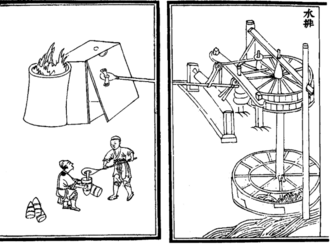
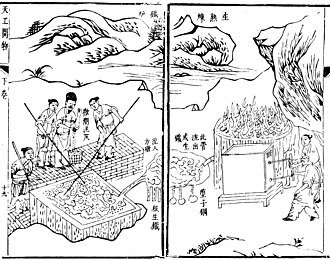
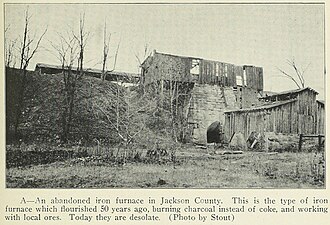
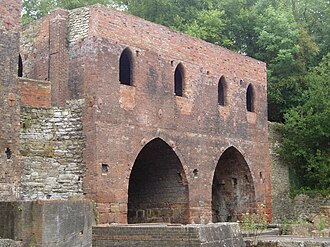
中国では紀元前5世紀には鋳鉄が存在しており、紀元1世紀頃には初期の高炉が稼働していたと考えられています。一方、西洋では中世盛期に登場し、15世紀後半にはベルギーのナミュール地域からイングランドへと普及しました。初期の炉では燃料に木炭が使用されていました。
![Remnants of a blast furnace in Russia first commissioned in 1715 by order of Peter the Great with the help of Holland masters.[citation needed]](/images/ec/e1/ece176358adab21c80892061afee50b475339b1f967f90478109475554c5e3c0.jpg)
産業革命を加速させた技術革新
1709年、イギリスのアブラハム・ダービーが木炭に代わりコークスを燃料として成功させたことで、製鉄効率は飛躍的に向上し、産業革命の原動力となりました。その後、1828年にジェームズ・ビューモント・ニールソンが「熱風送風」を特許取得し、燃料消費量を大幅に削減することに成功しました。

動力源の進化と近代化
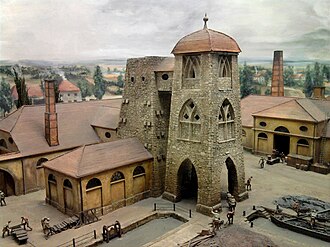
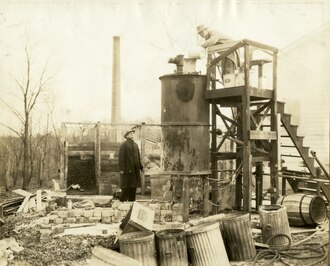
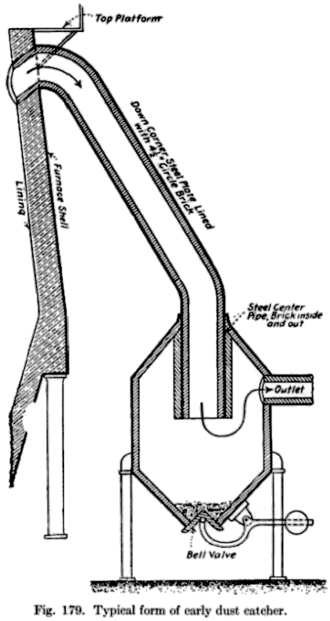
18世紀半ばには、水力に代わり蒸気機関が送風機の動力として導入されました。これにより、水辺以外の場所でも大規模な製鉄が可能となりました。また、19世紀には廃ガスを利用して空気を予熱する「カウパー炉」などの設備が導入され、さらなる効率化が進みました。
現代の応用と環境への取り組み
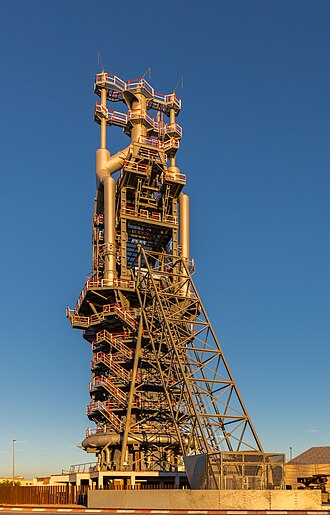
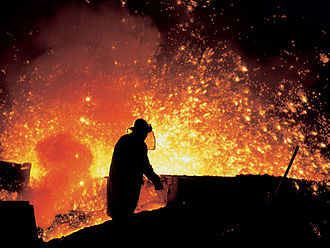
現代の高炉は極めて巨大化・効率化しており、世界最大級のものは韓国にあり、年間約565万トンの鉄を生産します。また、銅や鉛の精錬、さらにはロックウールの製造など、鉄以外の分野でも同様の原理が応用されています。
次世代の製鉄技術
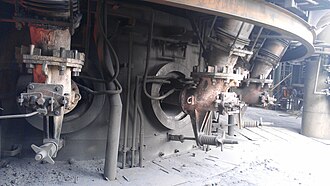
環境負荷の低減に向け、1970年代から酸素高炉(OBF)の研究が進められており、エネルギー消費とCO2排出の削減が期待されています。また、排出されたCO2を回収して地下に貯留または再利用するCCUS(Carbon Capture, Utilisation, and Storage)の導入が、脱炭素社会に向けた重要な鍵となっています。
高炉の概要まとめ
| 項目 | 詳細 | 役割・目的 |
|---|---|---|
| 主要原料 | 鉄鉱石、コークス、石灰石 | 金属の抽出、還元、不純物除去 |
| 還元剤 | 一酸化炭素 (CO) | 酸化鉄から酸素を分離し鉄にする |
| 送風設備 | 風口 (Tuyeres) | 高温空気を吹き込み燃焼を促進 |
| 主要製品 | 銑鉄 (Pig Iron) | 鋼鉄製造の中間材料 |
| 環境対策 | CCUS / 酸素高炉 | CO2排出量の削減と回収 |
Frequently Asked Questions
高炉と通常の炉(空気炉)の違いは何ですか?
最大の違いは「送風」の有無です。高炉は風口から大気圧以上の圧力で強制的に空気を送り込みますが、空気炉(反転炉など)は煙突による自然対流などの自然吸気によって動作します。
なぜコークスを使うことが重要だったのですか?
木炭は森林資源に依存するため供給量に限界がありましたが、石炭から作られるコークスを利用することで、大量かつ安定した燃料確保が可能になり、製鉄業の規模が劇的に拡大したためです。
銑鉄とは何ですか?
高炉で鉄鉱石を還元して得られる、炭素含有量の高い溶融鉄のことです。そのままでは脆いため、通常は転炉などで炭素量を調整し、鋼(スチール)に加工されます。
熱風送風(Hot Blast)のメリットは何ですか?
送風する空気をあらかじめ加熱することで、炉内の温度を効率的に上げることができ、燃料(コークスや石炭)の消費量を大幅に削減できる点にあります。
現代の製鉄における環境問題への対策は?
主にCCUS(二酸化炭素回収・利用・貯留)技術の導入が進められています。これは、高炉から出る廃ガス中のCO2を回収し、地下に貯蔵したり、他の化学製品の原料として再利用したりする取り組みです。
References
- "Blast furnace | Definition, Temperature, Diagrams, & Facts | Britannica". www.britannica.com. 11 October 2024. Retrieved 8 November 2024.
- Schmult, Brian (2016). "Evolution of the Hopewell Furnace Blast Machinery". IA. The Journal of the Society for Industrial Archeology. 42 (2): 5–22.
- Spirin, N A; Yaroshenko, Yu G; Lavrov, V V (September 2016). "Development of heat-transfer circuits in the blast furnace". IOP Conference Series: Materials Science and Engineering. 150 (1) 012022. :2016MS&E..150a2022S. :10.1088/1757-899X/150/1/012022.
- P J Wand, "Copper smelting at Electrolytic Refining and Smelting Company of Australia Ltd., Port Kembla, N.S.W.", in: Mining and Metallurgical Practices in Australasia: The Sir Maurice Mawby Memorial Volume, Ed J T Woodcock (The Australasian Institute of Mining and Metallurgy: Melbourne, 1980) 335–340.
- R J Sinclair, The Extractive Metallurgy of Lead (The Australasian Institute of Mining and Metallurgy: Melbourne, 2009), 9–12.
- Pooler, Michael (January 2019). "Cleaning up steel is key to tackling climate change". . Archived from the original on 10 December 2022. Retrieved 7 July 2021.
- Skrabec, Quentin R. (24 January 2015). The Metallurgic Age: The Victorian Flowering of Invention and Industrial Science. Jefferson, NC: McFarland & Company. p. 53. .
- Oeters, Franz; Ottow, Manfred; Meiler, Heinrich; Lüngen, Hans Bodo; Koltermann, Manfred; Buhr, Andreas; Yagi, Jun-Ichiro; Formanek, Lothar; Rose, Fritz; Flickenschild, Jürgen; Hauk, Rolf; Steffen, Rolf; Skroch, Reiner; Mayer-Schwinning, Gernot; Bünnagel, Heinz-Lothar; Hoff, Hans-Georg (2006). "Iron". Ullmann's Encyclopedia of Industrial Chemistry. Weinheim: Wiley-VCH. :10.1002/14356007.a14_461.pub2. .
- "Blast Furnace". Science Aid. Archived from the original on 17 December 2007. Retrieved 30 December 2007.
- Rayner-Canham & Overton (2006), Descriptive Inorganic Chemistry, Fourth Edition, New York: W. H. Freeman and Company, pp. 534–535,
📸 フォトギャラリー