私たちの身体の中で、絶えず複雑な化学反応が起きていることをご存知でしょうか。生化学とは、生命現象を化学的な視点から解明する学問であり、その中心にあるのが「代謝」というプロセスです。食事から得た栄養素をエネルギーに変え、新しい細胞や組織を作り出すこの一連の流れは、精緻なネットワークによって制御されています。
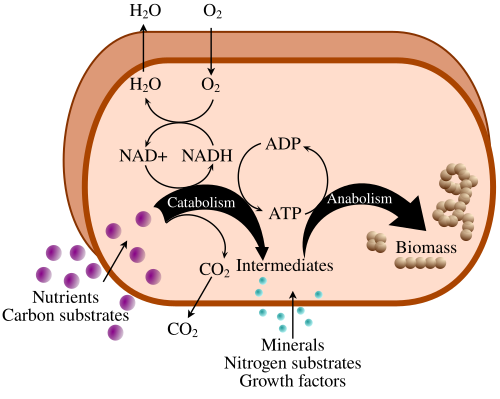
代謝は大きく分けて、物質を分解してエネルギーを取り出す「異化」と、エネルギーを使って必要な物質を合成する「同化」の2つの方向に分かれます。これらの反応は、酵素という触媒によって効率的に進められており、生命の維持に不可欠な役割を果たしています。
Key Facts
- 代謝の二面性: 物質を分解する「異化(カタボリズム)」と、合成する「同化(アナボリズム)」で構成される。
- エネルギー通貨: ATP(アデノシン三リン酸)が、細胞内でのエネルギー輸送の主役となる。
- 主要な生体分子: タンパク質(アミノ酸)、炭水化物(単糖類)、脂質(脂肪酸など)、核酸(ヌクレオチド)の4つが基本となる。
- エネルギー源の多様性: 生物は太陽光(光栄養生物)や化学物質(化学栄養生物)からエネルギーを得る。
生命を構成する主要な生体分子
生化学において、生命体を形作る分子は大きく4つのグループに分類されます。これらは単純な単位(モノマー)が連なって複雑な構造(ポリマー)を形成することで、多様な機能を持ちます。
タンパク質とアミノ酸
アミノ酸が鎖状に連なったポリペプチドが折りたたまれることで、タンパク質となります。これらは酵素として化学反応を促進したり、構造タンパク質として身体を支えたりします。
炭水化物(糖質)
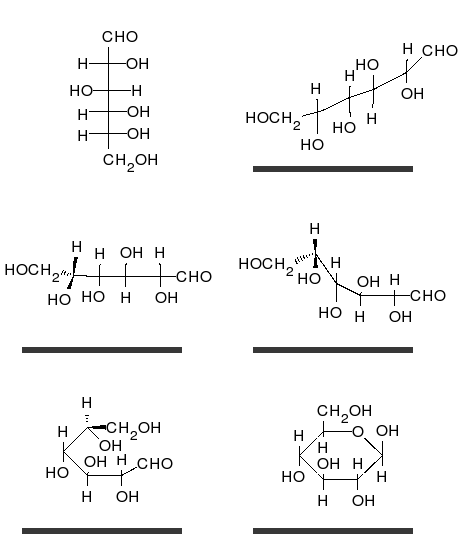
単糖類(モノサッカライド)が結合して多糖類となります。例えば、植物のデンプンや動物のグリコーゲンは、エネルギーを蓄えるための重要な貯蔵形態です。糖は直線状の構造と環状の構造の間で変化しながら存在します。
脂質
脂肪酸やグリセリド、ステロイドなどが含まれます。細胞膜の主成分となるリン脂質や、ホルモンの原料となるコレステロールなど、エネルギー貯蔵以外にも重要な役割を担っています。
核酸
ヌクレオチドが重合してDNAやRNAとなります。これらは遺伝情報の保存と伝達という、生命の設計図としての機能を果たします。
| 分子の種類 | 基本単位(モノマー) | 高分子形態(ポリマー) | 具体例 |
|---|---|---|---|
| タンパク質 | アミノ酸 | ポリペプチド | 線維状タンパク質、球状タンパク質 |
| 炭水化物 | 単糖類 | 多糖類 | デンプン、グリコーゲン、セルロース |
| 核酸 | ヌクレオチド | ポリヌクレオチド | DNA、RNA |
エネルギー代謝の仕組み
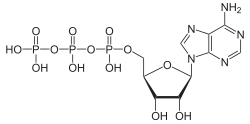
生物が活動するためには、化学エネルギーが必要です。その中心的な役割を果たすのがATP(アデノシン三リン酸)です。ATPはエネルギーを蓄え、必要な場所へ運ぶ「エネルギー通貨」として機能します。
異化:エネルギーの抽出
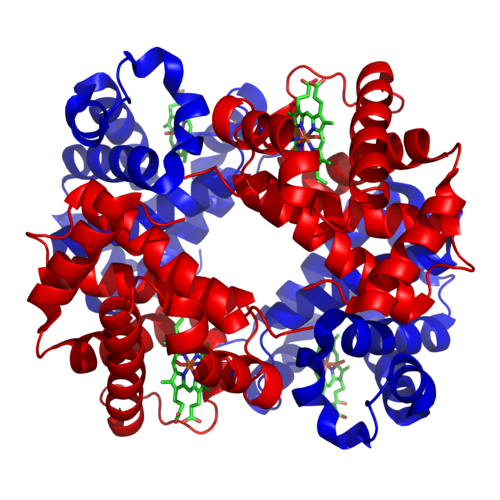
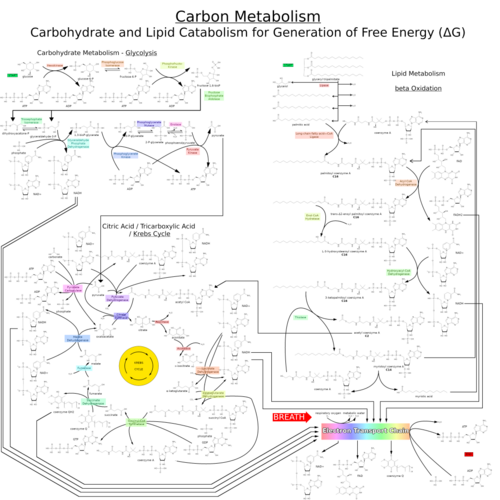
異化とは、複雑な有機物を分解して単純な物質に変え、その過程でエネルギーを放出する反応です。例えば、糖を分解してATPを生成する解糖系や、ミトコンドリアで行われるクエン酸回路などが代表的です。この過程で、鉄を含むヘモグロビンなどのタンパク質が酸素の運搬を助け、効率的なエネルギー産生を支えています。
![A simplified outline of the catabolism of proteins, carbohydrates and fats[43][44]](/images/8d/39/8d3909df1414e8f8b71749d0ac03825f19c70f2e3eca38fc968c9f57461467bc.webp)
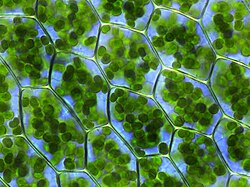
エネルギー源は生物によって異なります。太陽光を利用する光合成を行う植物や、無機化合物からエネルギーを得る化学合成生物などが存在します。
同化:物質の合成
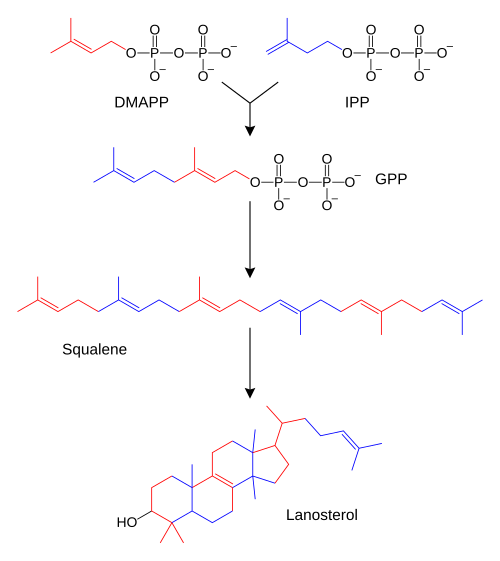
同化は、異化で得られたエネルギーを利用して、生命に必要な複雑な分子を合成するプロセスです。アミノ酸からタンパク質を合成したり、脂肪酸からステロイドを合成したりすることがこれにあたります。
ATP合成のメカニズム
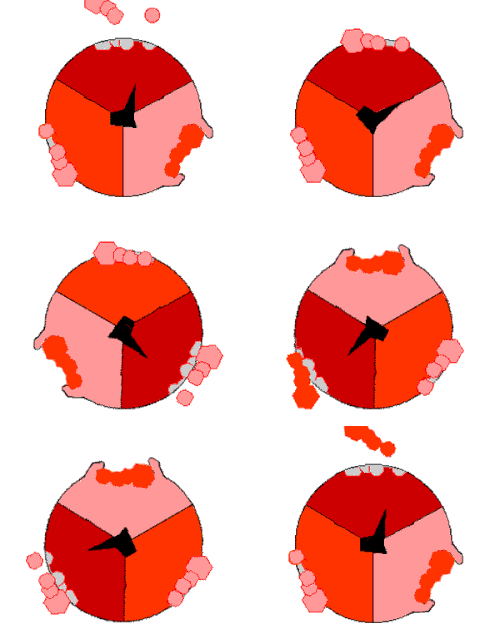
細胞内では、ATP合成酵素という特殊なタンパク質が回転するモーターのような仕組みで、ADP(アデノシン二リン酸)とリン酸からATPを再合成しています。
代謝の制御と調節
代謝は無秩序に起きているわけではなく、ホルモンなどの信号によって厳密にコントロールされています。例えば、インスリンというホルモンは、細胞へのグルコース(ブドウ糖)の取り込みを促進し、グリコーゲンの合成や脂肪酸の合成を誘導することで、血糖値を調節しています。
![Effect of insulin on glucose uptake and metabolism. Insulin binds to its receptor (1), which in turn starts many protein activation cascades (2). These include: translocation of Glut-4 transporter to the plasma membrane and influx of glucose (3), glycogen synthesis (4), glycolysis (5) and fatty acid synthesis (6).[118]](/images/56/9d/569d4668ae32c3df5a8644970b46d9bef0711a62ad03e72e307d6e0f916e096b.webp)
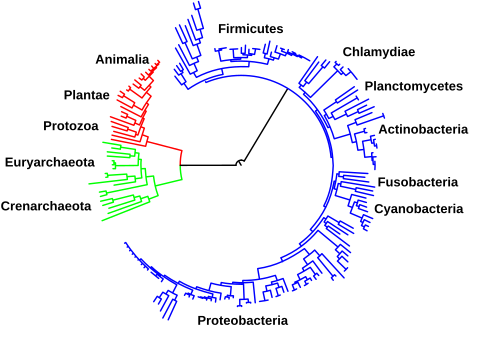
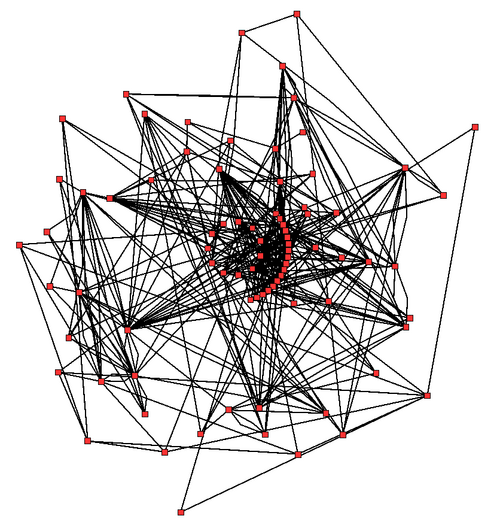
また、生物の進化の過程で、これらの代謝経路は最適化されてきました。細菌、古細菌、真核生物という3つのドメインに分かれる生物たちは、共通の祖先から分かれながらも、それぞれの環境に適応した独自の代謝ネットワークを発達させてきました。
生化学の歴史的視点
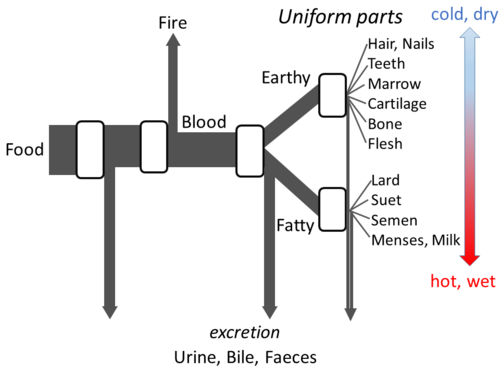
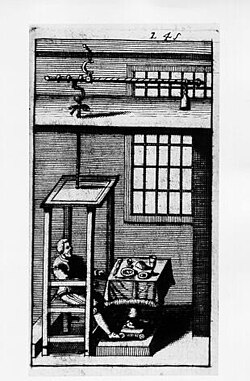
代謝の研究は、古代ギリシャの哲学的な考察から始まりました。アリストテレスは生命を一種のオープンフローモデルとして捉えていました。その後、17世紀にはサントリオ・サントリオが天秤を用いて身体の物質出入りを定量的に測定し、現代の代謝バランス研究の基礎を築きました。
Frequently Asked Questions
異化と同化の違いは何ですか?
異化は「分解してエネルギーを取り出す」プロセスであり、同化は「エネルギーを使って物質を合成する」プロセスです。この2つがバランスよく行われることで、生命は維持されています。
ATPとは具体的にどのような役割を持つものですか?
ATPは細胞内での「エネルギー通貨」です。高エネルギーリン酸結合を持っており、これが切れる際に放出されるエネルギーを、筋肉の収縮や物質の輸送、化学合成などのあらゆる生命活動に利用します。
酵素が代謝において重要な理由は?
化学反応が自然に起きるには膨大な時間やエネルギーが必要ですが、酵素は反応に必要な活性化エネルギーを下げることで、体温程度の低い温度でも極めて高速に反応を進めることができるためです。
インスリンは代謝にどのように影響しますか?
インスリンは血糖値を下げる働きを持つホルモンです。細胞膜にある輸送体(Glut-4など)を活性化してグルコースを細胞内に取り込ませ、それをエネルギーとして利用させたり、グリコーゲンや脂肪として蓄えさせたりします。
References
- Friedrich, CG (1997). Physiology and Genetics of Sulfur-oxidizing Bacteria. Advances in Microbial Physiology. Vol. 39. pp. 235–89. :10.1016/S0065-2911(08)60018-1. . 9328649.
- Cirino, Giuseppe; Szabo, Csaba; Papapetropoulos, Andreas (January 2023). "Physiological roles of hydrogen sulfide in mammalian cells, tissues, and organs". Physiological Reviews. 103 (1): 31–276. :10.1152/physrev.00028.2021. 0031-9333. 35435014.
- Pace NR (January 2001). "The universal nature of biochemistry". Proceedings of the National Academy of Sciences of the United States of America. 98 (3): 805–8. :2001PNAS...98..805P. :10.1073/pnas.98.3.805. 33372. 11158550.
- Smith E, Morowitz HJ (September 2004). "Universality in intermediary metabolism". Proceedings of the National Academy of Sciences of the United States of America. 101 (36): 13168–73. :2004PNAS..10113168S. :10.1073/pnas.0404922101. 516543. 15340153.
- Ebenhöh O, Heinrich R (January 2001). "Evolutionary optimization of metabolic pathways. Theoretical reconstruction of the stoichiometry of ATP and NADH producing systems". Bulletin of Mathematical Biology. 63 (1): 21–55. :10.1006/bulm.2000.0197. 11146883. 44260374.
- Meléndez-Hevia E, Waddell TG, Cascante M (September 1996). "The puzzle of the Krebs citric acid cycle: assembling the pieces of chemically feasible reactions, and opportunism in the design of metabolic pathways during evolution". Journal of Molecular Evolution. 43 (3): 293–303. :1996JMolE..43..293M. :10.1007/BF02338838. 8703096. 19107073.
- Smith RL, Soeters MR, Wüst RC, Houtkooper RH (August 2018). "Metabolic Flexibility as an Adaptation to Energy Resources and Requirements in Health and Disease". Endocrine Reviews. 39 (4): 489–517. :10.1210/er.2017-00211. 6093334. 29697773.
- Vander Heiden MG, DeBerardinis RJ (February 2017). "Understanding the Intersections between Metabolism and Cancer Biology". Cell. 168 (4): 657–669. :10.1016/j.cell.2016.12.039. 5329766. 28187287.
- Cooper GM (2000). "The Molecular Composition of Cells". The Cell: A Molecular Approach (2nd ed.). Archived from the original on 27 August 2020. Retrieved 25 June 2020.
- Michie KA, Löwe J (2006). "Dynamic filaments of the bacterial cytoskeleton". . 75: 467–92. :10.1146/annurev.biochem.75.103004.142452. 16756499. 4550126.
📸 フォトギャラリー