Precessional movement of Earth. Earth rotates (white arrows) about once a day around its rotational axis (red); this axis itself rotates slowly (white circle), completing a rotation in approximately 26,000 years[1]
← ホームへ戻る
歳差運動地軸春分点天文学ヒッパルコス

地軸の歳差運動地球の回転軸が描く26,000年の巨大なサイクル

🗓 2026年8月11日

地球は単に自転し、太陽の周りを公転しているだけではありません。実は、地球の回転軸(地軸)そのものが、長い年月をかけてゆっくりと円を描くように動いています。この現象を歳差運動(さいさうんどう)と呼びます。まるで回転している独楽(こま)が、速度を落とすと軸がふらつく様子に似ています。

この微細な軸の変動は、数千年という単位で夜空に見える星々の位置や、季節の基準となる春分点・秋分点に影響を与えます。本記事では、この壮大な宇宙のメカニズムとその歴史、そして地球にもたらす影響について詳しく解説します。

Precessional movement of Earth. Earth rotates (white arrows) about once a day around its rotational axis (red); this axis itself rotates slowly (white circle), completing a rotation in approximately 26,000 years[1]

Key Facts

  • 周期: 地軸が1回転するのに約25,700年〜26,000年かかります。
  • 角度: 地軸は黄道面に対して約23.4度(黄道傾斜角)傾いたまま、円錐を描くように動きます。
  • 原因: 主に太陽と月の重力が、地球の赤道部分の膨らみに作用することで発生します。
  • 影響: 長い時間をかけて「北極星」となる星が変化し、春分点などの位置が西へずれていきます。

歳差運動のメカニズムと原因

地球は完全な球体ではなく、自転の影響で赤道付近がわずかに膨らんだ楕円体となっています。この膨らんだ部分に、太陽や月の強力な重力が作用します。この力が回転する地球に「トルク(回転させる力)」として働くため、地軸がゆっくりと方向を変えることになります。
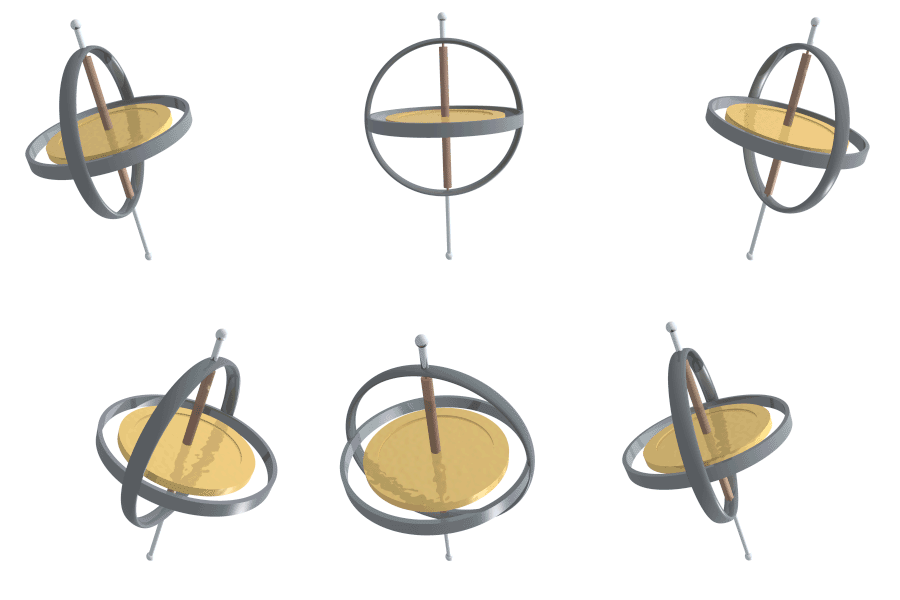
Precession of a gyroscope. Like the way the force from the table generates this phenomenon of precession in the spinning gyro, the gravitational pull of the Sun and Moon on the Earth's equatorial bulge generates a very slow precession of the Earth's axis (see §Cause). This off-center push or pull causes a torque, and a torque on a spinning body results in precession. The gyro can be analyzed in its parts, and each part within the disk is trying to fall, but the rotation brings it from down to up, and the net result of all particles going through this is precession.

この現象は、物理学におけるジャイロスコープの動きと同じ原理です。外部からの力が回転体に加わると、その力とは直角に近い方向に軸が移動します。地球の場合、太陽と月の影響による「ルニソーラー歳差(月太陽歳差)」が支配的ですが、惑星の重力による「惑星歳差」もわずかに組み合わさっており、これらを合わせて「一般歳差」と呼びます。
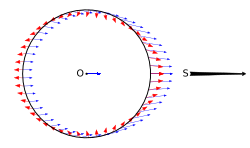
Tidal force on Earth due to the Moon or another celestial body. It shows both the tidal field (thick red arrows) and the gravity field (thin blue arrows) exerted on Earth's surface and center (label O) by the Moon (label S).

章動(Nutation)との違い

歳差運動は滑らかな円運動ですが、実際にはその動きに小さな「震え」のような変動が加わっています。これを章動と呼びます。主に月の位置変化によって引き起こされ、約18.6年という短い周期で軸がわずかに揺れ動きます。

天球上の変化と「北極星」の交代

地軸の向きが変わるということは、地球から見て宇宙のどの方向を向いているかが変わることを意味します。現在、地軸の北端は「ポラリス(北極星)」の方向を向いていますが、数千年後には別の星がその位置にやってきます。
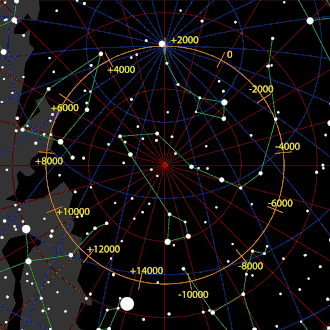
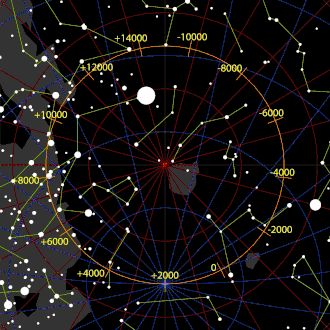
Precession of Earth's axis around the north ecliptical pole
Precession of Earth's axis around the south ecliptical pole

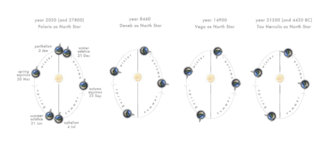
例えば、約12,000年後にはこと座の「ベガ」が、約8,000年後には白鳥座の「デネブ」が北極星に近い位置にくる計算になります。このように、地球の軸が描く円軌道に従って、天の北極の位置は絶えず移動しています。
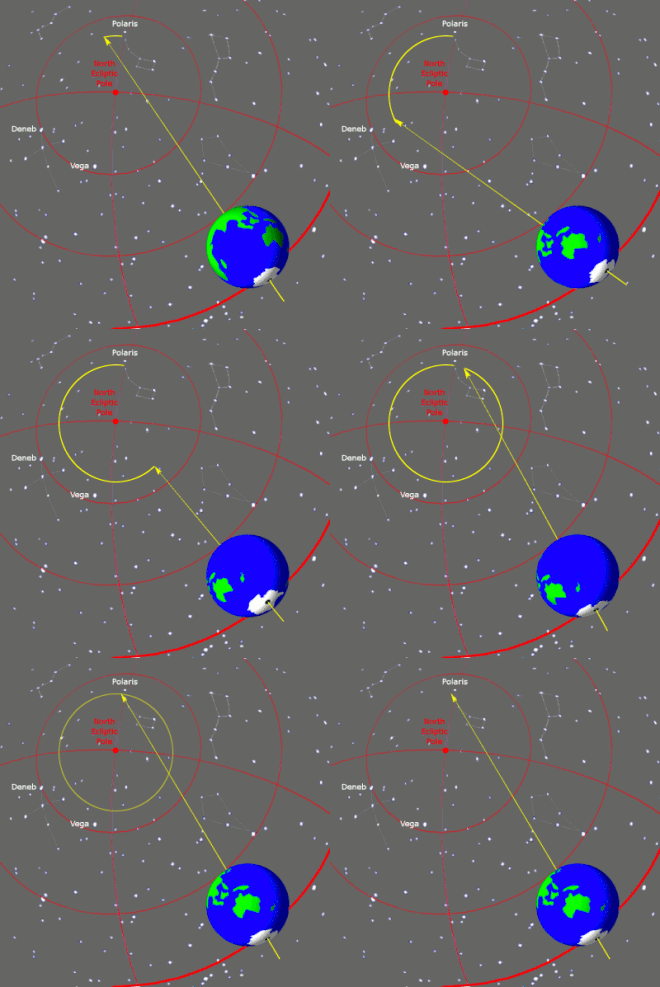
The 25,700 year cycle of precession as seen from near the Earth. The current north pole star is Polaris (top). In about 8,000 years it will be the bright star Deneb (left), and in about 12,000 years, Vega (left center). The Earth's rotation is not depicted to scale – in this span of time, it would actually rotate over 4 million times.
Axial and apsidal precession with four of the nearest northern pole stars over the course of millennia

春分点の移動(分点歳差)

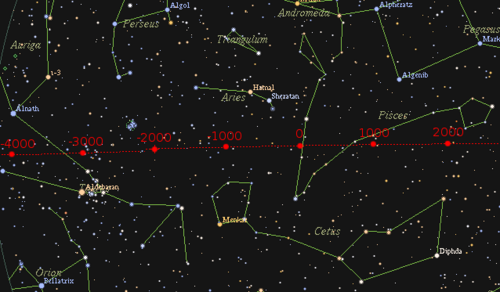
歴史的にこの現象は「分点歳差」と呼ばれてきました。これは、地球の軸がずれることで、太陽が春分点(赤道と黄道が交わる点)に到達するタイミングが、背景の星々に対してわずかに早まるためです。結果として、春分点は星々の中を西へゆっくりと移動していきます。
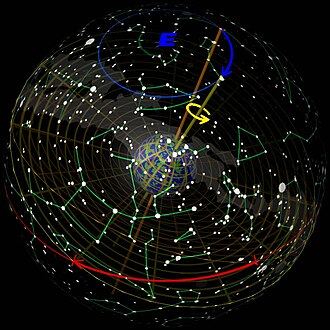
Precessional movement as seen from 'outside' the celestial sphere
Diagram showing the westward shift of the March equinox among the stars over the past 6,000 years.

歳差運動の発見と観測の歴史

この現象を最初に突き止めたのは、紀元前2世紀のギリシャの天文学者ヒッパルコスであるとされています。彼は、自身の観測データと過去の天文学者(ティモカリスら)のデータを比較し、スピカなどの明るい星の位置が秋分点に対して約2度ずれていることに気づきました。
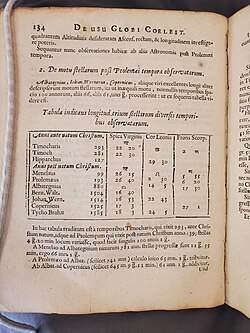
"Table indicating the longitude of three stars observed at different times." Compiled by Adriaan Metius, 1624.

その後、2世紀のプトレマイオスがこの研究を引き継ぎ、100年で約1度移動するという数値を算出しました。現代の精密な観測では、約71.6年で1度(1サイクル約25,772年)であることが分かっています。

また、古代インドの天文学でも、カルパ(極めて長い時間単位)に基づいた歳差運動に近い概念が議論されており、時代や地域を超えて天文学者たちがこの壮大なサイクルを解明しようとしてきたことが分かります。
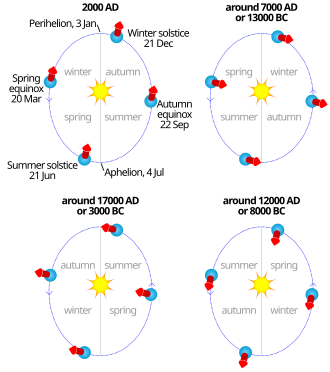
The coincidence of the annual cycles of the apses (closest and further approach to the Sun) and calendar dates (with seasons noted) at four equally spaced stages of a fictitious precessionary cycle of 20,000 years (rather than the Earth's true precessionary cycle of 26,000 years). The season dates are those in the north. The tilt of fictitious Earth's axis and the eccentricity of its orbit are exaggerated. Approximate estimates. Effects of weak planetary precession on the stages shown are ignored.

歳差運動のまとめ

地球の歳差運動に関する主要データ
項目 詳細・数値
1サイクルの期間 約25,700年 〜 26,000年
移動速度 約50.3秒角 / 年(約72年で1度)
軸の傾斜角(黄道傾斜角) 約23.4度
主な原因 太陽と月の重力によるトルク
主な影響 北極星の交代、春分点の西方向への移動

Frequently Asked Questions

歳差運動が起きないとどうなりますか?

もし歳差運動がなければ、地球の回転軸は常に宇宙の同じ方向を向き続ける「軸平行」の状態になります。その場合、数千年経っても北極星は変わらず、星々の位置と季節の基準点(分点)の関係も固定されたままになります。

なぜ「分点歳差」と呼ばれるのですか?

地球の軸が回転することで、太陽が春分点や秋分点に到達するタイミングが、背景にある固定星に対して毎年わずかにずれるためです。観測者からは、分点(エキノクス)が黄道沿いに西へ移動しているように見えるため、このように呼ばれます。

歳差運動は季節に影響しますか?

短期的には影響しませんが、数万年という超長期的なスパンでは、地軸の向きと公転軌道上の位置関係が変わるため、季節の現れ方や気候に影響を与える可能性があります(ミランコビッチ・サイクルなどの一部として議論されます)。

現在の北極星ポラリスはいつまで北極星ですか?

ポラリスは現在、天の北極に非常に近い位置にありますが、歳差運動によって徐々に離れていきます。約27,800年後には再び北極付近に戻ってきますが、星自身の固有運動があるため、その時の距離は現在とは異なります。

References

  1. Hohenkerk, C.Y., Yallop, B.D., Smith, C.A., & Sinclair, A.T. "Celestial Reference Systems" in Seidelmann, P.K. (ed.) Explanatory Supplement to the Astronomical Almanac. Sausalito: University Science Books. p. 99.
  2. Lerner, K. Lee; Lerner, Brenda Wilmoth (2003). World of earth science. Farmington Hills, MI: Thomson-Gale. p. 105 and 454.  .  60695883. During revolution about the Sun, the earth's polar axis exhibits parallelism to Polaris (also known as the North Star). Although observing parallelism, the orientation of Earth's polar axis exhibits precession – a circular wobbling exhibited by gyroscopes – that results in a 28,000-year-long precessional cycle. Currently, Earth's polar axis points roughly in the direction of Polaris (the North Star). As a result of precession, over the next 11,000 years, Earth's axis will precess or wobble so that it assumes an orientation toward the star Vega.
  3. Astro 101 – Precession of the Equinox Archived 2 January 2009 at the , . Retrieved 30 December 2008
  4. Robert Main, Practical and Spherical Astronomy (Cambridge: 1863) pp.203–4.
  5. Williams, James G. (1994). "Contribution to the Earth's Obliquity Rate, Precession, and Nutation". The Astronomical Journal. 108: 711. :1994AJ....108..711W. :10.1086/117108.  122370108.
  6. "IAU 2006 Resolution B1: Adoption of the P03 Precession Theory and Definition of the Ecliptic" (PDF). Archived from the original (PDF) on 21 October 2011. Retrieved 28 February 2009.
  7. (1998) [1984 c. 150], Ptolemy's Almagest, translated by , Princeton University Press, pp. 131–141, 321–340,  
  8. Evans 1998, pp. 251–255
  9. Neugebauer, O. (1950). "The Alleged Babylonian Discovery of the Precession of the Equinoxes". Journal of the American Oriental Society. 70 (1): 1–8. :10.2307/595428.  595428.
  10. Susan Milbrath, "Just How Precise is Maya Astronomy?", Institute of Maya Studies newsletter, December 2007.

📸 フォトギャラリー

Precessional movement of Earth. Earth rotates (white arrows) about once a day around its rotational axis (red); this axis itself rotates slowly (white circle), completing a rotation in approximately 26,000 years[1]
Precession of a gyroscope. Like the way the force from the table generates this phenomenon of precession in the spinning gyro, the gravitational pull of the Sun and Moon on the Earth's equatorial bulge generates a very slow precession of the Earth's axis (see §Cause). This off-center push or pull causes a torque, and a torque on a spinning body results in precession. The gyro can be analyzed in its parts, and each part within the disk is trying to fall, but the rotation brings it from down to up, and the net result of all particles going through this is precession.
The coincidence of the annual cycles of the apses (closest and further approach to the Sun) and calendar dates (with seasons noted) at four equally spaced stages of a fictitious precessionary cycle of 20,000 years (rather than the Earth's true precessionary cycle of 26,000 years). The season dates are those in the north. The tilt of fictitious Earth's axis and the eccentricity of its orbit are exaggerated. Approximate estimates. Effects of weak planetary precession on the stages shown are ignored.
"Table indicating the longitude of three stars observed at different times." Compiled by Adriaan Metius, 1624.
Precession of Earth's axis around the north ecliptical pole
Precession of Earth's axis around the south ecliptical pole
Precessional movement as seen from 'outside' the celestial sphere
The 25,700 year cycle of precession as seen from near the Earth. The current north pole star is Polaris (top). In about 8,000 years it will be the bright star Deneb (left), and in about 12,000 years, Vega (left center). The Earth's rotation is not depicted to scale – in this span of time, it would actually rotate over 4 million times.
Diagram showing the westward shift of the March equinox among the stars over the past 6,000 years.
Axial and apsidal precession with four of the nearest northern pole stars over the course of millennia
Tidal force on Earth due to the Moon or another celestial body. It shows both the tidal field (thick red arrows) and the gravity field (thin blue arrows) exerted on Earth's surface and center (label O) by the Moon (label S).