あらゆる物質の最小単位である原子。その中心に位置し、極めて高密度な領域を形成しているのが原子核です。原子核は、正の電荷を持つ陽子と、電荷を持たない中性子という2種類の粒子(総称して核子)で構成されています。原子の全質量のほとんどはこの小さな核に集中しており、その周囲を負の電荷を持つ電子の雲が取り囲むことで、電気的に中性な原子が成り立っています。
原子核のサイズは驚くほど小さく、水素(陽子1つ)の約1.70フェムトメートル(fm)から、ウランの約11.7フェムトメートルまでと幅がありますが、原子全体の直径と比較すると数万分の一という極小の領域に過ぎません。
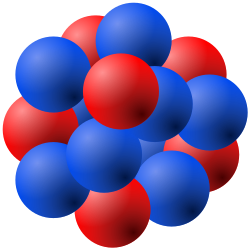
Key Facts
- 構成要素:陽子(proton)と中性子(neutron)から成る。
- 結合力:電磁気的な反発を上回る「核力(強い相互作用の残差)」によって結びついている。
- 密度:原子の質量の大部分が極めて狭い領域に集中している。
- 安定性:核子の数や比率によって安定度が異なり、不安定なものは放射性崩壊を起こす。
- 発見:1911年にアーネスト・ルザフォードによる金箔実験を通じて証明された。
原子核発見の歴史と名称の由来
20世紀初頭、J.J.トムソンは電子を発見し、正の電荷が球状に広がりその中に電子が散らばっている「プディングモデル」を提唱しました。しかし、1911年にアーネスト・ルザフォードが行った実験は、この定説を覆しました。薄い金箔にアルファ粒子を照射したところ、一部の粒子が予想に反して大きな角度で跳ね返ったためです。
この結果から、原子の中心には正の電荷と質量が極めて狭い範囲に集中した「核」が存在することが明らかになりました。なお、「nucleus(核)」という言葉はラテン語で「小さな種(kernel)」を意味し、1844年にマイケル・ファラデーが使用し、後にルザフォードが現代的な意味で定着させました。
核を繋ぎ止める力と安定性のメカニズム
陽子同士は正の電荷を持つため、電磁気的な反発力(クーロン力)によって互いに遠ざかろうとします。それにもかかわらず原子核が崩壊せずに存在できるのは、核力(強い相互作用の残差)と呼ばれる非常に強力な引力が働くためです。この力は短距離でしか作用しませんが、核子同士が十分に接近している場合には電磁気的な反発を圧倒します。
しかし、核力の作用範囲には限界があるため、核子が多すぎる巨大な原子核は不安定になります。完全に安定している最大の核は鉛-208(核子数208)とされており、それを超える重い元素は放射性崩壊を起こしやすくなります。一方で、リチウム-11のような「ハロー核」と呼ばれる特殊な構造を持つ核では、中性子が核の中心から遠く離れた位置に分布する現象が見られます。
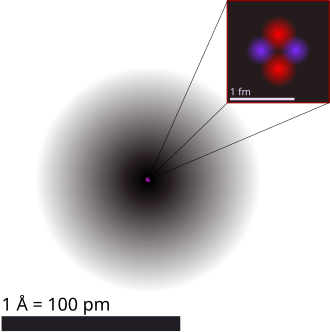
原子核を理解するための物理モデル
原子核の内部挙動を完全に記述することは現代の計算能力でも困難ですが、物理学者はいくつかの近似モデルを用いてその性質を説明しています。
液滴モデル
原子核を回転する液体の滴として捉えるモデルです。表面張力のような力が働き、核子の数に応じた結合エネルギーの変化をうまく説明できます。特に核分裂のメカニズムを理解するのに有効ですが、特定の核子数で現れる異常な安定性(魔法数)を説明できないという弱点があります。
殻モデル(シェルモデル)
電子が軌道を占有するように、陽子と中性子も特定のエネルギー準位(殻)を占有するという考え方です。これにより、特定の数(魔法数)の陽子や中性子を持つ核が非常に安定することが説明されます。例えば、スズ(原子番号50)は陽子の殻が閉じているため、多くの安定同位体を持ちます。
その他のモデル
- クラスターモデル:核をアルファ粒子などの小さなグループ(クラスター)の集合体として捉える手法です。
- ab initio(第一原理計算):量子色力学(QCD)に基づき、個々の核子の相互作用から直接的に構造を導き出そうとするアプローチです。
原子核の特性まとめ
| 項目 | 詳細・特徴 | 関連概念 |
|---|---|---|
| 構成粒子 | 陽子 (p) + 中性子 (n) | 核子 (Nucleon) |
| 支配的な力 | 核力(強い相互作用) | クーロン反発との均衡 |
| サイズ | 約 1.7 fm 〜 11.7 fm | 原子半径の数万分の一 |
| 液滴モデル | 流体として近似 | 結合エネルギー・核分裂 |
| 殻モデル | 量子力学的な軌道として近似 | 魔法数・安定同位体 |
Frequently Asked Questions
なぜ陽子同士は反発し合っているのにまとまっていられるのですか?
電磁気的な反発力よりもはるかに強力な「核力(強い相互作用)」が、ごく至近距離で作用して陽子と中性子を強力に結びつけているためです。
「魔法数」とは何ですか?
殻モデルにおいて、陽子または中性子の数が特定の数値(2, 8, 20, 28, 50, 82, 126など)になったとき、エネルギー殻が完全に満たされ、原子核が特に安定する現象のことを指します。
原子核の大きさを決める要因は何ですか?
一般的に、安定した原子核の半径は、核子の総数(質量数)の3乗根に比例します。これは、核子がほぼ一定の密度で詰まっているためと考えられています。
ハロー核とはどのような構造ですか?
一部の中性子が中心核から大きく離れた位置に分布し、まるで「後光(ハロー)」のように広がった構造を持つ不安定な原子核のことです。
核物理学の研究はどのような分野に応用されていますか?
エネルギー生成(核融合・核分裂)、医療分野(PET検査や放射線治療)、天体物理学(星の内部での元素合成)など、多岐にわたる分野で活用されています。
References
- 26,634 derives from 2 x 156 pm / 11.7142 fm; 60,250 derives from 2 x 52.92 pm / 1.7166 fm.
📸 フォトギャラリー