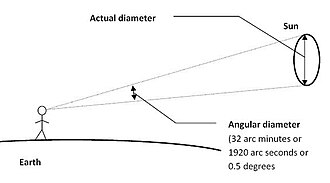
私たちが夜空を見上げるとき、星や月がどれほど大きく見えるかは、その物体の実際のサイズだけでなく、地球からの距離によって決まります。このように、ある視点から見た物体が占める角度のことを視直径(または視角、見かけの大きさ)と呼びます。光学の世界では「開口角」、視覚科学では「視角」とも表現されます。
簡単に言えば、視直径とは「物体の端から端までを見るために、目やカメラをどれだけ回転させる必要があるか」という角度のことです。
Key Facts
- 視直径は、物体の物理的な大きさと距離によって決まる「見かけ上の角度」である。
- 人間の裸眼で識別できる最小の視直径は約1分(1/60度)である。
- 天文学では非常に小さな角度を扱うため、「弧分(分)」や「弧秒(秒)」という単位が多用される。
- 物体が非常に遠い場合、視直径は「物理的直径 ÷ 距離」という簡略式で近似できる。
視直径を算出する計算メカニズム
視直径を求める方法は、対象が平面的な円であるか、立体的な球体であるかによって異なります。
平面的な円の場合
視点から見て円の面が垂直である場合、視直径(δ)は以下の式で求められます。 δ = 2 arctan(d / 2D) ここで、dは物体の直線的な直径、Dは物体までの距離を指します。物体が十分に遠い(D ≫ d)ときは、単純に δ ≈ d / D(ラジアン単位)として計算することが可能です。
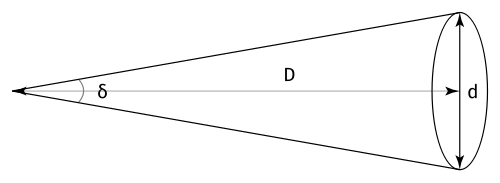
球体の場合
惑星のような球体の場合、見かけ上の端は球の接点となるため、中心までの距離よりも観測者に近くなります。そのため、以下の修正式が用いられます。 δ = 2 arcsin(d / 2D) 視直径が小さい場合は、平面の計算式とほぼ同じ結果になりますが、視直径が大きい物体ほどこの差が顕著に現れます。
日常生活での視直径の推定方法
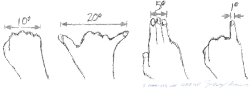
特別な器具がなくても、腕をまっすぐに伸ばして手をかざすことで、空にある物体の視直径を概算的に見積もることができます。例えば、小指の幅や拳の幅が、それぞれ特定の角度に対応しています。
天文学における視直径の活用
宇宙のスケールでは、物体が極めて遠いため、度(°)よりもさらに細かい単位が使われます。1度は60分(arc-minutes)、1分は60秒(arc-seconds)に分割されます。1ラジアンは約206,265秒に相当します。
例えば、1秒(1")という角度は、2.06km先にある1cmの物体を見たときや、1パーセク(pc)離れた場所から地球の公転軌道(1天文単位)を見たときの大きさに相当します。太陽を1光年離れた場所から見ると、その視直径はわずか0.03秒となり、これは地球の直径分だけ離れた場所から人間を見たときの大きさとほぼ同じです。
また、望遠鏡の性能(分解能)によって、どこまで小さな視直径を識別できるかが決まります。ハッブル宇宙望遠鏡のような高性能な機器は、可視光域で約0.1秒の分解能を持ちますが、人間の目は理論上20秒、実際には約60秒程度の分解能しかありません。
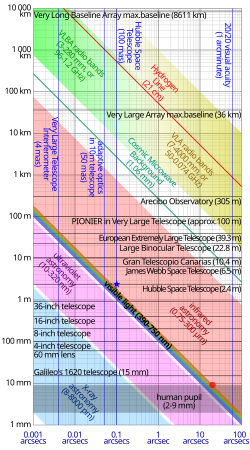
以下に、地球から見た主要な天体の視直径をまとめます。
| 天体・物体 | 視直径(近似値) | 比較・備考 |
|---|---|---|
| 天の川銀河 | 30° (幅) | 伸ばした手のひらの幅程度 |
| アンドロメダ銀河 | 約3°10′ | 月や太陽の約6倍(核のみ視認可能) |
| 太陽 | 約31′ 〜 32′ | 月とほぼ同等 |
| 月 | 約29′ 〜 34′ | 地球から見た標準的な基準 |
| 木星 | 29.8″ 〜 50.1″ | 惑星の中で最大に見える |
| 金星 | 0′ 9.7″ 〜 1′ 6″ | 条件によりディスク状に視認可能 |
| M87* ブラックホール事象の地平線 | 0.000025″ | 月面に置いたテニスボールに相当 |
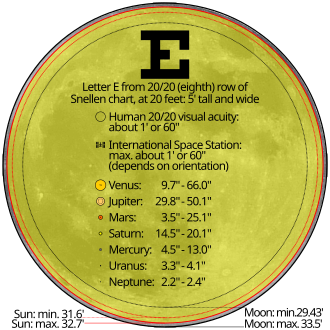
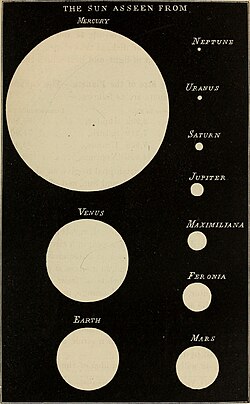
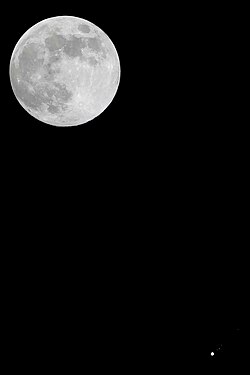
このように、視直径を比較することで、天体同士の相対的な見え方の違いを理解できます。例えば、木星とその衛星を月と比較すると、その圧倒的なサイズ差が明確になります。
特殊なケースと補足概念
非円形物体の扱い
銀河や星雲のように形が円ではない天体の場合、単一の直径ではなく「長軸」と「短軸」の2つの値で大きさを表現します。
照明欠損(Defect of illumination)
天体が完全に照らされていない場合、観測者から見て暗い部分が占める最大角度を「照明欠損」と呼びます。例えば、視直径40秒の天体が75%照らされている場合、照明欠損は10秒となります。
ホライゾン効果(Horizon effect)
巨大で不透明な物体を至近距離で見る際、端の部分が視界から隠れるため、実際の幅よりも小さく見える現象があります。
Frequently Asked Questions
視直径と実際の大きさはどう違うのですか?
実際の大きさ(物理的直径)は物体そのものの寸法(kmやm)ですが、視直径は「ある地点から見たときの角度」です。そのため、物理的に巨大な星であっても、非常に遠くにある場合は視直径が極めて小さくなり、点として見えます。
なぜ天文学では「度」ではなく「秒」を使うのですか?
宇宙の天体はあまりに遠く、地球から見ると占める角度が極めて小さいためです。1度を3600等分した「弧秒(秒)」という単位を使うことで、微小なサイズの変化や天体の大きさを精密に記述できます。
人間の目はどれくらいの小ささまで見分けることができますか?
健康な人間の裸眼では、約1分(1/60度)の視直径を持つ物体を識別できると言われています。これは、1km先にある30cmの物体を見分ける能力に相当します。
視直径を使って距離を測ることはできますか?
はい、可能です。物体の実際の物理的サイズ(d)が既知であり、視直径(δ)を測定できれば、計算式を逆算することで物体までの距離(D)を導き出すことができます。
References
- Yanoff, Myron; Duker, Jay S. (2009). Ophthalmology 3rd Edition. MOSBY Elsevier. p. 54. .
- This can be derived using the formula for the length of a chord found at "Circular Segment". Archived from the original on 2014-12-21. Retrieved 2015-01-23.
- "Angular Diameter | Wolfram Formula Repository". resources.wolframcloud.com. Retrieved 2024-04-10.
- "7A Notes: Angular Size/Distance and Areas" (PDF).
- "A Taylor series for the functionarctan" (PDF). Archived from the original (PDF) on 2015-02-18. Retrieved 2015-01-23.
- "Coordinate Systems". Archived from the original on 2015-01-21. Retrieved 2015-01-21.
- "Photographing Satellites". 8 June 2013. Archived from the original on 21 January 2015.
- Wikiversity: Physics and Astronomy Labs/Angular size
- Michael A. Seeds; Dana E. Backman (2010). Stars and Galaxies (7 ed.). Brooks Cole. p. 39. .
- O'Meara, Stephen James (2019-08-06). "The coalsacks of Cygnus". Astronomy.com. Retrieved 2023-02-10.
📸 フォトギャラリー