私たちはどこから来たのか。この根源的な問いに対する科学的なアプローチがアビオジェネシス(Abiogenesis)です。これは、単純な有機化合物などの非生物的な物質から、自然なプロセスを経て生命が誕生したとする理論です。現代の科学では、生命の誕生を単一の出来事ではなく、惑星の居住可能性の確保から複雑な分子の形成、そして自己複製能の獲得に至るまで、段階的に複雑性が増していくプロセスとして捉えています。
生命を構成する基本要素は、細胞膜を作る脂質、エネルギー源となる糖などの炭水化物、代謝を担うアミノ酸(タンパク質)、そして遺伝情報を保持する核酸(DNAやRNA)の4つの化学ファミリーに大別されます。アビオジェネシスの研究は、これらの分子がどのようにして相互に作用し、機能的な生命システムへと進化したのかを解明することを目指しています。
![Stages in the origin of life process range from the well understood, such as the habitable Earth and the abiotic synthesis of simple molecules, to the largely unknown, like the derivation of the last universal common ancestor (LUCA) with its complex molecular functionalities.[1]](/images/f6/2b/f62ba0adcfb80f73d6985f762495d0cb1d504aad6ccdc4d70221d64fcf462eba.webp)
Key Facts
- アビオジェネシスとは、非生物的な物質から生命が自然に発生するプロセスのこと。
- 生命の誕生には、有機分子の合成、自己複製、自己組織化、細胞膜の形成という段階的な複雑化が必要とされる。
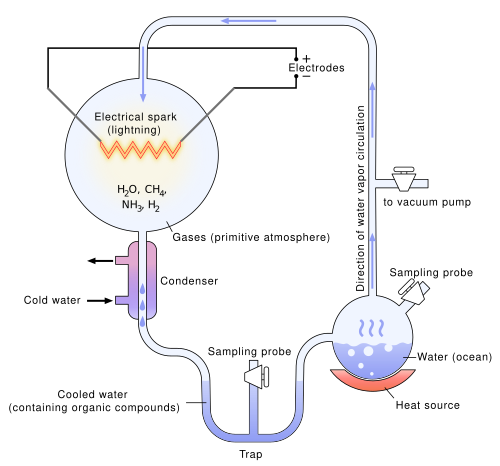
- 1952年のミラー・ユーリーの実験により、無機物からアミノ酸が合成可能であることが証明された。
- 生命の共通祖先とされるLUCA(最終共通祖先)に至るまでの過程が研究の焦点となっている。
- 宇宙空間や隕石からもアミノ酸などの有機分子が発見されており、地球外からの供給の可能性も検討されている。
生命誕生への化学的ステップ
プレバイオティクス合成と有機分子の起源
生命が誕生する前段階の化学反応をプレバイオティクス化学と呼びます。初期の地球環境を模した実験で、単純なガスに電気放電を加えることでアミノ酸が生成されることが示されました。これは、生命の材料となる有機物が自然に作り出されることを証明した画期的な出来事でした。
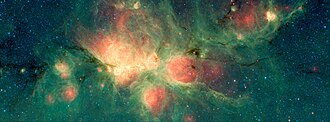
また、地球内部だけでなく、宇宙空間においても生命の種となる分子が存在しています。星形成領域や彗星、小惑星からは、多環芳香族炭化水素(PAH)などの複雑な有機分子が検出されており、これらが地球の生命誕生に寄与したという説もあります。
自己複製システムの構築:RNAワールド仮説
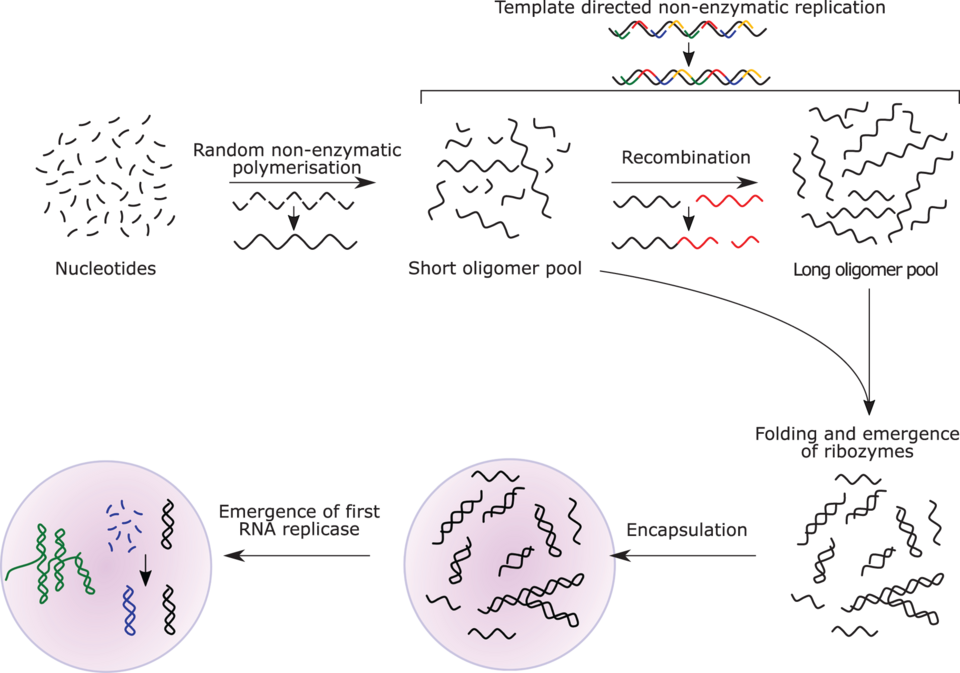
生命の最大の特徴は、自らの設計図をコピーして次世代に伝える「自己複製」にあります。現在有力な説の一つがRNAワールド仮説です。これは、DNAやタンパク質が登場する前に、情報保持と触媒機能(リボザイム)の両方を兼ね備えたRNAが主役となる世界があったとする考え方です。
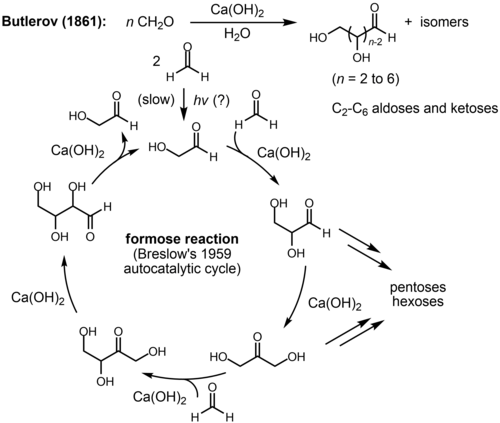
一方で、代謝系が先に構築されたとする「代謝第一説」もあり、初期地球での触媒反応が自己複製分子の先駆けとなった可能性が研究されています。また、糖の形成プロセスにおける触媒サイクルなどの化学的メカニズムも、生命誕生のパズルを解く鍵として注目されています。
プロトセルの形成とエネルギー代謝
細胞膜の自己組織化
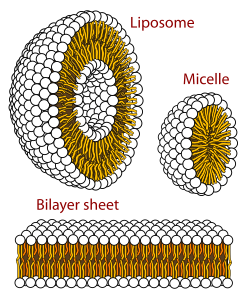
化学反応を効率的に行うには、反応物を閉じ込める「容器」が必要です。リン脂質のような分子は、水溶液中で自然に集まり、リポソームやミセルといった球状の構造(膜)を形成します。これが初期の細胞であるプロトセルの原型になったと考えられています。
エネルギーの獲得と化学浸透
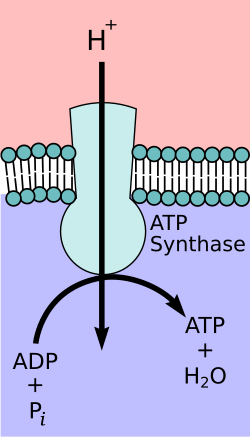
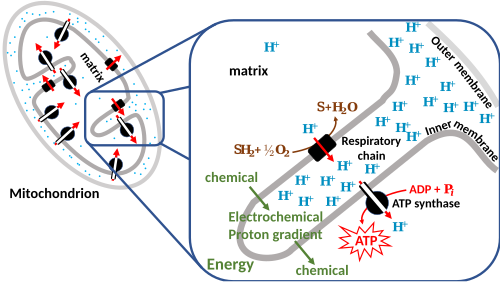
生命が維持されるにはエネルギーが必要です。現代の細胞では、膜を隔てたプロトン(水素イオン)の濃度勾配を利用してATPを合成する化学浸透という仕組みが使われています。初期の生命も、外部環境の自然な濃度勾配を利用してエネルギーを得ていた可能性があります。
生命誕生の舞台:地球上の候補地
深海熱水噴出孔説
暗く高温の深海熱水噴出孔は、豊富なミネラルとエネルギー勾配が存在するため、生命誕生の有力な候補地とされています。ここでは、金属硫化物の壁が触媒となり、外部のプロトン勾配が初期の細胞にエネルギーを供給していたというモデルが提唱されています。
![The earliest known life forms may be putative fossilized microorganisms, found in white smoker hydrothermal vent precipitates. They may have lived as early as 4.28 Gya (billion years ago), relatively soon after the formation of the oceans 4.41 Gya, not long after the formation of the Earth 4.54 Gya.[78]](/images/3e/49/3e49ce89c270b6398fc0d69d4724781d7a7a7e8af2f405cda8c20e09d599ccdb.jpg)
![Proposed model of an early cell powered by external proton gradient near a deep-sea hydrothermal vent. As long as the membrane (or passive ion channels within it) is permeable to protons, the mechanism can function without ion pumps.[162]](/images/08/fe/08feb036e2feb1f048fcd4a42173bf7337f0f1e12c48bd238a1c142c2f44810e.webp)
地表の水辺とその他の環境
一方で、地表の温泉や穏やかな水辺で、乾燥と湿潤のサイクルが分子の濃縮を促し、重合反応が進んだとする説もあります。また、大陸地殻内部の断層などでプレバイオティクス化学が進展した可能性も検討されています。
生命の痕跡と進化のタイムライン
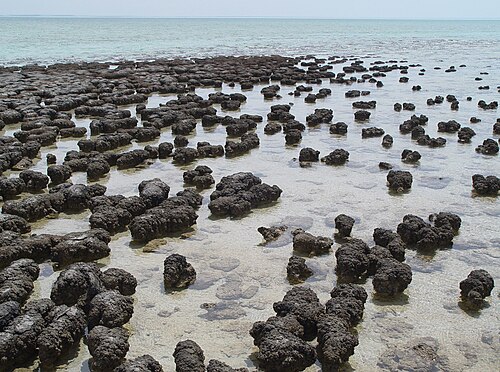
地球が誕生して約45億年後、海が形成されると比較的早い段階で生命の兆候が現れたと考えられています。最古の化石候補には、ストロマトライトのような微生物のコロニーによる構造物や、熱水噴出孔の沈殿物に含まれる微化石などが挙げられます。
![If banded iron formation rocks of Archaean age (like these from Australia) are fossilized stromatolites, they would be among the earliest life-forms.[78][79]](/images/f5/54/f554cfa1f00e8e5ec5c7fe53b576bf0ca080ee9fa9caea75b6d26f7f94349923.jpg)
これらの初期生命は、やがて共通の祖先であるLUCAへと収束し、そこから細菌(バクテリア)や古細菌(アーキア)といった多様な系統へと分かれていきました。
なお、生命の大きな謎の一つにホモキラリティがあります。天然のアミノ酸は左手型(L型)のみで構成されていますが、化学合成では右手型と左手型が等量に生成されます。なぜ生命が一方の形態のみを選択したのかは、現在も重要な研究テーマです。
![Many biomolecules, such as L-glutamic acid, are asymmetric, and occur in living systems in only one of the two possible forms, in the case of amino acids the left-handed form. Prebiotic chemistry would produce both forms, creating a puzzle for abiogenesis researchers.[275]](/images/e4/9e/e49e47ec7bd8504efeeae2470f4ee18da7beb1cad4213d2545df273ac606dd4b.png)
| 段階 | 主要なプロセス | 重要な分子・構造 |
|---|---|---|
| プレバイオティクス段階 | 単純な無機物から有機分子への合成 | アミノ酸、糖、核酸塩基 |
| 自己複製段階 | 情報の保持とコピー機能の獲得 | RNA(リボザイム) |
| 区画化段階 | 膜による内部環境の分離 | 脂質二重層(プロトセル) |
| 代謝確立段階 | エネルギー変換システムの構築 | ATP、プロトン勾配 |
| 共通祖先段階 | 機能的な生命システムの完成 | LUCA(最終共通祖先) |
![NASA's 2015 strategy for astrobiology aimed to solve the puzzle of the origin of life – how a fully functioning living system could emerge from non-living components – through research on the prebiotic origin of life's chemicals, both in space and on planets, as well as the functioning of early biomolecules to catalyse reactions and support inheritance.[2]](/images/6b/9c/6b9c6d2c88c5903b81ca4fe670f091778cba98b28690cccf4fbd116627578e6f.webp)
Frequently Asked Questions
アビオジェネシスと進化論はどう違うのですか?
進化論は「すでに存在する生命」がどのように変化し多様化したかを説明するものですが、アビオジェネシスは「非生物から最初の生命がどう生まれたか」という、生命の始まりそのものを扱う理論です。
RNAワールド仮説とは具体的にどのような考えですか?
現代の生命はDNA(情報)とタンパク質(機能)に分かれていますが、初期にはその両方の役割を一人二役でこなせるRNAという分子が主役だったとする説です。これにより、情報保持と代謝が同時に始まったと考えられます。
生命は地球以外でも誕生した可能性がありますか?
はい。アストロバイオロジー(宇宙生物学)の視点では、宇宙に普遍的に存在する有機分子や、火星やエウロパのような液体の水を持つ天体において、地球と同様のプロセスで生命が誕生した可能性が研究されています。
LUCAとは何のことですか?
Last Universal Common Ancestorの略で、「最終共通祖先」と訳されます。地球上のすべての現生生物(細菌、古細菌、真核生物)が遡っていく、たった一つの共通の祖先細胞のことです。
なぜアミノ酸の「向き(キラリティ)」が重要なのですか?
生命を構成する分子は、鏡合わせのような右型と左型がありますが、生物は厳格に一方のみを利用しています。この「ホモキラリティ」がなければ、タンパク質の正確な立体構造が作れず、生命機能が維持できないため、この選択がどう起きたかは生命誕生の核心的な謎とされています。
References
- The reactions are:
- FeS + H2S → FeS2 + 2H+ + 2e−
- FeS + H2S + CO2 → FeS2 + HCOOH
- The reactions are:
Reaction 1: Fayalite + water → magnetite + aqueous silica + hydrogen- 3Fe2SiO4 + 2H2O → 2Fe3O4 + 3SiO2 + 2H2
- 3Mg2SiO4 + SiO2 + 4H2O → 2Mg3Si2O5(OH)4
- 2Mg2SiO4 + 3H2O → Mg3Si2O5(OH)4 + Mg(OH)2
- 2 Ca2SiO4 + 4 H2O → 3 CaO · 2 SiO2 · 3 H2O + Ca(OH)2
📸 フォトギャラリー