28 Broad Street (now Broadwick Street) in an illustration of 1912. Blake was born here and lived here until he was 25. The house was demolished in 1965.[13]
← ホームへ戻る

ウィリアム・ブレイク詩と絵画を融合させた孤高の幻想的芸術家

🗓 2026年8月11日

18世紀後半から19世紀初頭にかけてのイギリスで、詩人、画家、そして版画家として唯一無二の足跡を残したのがウィリアム・ブレイクです。彼は単なる芸術家の枠を超え、自らの精神世界で見たヴィジョン(幻視)を言葉と色彩で具現化した、ロマン主義を代表する先駆者でした。当時の社会通念や合理主義に抗い、想像力こそが真の現実であると信じた彼の作品は、没後長い年月を経て世界的な評価を得るに至りました。

Key Facts

  • 多才な表現者:詩作、絵画、版画のすべてを一人でこなし、文字と図像を一体化させた「彩色版画」を確立した。
  • 独自の精神世界:幼少期から天使や霊的な存在を見るヴィジョンを体験し、それを作品の核とした。
  • 反合理主義:啓蒙主義的な科学的物質主義を批判し、人間の想像力と精神的な自由を重視した。
  • 代表作:『無垢と経験の歌』や、壮大な神話体系を構築した「預言書」シリーズで知られる。

生涯と芸術的歩み

ロンドンでの誕生と修行時代

ブレイクは1757年、ロンドンのソーホー地区に生まれました。若き日の彼は、彫刻師としての徒弟修行を経て、ロイヤル・アカデミーで美術教育を受けました。この時期に培われた確かな技術が、後の独創的な版画技法の基礎となりました。

28 Broad Street (now Broadwick Street) in an illustration of 1912. Blake was born here and lived here until he was 25. The house was demolished in 1965.[13]
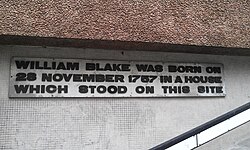
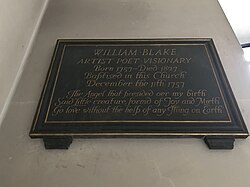
Memorial marking Blake's birthplace in Soho, City of Westminster

妻キャサリンとの共同作業と革新

1782年に結婚した妻のキャサリン・ブッシャーは、ブレイクの芸術人生において不可欠なパートナーでした。彼女はブレイクの作品に鮮やかな色彩を添える手助けをし、二人の協力によって、詩と絵が融合した「彩色版画」という独自の形式が完成しました。
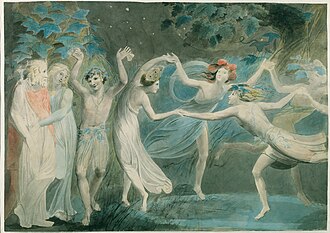
Oberon, Titania and Puck with Fairies Dancing (1786)

波乱の生活と晩年

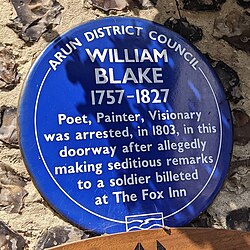
ブレイクの人生は常に平坦ではありませんでした。1800年から1803年にかけてはフェルパムの小さなコテージで暮らしましたが、そこでの活動中に逮捕されるという困難にも直面しています。その後ロンドンに戻り、晩年はほとんど無名に近い状態でしたが、ジョン・リンネルなどの若い芸術家たちに支持され、静かにその生涯を閉じました。
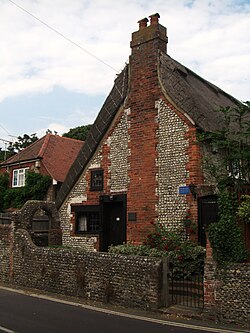
The cottage in Felpham, Blake’s Cottage, where Blake lived from 1800 until 1803
A blue memorial plaque on a wall outside of The Fox Inn at Felpham, West Sussex describing Blake's arrest. It reads "Arun District Council. William Blake 1757 - 1827. Poet, Painter, Visionary was arrested, in 1803, in this doorway after allegedly making seditious remarks to a soldier billeted at The Fox Inn.
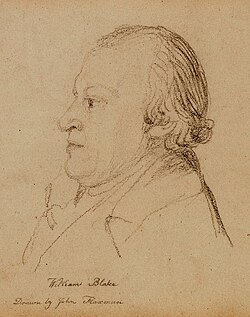
Sketch of Blake from, c. 1804, by John Flaxman
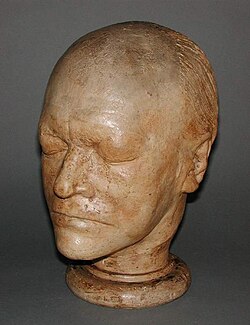
"Head of William Blake" by James De Ville. Life mask taken in plaster cast in September 1823, Fitzwilliam Museum.

芸術的哲学とヴィジョン

物質主義への抵抗

ブレイクは、当時の主流であった科学的合理主義や、ニュートンに代表される「単一の視点」による世界把握に強く反対しました。彼は、目に見える物理的な世界だけを信じることは、精神的な拘束(mind forged manacles)に繋がると考え、直感と想像力による多角的な視点を重視しました。

Blake's Newton (1795) demonstrates his opposition to the "single-vision" of scientific materialism: Newton fixes his eye on a pair of compasses (recalling Proverbs 8:27,[98] an important passage for John Milton)[99] to write upon a scroll that seems to project from his own head.[100]
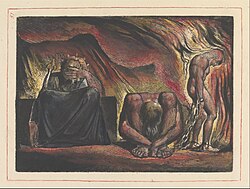
'Skofeld' wearing "mind forged manacles" in Jerusalem: The Emanation of the Giant Albion, Plate 51

宗教観と神話の創造

聖書やダンテ、ミルトンなどの古典に深く影響を受けながらも、ブレイクは独自の神話体系を構築しました。彼は、絶対的な神ではなく、人間の精神状態を象徴するキャラクター(ウリゼンやロスなど)を登場させ、対立する概念(無垢と経験など)を通じて人間の魂の成長を描きました。

Urizen − from Blake's Ancient of Days, 1794. The "Ancient of Days" is described in Chapter 7 of the Book of Daniel. This image depicts Copy D of the illustration currently held at the British Museum.[86]
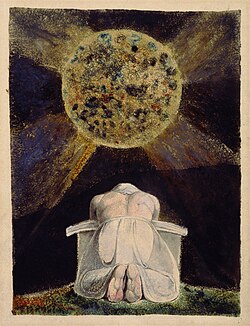
The archetype of the Creator is a familiar image in Blake's work. Here, the demiurgic figure Urizen prays before the world he has forged. The Song of Los is the third in a series of illuminated books painted by Blake and his wife, collectively known as the Continental Prophecies.
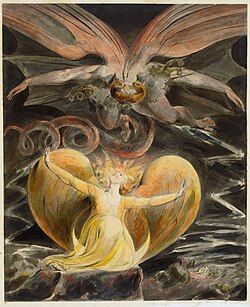
Blake's The Great Red Dragon and the Woman Clothed with Sun (1805) is one of a series of illustrations of Revelation 12.

社会正義と人間愛

彼の作品には、奴隷制への激しい怒りや、抑圧された人々への共感も色濃く反映されています。宗教的な権威や政治的な抑圧を批判し、真の自由と愛こそが人間を救うと説きました。
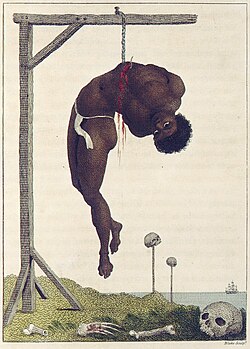
Blake's A Negro Hung Alive by the Ribs to a Gallows, an illustration to John Gabriel Stedman's Narrative, of a Five Years' Expedition, against the Revolted Negroes of Surinam (1796)

技法と主要作品

浮き彫り版画(リリーフ・エッチング)

ブレイクは、従来の版画技法とは異なる「浮き彫り版画」という手法を考案しました。これは、銅板に直接文字や図像を書き込み、酸で腐食させるのではなく、盛り上がった部分を印刷する手法です。これにより、詩と絵を同時に、かつ有機的に配置することが可能となりました。
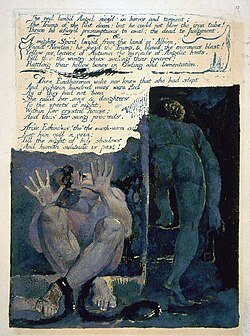
Detail of printing error on E13 of EUROPE a PROPHECY
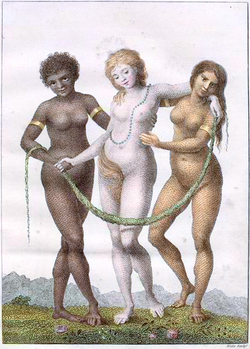
Europe Supported by Africa and America engraving by William Blake

多様な挿絵作品

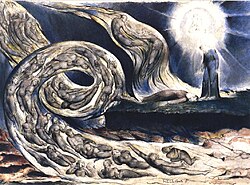
自作の詩だけでなく、ダンテの『神曲』や聖書の『ヨブ記』など、他者の著作に対する挿絵も数多く手がけました。そこでは、地獄の光景や怪物など、彼の想像力が最大限に発揮されたダイナミックな構図が見られます。
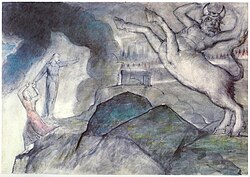
Blake's image of the Minotaur to illustrate Inferno, Canto XII, 12–28, The Minotaur XII.
Blake's The Lovers' Whirlwind illustrates Hell in Canto V of Dante's Inferno.
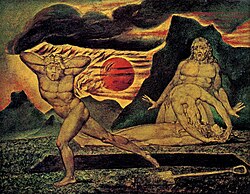
The Body of Abel Found by Adam and Eve, c. 1825. Watercolour on wood.
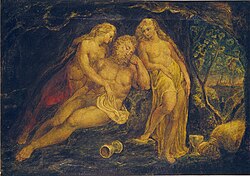
Blake's Lot and His Daughters, Huntington Library, c. 1800
The Ghost of a Flea, 1819–1820. Having informed the painter-astrologer John Varley of his visions of apparitions, Blake was subsequently persuaded to paint one of them.[131] Varley's anecdote of Blake and his vision of the flea's ghost became well-known.[131]

後世への遺産

ブレイクの死後、彼の墓は長い間忘れ去られていましたが、後に再発見され、現在はロンドンのバンヒル・フィールズに記念碑が建てられています。彼の先駆的な精神は、後の象徴主義やシュルレアリスム、さらには現代のポップカルチャーにまで多大な影響を与え続けています。
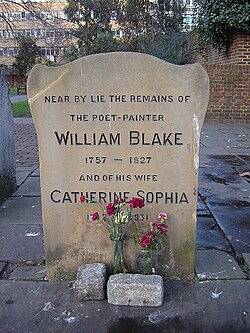
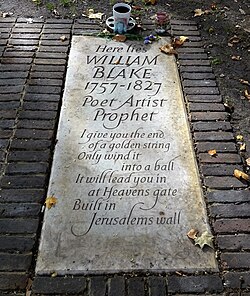
Headstone in Bunhill Fields, London, erected on Blake's grave in 1927 and moved to its present location in 1964–65
Ledger stone on Blake's grave, unveiled in 2018
A memorial to William Blake in St James's Church, Piccadilly
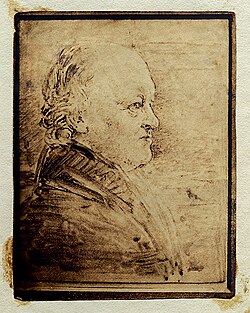
William Blake's portrait in profile, by John Linnell. This larger version was painted to be engraved as the frontispiece of Alexander Gilchrist's Life of Blake (1863).

作品概要まとめ

ウィリアム・ブレイクの主要活動と作品群
カテゴリー 主な作品・特徴 備考
彩色版画(詩集) 『無垢と経験の歌』 対照的な人間精神の状態を描いた代表作
預言書シリーズ 『ウリゼンの書』『エルサレム』 独自の宇宙論と神話を構築した壮大な叙事詩
挿絵・版画 『失楽園』『ヨブ記』の挿絵 古典文学を独自のヴィジョンで再解釈
独創的技法 浮き彫り版画(Relief Etching) 文字と図像を一体化させた印刷手法

Frequently Asked Questions

ウィリアム・ブレイクはどのような人物でしたか?

18世紀末から19世紀初頭のイギリスで活動した、詩人であり画家、版画家でもある芸術家です。ロマン主義の先駆者として、合理主義を否定し、個人の想像力と精神的なヴィジョンを重視した作品を多く残しました。

「彩色版画」とはどのような技法ですか?

ブレイクが考案した「浮き彫り版画」という手法で、銅板に詩と絵を同時に刻み込み、印刷した後に手作業で彩色を施したものです。これにより、文学と美術が完全に融合した一冊の本を作り上げました。

彼の作品に共通するテーマは何ですか?

「無垢(Innocence)」と「経験(Experience)」の対立と統合、精神的な自由、そして物質的な制約からの解放が中心的なテーマです。また、独自の神話体系を用いて、人間の魂の救済や社会的な抑圧への抵抗を描きました。

なぜ生前はあまり評価されなかったのでしょうか?

彼の描くヴィジョンや思想があまりに独創的で前衛的だったため、当時の保守的な社会や芸術界には理解されにくかったためと考えられています。しかし、その特異性こそが、後世に大きな影響を与える要因となりました。

ブレイクに影響を与えたものは何ですか?

聖書をはじめ、ダンテの『神曲』やミルトンの『失楽園』などの古典文学、またスウェーデンボリやベーメといった神秘主義的な思想から強い影響を受けていました。

References

  1. "Blake & London". The Blake Society. 28 March 2008. Archived from the original on 15 September 2015. Retrieved 15 August 2014.
  2. Frye, Northrop and Denham, Robert D. Collected Works of Northrop Frye. 2006, pp 11–12.
  3. Thomas, Edward. A Literary Pilgrim in England. 1917, p. 3.
  4. The Collected Works of W. B. Yeats. 2007, p. 85.
  5. Wilson, Mona. The Life of William Blake. The Nonesuch Press, 1927. p. 167.
  6. The New York Times Guide to Essential Knowledge. 2004, p. 351.
  7. Blake, William. Blake's "America, a Prophecy"; And, "Europe, a Prophecy". 1984, p. 2.
  8. Wilson, Andy (2021). "William Blake as a Revolutionary Poet". Archived from the original on 18 December 2021. Retrieved 29 January 2021.
  9. Kazin, Alfred (1997). "An Introduction to William Blake". Archived from the original on 26 September 2006. Retrieved 23 September 2006.
  10. Blake, William and Rossetti, William Michael. The Poetical Works of William Blake: Lyrical and Miscellaneous. 1890, p. xi.

📸 フォトギャラリー

28 Broad Street (now Broadwick Street) in an illustration of 1912. Blake was born here and lived here until he was 25. The house was demolished in 1965.[13]
The archetype of the Creator is a familiar image in Blake's work. Here, the demiurgic figure Urizen prays before the world he has forged. The Song of Los is the third in a series of illuminated books painted by Blake and his wife, collectively known as the Continental Prophecies.
Oberon, Titania and Puck with Fairies Dancing (1786)
Detail of printing error on E13 of EUROPE a PROPHECY
Europe Supported by Africa and America engraving by William Blake
The cottage in Felpham, Blake’s Cottage, where Blake lived from 1800 until 1803
A blue memorial plaque on a wall outside of The Fox Inn at Felpham, West Sussex describing Blake's arrest. It reads "Arun District Council. William Blake 1757 - 1827. Poet, Painter, Visionary was arrested, in 1803, in this doorway after allegedly making seditious remarks to a soldier billeted at The Fox Inn.
'Skofeld' wearing "mind forged manacles" in Jerusalem: The Emanation of the Giant Albion, Plate 51
Sketch of Blake from, c. 1804, by John Flaxman
Blake's The Great Red Dragon and the Woman Clothed with Sun (1805) is one of a series of illustrations of Revelation 12.
Blake's image of the Minotaur to illustrate Inferno, Canto XII, 12–28, The Minotaur XII.
Blake's The Lovers' Whirlwind illustrates Hell in Canto V of Dante's Inferno.
"Head of William Blake" by James De Ville. Life mask taken in plaster cast in September 1823, Fitzwilliam Museum.
Headstone in Bunhill Fields, London, erected on Blake's grave in 1927 and moved to its present location in 1964–65
Ledger stone on Blake's grave, unveiled in 2018
A memorial to William Blake in St James's Church, Piccadilly
Urizen − from Blake's Ancient of Days, 1794. The "Ancient of Days" is described in Chapter 7 of the Book of Daniel. This image depicts Copy D of the illustration currently held at the British Museum.[86]
The Body of Abel Found by Adam and Eve, c. 1825. Watercolour on wood.
Blake's Newton (1795) demonstrates his opposition to the "single-vision" of scientific materialism: Newton fixes his eye on a pair of compasses (recalling Proverbs 8:27,[98] an important passage for John Milton)[99] to write upon a scroll that seems to project from his own head.[100]
Blake's Lot and His Daughters, Huntington Library, c. 1800
Blake's A Negro Hung Alive by the Ribs to a Gallows, an illustration to John Gabriel Stedman's Narrative, of a Five Years' Expedition, against the Revolted Negroes of Surinam (1796)
The Ghost of a Flea, 1819–1820. Having informed the painter-astrologer John Varley of his visions of apparitions, Blake was subsequently persuaded to paint one of them.[131] Varley's anecdote of Blake and his vision of the flea's ghost became well-known.[131]
William Blake's portrait in profile, by John Linnell. This larger version was painted to be engraved as the frontispiece of Alexander Gilchrist's Life of Blake (1863).
Memorial marking Blake's birthplace in Soho, City of Westminster