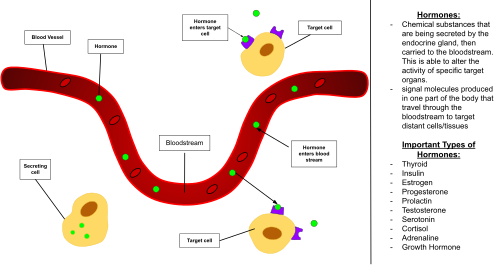
私たちの身体や植物の成長、そして行動に至るまで、生命活動のあらゆる場面で重要な役割を果たしているのがホルモンです。ホルモンとは、多細胞生物において特定の組織や器官から放出され、血流や輸送経路を通じて遠く離れた標的細胞に届けられるシグナル分子のことを指します。ギリシャ語で「動き出させる」という意味を持つこの物質は、まさに生命のダイナミズムを駆動させる化学的なメッセンジャーといえます。
動物だけでなく、植物や菌類においても、正常な発達にはホルモンが不可欠です。例えば、人間では代謝や睡眠、生殖などの複雑な生理現象を制御し、植物では種子の発芽から老化に至るまでの全プロセスを調節しています。
Key Facts
- 広範な役割: 代謝、成長、睡眠、生殖、気分など、生理的プロセスと行動の両方を制御する。
- 多様な化学構造: タンパク質、ステロイド、アミノ酸誘導体、ガス状物質など、構造は多岐にわたる。
- 特異的な作用: 特定の受容体を持つ標的細胞にのみ結合し、細胞機能を変化させる。
- 恒常性の維持: 負のフィードバック機構により、体内の環境を一定に保つ(ホメオスタシス)。
- 伝達速度: 神経伝達物質に比べて速度は遅いが、持続的かつ広範囲に影響を及ぼす。
ホルモンの種類と化学的特性
ホルモンは構造によって分類されますが、その定義は「機能(遠隔地へ信号を送る)」に基づいているため、化学的な組成は非常に多様です。
脊椎動物における主な分類
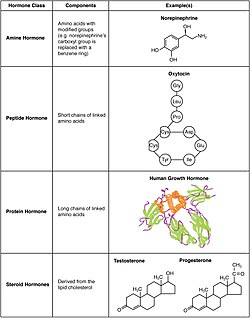
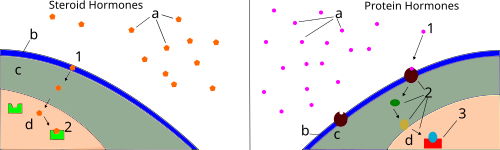
- ペプチド・タンパク質ホルモン: アミノ酸の鎖で構成され、水溶性(親水性)です。細胞膜を通過できないため、細胞表面の受容体に結合します(例:インスリン、オキシトシン)。
- ステロイドホルモン: コレステロールから派生した脂溶性の物質です。細胞膜を容易に通過し、核内の受容体に直接結合して遺伝子発現を制御します(例:エストロゲン、テストステロン、コルチゾール)。
- アミノ酸誘導体: チロシンなどのアミノ酸から作られます(例:メラトニン、サイロキシン)。
- エイコサノイド: アラキドン酸などの脂質から生成される局所的なホルモンで、近接する細胞にのみ作用し、速やかに分解されます(例:プロスタグランジン)。
- ガス状ホルモン: 一酸化窒素(NO)やエチレンなどが含まれます。
植物や無脊椎動物のホルモン
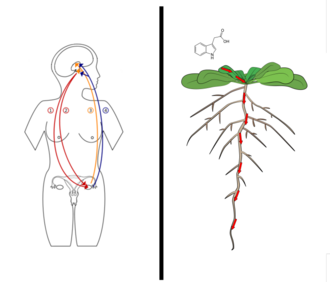
植物では、光に向かって茎が曲がる「屈光性」などを制御するオーキシンのような成長調節物質が重要です。また、昆虫などの無脊椎動物では、幼若ホルモンのように脊椎動物には見られない特異な構造を持つホルモンが存在します。
シグナル伝達のメカニズム
ホルモンが標的細胞に到達すると、特定の受容体(レセプター)に結合します。これにより細胞内でシグナル伝達経路が活性化され、最終的に遺伝子の転写が促進されて特定のタンパク質が合成されるなど、細胞の機能が変化します。
伝達方式の分類
| 伝達方式 | 特徴 |
|---|---|
| 内分泌 (Endocrine) | 血流を通じて遠く離れた標的細胞へ運ばれる。 |
| 傍分泌 (Paracrine) | 近隣の細胞にのみ作用する。 |
| 自己分泌 (Autocrine) | 分泌した自分自身の細胞に作用する。 |
| 内分泌内作用 (Intracrine) | 細胞内部で合成され、そのまま内部で作用する。 |
また、一部のホルモンは血中で「結合タンパク質」と複合体を形成します。これにより、ホルモンの半減期が延び、血中濃度の急激な変動を抑える貯蔵庫のような役割を果たします。例えば、サイロキシンの多くは結合タンパク質によって運ばれています。
生体調節とフィードバック制御
ホルモンの分泌量は、多くの場合負のフィードバックという仕組みで厳密に管理されています。これは、ある物質が増えすぎると、それを抑制する方向に働く仕組みです。
代表的な例が血糖値の調節です。血糖値が上昇すると膵臓からインスリンが分泌され、血糖値を下げます。血糖値が正常値に戻ると、インスリンの分泌も抑制されます。このようにして、身体は常に最適な状態(恒常性)を維持しています。

ホルモン研究の歴史的発見
ホルモンの概念は、一連の科学的実験を通じて確立されました。
- B.ベルトルト(1849年): オンドリの精巣移植実験により、精巣の場所に関わらず、そこから分泌される化学物質(後にテストステロンと判明)が雄としての行動や外見を制御していることを突き止めました。
- ダーウィン父子(1880年代): 植物の茎の先端で光を感知し、ある「伝達物質」が下方に送られることで茎が曲がることを示唆し、後のオーキシン発見につながりました。
- オリバーとシェーファー(1894年): 副腎抽出液による生理的変化を報告し、実質的に最初のホルモン(アドレナリン)を発見しました。
- スターリング(1905年): 血液を通じて細胞間を移動し、身体の活動を調整する化学伝達物質を指して「ホルモン」という言葉を定義しました。
神経伝達物質との違い
ホルモンと神経伝達物質はどちらも化学的な信号ですが、その性質は大きく異なります。神経信号は電気的な刺激を伴い、ミリ秒単位という極めて速い速度で特定の細胞へピンポイントに伝わります(デジタル的な全か無かの作用)。対してホルモンは、血流に乗ってゆっくりと運ばれ、濃度に応じて連続的に作用を変化させます(アナログ的な作用)。
ただし、神経細胞から分泌され血流に乗る「神経ホルモン」のように、両者の性質を併せ持つ経路も存在します。
Frequently Asked Questions
ホルモンと神経伝達物質の最大の違いは何ですか?
主な違いは「伝達速度」と「到達範囲」です。神経伝達物質はシナプスを介して極めて高速に特定の細胞へ伝わりますが、ホルモンは血流を通じて全身に運ばれ、受容体を持つあらゆる細胞に比較的ゆっくりと作用します。
ステロイドホルモンが細胞膜を通過できるのはなぜですか?
ステロイドホルモンは脂質(コレステロール)から作られているため、脂質二重層で構成される細胞膜と親和性が高く、そのまま通り抜けて細胞内部の受容体に結合できるからです。
「負のフィードバック」とは具体的にどのような仕組みですか?
あるホルモンの作用によって生じた結果(例:血糖値の低下)が、さらにそのホルモンの分泌を抑制する仕組みのことです。これにより、体内の状態が極端に振れることなく、一定の範囲内に保たれます。
植物にもホルモンがあるというのは本当ですか?
はい、本当です。植物にはオーキシンのように、成長、屈光性、果実の成熟、種子の発芽などを制御する独自のホルモンが存在し、動物と同様に生理機能を調節しています。
ホルモン受容体がない細胞には、ホルモンは作用しませんか?
その通りです。ホルモンは血流に乗って全身に運ばれますが、実際に反応するのは、そのホルモンに適合する特定の「受容体」を持っている標的細胞だけです。鍵と鍵穴のような関係であるため、受容体がない細胞は無視されます。
References
- Shuster M (2014-03-14). Biology for a Changing World, with Physiology (2nd ed.). New York: . . 884499940.
- Neave N (2008). Hormones and behaviour: a psychological approach. Cambridge: Cambridge Univ. Press. .
- Gibson CL (2010). "Hormones and Behaviour: A Psychological Approach (review)". Perspectives in Biology and Medicine. 53 (1). Project Muse: 152–155. :10.1353/pbm.0.0141. 1529-8795. 72100830.
- "Hormones". . .
- "Hormone - The hormones of plants". . Retrieved 2021-01-05.
- Ruhs S, Nolze A, Hübschmann R, Grossmann C (July 2017). "30 Years of the Mineralocorticoid Receptor: Nongenomic effects via the mineralocorticoid receptor". . 234 (1): T107–T124. :10.1530/JOE-16-0659. 28348113.
- Wang ZY, Seto H, Fujioka S, Yoshida S, Chory J (March 2001). "BRI1 is a critical component of a plasma-membrane receptor for plant steroids". . 410 (6826): 380–3. :2001Natur.410..380W. :10.1038/35066597. 11268216. 4412000.
- Miller BF, Keane CB (1997). (6th ed.). Philadelphia: . . 36465055.
- "Plant Hormones/Nutrition". estrellamountain.edu. Archived from the original on 2021-01-09. Retrieved 2021-01-07.
- Wisse B (13 June 2021). "Endocrine glands". MedlinePlus. U.S. National Library of Medicine. Retrieved November 18, 2021.
📸 フォトギャラリー