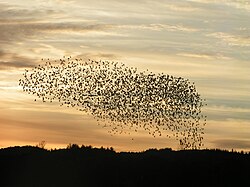
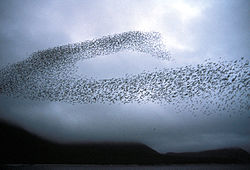
自然界を見渡すと、数千羽の鳥が一体となって空を舞い、膨大な数の魚が同期して泳ぐ光景を目にします。このような、似たサイズの個体が集まり、集団として移動したり、特定の場所に密集したりする現象を群れ行動(スウォーミング)と呼びます。この現象は単なる集団の集まりではなく、個々の単純なルールが組み合わさることで、全体として高度な秩序が生まれる「創発」の好例です。
群れ行動は、対象によって呼び方が異なります。鳥類では「フロッキング(flocking)」や「マーマレーション(murmuration)」、魚類では「スクーリング(schooling)」や「ショーリング(shoaling)」、四肢動物では「ハーディング(herding)」と呼ばれます。また、自走能力を持たないプランクトンが大量発生することも「ブルーム(bloom)」という形で群れのような挙動として捉えられます。
Key Facts
- 中央制御の不在: 群れを率いるリーダーがいなくても、個々の単純な相互作用によって集団全体の秩序が形成される。
- 創発的特性: 個々の個体にはない高度な振る舞いが、集団レベルで自然に現れる(エマージェンス)。
- 多分野への応用: 生物学だけでなく、物理学、数学、ロボティクス、軍事戦略などの分野で研究されている。
- 非平衡状態: 物理学的には、熱力学的平衡状態にない「アクティブマター」として解析される。
群れを形作るメカニズムと数学的モデル
数学的な視点から見ると、群れ行動は「自走する粒子」の集団運動としてモデル化されます。多くのモデルで共通しているのは、個体が以下の3つの基本的なルールに従っているという点です。
- 方向の一致: 周囲の個体と同じ方向に進もうとする。
- 近接の維持: 仲間から離れすぎず、近くに留まろうとする。
- 衝突の回避: 隣接する個体とぶつからないよう距離を保つ。
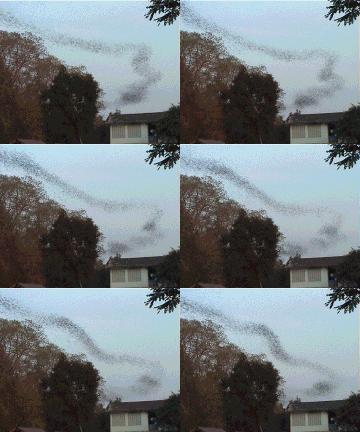
特に鳥の群れなどの解析では、個体が「物理的な距離」ではなく、「周囲の数匹(通常6〜7匹)」という「位相的な関係」に基づいて位置を調整していることが示唆されています。
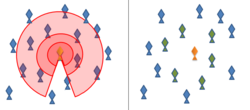
![Recent studies of starling flocks have shown that each bird modifies its position, relative to the six or seven animals directly surrounding it, no matter how close or how far away those animals are.[7] Murmurations of starlings](/images/17/48/1748208d7b26e3c5754f82117a17fe1f99895bc617ceba2f322f79cc5a62b5fa.jpg)
自己組織化とスティグマジー
群れ行動の根幹にあるのが自己組織化です。これは外部からの指示なしに、内部的な相互作用のみで構造が作られるプロセスを指します。また、アリなどの社会性昆虫に見られるスティグマジー(環境に残された痕跡を介した間接的なコミュニケーション)は、効率的な経路探索や巣作りを可能にする重要な仕組みです。
生物界における多様な群れ行動
昆虫と社会性動物
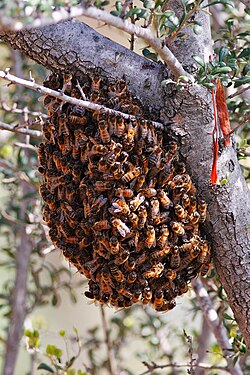
ミツバチやアリなどの社会性昆虫は、高度な集団知能を発揮します。例えば、ミツバチの分蜂(ぶんぽう)では、偵察蜂が新しい巣の候補地を評価し、集団で意思決定を行います。一方で、蛾やハエ、ゴキブリなどの非社会性昆虫も、フェロモンなどの化学物質を介して集団を形成します。
鳥類と海洋生物
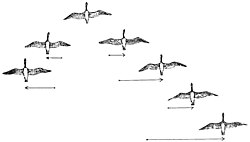
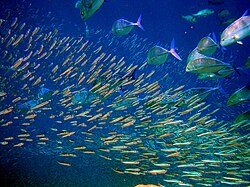
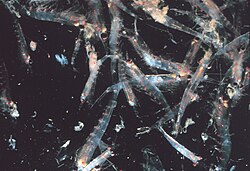
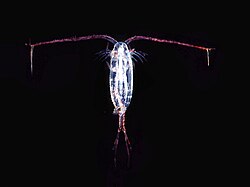
鳥類のV字編隊は、空気力学的な利点を得てエネルギー消費を抑えるための戦略的な配置です。また、海洋生物では、魚がスクーリングすることで捕食者から身を守るだけでなく、採餌の効率を高めています。プランクトンの仲間であるオキアミやカイアシ類も、巨大な群れを形成して生存率を高めています。
その他の生物と人間
群れ行動は脊椎動物だけのものではありません。細菌のコロニー形成や植物の根の広がりにも、同様の集団挙動が見られます。また、人間においても、スタジアムでの「ウェーブ」や、パニック時の避難行動、歩行者が自然に形成する道などの現象に、スウォーミングの原理が適用されています。
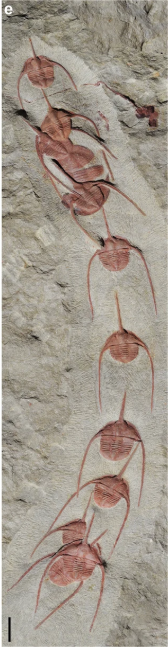
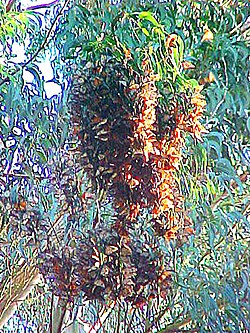
テクノロジーへの応用:群知能とロボティクス
自然界の群れ行動を模倣した群知能(Swarm Intelligence)は、コンピュータサイエンスやロボティクスに革命をもたらしています。特に「粒子群最適化(PSO)」や「アントコロニー最適化」などのアルゴリズムは、複雑な問題の最適解を導き出すために利用されています。
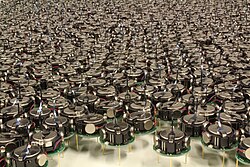
ロボティクス分野では、単体では単純な機能しか持たない小型ロボットを大量に連携させる「スウォームロボティクス」の研究が進んでいます。これにより、広範囲の探索や災害救助、さらには軍事的な飽和攻撃などの戦略への応用が検討されています。

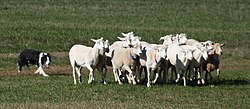
また、家畜の管理においても、牧羊犬が羊の群れ行動をコントロールすることで、効率的な誘導を実現している例があります。
群れ行動のまとめ
| カテゴリー | 主な呼称 | 代表的な例 | 主な目的・機能 |
|---|---|---|---|
| 鳥類 | フロッキング | ムクドリ、ガン | 捕食回避、エネルギー効率化 |
| 魚類 | スクーリング | イワシ、サケ | 防御、採餌効率の向上 |
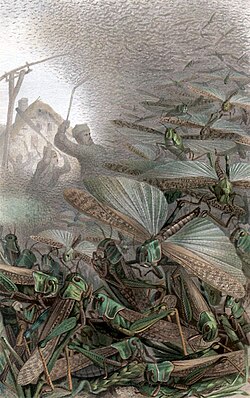
| 昆虫 | スウォーミング | ミツバチ、バッタ | 繁殖、移動、巣探し |
| 人工物 | ロボットスウォーム | キロボット | 分散処理、広域探索 |
| 非生物 | スウォーム | 地震群、星団 | 物理的・統計的集積 |
Frequently Asked Questions
群れを率いるリーダーは必ず存在するのですか?
いいえ、多くの群れ行動において中央集権的なリーダーは存在しません。個々の個体が隣接する数匹の動きに反応するという単純なルールに従うことで、結果として集団全体が同期して動く「創発」という現象が起きています。
「創発(エマージェンス)」とは具体的にどういう意味ですか?
個々の要素(個体)が持つ単純な特性からは予想できないような、高度で複雑なパターンや機能が、集団として現れることを指します。例えば、一羽の鳥には「V字編隊」という概念はありませんが、集団になると自然にその形が形成されます。
群れ行動を模倣した技術はどのように役立っていますか?
「群知能」として、物流のルート最適化やネットワークの効率的なルーティング、複雑な設計問題の解決などに利用されています。また、小型ロボットを連携させることで、単一の大型ロボットでは不可能な柔軟なタスク遂行が可能になります。
人間にも群れ行動のような性質があるのでしょうか?
はい。パニック時の群衆心理や、スポーツ観戦時のウェーブ、あるいは人々が自然に使い始める近道(踏み跡)の形成など、意識的な制御なしに集団として同期する行動にその特性が見られます。
References
- Bouffanais, Roland (2016). Design and Control of Swarm Dynamics. SpringerBriefs in Complexity (First ed.). Springer. :10.1007/978-981-287-751-2. .
- A Swarm of Ancient Stars European Southern Observatory, 8 December 2010. Accessed: 23 October 2025.
- Hubble Spots a Swarm of Stars NASA Hubble Mission Team, 6 September 2019. Accessed: 23 October 2025.
- O'Loan; Evans (1998). "Alternating steady state in one-dimensional flocking". Journal of Physics A: Mathematical and General. 32 (8): L99–L105. :cond-mat/9811336. :1999JPhA...32L..99O. :10.1088/0305-4470/32/8/002. 7642063.
- Attanasi, A.; Cavagna, A.; Del Castello, L.; Giardina, I.; Grigera, T. S.; Jelić, A.; Melillo, S.; Parisi, L.; Pohl, O.; Shen, E.; Viale, M. (September 2014). "Information transfer and behavioural inertia in starling flocks". Nature Physics. 10 (9): 691–696. :1303.7097. :2014NatPh..10..691A. :10.1038/nphys3035. 4173114. 25264452.
- Reynolds CW (1987). "Flocks, herds and schools: A distributed behavioral model". Proceedings of the 14th annual conference on Computer graphics and interactive techniques. Vol. 21. pp. 25–34. 10.1.1.103.7187. :10.1145/37401.37406. . 546350.
{{}}: Cite uses deprecated parameter|citeseerx=() - Ballerini M, Cabibbo N, Candelier R, Cavagna A, Cisbani E, Giardina I, Lecomte V, Orlandi A, Parisi G, Procaccini A, Viale M, Zdravkovic V (2008). "Interaction ruling animal collective behavior depends on topological rather than metric distance: Evidence from a field study". Proc. Natl. Acad. Sci. U.S.A. 105 (4): 1232–7. :0709.1916. :2008PNAS..105.1232B. :10.1073/pnas.0711437105. 2234121. 18227508.
- Hildenbrandt H, Carere C, Hemelrijk CK (2010). "Self-organized aerial displays of thousands of starlings: a model". Behavioral Ecology. 21 (6): 1349–1359. :0908.2677. :10.1093/beheco/arq149.
- Hemelrijk CK, Hildenbrandt H (2011). "Some causes of the variable shape of flocks of birds". PLOS ONE. 6 (8) e22479. :2011PLoSO...622479H. :10.1371/journal.pone.0022479. 3150374. 21829627.
- "Zwermen en scholen - Swarming - Permanente expo - Bezoek onze expo's & workshops! - Science LinX - Rijksuniversiteit Groningen". 10 November 2007.
📸 フォトギャラリー