Stereoscopy with a binocular stereoscope, showing the two lenses a person looks through to see a 3D image formed behind them
← ホームへ戻る

ステレオスコピー(立体視)の仕組みと進化2Dから3D体験への技術的アプローチ

🗓 2026年8月10日

私たちが日常的に世界を立体的に捉えられるのは、左右の目がわずかに異なる角度から物体を見ているためです。この視覚的な仕組みを人工的に再現し、平面的な画像から奥行きを感じさせる技術がステレオスコピー(立体視)です。ギリシャ語で「固形」を意味する「stereos」と「見る」を意味する「skopeo」に由来するこの技術は、単なる視覚的なトリックではなく、人間の脳が持つ高度な画像処理能力を利用しています。

Key Facts

  • 基本原理:左右の目に異なる2枚の2D画像を提示し、脳内で統合させることで奥行きを再現する。
  • 両眼視差:左右の目の物理的な距離によって生じる画像の差異が、立体感の鍵となる。
  • 歴史的起源:1838年にチャールズ・ウィートストンによって発明され、その後デヴィッド・ブリュースターらが携帯型デバイスへと発展させた。
  • 限界:多くの3D方式では、焦点調節と輻輳(ふくそう)の不一致による「輻輳・調節矛盾」が発生し、目の疲れを招くことがある。
  • 多様な手法:専用メガネを使う方式から、メガネ不要のオートステレオスコピーまで幅広い技術が存在する。

立体視を支える視覚メカニズム

ステレオスコピーの核心は、両眼視差(Binocular disparity)にあります。これは、左右の目の間にある水平距離によって、それぞれの網膜に映る像がわずかに異なる現象です。脳はこの差異を計算し、物体までの距離を判断します。

ただし、人間が奥行きを感じる要因は視差だけではありません。物体が重なり合う「遮蔽」、遠くのものが小さく見える「線形透視図法」、地平線に近いほど遠くに見える「垂直位置」など、多くの視覚的手がかりが組み合わさっています。ステレオスコピーは、これらのうち特に「視差」を強調することで、強力な立体感を演出します。
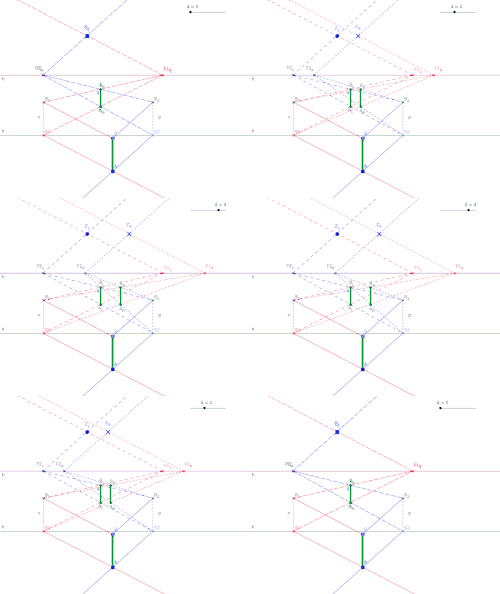
Difference in projections of a vertical line in stereoscopy according to distance between left Z L {\displaystyle Z_{L}} and right eye Z R {\displaystyle Z_{R}} - animation for eye distance d {\displaystyle d}

視覚的な要件と個人差

立体視を正しく体験するには、「同時知覚」「融合(単一視)」「立体視」という3つの機能が脳内で適切に働く必要があります。これらの機能は幼児期に発達しますが、斜視などの影響で立体視が困難な人もいます。統計的には、約12%から最大30%の人が、視差による奥行き知覚が弱いか、あるいは全く得られないと言われています。

ステレオスコピーの多様な提示手法

デバイスを使用しない視聴法(フリービューイング)

特別な装置を使わずに立体視を行う方法に「フリービューイング」があります。代表的なのが平行法で、左右に並んだ画像の間を通り抜けるように視線を外すことで、脳内で画像を融合させます。また、あえて寄り目にして見る「交差法」も知られています。

Two Passiflora caerulea flowers arranged as a stereo image pair for viewing by the cross-eyed viewing method (see Freeviewing)

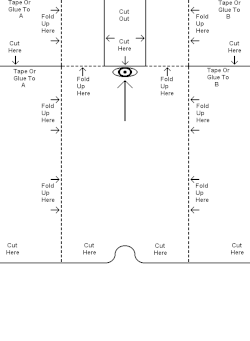
Printable cross eye viewer

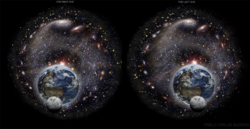
Cross-eyed stereography of an artistic depiction of the Solar System and nearby galaxies

古典的なステレオスコープとカード

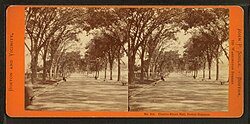
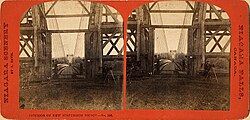
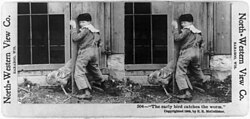
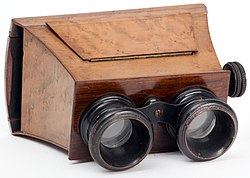
19世紀に普及したステレオグラフ・カードは、2枚の写真を台紙に並べたものでした。これを専用のステレオスコープ(立体鏡)で覗くことで、当時の人々は遠い異国の風景を立体的に体験しました。初期のモデルにはウィートストンの鏡式や、ブリュースター式などの携帯型がありました。
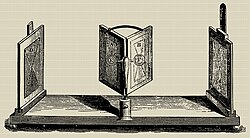
Wheatstone mirror stereoscope

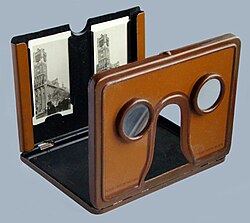
Brewster-type stereoscope, 1870

View of Boston, c. 1860; an early stereoscopic card for viewing a scene from nature

Saul Davis (act. 1860s–1870s), New Suspension Bridge, Niagara Falls, Canada, c. 1869, albumen print stereograph, Department of Image Collections, National Gallery of Art Library, Washington, DC

"The early bird catches the worm" stereograph published in 1900 by North-Western View Co. of Baraboo, Wisconsin, digitally restored

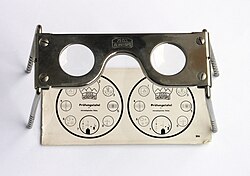
Pocket stereoscope with original test image. Used by military to examine stereoscopic pairs of aerial photographs.

Stereoscopy with a binocular stereoscope, showing the two lenses a person looks through to see a 3D image formed behind them

透過型ビューアーと玩具

紙のカードから発展し、フィルムやガラスを用いた透過型のスライド方式が登場しました。特に20世紀半ばに普及した「ビューマスター」は、商業的な成功を収めた代表的な製品です。

Kaiserpanorama consists of a multi-station viewing apparatus and sets of stereo slides. Patented by A. Fuhrmann around 1890.[1]

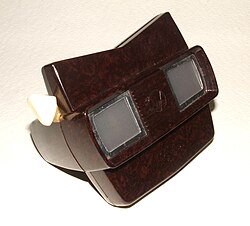
A View-Master Model E of the 1950s

現代の3Dディスプレイ技術

現代の3D技術は、大きく分けて「アクティブ方式」と「パッシブ方式」に分類されます。

アクティブ方式:シャッターシステム

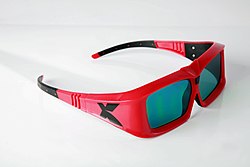
液晶シャッターメガネを使用し、ディスプレイの書き換え速度に合わせて左右のレンズを高速に切り替える方式です。これにより、左右の目に交互に異なる画像が届けられます。ただし、映像のタイミングにわずかなズレ(タイムパララックス)が生じることがあります。
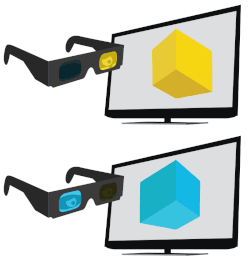
Functional principle of active shutter 3D systems

A pair of LC shutter glasses used to view XpanD 3D films. The thick frames conceal the electronics and batteries.

パッシブ方式:フィルターと偏光

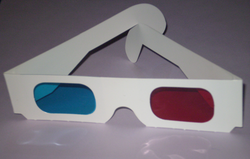
特定の光だけを透過させるフィルターを用いる方式です。代表的なのがアナグリフで、赤とシアンのフィルターを用いて左右の画像を分離します。また、映画館などで使われる偏光方式や、特定の波長を分ける干渉フィルター方式(Dolby 3Dなど)もあります。
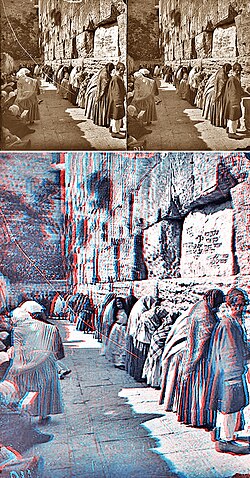
A stereoscopic pair of images (top) and a combined anaglyph that colors one perspective red and the other cyan. 3D red cyan glasses are recommended to view this image correctly.

Anaglyph 3D glasses

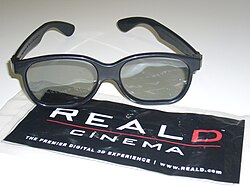
RealD circular polarized glasses

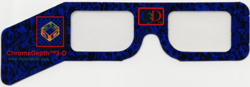
ChromaDepth glasses with prism-like film

メガネ不要の技術(オートステレオスコピー)

パララックスバリア(視差障壁)やレンチキュラーレンズを用いることで、メガネなしで立体的に見えるディスプレイも開発されました。任天堂3DSなどがこの技術を採用しています。さらに高度な「インテグラルイメージング」では、見る角度を変えることで視点が変わる、より自然な立体表現が可能です。
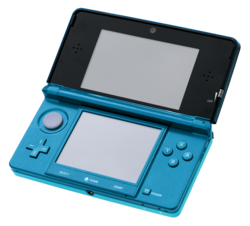
The Nintendo 3DS uses parallax barrier autostereoscopy to display a 3D image.

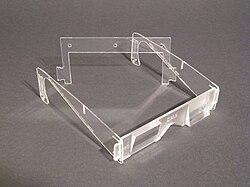
KMQ stereo prismatic viewer with openKMQ plastics extensions

その他の特殊な手法

  • オートステレオグラム単一の画像の中にパターンを組み込み、脳に奥行きを錯覚させる手法。
  • ウィグル・ステレオスコピー:左右の画像を高速に切り替えて表示し、擬似的な立体感を出すアニメーション形式。
  • HMD(ヘッドマウントディスプレイ):各目に独立した映像を提示し、没入感の高い体験を提供する。
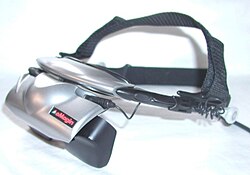
An HMD with a separate video source displayed in front of each eye to achieve a stereoscopic effect

A stereogram of a trefoil knot, generated by the mpl_stereo[38] extension to the Matplotlib open-source plotting library. The stereoscopic effect allows for seeing the otherwise hidden 3D structure.

ステレオスコピーの応用分野

立体視技術は、娯楽以外にも多くの専門分野で活用されています。

ステレオスコピーの主な活用事例
分野 具体的な用途 得られるメリット
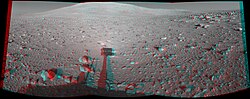
宇宙探査 火星探査機(Pancam)による地表撮影 地形の正確な3次元構造の把握
科学・工学 分子構造の可視化、航空写真の解析 複雑な3Dデータの直感的な理解
芸術 サルバドール・ダリなどの立体作品 錯視を利用した新しい表現手法の開拓
教育 地理や歴史の立体的な風景提示 遠隔地の臨場感ある学習体験

例えば、NASAの火星探査機は、30cmの間隔を空けて配置された2つのカメラで撮影を行い、地球上の研究者が火星の地形を立体的に分析することを可能にしています。
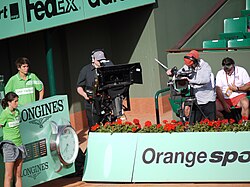
Modern stereo TV camera

This image, captured on 8 June 2004, is an example of a composite anaglyph image generated from the stereo Pancam on Spirit, one of the Mars Exploration Rovers. It can be viewed stereoscopically with proper red/cyan filter glasses. A single 2D version is also available. Courtesy NASA/JPL-Caltech. 3D red cyan glasses are recommended to view this image correctly.

Frequently Asked Questions

3D画像が見えない人がいるのはなぜですか?

立体視には、左右の目の視差を脳で統合する能力が必要です。斜視などの身体的な要因や、脳の視覚処理の特性により、この「融合」がうまく行われない人が一定数存在するためです。

「輻輳・調節矛盾」とは何ですか?

本来、目は「見ている物の距離(輻輳)」と「ピントを合わせる距離(調節)」を同時に調整します。しかし、3Dディスプレイでは、ピントは画面という平面に合っているのに、脳は奥行きのある物体を見ていると判断するため、この2つの動作に矛盾が生じ、眼精疲労や不快感の原因となります。

アナグリフ方式のメリットとデメリットは?

メリットは、安価な色フィルターメガネで視聴でき、印刷物でも実現可能な点です。デメリットは、色が不自然になり、本来の色味が損なわれる点です。

VR(仮想現実)とステレオスコピーはどう違うのですか?

VRはステレオスコピーの原理(左右別々の映像提示)を利用していますが、さらに頭部の動きに合わせて映像をリアルタイムに変化させることで、空間全体に没入する体験を提供します。単なるステレオスコピーでは、頭を動かしても得られる視覚情報は変わりません。

オートステレオグラムを見るコツはありますか?

意識的にピントを合わせようとせず、画像を「通り抜けて後ろを見る」ように視線を外したり、画像を顔に近づけてからゆっくり離したりすることで、脳が自然に画像を融合させやすくなります。

References

  1. "The Kaiser (Emperor) Panorama". 9 June 2012.
  2. Holliman, Nicolas S.; Dodgson, Neil A.; Favalora, Gregg E.; Pockett, Lachlan (June 2011). "Three-Dimensional Displays: A Review and Applications Analysis" (PDF). IEEE Transactions on Broadcasting. 57 (2): 362–371. :10.1109/TBC.2011.2130930.
  3. The Logical Approach to Seeing 3D Pictures. www.vision3d.com by Optometrists Network. Retrieved 2009-08-21
  4. στερεός Tufts.edu, Henry George Liddell, Robert Scott, A Greek-English Lexicon, on Perseus Digital Library
  5. σκοπέω, Henry George Liddell, Robert Scott, A Greek-English Lexicon, on Perseus Digital Library
  6. Exercises in Three Dimensions: About 3D, Tom Lincoln, 2011
  7. , J. M. Rolfe and K. J. Staples, , 1986, page 134
  8. Exercises in Three Dimensions, Tom Lincoln, 2011
  9. Contributions to the Physiology of Vision.—Part the First. On some remarkable, and hitherto unobserved, Phenomena of Binocular Vision. By CHARLES WHEATSTONE, F.R.S., Professor of Experimental Philosophy in King's College, London. Stereoscopy.com
  10. Welling, William. Photography in America, page 23

📸 フォトギャラリー

Stereoscopy with a binocular stereoscope, showing the two lenses a person looks through to see a 3D image formed behind them
Pocket stereoscope with original test image. Used by military to examine stereoscopic pairs of aerial photographs.
View of Boston, c. 1860; an early stereoscopic card for viewing a scene from nature
Kaiserpanorama consists of a multi-station viewing apparatus and sets of stereo slides. Patented by A. Fuhrmann around 1890.[1]
Wheatstone mirror stereoscope
Brewster-type stereoscope, 1870
Saul Davis (act. 1860s–1870s), New Suspension Bridge, Niagara Falls, Canada, c. 1869, albumen print stereograph, Department of Image Collections, National Gallery of Art Library, Washington, DC
"The early bird catches the worm" stereograph published in 1900 by North-Western View Co. of Baraboo, Wisconsin, digitally restored
A stereoscopic pair of images (top) and a combined anaglyph that colors one perspective red and the other cyan. 3D red cyan glasses are recommended to view this image correctly.
Two Passiflora caerulea flowers arranged as a stereo image pair for viewing by the cross-eyed viewing method (see Freeviewing)
Printable cross eye viewer
A View-Master Model E of the 1950s
An HMD with a separate video source displayed in front of each eye to achieve a stereoscopic effect
Functional principle of active shutter 3D systems
A pair of LC shutter glasses used to view XpanD 3D films. The thick frames conceal the electronics and batteries.
RealD circular polarized glasses
Difference in projections of a vertical line in stereoscopy according to distance between left Z L {\displaystyle Z_{L}} and right eye Z R {\displaystyle Z_{R}} - animation for eye distance d {\displaystyle d}
Anaglyph 3D glasses
ChromaDepth glasses with prism-like film
KMQ stereo prismatic viewer with openKMQ plastics extensions
The Nintendo 3DS uses parallax barrier autostereoscopy to display a 3D image.
Modern stereo TV camera
This image, captured on 8 June 2004, is an example of a composite anaglyph image generated from the stereo Pancam on Spirit, one of the Mars Exploration Rovers. It can be viewed stereoscopically with proper red/cyan filter glasses. A single 2D version is also available. Courtesy NASA/JPL-Caltech. 3D red cyan glasses are recommended to view this image correctly.
Cross-eyed stereography of an artistic depiction of the Solar System and nearby galaxies
A stereogram of a trefoil knot, generated by the mpl_stereo[38] extension to the Matplotlib open-source plotting library. The stereoscopic effect allows for seeing the otherwise hidden 3D structure.