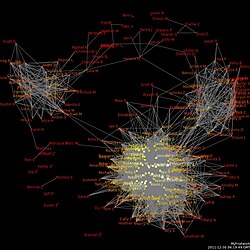
人間社会における個々人のつながりは、単なる偶然の集まりではなく、特定の構造を持った「ネットワーク」として捉えることができます。社会ネットワーク分析(SNA: Social Network Analysis)とは、人々や組織などの主体(アクター)と、それらを結ぶ関係性を数学的・視覚的に分析する手法です。このアプローチにより、目に見えない影響力の源泉や、情報の伝播ルートを明らかにすることが可能になります。
Key Facts
- 構造的視点: 個人の属性よりも、誰とどのように繋がっているかという「関係性の構造」を重視する。
- 密度の概念: 実際に存在する接続数を、理論上の最大接続数で割ることでネットワークの緊密さを測定する。
- SNP(社会ネットワーク潜在力): ユーザーが持つ潜在的な影響力を資産として捉え、マーケティング等に活用する概念。
- 多角的な手法: 定量的なグラフ理論だけでなく、インタビューや行動観察などの定性的データと組み合わせて分析される。
ネットワークを読み解く基礎概念
SNAでは、ネットワークを構成する要素を「頂点(Vertex)」と「辺(Edge)」として定義します。頂点は人間や組織などの個別の主体を指し、辺はそれらの間に存在する友人関係、信頼、あるいは対立といったつながりを表します。
分析において重要な指標の一つが密度(Density)です。これは、あるグループ内で可能なすべての接続数のうち、実際にどれだけの接続が存在するかを示す割合です。例えば、20人のグループでは1人あたり最大19人と繋がれますが、もし1人しか繋がっていなければ密度は約5%となり、非常に疎なネットワークであると言えます。
ネットワークの特性と多様性
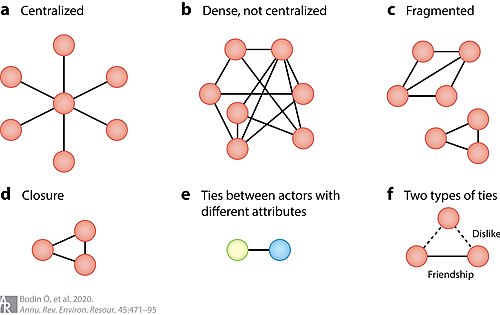
ネットワークの形状は一様ではありません。中心的な人物が情報を独占している構造もあれば、均等に分散している構造もあります。また、共通の知人を介して直接的な繋がりを持つ「閉鎖性(Closure)」や、似た属性を持つ者同士が結びつきやすい「ホモフィリー(Homophily)」といった特性が、コミュニティの形成に大きく影響します。
実社会における応用領域
SNAは社会学の枠を超え、現代のデジタル社会において幅広い分野で活用されています。
マーケティングとビジネス
特に注目されるのが「アルファユーザー」の特定です。2000年代半ばから、モバイル通信やソーシャルマーケティングの分野で、高い影響力を持つユーザーを特定し、戦略的にアプローチする手法が議論されてきました。Nicola Greco氏は、ユーザーが生成するこの潜在的な力を「SNP(Social Networking Potential)」と呼び、企業が保有すべき新たな資産であると提唱しています。
教育と学習支援
学校教育やコンピュータ支援協調学習(CSCL)の現場では、生徒間の相互作用を可視化することで、学習効率の向上や孤立した生徒の早期発見に役立てられています。ここでは、ログファイルによる自動データ収集と、アンケートやインタビューなどのエスノグラフィー的手法を併用することが一般的です。
セキュリティと政治分析
テロ組織の構造解明や、選挙におけるナラティブ(語り)の分析にも応用されています。大量のテキストデータからキーワード間の繋がりを抽出することで、社会的な議論の潮流や権力構造を可視化することが可能です。
![Narrative network of US Elections 2012[80]](/images/8a/33/8a3312fccc2770c01068446b0a326a1fafbbc85133e44c7e011cdcc845b73cac.png)
分析手法のまとめ
SNAを効果的に運用するためには、単一の手法に頼らず、目的に応じた複数のアプローチを組み合わせることが推奨されます。
| 手法 | 分析内容 | 得られる知見 |
|---|---|---|
| 定量分析(グラフ理論) | 中心性、密度、クラスター化 | 影響力のある人物やグループの特定 |
| 定性分析(エスノグラフィー) | インタビュー、参与観察 | 関係性の質的な意味や背景の理解 |
| コンテンツ分析 | コミュニケーション内容の解析 | やり取りされる情報の種類と文脈 |
| 多次元尺度構成法(MDS) | アクター間の類似性のチャート化 | 属性や傾向に基づく近接性の可視化 |
Frequently Asked Questions
社会ネットワーク分析で「中心性」とは何を意味しますか?
中心性とは、ネットワーク内でのある個人の「重要度」や「影響力」を示す指標です。接続数が多いこと(次数中心性)や、異なるグループを繋ぐ橋渡し役であること(媒介中心性)など、定義によって異なる視点から重要性を測定します。
SNAを導入することでどのようなメリットがありますか?
個人の属性データだけでは見えない「構造的な力」を可視化できる点です。誰が情報のボトルネックになっているか、あるいはどのルートで情報が拡散しやすいかといった、集団としてのダイナミクスを客観的に把握できます。
分析に利用されるソフトウェアにはどのようなものがありますか?
目的により異なりますが、QUESTやSAMSAのような専門ツールから、NodeXLのようなソーシャルメディア分析向けツール、あるいはRやPythonを用いた計算ネットワーク分析まで、多様なツールが存在します。
「ホモフィリー」とは具体的にどのような現象ですか?
「類は友を呼ぶ」という言葉通り、年齢、教育水準、信念、ジェンダーなどの属性が似ている個体同士が、互いに結びつきやすくなる傾向を指します。これはネットワークの分断やエコーチェンバー現象の原因となることがあります。
References
- Antonio Zinilli (2025). Elements of Network Science: Theory, Methods and Applications in Stata, R and Python. Statistics and Computing. Springer, Cham. :10.1007/978-3-031-84712-7. .
- Otte, Evelien; Rousseau, Ronald (December 2002). "Social network analysis: a powerful strategy, also for the information sciences". Journal of Information Science. 28 (6): 441–453. :10.1177/016555150202800601. 17454166.
- Goodier, Sarah (January 26, 2018). "Evaluating the Network: A Workflow for Tracking Twitter Interactions Using Social Networking Analysis". Journal of Interactive Media in Education. 2018 (1): 2. :10.5334/jime.449. 1365-893X.
- Grandjean, Martin (December 31, 2016). "A social network analysis of Twitter: Mapping the digital humanities community". Cogent Arts & Humanities. 3 (1). :10.1080/23311983.2016.1171458. 114999767.
- Hagen, Loni; Keller, Thomas; Neely, Stephen; DePaula, Nic; Robert-Cooperman, Claudia (October 2018). "Crisis Communications in the Age of Social Media: A Network Analysis of Zika-Related Tweets". Social Science Computer Review. 36 (5): 523–541. :10.1177/0894439317721985. 7323548177. 67362137.
- Nasrinpour, Hamid Reza; ; McLeod, Robert D. (November 22, 2016). "An Agent-Based Model of Message Propagation in the Facebook Electronic Social Network". :1611.07454 [cs.SI].
- Grandjean, Martin (2022). "The Paris/Geneva Divide. A Network Analysis of the Archives of the International Committee on Intellectual Cooperation of the League of Nations" (PDF). Culture as Soft Power: Bridging Cultural Relations, Intellectual Cooperation, and Cultural Diplomacy: 65–98. :10.1515/9783110744552-004.
- Brennecke, Julia; Rank, Olaf (May 2017). "The firm's knowledge network and the transfer of advice among corporate inventors—A multilevel network study". Research Policy. 46 (4): 768–783. :10.1016/j.respol.2017.02.002.
- Harris, Jenine K.; Luke, Douglas A.; Zuckerman, Rachael B.; Shelton, Sarah C. (June 2009). "Forty Years of Secondhand Smoke Research". American Journal of Preventive Medicine. 36 (6): 538–548. :10.1016/j.amepre.2009.01.039. 6980180781. 19372026.
- Brennecke, Julia (June 2020). "Dissonant Ties in Intraorganizational Networks: Why Individuals Seek Problem-Solving Assistance from Difficult Colleagues". Academy of Management Journal. 63 (3): 743–778. :10.5465/amj.2017.0399. 8163488129. 164852065.
📸 フォトギャラリー