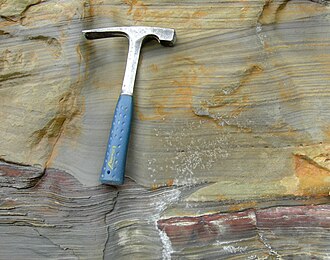
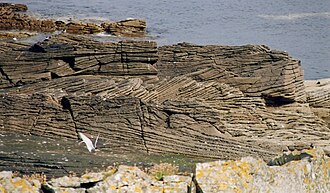
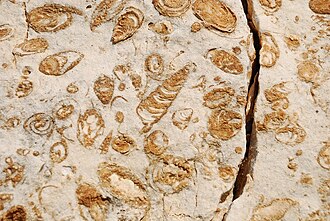
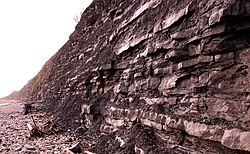
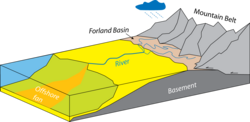
Middle Triassic marginal marine sequence of siltstones (reddish layers at the cliff base) and limestones (brown rocks above), Virgin Formation, southwestern Utah, U.S.
← ホームへ戻る
堆積岩砕屑岩化学的堆積岩生物化学的堆積岩地質学

堆積岩の分類と形成プロセス:地球の歴史を刻む地層の科学

🗓 2026年8月10日

地球の地殻において、堆積岩は体積比ではわずか8%程度に過ぎませんが、陸地表面の約73%を覆う広大な分布を見せています。火成岩や変成岩の上に薄い層(ベニヤ)のように重なるこれらの岩石は、層理と呼ばれる層状構造を形成し、地球や火星などの惑星における過去の環境を物語る貴重な記録となっています。

Key Facts

  • 堆積岩は、砕屑物、化学的沈殿、生物活動の3つの主要な起源に分類される。
  • 粒子の大きさ(礫、砂、泥)によって岩石の名称と性質が決定される。
  • 鉄酸化物の状態により、岩石の色は赤、茶、緑、灰色へと変化する。
  • 堆積環境(浅海、深海、陸上など)が堆積物の種類と構造を左右する。
  • 天文学的なサイクル(ミランコビッチ・サイクル)が長期的な地層の周期性に影響を与える。

堆積岩の主要な分類

1. 砕屑性堆積岩(Clastic Sedimentary Rocks)

既存の岩石が風化・浸食され、その破片(砕屑物)が堆積し、セメント物質によって固まった岩石です。主に石英、長石、雲母などの鉱物粒子で構成されます。

分類の基準となるのは粒子のサイズです。2mm以上の大きな粒子からなる礫岩角礫岩、0.06〜2mmの粒子が主体の砂岩、そしてそれ以下の微細な粒子からなる泥岩に分けられます。

Diagram showing well-sorted (left) and poorly sorted (right) grains
Diagram showing the rounding and sphericity of grains

砂岩はさらに、構成粒子の種類(石英質、長石質、岩片質)や、粒子間の泥質マトリックスの量(少ないものはアレナイト、多いものはワッケ)によって詳細に区別されます。
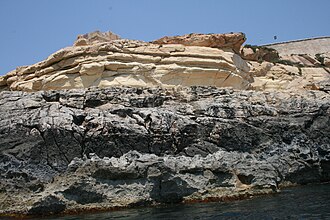
Sedimentary rock with sandstone in Malta, southern Europe
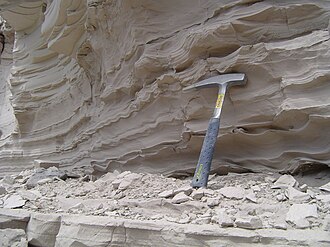
Cross-bedding and scour in a fine sandstone; the Logan Formation (Mississippian) of Jackson County, Ohio
Cross-bedding in a fluviatile sandstone, Middle Old Red Sandstone (Devonian) on Bressay, Shetland Islands

2. 生化学的および化学的堆積岩

生物が海水中の成分を利用して骨格や殻を作ったり、水に溶けていた物質が化学的に沈殿したりすることで形成されます。

  • 炭酸塩岩:方解石やアラゴナイトからなり、石灰岩やドロマイトが代表的です。
  • 蒸発岩:水の蒸発に伴い、岩塩(ハライト)や石膏などが沈殿して形成されます。
  • 有機質岩:炭素含有量が高い岩石で、石炭やオイルシェールなどが含まれます。
  • 珪質岩:シリカを主成分とするチャートやオパールなどが該当します。
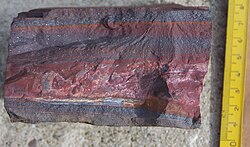
  • 鉄質岩:酸化鉄を豊富に含み、縞状鉄鉱層などが有名です。
Fossils of Nerinea marine gastropods of Late Cretaceous (Cenomanian) age, in limestone in Lebanon
Outcrop of Ordovician oil shale (kukersite), northern Estonia
A piece of a banded iron formation, a type of rock that consists of alternating layers with iron(III) oxide (red) and iron(II) oxide (grey). BIFs were mostly formed during the Precambrian, when the atmosphere was not yet rich in oxygen. Moodies Group, Barberton Greenstone Belt, South Africa
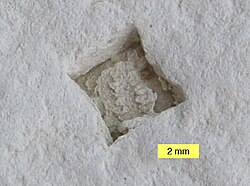
Halite crystal mold in dolomite, Paadla Formation (Silurian), Saaremaa, Estonia

堆積物の特性と構造

色と質感の決定要因

堆積岩の色は主に鉄分によって決まります。酸素が少ない環境では二価鉄(FeO)が優勢となり、灰色や緑色を呈します。一方、酸素が豊富な環境では三価鉄(Fe2O3)となり、赤色や茶色のレッドベッドが形成されます。
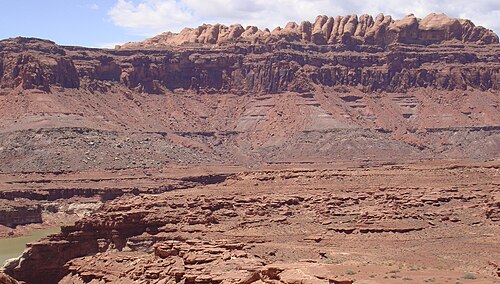
The Permian through Jurassic stratigraphy of the Colorado Plateau area of southeastern Utah that makes up much of the famous prominent rock formations in protected areas such as Capitol Reef National Park and Canyonlands National Park. From top to bottom: Rounded tan domes of the Navajo Sandstone, layered red Kayenta Formation, cliff-forming, vertically jointed, red Wingate Sandstone, slope-forming, purplish Chinle Formation, layered, lighter-red Moenkopi Formation, and white, layered Cutler Formation sandstone. Picture from Glen Canyon National Recreation Area, Utah.

また、粒子の「分級(ソーティング)」という概念があり、粒子サイズが揃っているものを「分級が良い」、バラバラなものを「分級が悪い」と呼びます。これにより、当時の流速や運搬プロセスを推測できます。
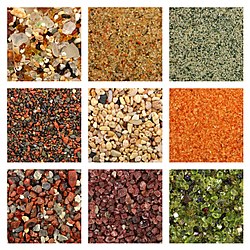
Global collage of sand samples. There is one square centimeter of sand on every sample photo. Sand samples row by row from left to right: 1. Glass sand from Kauai, Hawaii 2. Dune sand from the Gobi Desert 3. Quartz sand with green glauconite from Estonia 4. Volcanic sand with reddish weathered basalt from Maui, Hawaii 5. Biogenic coral sand from Molokai, Hawaii 6. Coral pink sand dunes from Utah 7. Volcanic glass sand from California 8. Garnet sand from Emerald Creek, Idaho 9. Olivine sand from Papakolea, Hawaii.

堆積構造と化石

堆積過程で形成される斜交層理リップルマーク(波紋)は、古流向(当時の水の流れの方向)を示す重要な指標となります。また、生物の遺骸や痕跡である化石は、特に硬い組織(骨や殻)が保存されやすく、生前の活動を示す生痕化石(巣穴や足跡)も重要な情報源となります。
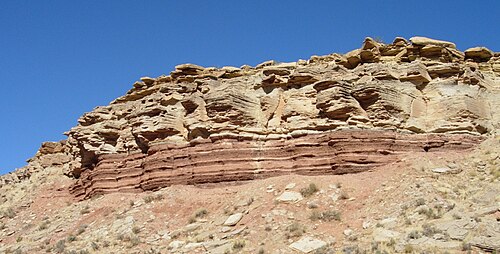
Middle Triassic marginal marine sequence of siltstones (reddish layers at the cliff base) and limestones (brown rocks above), Virgin Formation, southwestern Utah, U.S.
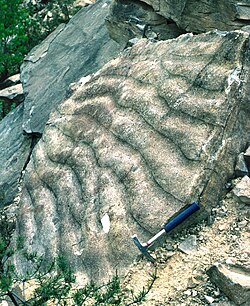
Ripple marks formed by a current in a sandstone that was later tilted (Haßberge, Bavaria)
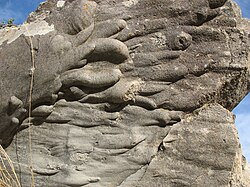
Flute casts, a type of sole marking on the base of a vertical layer of Triassic sandstone in Spain
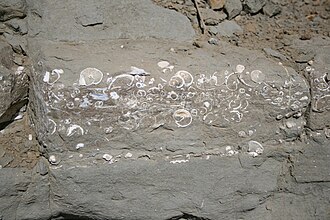
Fossil-rich layers in a sedimentary rock, Año Nuevo State Reserve, California
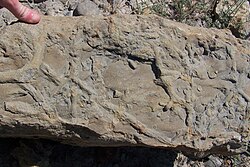
Burrows in a turbidite, made by crustaceans, San Vincente Formation (early Eocene) of the Ainsa Basin, southern foreland of the Pyrenees

堆積環境と地質学的プロセス

海洋環境による違い

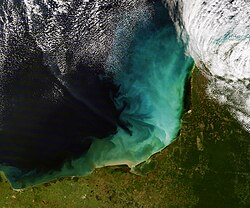
浅海域では波や潮流のエネルギーが高いため、粗い粒子が堆積しやすく、温暖な海域ではサンゴ礁などの炭酸塩岩が発達します。対して深海域では、微細な粘土や微生物の殻が静かに降り積もります。ただし、大陸斜面などで発生する濁流(タービディティ・カレント)は、大量の砂や泥を一気に深海へ運び、タービダイトと呼ばれる特有の地層を作ります。
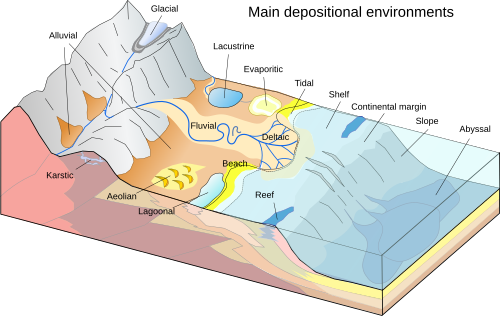
Common types of depositional environments
The swirls of tan, green, blue, and white are sediment in the shallow waters of the Gulf of Mexico off the Yucatan Peninsula. The blue-green cloud in this image roughly matches the extent of the shallow continental shelf west of the peninsula. This is a perfect example of a shallow marine depositional environment.

堆積盆地と地球規模のサイクル

地殻が引き伸ばされ沈降することで形成される堆積盆地(サグ盆地など)では、堆積物の重みでさらに沈降が進み、10kmを超える厚い地層が蓄積することがあります。また、地球の公転軌道や自転軸の変化(ミランコビッチ・サイクル)による気候変動が、海面変動や堆積物の供給量に影響を与え、地層に周期的なパターンをもたらします。
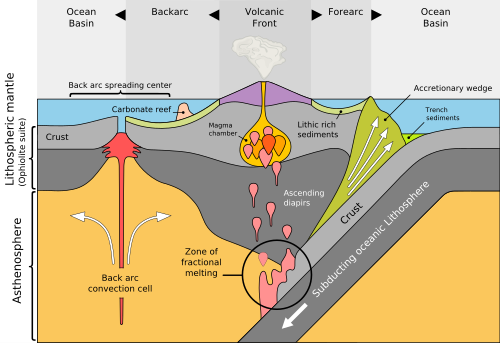
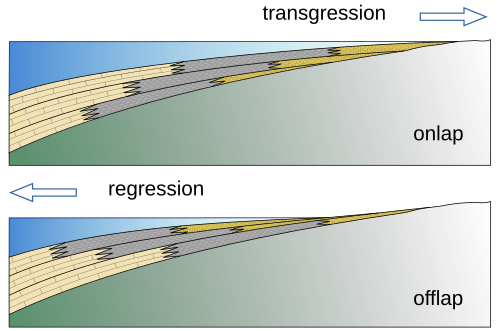
Plate tectonics diagram showing convergence of an oceanic plate and a continental plate. Note the back-arc basin, forearc basin, and oceanic basin.
Shifting sedimentary facies in the case of transgression (above) and regression of the sea (below)

岩石への変化(続成作用)

緩い堆積物が岩石へと変化する過程を続成作用(ダイアジェネシス)と呼びます。圧密による脱水や、粒子間の空隙を埋める鉱物の再結晶化(圧力溶解など)を経て、硬い岩石へと変化します。
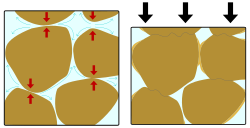
Pressure solution at work in a clastic rock. While material dissolves at places where grains are in contact, that material may recrystallize from the solution and act as cement in open pore spaces. As a result, there is a net flow of material from areas under high stress to those under low stress, producing a sedimentary rock that is harder and more compact. Loose sand can become sandstone in this way.

堆積岩のまとめ

堆積岩の主要分類と特徴
分類 主な形成要因 代表的な岩石 特徴的な成分/構造
砕屑岩 物理的風化・運搬 砂岩、礫岩、泥岩 石英、長石、層理
炭酸塩岩 生物活動・化学沈殿 石灰岩、ドロマイト CaCO3、サンゴ化石
化学的堆積岩 蒸発・化学沈殿 岩塩、石膏、チャート 塩化物、硫酸塩、シリカ
有機質岩 有機物の蓄積 石炭、オイルシェール 炭素、植物遺骸

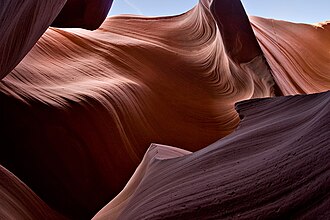
自然界における堆積岩の例として、オーストラリアのウルルやアメリカのアンテロープキャニオンなどが挙げられます。これらは砂岩が長い年月をかけて風化・浸食された結果、現在の壮大な姿となりました。
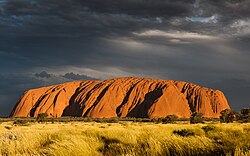
Uluru (Ayers Rock) is a large sandstone formation in Northern Territory, Australia.
Lower Antelope Canyon was carved out of the surrounding sandstone by both mechanical weathering and chemical weathering. Wind, sand, and water from flash flooding are the primary weathering agents.
Claystone deposited in Glacial Lake Missoula, Montana, United States. Note the very fine and flat bedding, common for deposits coming from lake beds further away from the source of sediment.
Chert concretions in chalk, Middle Lefkara Formation (upper Paleocene to middle Eocene), Cyprus
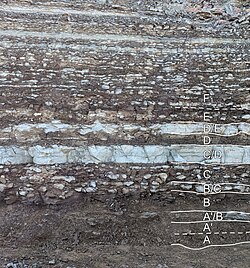
Cyclic alternation of competent and less competent beds in the Blue Lias at Lyme Regis, southern England
Distribution of detritus

Frequently Asked Questions

堆積岩と他の岩石との最大の違いは何ですか?

最大の特徴は、物質が層状に積み重なって形成される「層理」を持つことです。火成岩(マグマの冷却)や変成岩(熱と圧力による変化)とは異なり、地表付近の物理的・化学的プロセスによって形成されます。

なぜ堆積岩の色は赤いことが多いのでしょうか?

主に鉄分が含まれているためです。特に乾燥した陸上環境では、鉄が酸素と反応して酸化鉄(ヘマタイトなど)となり、岩石を赤色やオレンジ色に染めます。これをレッドベッドと呼びます。

化石はどのような堆積岩に見つかりやすいですか?

一般的に、泥岩のような粒子の細かい岩石や、石灰岩などの生物起源の岩石に見つかりやすい傾向があります。粗い礫岩などでは、堆積時の物理的な衝撃で生物遺骸が破壊されやすいためです。

「分級」とは具体的に何を指しますか?

堆積物を構成する粒子のサイズがどの程度揃っているかを示す指標です。風によって運ばれた砂などはサイズが揃いやすく「分級が良い」とされ、氷河によって運ばれた堆積物はサイズがバラバラで「分級が悪い」とされます。

タービダイトとはどのような現象でできるのですか?

海底の斜面などで堆積物が不安定になり、砂や泥が水と共に一気に流れ落ちる「濁流(タービディティ・カレント)」によって形成されます。これにより、深海であっても一時的に粗い粒子が堆積します。

References

  1. Wilkinson et al. 2008.
  2. Buchner & Grapes 2011, p. 24.
  3. Jump up to: 1 2 3 4 "geology, geography, and meteorology". The Ultimate Visual Family Dictionary. New Delhi: DK Pub. 2012. pp. 276–280.
  4. Jump up to: 1 2 Dott 1964.
  5. Jump up to: 1 2 Blatt, Middleton & Murray 1980, p. 782.
  6. Jump up to: 1 2 3 Prothero & Schwab 2004.
  7. Jump up to: 1 2 Boggs 2006.
  8. Stow 2005.
  9. "Chemical sedimentary rock definition in Geology Dictionary". Geology Dictionary. Archived from the original on 2023-09-24. Retrieved 2025-07-26.
  10. Jump up to: 1 2 3 4 5 Boggs 2006, pp. 147–154.

📸 フォトギャラリー

Middle Triassic marginal marine sequence of siltstones (reddish layers at the cliff base) and limestones (brown rocks above), Virgin Formation, southwestern Utah, U.S.
Uluru (Ayers Rock) is a large sandstone formation in Northern Territory, Australia.
Claystone deposited in Glacial Lake Missoula, Montana, United States. Note the very fine and flat bedding, common for deposits coming from lake beds further away from the source of sediment.
Sedimentary rock with sandstone in Malta, southern Europe
Lower Antelope Canyon was carved out of the surrounding sandstone by both mechanical weathering and chemical weathering. Wind, sand, and water from flash flooding are the primary weathering agents.
Outcrop of Ordovician oil shale (kukersite), northern Estonia
Fossils of Nerinea marine gastropods of Late Cretaceous (Cenomanian) age, in limestone in Lebanon
Cross-bedding and scour in a fine sandstone; the Logan Formation (Mississippian) of Jackson County, Ohio
Pressure solution at work in a clastic rock. While material dissolves at places where grains are in contact, that material may recrystallize from the solution and act as cement in open pore spaces. As a result, there is a net flow of material from areas under high stress to those under low stress, producing a sedimentary rock that is harder and more compact. Loose sand can become sandstone in this way.
A piece of a banded iron formation, a type of rock that consists of alternating layers with iron(III) oxide (red) and iron(II) oxide (grey). BIFs were mostly formed during the Precambrian, when the atmosphere was not yet rich in oxygen. Moodies Group, Barberton Greenstone Belt, South Africa
Diagram showing well-sorted (left) and poorly sorted (right) grains
Diagram showing the rounding and sphericity of grains
Global collage of sand samples. There is one square centimeter of sand on every sample photo. Sand samples row by row from left to right: 1. Glass sand from Kauai, Hawaii 2. Dune sand from the Gobi Desert 3. Quartz sand with green glauconite from Estonia 4. Volcanic sand with reddish weathered basalt from Maui, Hawaii 5. Biogenic coral sand from Molokai, Hawaii 6. Coral pink sand dunes from Utah 7. Volcanic glass sand from California 8. Garnet sand from Emerald Creek, Idaho 9. Olivine sand from Papakolea, Hawaii.
Fossil-rich layers in a sedimentary rock, Año Nuevo State Reserve, California
Burrows in a turbidite, made by crustaceans, San Vincente Formation (early Eocene) of the Ainsa Basin, southern foreland of the Pyrenees
Cross-bedding in a fluviatile sandstone, Middle Old Red Sandstone (Devonian) on Bressay, Shetland Islands
Flute casts, a type of sole marking on the base of a vertical layer of Triassic sandstone in Spain
Ripple marks formed by a current in a sandstone that was later tilted (Haßberge, Bavaria)
Halite crystal mold in dolomite, Paadla Formation (Silurian), Saaremaa, Estonia
Chert concretions in chalk, Middle Lefkara Formation (upper Paleocene to middle Eocene), Cyprus
Common types of depositional environments
The swirls of tan, green, blue, and white are sediment in the shallow waters of the Gulf of Mexico off the Yucatan Peninsula. The blue-green cloud in this image roughly matches the extent of the shallow continental shelf west of the peninsula. This is a perfect example of a shallow marine depositional environment.
Shifting sedimentary facies in the case of transgression (above) and regression of the sea (below)
Plate tectonics diagram showing convergence of an oceanic plate and a continental plate. Note the back-arc basin, forearc basin, and oceanic basin.
Cyclic alternation of competent and less competent beds in the Blue Lias at Lyme Regis, southern England
The Permian through Jurassic stratigraphy of the Colorado Plateau area of southeastern Utah that makes up much of the famous prominent rock formations in protected areas such as Capitol Reef National Park and Canyonlands National Park. From top to bottom: Rounded tan domes of the Navajo Sandstone, layered red Kayenta Formation, cliff-forming, vertically jointed, red Wingate Sandstone, slope-forming, purplish Chinle Formation, layered, lighter-red Moenkopi Formation, and white, layered Cutler Formation sandstone. Picture from Glen Canyon National Recreation Area, Utah.
Distribution of detritus