紀元前24世紀から23世紀にかけて、メソポタミアの地に突如として現れた強力な統治者がいました。彼こそがサルゴン大王(サルゴン・オブ・アッカド)です。彼はそれまで独立した都市国家として競い合っていたシュメールの諸都市を次々と征服し、多民族を統括する中央集権的な国家体制を構築しました。これは、記録に残る人類史上初の「帝国」の誕生であったと言われています。
サルゴンの統治は、単なる領土拡大に留まらず、その後の古代近東におけるセム系帝国の先駆けとなりました。彼の築いた基盤は、後のアッシリアやバビロニアといった強大な国家へと繋がる歴史的な転換点となったのです。
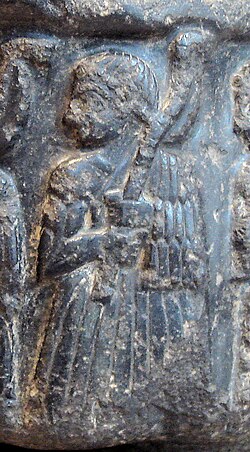
!["King Sargon" (𒊬𒊒𒄀 𒈗 Šar-ru-gi lugal) on the Victory stele of Sargon[8][9][10]](/images/67/60/6760edd02455805407dcd063e47989164e3e6096694d5bf9f9fe02b2ee950f13.jpg)
Key Facts
- 世界初の帝国建設:シュメールの都市国家を統合し、広大な多民族領域を統治した。
- 統治期間:紀元前2334年頃から紀元前2279年頃まで(中年代説)。
- 出身の謎:伝説では庭師の息子であり、キシュ王の献酒係から王位を奪ったとされる。
- 血統の継承:息子リムシュ、マニシュトゥシュ、そして孫のナラム・シンへと権力を継承させた。
- 文化への影響:娘のエンヘドゥアンナは高位の女祭司となり、後世に影響を与える宗教詩を執筆した。
サルゴンの出自と権力への道
サルゴンの人生の始まりについては、歴史的事実と後世の伝説が混在しています。後世に作られた「サルゴン伝説」によれば、彼は司祭の不義の子として生まれ、籠に入れられて川に流された後、庭師に拾われて育てられたとされています。その後、キシュの王ウル・ザババに仕える献酒係(王の飲み物を管理する役職)となりましたが、最終的にウルクの王ルガルザゲシを破り、自らの都市アッカドを拠点に王位に就いたと伝えられています。
![Story of the birth of Sargon, early 2nd millennium BC[12]](/images/89/a9/89a967a468f7eb3a680d3d1086c4f5813b0979d150c358ed781a8696481d5f2b.jpg)
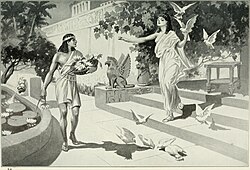
また、別の伝承では、愛の女神イシュタルに寵愛を受けたことで、庭師から王への道を切り拓いたというエピソードも残されています。
帝国の拡大と統治範囲
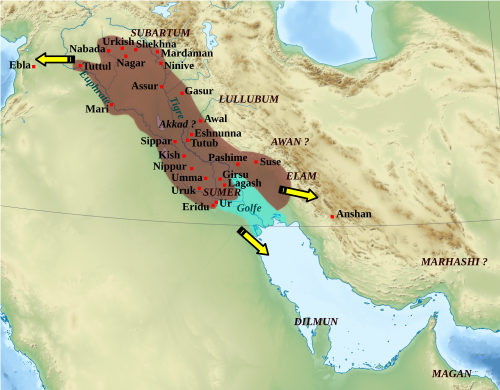
サルゴンは軍事的な才能を発揮し、メソポタミア全域を支配下に置いただけでなく、その勢力圏を地中海沿岸まで拡大させました。また、東方のエラムやマルハシといった地域をも征服し、広大な版図を築き上げました。彼の征服活動は、単なる略奪ではなく、戦略的な都市の破壊と再編を伴うものでした。
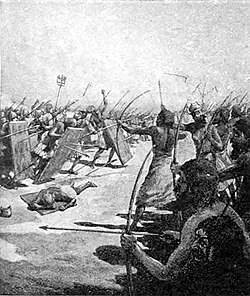
当時の戦いでは、弓矢を用いた戦術が効果的に活用されており、シュメールの伝統的な戦い方とは異なるアプローチで勝利を収めたと考えられています。
サルゴンの軍事的な勝利は、多くの戦勝碑(ステレ)に刻まれており、捕虜となった敵対勢力の姿などが詳細に描写されています。
![Prisoners escorted by a soldier, on a victory stele of Sargon of Akkad, c. 2300 BC.[42] Probably from the end of Sargon's reign.[43] The hairstyle of the prisoners (curly hair on top and short hair on the sides) is characteristic of Sumerians, as also seen on the Standard of Ur.[44] Louvre Museum.](/images/1c/d3/1cd3be6b4e286a610a8bb73970f7992e343e3f61d5657c8ce10d1d3790cf120f.jpg)
![Prisoner in a cage, probably King Lugalzagesi of Uruk, being hit on the head with a mace by Sargon of Akkad.[62] Akkadian Empire victory stele circa 2300 BC. Louvre Museum.](/images/ab/28/ab28530b8aa19252d7a1b82f46aa84ea2cb9ff997c0196610f1963689032a69d.jpg)
アッカド帝国の社会と家族
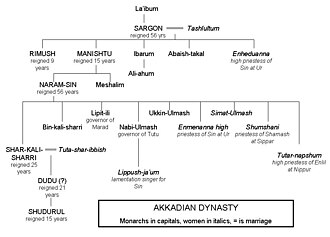
サルゴンは強力な血縁ネットワークを用いて帝国を維持しました。彼の妻タシュルルトゥムとの間には、後の王となるリムシュやマニシュトゥシュ、そして歴史的に重要な役割を果たした娘エンヘドゥアンナがいました。エンヘドゥアンナはウル市の月神の女祭司に任命され、彼女が執筆した賛歌は数世紀にわたって読み継がれることになります。
また、サルゴンの側近には有能な書記や官僚が配置され、行政組織の整備が進められました。これにより、広大な領土の効率的な管理が可能となりました。
![Cylinder seal of the scribe Kalki, showing Prince Ubil-Eshtar, probable brother of Sargon, with dignitaries (an archer in front, two dignitaries, and the scribe holding a tablet following the Prince). Inscription: "Ūbil-Aštar, brother of the king: KAL-KI the scribe, (is) his servant."[10][55]](/images/98/97/98974601f177a612e30638d900e5ad3abf49f64110a4136e0c2060da697e8de7.jpg)
歴史的評価と遺産
サルゴンの統治期間については、シュメール王名表などの資料によって40年から56年まで幅がありますが、彼が築いた「サルゴン王朝」は、グティア人の侵攻までメソポタミアの主導権を握り続けました。特に孫のナラム・シン時代には、帝国は最大版図に達しました。
![The so-called "Mask of Sargon", after restoration, in 1936. The braided hair and royal bun, reminiscent of the headgears of Meskalamdug, Eannatum or Ishqi-Mari, are particularly visible. On stylistic grounds, this is now thought to represent Sargon's grandson Naram-Sin, rather than Sargon himself.[92]](/images/a5/d5/a5d52b4d3259e94ee12407fc9ae47eb893e9cef48bea80f473b8b60dfc520d7d.jpg)
サルゴンの名は、聖書の人物ニムロドのモデルになったという説もあり、古代世界における「偉大な征服者」の象徴として記憶されています。
| 項目 | 詳細 |
|---|---|
| 在位期間 | 紀元前2334年頃 〜 紀元前2279年頃 |
| 主な称号 | アッカド王、シュメール王、宇宙の王 |
| 主要な征服地 | シュメール諸都市、エラム、地中海沿岸地域 |
| 後継者 | リムシュ(息子) → マニシュトゥシュ(息子) → ナラム・シン(孫) |
| 歴史的意義 | 人類史上初の多民族帝国を創設した |
Frequently Asked Questions
サルゴン大王は本当に世界で最初の帝国を築いたのですか?
一般的に、多民族にわたる広大な領域を中央政府が統治したという意味で、サルゴンが史上初の帝国創設者であると見なされています。ただし、彼以前のルガルザゲシなどの統治者にも同様の傾向があったという議論もあります。
サルゴンの出自について、なぜ伝説と事実が混在しているのですか?
サルゴンに関する同時代の一次史料が非常に少ないためです。後世に作られた「サルゴン伝説」は、英雄的な王のイメージを強調するために、川に流された赤ん坊や低身分からの成り上がりといった物語的な要素が付け加えられたと考えられています。
娘のエンヘドゥアンナはどのような人物でしたか?
彼女はサルゴンによってウル市の月神の女祭司に任命されました。宗教的な指導者であると同時に、優れた詩人でもあり、彼女が書いた「イナンナ賛歌」などの作品は、古代メソポタミアの文学において極めて重要な位置を占めています。
アッカド帝国はどのようにして滅びたのですか?
サルゴンが築いた王朝は、数代にわたる後継者たちによって維持されましたが、最終的にはザグロス山脈から侵入してきたグティア人による征服によって崩壊しました。
「サルゴンのマスク」は本人のものですか?
かつてはサルゴン大王の肖像と考えられていましたが、現在の美術史的・様式的な分析では、彼の孫であるナラム・シンを表したものだという説が有力視されています。
References
- "King of Akkad, Kish, and Sumer" is a translation of the Akkadian phrase "LUGAL Ag-ga-dèKI, LUGAL KIŠ, LUGAL KALAM.MAKI". See Peter Panitschek, Lugal – šarru – βασιλεύς: Formen der Monarchie im Alten Vorderasien von der Uruk-Zeik bis zum Hellenismus (2008), p. 138. KALAM.MA, meaning "land, country", is the old Sumerian name of the cultivated part of Mesopotamia (Sumer). See Esther Flückiger-Hawker, Urnamma of Ur in Sumerian Literary Tradition (1999), p. 138.
- The date of the reign of Sargon is highly uncertain, depending entirely on the (conflicting) regnal years given in the various copies of the , specifically the uncertain duration of the . The added regnal years of the Sargonic and the Gutian dynasties have to be subtracted from the accession of of the , which is variously dated to either 2047 BC () or 2112 BC (). An accession date of Sargon of 2334 BC assumes: (1) a Sargonic dynasty of 180 years (fall of Akkad 2154 BC), (2) a interregnum of 42 years and (3) the Middle Chronology accession year of Ur-Nammu (2112 BC).
- also "Sargon the Elder", and in older literature Shargani-shar-ali and Shargina-Sharrukin. (ed. , trans. M. L. McClure), History of Egypt, Chaldea, Syria, Babylonia and Assyria (1906?), p. 90.
- . A History of the Ancient Near East: ca. 3000–323 BC. Blackwell, 2006, . p. 63.
- Bauer, Susan Wise (2007). The History of the Ancient World: From the Earliest Accounts to the Fall of Rome. W. W. Norton & Company. – via Google Książki.
- Westenholz, Joan Goodnick (January 1984). "Review of The Sargon Legend: A Study of the Akkadian Text and the Tale of the Hero Who Was Exposed at Birth. By Brian Lewis". Journal of Near Eastern Studies. 43 (1): 73–79. :10.1086/373065. 545065.
- (1907). Chronicles concerning early Babylonian kings. London, Luzac and co. pp. 87–96.
- "RIME 2.01.01.10, ex. 01 (P215559)". CDLI. Retrieved 27 July 2026.
- Foster, Benjamin R. (2015). The Age of Agade: Inventing Empire in Ancient Mesopotamia. Routledge. p. 3. .
- Nigro, Lorenzo (1998). "The Two Steles of Sargon: Iconology and Visual Propaganda at the Beginning of Royal Akkadian Relief". Iraq. 60. British Institute for the Study of Iraq: 93–94. :10.2307/4200454. :11573/109737. 4200454. 193050892.
📸 フォトギャラリー