サンスクリット語は、インド亜大陸を中心に発展し、かつては東南アジアの一部にも広がった、極めて重要なインド・ヨーロッパ語族の言語です。単なる伝達手段ではなく、「洗練された」という意味を持つその名の通り、宗教的、哲学的、そして学術的な権威を持つ言語として、数千年にわたり南アジアの文化的な基盤を形作ってきました。
主要な事実(Key Facts)
- 言語系統:インド・ヨーロッパ語族のインド・イラン語派、インド・アーリヤ語群に属する。
- 歴史的区分:紀元前1500年〜600年頃の「ヴェーダ・サンスクリット」と、紀元前700年〜紀元1350年頃の「古典サンスクリット」に大別される。
- 地理的影響:インド亜大陸のみならず、中央アジアや東南アジア(インドネシア、ベトナムなど)まで広範な影響を及ぼした。
- 現代の地位:インドのヒマーチャル・プラデーシュ州やウッタラーカンド州で追加の公用語となっており、南アフリカでは認定少数言語である。
- 文字体系:古代のブラーフミー文字から始まり、現代ではデーヴァナーガリー文字が広く用いられている。
言語の起源と進化のプロセス
サンスクリット語のルーツは、印欧祖語(PIE)にまで遡ります。例えば、「母」を意味する単語は、英語のmother、ラテン語のmater、ギリシャ語のmētērと共通の語源(*méh₂tēr)を持っており、言語学的な親縁関係を明確に示しています。
初期の形態であるヴェーダ・サンスクリットは、主に聖典『ヴェーダ』の記述に用いられました。この時代のテキストは、詠唱のための高低アクセント(ピッチアクセント)が重要視されていました。
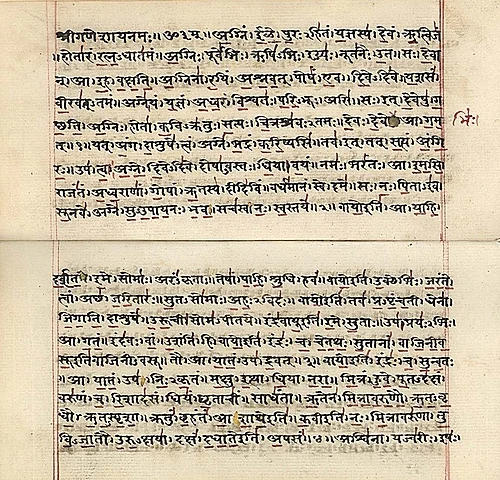
その後、言語はより体系化され、パーニニなどの文法学者による厳格なルールが整備されたことで、「古典サンスクリット」へと移行しました。これにより、口語的なプラクリット(俗語)とは一線を画す、高度に洗練された文学・学術言語としての地位を確立しました。
文字の変遷と記録
サンスクリット語を記録するための文字は時代とともに進化しました。最古の部類に入るブラーフミー文字は、多くのインド系文字の祖先となりました。その後、グプタ文字などを経て、現在の標準的な表記法であるデーヴァナーガリー文字へと発展しました。
![An early use of the word for "Sanskrit" in Late Brahmi script (also called Gupta script): Saṃ-skṛ-taMandsaur stone inscription of Yashodharman-Vishnuvardhana, 532 CE.[109]](/images/ce/be/cebe1b2b2bbef7e7f242e4d77befd4f88f176972c17fa8a6ae02ca30ae44aca6.jpg)
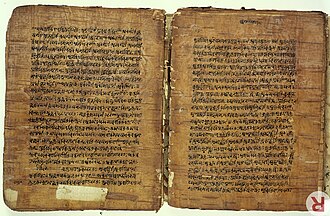
これらの文字は、石碑やヤシの葉、白樺の皮などの多様な媒体に刻まれ、アジア全域に伝播しました。中央アジアのキジル石窟で発見されたスピッツァー写本は、現存する最古のサンスクリット哲学写本の一つとして知られています。
![The Spitzer Manuscript is dated to about the 2nd century CE (above: folio 383 fragment). Discovered in the Kizil Caves, near the northern branch of the Central Asian Silk Route in northwest China,[144] it is the oldest Sanskrit philosophical manuscript known so far.[145][146]](/images/5d/d8/5dd8dae310a5c7846a1fa054ad4f11a176dad9d9fa9127d8d00df01df3d24c7e.jpg)
地理的な広がりと文化的影響
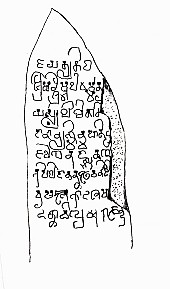
サンスクリット語の影響力はインドの国境を遥かに超えていました。特に東南アジアでは、ヒンドゥー教や仏教の伝播とともに導入され、王権の正当化や宗教儀礼に利用されました。インドネシアのジャワ島やボルネオ島で見つかった碑文は、この地域におけるサンスクリット語の早期の存在を証明しています。
![A 5th-century Sanskrit inscription discovered in Java, Indonesia—one of the earliest in southeast Asia after the Mulavarman inscription discovered in Kutai, eastern Borneo. The Ciaruteun inscription combines two writing scripts and compares the king to the Hindu god Vishnu. It provides a terminus ad quem to the presence of Hinduism in the Indonesian islands. The oldest southeast Asian Sanskrit inscription—called the Vo Canh inscription—so far discovered is near Nha Trang, Vietnam, and it is dated to the late 4th century to early 5th century CE.[155][156]](/images/5b/2e/5b2e036cdce73201ccaf99f6c3de710489014dca818fdb7e7de44a33503c3574.jpg)
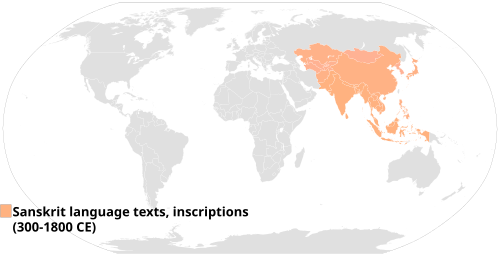
中央アジアから東南アジアに至るまで、300年から1800年頃にかけての多様な写本や碑文が発見されており、この言語が広大な地域で知的共通語として機能していたことが分かります。
また、サンスクリット語は単独で存在していたわけではなく、地域の言語と相互に影響し合いました。特に南インドのドラヴィダ諸語からは、「phálam(熟した果実)」や「múkham(口)」といった語彙が取り入れられたと考えられています。

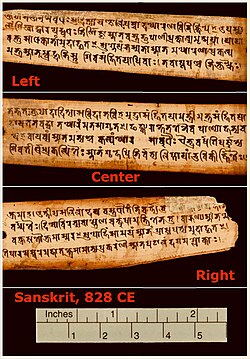
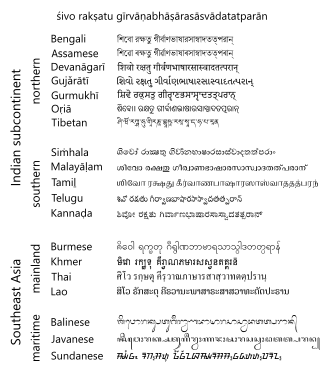
ネパールで発見されたグプタ文字の写本や、南インドのタミル・グランタ文字による碑文など、地域ごとに異なる文字で記録されたサンスクリット語の遺産が数多く残されています。
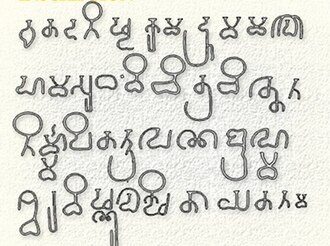
さらに、ラージャスターン州のハティバダ碑文のような初期の宗教的献納文から、現代の教育機関での活用に至るまで、その生命力は現代にまで続いています。
![One of the oldest Hindu Sanskrit[z] inscriptions, the broken pieces of this early-1st-century BCE Hathibada Brahmi Inscription were discovered in Rajasthan. It is a dedication to deities Vāsudeva-Samkarshana (Krishna-Balarama) and mentions a stone temple.[133][263]](/images/47/91/47917d192406c159829c0cd88513b110b285fc9a188ddf92adfa0b02d0098e29.jpg)
東南アジアにおける最古の例の一つであるインドネシアのユーパ碑文(4世紀)は、当時の王権とブラーフマン(司祭)の密接な関係を物語っています。
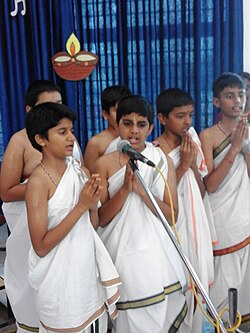
今日でも、インドのマイソールなどでサンスクリット語の祭典が開かれるなど、文化的なアイデンティティの象徴として大切にされています。
学術的・文学的体系
サンスクリット語による文学は、その範囲の広さと深さで知られています。宗教的な聖典から、政治学、医学、天文学、そして官能的な文学まで、あらゆる知的領域をカバーしています。
| カテゴリー | 内容・目的 | 代表的な作品・分野 |
|---|---|---|
| 宗教・哲学 | 精神的真理の探究と儀礼 | ヴェーダ、ウパニシャッド、バガヴァッド・ギーター |
| 叙事詩 | 神話と英雄の物語 | ラーマーヤナ、マハーバーラタ |
| 法・政治 | 社会秩序と統治の指針 | マヌ法典、アルタシャーストラ |
| 科学・医学 | 身体的健康と自然科学 | アーユルヴェーダ、スシュルタ・サンヒター |
| 芸術・学問 | 演劇、音楽、詩学の理論 | ナーティヤ・シャーストラ、カーヴィヤ(宮廷詩) |
音韻論と文法構造
サンスクリット語の音韻体系は非常に精緻です。母音と子音の区別が明確であり、特に子音においては、調音部位(喉、口蓋、歯茎、歯、唇)と、有声・無声、有気・無気の区別が厳格に定義されています。
文法面では、名詞の格変化や動詞の複雑な活用が特徴です。また、「サンディ(連声)」と呼ばれる音韻変化のルールがあり、単語が結合する際に音が変化することで、流暢な詠唱や詩的なリズムを生み出しています。
Frequently Asked Questions
サンスクリット語は現在も話されていますか?
日常会話としての第一言語(母語)として話す人は極めて稀ですが、宗教儀礼、学術研究、瞑想、そして一部の伝統的なコミュニティにおいて、書き言葉および典礼言語として活発に使用されています。
ヴェーダ・サンスクリットと古典サンスクリットの違いは何ですか?
ヴェーダ・サンスクリットはより古く、文法的に柔軟で、特有のピッチアクセントを持っていました。一方、古典サンスクリットはパーニニの文法書によって標準化され、より厳格な構造を持つ文学的な言語となりました。
サンスクリット語は他の言語にどのような影響を与えましたか?
ヒンディー語、ベンガル語、マラーティー語などの現代インド・アーリヤ諸語の直接的な祖先の一つであり、語彙や構造に多大な影響を与えました。また、仏教の伝播を通じて東アジアの言語や文化にも影響を及ぼしました。
サンスクリット語を学ぶメリットは何ですか?
インドの膨大な古典文学や哲学書を原典で読むことができるほか、印欧語族の言語構造を深く理解するための言語学的基盤を得ることができます。
References
- "In conclusion, there are strong systemic and paleographic indications that the Brahmi script derived from a Semitic prototype, which, mainly on historical grounds, is most likely to have been Aramaic. However, the details of this problem remain to be worked out, and in any case, it is unlikely that a complete letter-by-letter derivation will ever be possible; for Brahmi may have been more of an adaptation and remodeling, rather than a direct derivation, of the presumptive Semitic prototype, perhaps under the influence of a preexisting Indian tradition of phonetic analysis. However, the Semitic hypothesis is not so strong as to rule out the remote possibility that further discoveries could drastically change the picture. In particular, a relationship of some kind, probably partial or indirect, with the protohistoric Indus Valley script should not be considered entirely out of the question." , p. 30
- It is one of 22 for which the Constitution mandates development.
- Sanskrit is a "Protected Language" as per the Constitution, Chapter 1(6)(5)(b)(¡¡)
- "dhārayan·brāhmaṇam rupam·ilvalaḥ saṃskṛtam vadan..." – The Rāmāyaṇa 3.10.54 – said to be the first known use of saṃskṛta with reference to the language.
- "All these achievements are dwarfed, though, by the Sanskrit linguistic tradition culminating in the famous grammar by Pāṇini, known as the Aṣṭhādhyāyī. The elegance and comprehensiveness of its architecture have yet to be surpassed by any grammar of any language, and its ingenious methods of stratifying out use and mention, language and metalanguage, and theorem and metatheorem predate key discoveries in western philosophy by millennia."
- "The Sanskrit grammatical tradition is also the ultimate source of the notion of zero, which, once adopted in the Arabic system of numerals, allowed us to transcend the cumbersome notations of Roman arithmetic."
- 6,106 Indians in 1981, 49,736 in 1991, 14,135 in 2001, and 24,821 in 2011, have reported Sanskrit to be their mother tongue.
- William Jones (1786), quoted by Thomas Burrow in The Sanskrit Language: "The Sanscrit language, whatever be its antiquity, is of a wonderful structure; more perfect than the Greek, more copious than the Latin, and more exquisitely refined than either, yet bearing to both of them a stronger affinity, both in the roots of verbs and the forms of grammar, than could possibly have been produced by accident; so strong indeed, that no philologer could examine them all three, without believing them to have sprung from some common source, which perhaps no longer exists. There is a similar reason, though not quite so forcible, for supposing that both the Gothick and the Celtick [], though blended with a very different idiom, had the same origin with the Sanscrit; and the Old Persian might be added to the same family."
- The Mitanni treaty is generally dated to the 16th century BCE, but this date and its significance remains much debated.
- An example of the shared phrasal equations is the dyáuṣ pitṛ́ in Vedic Sanskrit, from Proto-Indo-European *dyḗws ph₂tḗr, meaning "sky father". The Mycenaean Greek equivalent is Zeus Pater, which evolved to Jupiter in Latin. Equivalent "paternal Heaven" phrasal equation is found in many Indo-European languages.
📸 フォトギャラリー