私たちが日常的に使用している「曜日」という概念は、単なる便宜上の区分ではなく、古代の天文学と占星術が深く結びついた結果として生まれました。その根幹にあるのが惑星時間(Planetary Hours)という体系です。これは、1日の中の各時間や、1週間の中の各日に特定の天体が支配権を持つという考え方に基づいています。
このシステムは、ヘレニズム占星術において発展し、さらに古いバビロニア占星術にルーツを持つと考えられています。英語をはじめとする多くの言語で曜日の名前に惑星の名前が使われているのは、この古代の知恵が現代まで受け継がれているためです。
Key Facts
- カルデア順:天体の移動速度(遅い順)に基づいた配列で、土星から月までを定義する。
- 曜日の決定:その日の「第1時間目」を支配する惑星によって、その日の名前が決まる。
- 時間の循環:7つの惑星が順番に1時間ずつ支配権を交代し、24時間の中でサイクルを繰り返す。
- 歴史的連続性:1世紀のポンペイの落書きなどの証拠から、現代まで曜日の連続性が維持されている可能性が示唆されている。
惑星の配列と「カルデア順」の仕組み
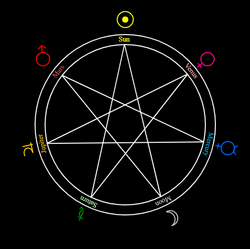
惑星時間を理解するためには、まずカルデア順(Chaldean order)という概念を知る必要があります。これは、夜空に見える天体の移動速度が遅い順(=地球からの距離が遠い順)に並べたものです。配列は以下の通りとなります。
- 土星 (Saturn)
- 木星 (Jupiter)
- 火星 (Mars)
- 太陽 (Sun)
- 金星 (Venus)
- 水星 (Mercury)
- 月 (Moon)
この7つの天体が、1時間ごとに順番に支配権を交代していきます。1日は24時間あるため、7つの惑星のサイクルを3回繰り返すと21時間となり、残りの3時間は次のサイクルの最初の3つの惑星が担当します。この計算の結果、翌日の第1時間目を支配する惑星は、前日の第1時間目の惑星から3つ後の惑星になります。
例えば、第1時間が「太陽」で始まる日は日曜日となり、その翌日の第1時間はカルデア順で3つ後の「月」になるため、月曜日となります。これが、私たちが知る曜日の並び順の正体です。
歴史的背景と計算方法の変遷
ヴェッティウス・ヴァレンスやディオ・カッシウスといった古代の著述家は、天体が順番に時間を支配するという原理を説明しています。また、古代ギリシャやバビロニアの慣習では、1日の始まりは「日没」からとされていました。これは現代の「日の出」から1日を始める考え方とは異なります。
興味深いことに、4世紀のアレクサンドリアのキリスト教徒の間では、惑星の名前を直接使わず、1から7までの数字で曜日を管理する体系が使われていました。エチオピアの暦においても、こうした複雑な曜日計算の伝統が現代まで一部残されています。
惑星時間の算出方法
伝統的な惑星時間では、機械的な60分単位の「時計時間」ではなく、太陽の動きに基づいた可変的な時間を採用します。具体的には、日の出から日没までを12等分して「昼の時間」とし、日没から翌日の日の出までを12等分して「夜の時間」とします。そのため、季節や緯度によって1時間の長さが変動します。
占星術的意味と魔術への応用
ルネサンス期になると、惑星時間は単なる時間管理ではなく、特定の目的を達成するための「最適なタイミング」を計るために利用されました。特に16世紀の魔術書『ソロモンの鍵』では、支配惑星に応じて推奨される活動が詳細に記されています。
| 支配惑星 | 推奨される活動・目的 |
|---|---|
| 土星 | 自然死した魂の召喚 |
| 木星 | 名誉の獲得、富の蓄積、友情の構築、健康維持 |
| 火星 | 戦争に関する事柄、軍事的名誉、勇気の獲得、敵の撃破 |
| 太陽 | 世俗的な富、希望、幸運、権力者の寵愛、敵意の解消 |
| 金星 | 愛と親切、喜びのある計画、旅行、友情の形成 |
| 水星 | 雄弁さ、知性、ビジネスの迅速な処理、科学、占い |
| 月 | 外交、航海、伝令、和解、水に関わる事柄、盗品回収 |
Frequently Asked Questions
なぜ曜日の順番は惑星の移動速度順ではないのですか?
曜日の名前は「その日の第1時間目を支配する惑星」に基づいているためです。1日は24時間あり、7つの惑星がサイクルを回すと余りが3時間出ます。このため、翌日の開始惑星はカルデア順で3つ分ずれることになり、結果として現在の曜日の並び順になります。
カルデア順とは具体的にどのような順番ですか?
地球から遠い(または移動速度が遅い)順に、土星 → 木星 → 火星 → 太陽 → 金星 → 水星 → 月 という配列になります。
古代の「1時間」は現代の60分と同じですか?
いいえ、異なります。古代の惑星時間では、日の出から日没までを12等分し、日没から翌日の日の出までを12等分していました。そのため、夏と冬では1時間の長さが変わり、地域によっても異なります。
惑星時間は現代の占星術でも重視されていますか?
ルネサンス期の魔術的な文脈では非常に重視されていましたが、当時の占星術師の中にも、コルネリウス・ゲンマのように惑星時間の重要性を低く見積もっていた人物がいました。現代では主に歴史的・文化的な研究対象や、伝統的な魔術体系の中で参照されています。
曜日の概念はいつから始まったのですか?
正確な起源は特定が難しいですが、ヘレニズム時代(紀元前2世紀頃)に現在の形式に近い体系が確立されたと考えられています。バビロニアの古い伝統がベースとなり、ギリシャで体系化されました。
References
- The term "Chaldean order" is modern, used e.g. in Popular Science, January 1895, p. 335, but there is no evidence this order is actually taken from ; rather, it seems to be a Hellenistic innovation of the 2nd century BC; see Eviatar Zerubavel, The Seven Day Circle: The History and Meaning of the Week, University of Chicago Press, 1989 [1985], p. 14.
- The complete cycle of seven planets occurs three times in the day, occupying 7x3=21 hours. The day’s remaining three hours take the first three planets of the next cycle.
- The day is divided into two parts; the day (time between sunrise and ) and the night (time between sunset and tomorrow's sunrise). Each part of the day is then divided into 12 equal parts, for a total of 24 (unequal) hours. The further the location is from the ; and the closer the date is to the (as opposed to the ); the greater the difference in length between the length of the planetary hours and the clock hours. (1989) [First printed in 1801]. "Book II. Part IV. The Magic and Philosophy of Trithemius of Spanheim". (First Carol Publishing Group ed.). New York: Carol Publishing Group. pp. 139–140. .
- Falk, Michael (19 March 1999). "Astronomical names for the days of the week". Journal of the Royal Astronomical Society of Canada. 93 (1999–06): 122–133. :1999JRASC..93..122F.
- Nerone Caesare Augusto Cosso Lentuol Cossil fil. Cos. VIII idus Febr(u)arius dies solis, luna XIIIIX nun(dinae) Cumis, V (idus Februarias) nun(dinae) Pompeis. Robert Hannah, "Time in Written Spaces", in: Peter Keegan, Gareth Sears, Ray Laurence (eds.), Written Space in the Latin West, 200 BC to AD 300, A&C Black, 2013, p. 89.
- The Festal Epistles of S. Athanasius, A Library of Fathers of the Holy Catholic Church, anterior to the division of the East and West, translated by Burgess, Henry, 1854, pp. xv–xxvi
- Neugebauer, Otto (2016) [First published 1979 by Austrian Academy of Sciences], Ethiopic Astronomy and Computus, Red Sea Press, pp. 53–58, 94, 212–219,
- Both of these first days of the year are August 29 in the for the day after the end of Alexandrian and Ethiopian common years and August 30 in those years after leap years having a sixth the day before.
- March 24 = Thoth/Maskaram 208 ≡ Thoth/Maskaram 5 mod 7.
- Giuseppe Bezza, "Representation of the Skies and the Astrological Chart" in: Brendan Dooley (ed.) A Companion to Astrology in the Renaissance, Brill's Companions to the Christian Tradition, 2014, p. 70.
📸 フォトギャラリー