地球を包み込む大気の中には、太陽から降り注ぐ有害な放射線を遮断し、地上の生命を保護するオゾン層という重要な領域が存在します。この「天然のフィルター」がなければ、私たちは強烈な紫外線にさらされ、深刻な健康被害や生態系の崩壊を招いていたでしょう。本記事では、オゾン層がどのように形成され、なぜ重要なのか、そして人類が直面した破壊の危機と回復への道のりについて詳しく解説します。
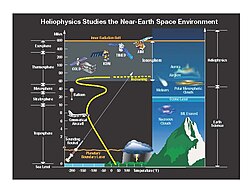
オゾン層は主に高度15kmから35km付近の成層圏(対流圏の上にある大気層)に位置しています。ここには、酸素分子(O2)に酸素原子が一つ加わったオゾン(O3)が高濃度で集まっています。大気全体の平均濃度は約0.3ppmとわずかですが、オゾン層内では8〜15ppmに達し、強力な紫外線吸収帯を形成しています。
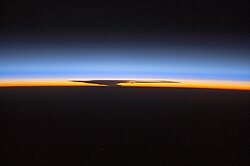
Key Facts
- 役割: 太陽からの有害な中波紫外線(200〜315nm)の97〜99%を吸収する。
- 位置: 地上約15〜35kmの成層圏に集中している。
- 形成: 太陽光による酸素分子の分解と再結合(オゾン・酸素サイクル)で維持される。
- 脅威: CFCs(クロロフルオロカーボン/フロンガス)などの化学物質が破壊を促進する。
- 現状: 国際的な規制(モントリオール議定書)により、回復傾向にある。
オゾン層の科学的メカニズム
オゾンが生成されるプロセス
オゾン層の形成は、約5億年前の地球環境の変化(酸素濃度の増加)に伴い始まりました。1930年にシドニー・チャップマンが解明したこの仕組みは、光化学反応に基づいています。まず、強い紫外線が酸素分子(O2)に衝突して2つの酸素原子に分解します。この単独の酸素原子が別の酸素分子と結合することで、オゾン(O3)が生成されます。
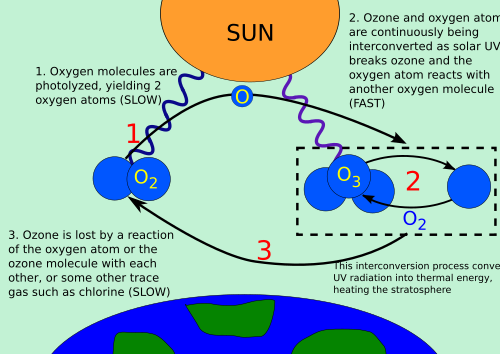
絶え間ない循環:オゾン・酸素サイクル
生成されたオゾンは不安定な性質を持っており、再び紫外線を吸収すると酸素分子と酸素原子に分解されます。この「生成と分解」のサイクルが繰り返されることで、成層圏のオゾン濃度が一定に保たれ、同時に大量の紫外線エネルギーが消費(吸収)される仕組みになっています。
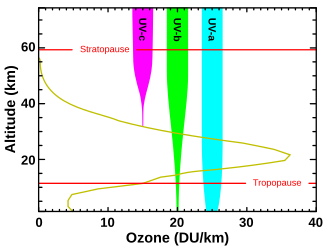
紫外線(UV)の種類とオゾン層の防御能
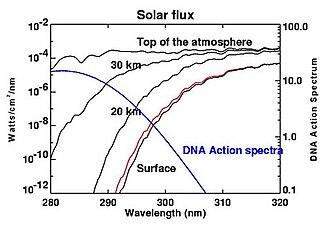
太陽から届く紫外線は、波長の長さによって3つのカテゴリーに分類され、それぞれ人体や環境への影響が異なります。
- UV-C(100〜280nm): 最もエネルギーが強く有害ですが、酸素分子とオゾン層によって完全に遮断されるため、地上には届きません。
- UV-B(280〜315nm): 日焼けや皮膚がん、白内障の原因となる有害な光線です。オゾン層が大部分を吸収しますが、一部が地上に到達します。なお、適量のUV-BはビタミンDの生成に必要です。
- UV-A(315〜400nm): オゾン層をほぼ透過して地上に届きます。DNAへの直接的なダメージは少ないものの、皮膚の老化や長期的な皮膚がんのリスクに関与していると考えられています。
地域的な分布と変動の理由
オゾン層の厚さは均一ではなく、季節や地域によって変動します。興味深いことに、オゾンの多くは日照量の強い熱帯地方で生成されますが、そこから「ブリューワー・ドブソン循環」と呼ばれる成層圏の風の流れによって極地方へと運ばれます。
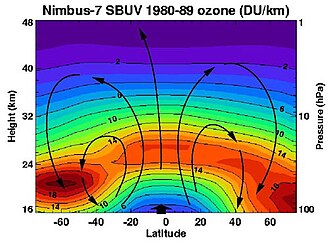
このため、一般的に赤道付近よりも極地方の方がオゾン層が厚くなる傾向があります。特に北半球では、山脈の影響や陸地と海洋の温度差により循環が強く、春先に最も厚くなることが知られています。一方、南極などの極域では、特定の条件下でオゾンが急激に減少する「オゾンホール」と呼ばれる現象が発生します。
人類による破壊と国際的な救済策
フロンガスによる脅威
1980年代、産業利用されていたCFCs(クロロフルオロカーボン)などの化学物質が成層圏に達し、オゾン層を破壊していることが判明しました。これらの物質は非常に安定しているため、分解されずに成層圏まで上昇し、そこで紫外線によって塩素や臭素のラジカルを放出します。たった一つの塩素原子が、連鎖反応によって10万分子以上のオゾンを破壊することが可能です。
モントリオール議定書と回復への道
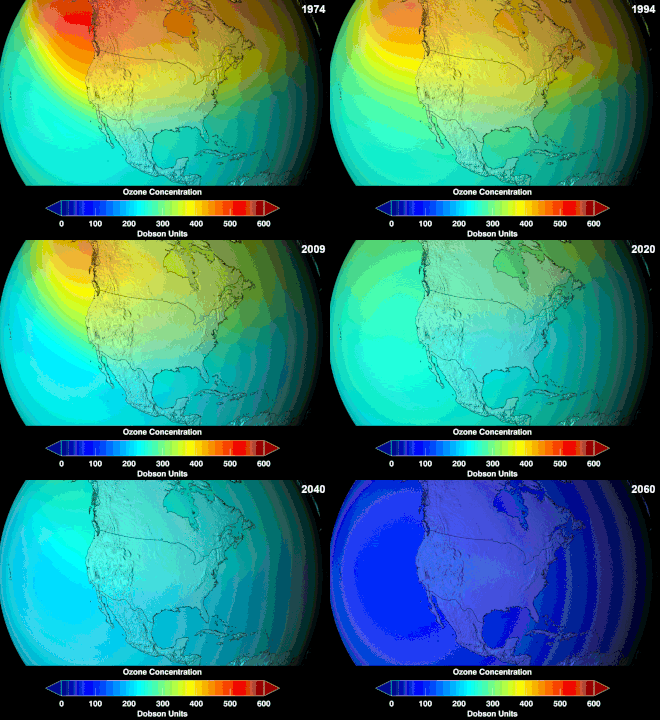
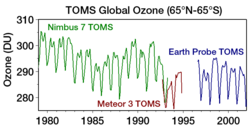
この危機に対し、世界各国は1987年に「モントリオール議定書」を締結し、フロンガスの生産・使用を段階的に禁止しました。その後、HCFCs(代替フロン)を経て、現在はオゾン層を破壊しないHFCsなどの物質への移行が進んでいます。最新の観測データでは、オゾン層の減少速度は鈍化しており、21世紀半ばまでには1980年代の水準に回復すると予測されています。
新たな懸念事項
近年では、地球低軌道上の衛星コンステレーションの増加が新たなリスクとして指摘されています。大気圏に再突入して燃え尽きる衛星から放出される酸化アルミニウムのナノ粒子が、長期的にオゾン層を損なう可能性があるという研究結果が出ています。
オゾン層に関するまとめ
| 項目 | 詳細・数値 | 影響・備考 |
|---|---|---|
| 主な位置 | 高度15〜35km(成層圏) | 地球を包む保護層として機能 |
| オゾン濃度 | 8〜15 ppm(ピーク時) | 大気全体の平均(0.3ppm)より遥かに高い |
| UV-C遮断率 | ほぼ100% | 極めて有害な短波長を完全にブロック |
| UV-B遮断率 | 約97〜99% | 日焼けや皮膚がんのリスクを軽減 |
| 主な破壊原因 | CFCs(フロンガス)等 | 塩素・臭素ラジカルによる連鎖分解 |
Frequently Asked Questions
「良いオゾン」と「悪いオゾン」の違いは何ですか?
成層圏にあるオゾンは、有害な紫外線を遮断するため「良いオゾン」と呼ばれます。一方で、地表付近(対流圏)で発生するオゾンは、光化学スモッグの原因となり、呼吸器系に悪影響を及ぼすため「悪いオゾン」として規制の対象となっています。
オゾンホールは完全に消滅したのでしょうか?
完全に消滅したわけではありませんが、国際的な規制の効果により、回復の兆しが見えています。特に南極上空のオゾン層は徐々に厚さを取り戻しており、21世紀半ば頃に完全な回復を迎えると期待されています。
オゾン層がなくなると、具体的にどのようなことが起こりますか?
UV-Bなどの有害な紫外線が大量に地上に降り注ぐため、人間では皮膚がんや白内障の急増、免疫系の抑制が起こります。また、植物の成長阻害や海洋プランクトンの減少など、食物連鎖の底辺から生態系に深刻なダメージを与えます。
金星にもオゾン層があるというのは本当ですか?
はい、本当です。金星の表面から高度約100kmの地点に、薄いオゾン層が存在することが確認されています。
天文学においてオゾン層はどのような影響を与えていますか?
オゾン層が紫外線を吸収してしまうため、地上から紫外線領域の天体観測を行うことは不可能です。そのため、若い高温の星や銀河の起源を研究する天文学者は、オゾン層より高い軌道を回る宇宙望遠鏡(GALEXなど)を使用してデータを収集しています。
References
- ↑ NASA Ozone Watch: Ozone facts
- ↑ "Ozone Basics". NOAA. March 20, 2008. Archived from the original on November 21, 2017. Retrieved January 29, 2007.
- ↑ McElroy, C.T.; Fogal, P.F. (2008). "Ozone: From discovery to protection". Atmosphere-Ocean. 46 (1): 1–13. Bibcode:2008AtO....46....1M. doi:10.3137/ao.460101. S2CID 128994884.
- ↑ "Ozone layer". Archived from the original on May 2, 2021. Retrieved September 23, 2007.
- ↑ An Interview with Lee Thomas, EPA's 6th Administrator. Video, Transcript (see p13). April 19, 2012.
- ↑ SPACE.com staff (October 11, 2011). "Scientists discover Ozone Layer on Venus". SPACE.com. Purch. Retrieved October 3, 2015.
- ↑ Paul M. Sutter (July 20, 2023). "How the Ozone Layer Evolved and Why It's Important". Discover Magazine.
- ↑ "NASA Facts Archive". Archived from the original on April 6, 2013. Retrieved June 9, 2011.
- ↑ Matsumi, Y.; Kawasaki, M. (2003). "Photolysis of Atmospheric Ozone in the Ultraviolet Region" (PDF). Chem. Rev. 103 (12): 4767–4781. doi:10.1021/cr0205255. PMID 14664632. Archived from the original (PDF) on June 17, 2012. Retrieved March 14, 2015.
- ↑ Narayanan, D.L.; Saladi, R.N.; Fox, J.L. (2010). "Review: Ultraviolet radiation and skin cancer". International Journal of Dermatology. 49 (9): 978–986. doi:10.1111/j.1365-4632.2010.04474.x. PMID 20883261. S2CID 22224492.
📸 フォトギャラリー