US annual real GDP from 1910 to 1960, with the years of the Great Depression (1929–1939) highlighted
← ホームへ戻る

ニューディール政策大恐慌から米国の再建へ導いた経済改革

🗓 2026年8月14日

1929年のウォール街大暴落に端を発した世界大恐慌は、米国経済を未曾有の危機に陥れました。失業者が街に溢れ、銀行が次々と破綻する絶望的な状況の中で、1933年に就任したフランクリン・D・ルーズベルト大統領は、政府が積極的に経済に介入する大胆な救済策を打ち出しました。これが、後の米国社会のあり方を根本から変えたニューディール政策です。

この政策は、単なる一時的な救済ではなく、金融システムの再構築、失業対策、そして社会保障の確立という多角的なアプローチによって、国民の信頼回復と経済の安定を目指したものでした。
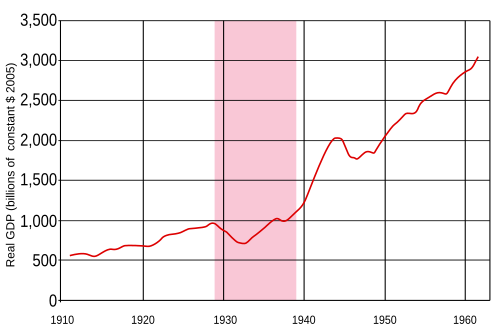
US annual real GDP from 1910 to 1960, with the years of the Great Depression (1929–1939) highlighted

Key Facts

  • 目的: 救済(Relief)、回復(Recovery)、改革(Reform)の3つの柱で大恐慌を克服すること。
  • 主要施策: 公共事業による雇用創出、銀行制度の改革、社会保障制度の導入。
  • 政治的影響: 民主党を中心とする「ニューディール連合」が形成され、政治的権力構造が変化した。
  • 経済的成果: GNPの回復と失業率の低下を実現したが、完全雇用に至ったのは第二次世界大戦への参戦後であった。

経済崩壊とルーズベルトの挑戦

1929年から1933年にかけて、米国は深刻な経済崩壊を経験しました。実質GDPは激減し、多くの市民が貯蓄を失い、生活基盤を破壊されました。特に銀行への取り付け騒ぎ(バンクラン)は、金融システムへの信頼を完全に喪失させました。
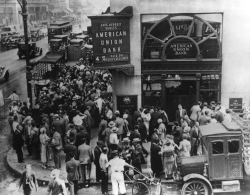
Crowd at New York's American Union Bank during a bank run early in the Great Depression

ルーズベルト大統領は就任直後の「最初の100日間」に、極めて迅速に一連の法案を成立させました。彼はラジオによる「炉辺談話」を通じて国民に直接語りかけ、「我々が恐れるべき唯一のものは、恐怖そのものである」という言葉で、国民の心理的な不安を取り除くことに注力しました。
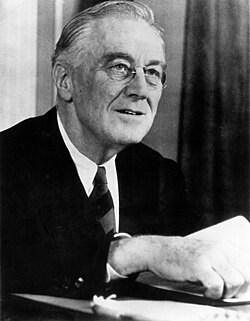
Roosevelt's ebullient public personality, conveyed through his declaration that "the only thing we have to fear is fear itself" and his "fireside chats" on the radio did a great deal to help restore the nation's confidence

第一次ニューディール:緊急救済と金融改革

初期の段階では、止血措置としての緊急対策が優先されました。銀行制度の安定化を図るため、グラス・スティーガル法などの金融改革が行われ、預金保険制度(FDIC)が導入されました。また、農業調整法(AAA)によって農産物の価格安定を図り、農村部の困窮を救おうとしました。
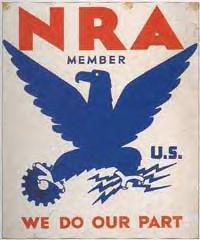
National Recovery Administration Blue Eagle

同時に、テネシー川流域開発公社(TVA)のような大規模な地域開発プロジェクトが始動し、インフラ整備と雇用創出を同時に達成することを目指しました。
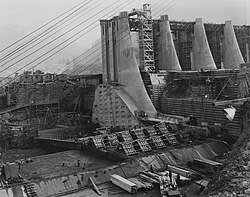
Public Works Administration Project Bonneville Dam

第二次ニューディール:社会保障と労働者の権利

1935年以降の第二次ニューディールでは、より長期的な社会構造の改革に重点が置かれました。その象徴が社会保障法の制定です。これにより、高齢者への年金支給や失業保険などのセーフティネットが構築されました。
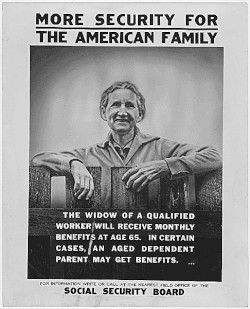
A poster publicizing Social Security benefits

また、全国労働関係法(ワグナー法)の制定により、労働組合の権利が法的に認められ、労働者の地位向上が図られました。これは、産業界と労働者のバランスを適正化し、購買力を底上げする狙いがありました。
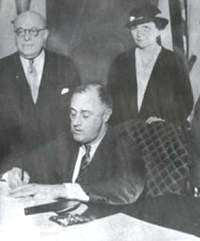
Frances Perkins looks on as Roosevelt signs the National Labor Relations Act.

雇用創出プログラムの展開

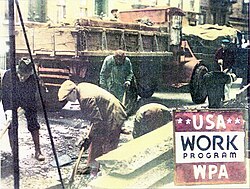
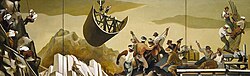
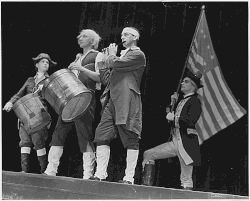
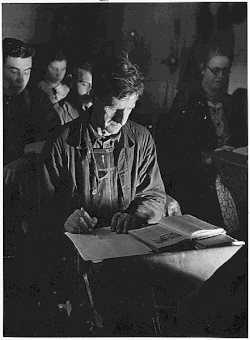
失業対策の目玉となったのが、公共事業促進局(WPA)です。WPAは、道路や橋などの建設だけでなく、芸術家や教師などの専門職をも雇用し、公共壁画の制作や成人教育プログラムを提供しました。
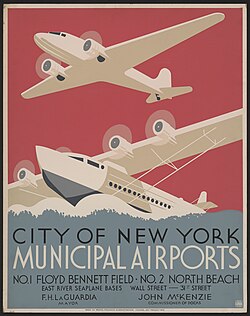
Works Progress Administration (WPA) poster promoting the LaGuardia Airport project (1937)

WPA employed 2 to 3 million unemployed at unskilled labor.

The federal government commissioned a series of public murals from the artists it employed: William Gropper's Construction of a Dam (1939) is characteristic of much of the art of the 1930s, with workers seen in heroic poses, laboring in unison to complete a great public project

"Created Equal": Act I, Scene 3 of Spirit of 1776, Boston (Federal Theatre Project, 1935)

The WPA hired unemployed teachers to provide free adult education programs.

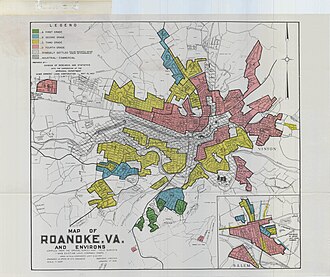
しかし、これらの救済策はすべての人に平等に届いたわけではありません。女性やアフリカ系アメリカ人向けのキャンプ(FERA)などが設置されましたが、住宅分野では「レッドライニング」と呼ばれる差別的な地域区分が行われるなど、構造的な格差が残りました。
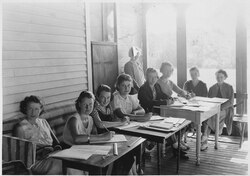
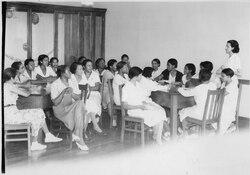
Federal Emergency Relief Administration (FERA) camp for unemployed women in Maine, 1934

FERA camp for unemployed black women, Atlanta, 1934

Roanoke, Virginia HOLC redlining map

経済指標で見るニューディールの軌跡

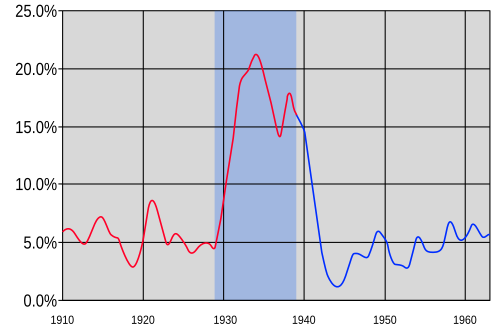
ニューディール政策期間中の経済状況は、緩やかな回復と一時的な後退を繰り返しました。1937年には再び景気後退(リセッション)に見舞われましたが、全体的なトレンドとしては、GDPの回復と失業率の低下傾向にありました。
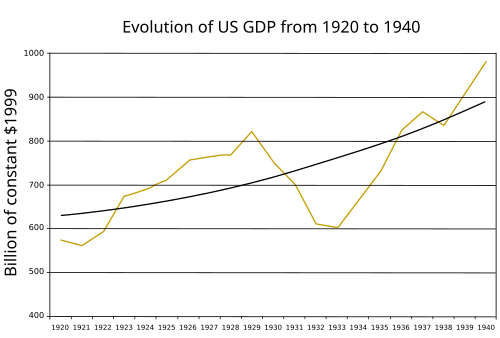
U.S. GDP annual pattern and long-term trend (1920–1940) in billions of constant dollars

Unemployment rate in the United States from 1910 to 1960, with the years of the Great Depression (1929–1939) highlighted (accurate data begins in 1939)

Manufacturing employment in the U.S. from 1920 to 1940[77]

政府支出の増大に伴い、国家債務は増加しましたが、これは後のケインズ経済学的な視点からも、崩壊を止めるために不可欠な措置であったと評価されています。最終的に米国が完全雇用を達成したのは、第二次世界大戦による軍需産業の爆発的な拡大によるものでした。
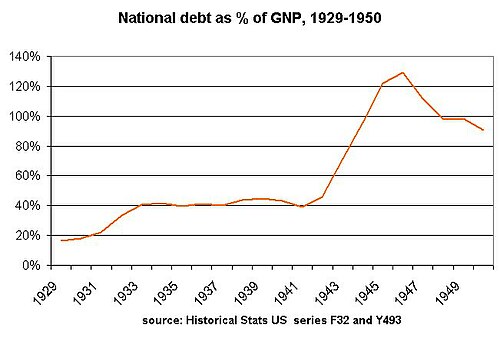
National debt as gross national product climbs from 20% to 40% under President Herbert Hoover; levels off under Roosevelt; and soars during World War II from Historical States US (1976)

また、食糧不足や過剰生産への対策として、余剰農産物の配布プログラムなども実施されました。
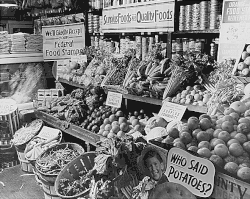
Surplus Commodities Program, 1936

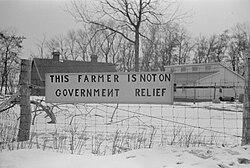
一部の批判者は、これらの介入が逆に回復を遅らせたと主張しましたが、多くの歴史家は、労働・農業・産業のバランスを改善し、現代的なリベラリズムの基礎を築いたと評価しています。
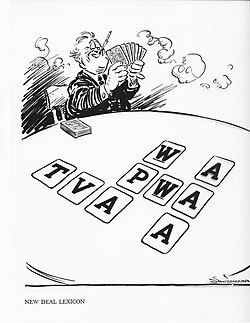
1935 cartoon by Vaughn Shoemaker in which he parodied the New Deal as a card game with alphabetical agencies

Anti-relief protest sign near Davenport, Iowa by Arthur Rothstein, 1940

ภาพประกอบบทความ

区分 主要プログラム・法案 主な目的と効果
金融・通貨 グラス・スティーガル法 / FDIC 銀行破綻の防止と預金者の保護
雇用・インフラ WPA / PWA / TVA 公共事業による失業者への職提供と地域開発
社会福祉 社会保障法 (Social Security Act) 年金・失業保険による生活保障の確立
労働・権利 全国労働関係法 (ワグナー法) 労働組合の合法化と団体交渉権の保障
農業 農業調整法 (AAA) 生産調整による農産物価格の底上げ

Frequently Asked Questions

ニューディール政策の「3つのR」とは何ですか?

Relief(救済)、Recovery(回復)、Reform(改革)の3つです。即効性のある貧困救済、経済活動の正常化への回復、そして将来的に同様の危機を防ぐための制度改革を指します。

WPA(公共事業促進局)ではどのような仕事が行われましたか?

道路や橋などの土木工事だけでなく、公共壁画の制作、演劇の上演、成人教育の提供など、肉体労働から芸術・教育活動まで幅広い分野で雇用を創出しました。

ニューディール政策で失業問題は完全に解決しましたか?

失業率は大幅に低下しましたが、1930年代を通じて完全雇用を達成することはできませんでした。完全に失業問題が解消されたのは、第二次世界大戦による軍需拡大の後です。

この政策が現代の米国に与えた影響は何ですか?

政府が国民の経済的福祉に責任を持つという考え方が定着し、社会保障制度や労働者の権利保護など、現代の社会保障国家の枠組みがこの時期に作られました。

なぜ1937年に再び景気が後退したのですか?

詳細な要因は議論がありますが、政府支出の削減や金融引き締めなどの政策変更が、回復途上の経済にブレーキをかけたと考えられています。

References

  1. Carol Berkin; et al. (2011). Making America, Volume 2: A History of the United States: Since 1865. Cengage Learning. pp. 629–632.  .
  2. Harry S. Truman Versus the Medical Lobby The Genesis of Medicare By Monte M. Poen, 1996, P.23
  3. A.E. Safarian (1970). The Canadian Economy. McGill-Queen's Press - MQUP.  . Archived from the original on February 5, 2023. Retrieved November 18, 2020.
  4. VanGiezen, Robert; Schwenk, Albert E. (January 30, 2003). "Compensation from before World War I through the Great Depression". . Archived from the original on April 30, 2013.
  5. , p. 87.
  6. (1995). "Records of the Federal Deposit Insurance Corporation". archives.gov. Archived from the original on February 5, 2023. Retrieved September 6, 2017.
  7. Mary Beth Norton; et al. (2009). A People and a Nation: A History of the United States. Since 1865. Cengage. p. 656.  .
  8. Robert L. Fuller. Phantom of Fear: The Banking Panic of 1933. 2011. pp. 156–157.
  9. March 4 was a Saturday and banks were not open on weekends. On Monday Roosevelt officially closed all banks. Arthur Schlesinger Jr. The Coming of the New Deal (1959), p. 3; Brands, Traitor to his class (2008) p. 288.
  10. Jonathan Alter, The Defining Moment: FDR's Hundred Days and the Triumph of Hope, esp. ch. 31. (2007); Bureau of the Census, Historical Statistics of the United States (1977) series K220, N301.

📸 フォトギャラリー

US annual real GDP from 1910 to 1960, with the years of the Great Depression (1929–1939) highlighted
Unemployment rate in the United States from 1910 to 1960, with the years of the Great Depression (1929–1939) highlighted (accurate data begins in 1939)
1935 cartoon by Vaughn Shoemaker in which he parodied the New Deal as a card game with alphabetical agencies
Crowd at New York's American Union Bank during a bank run early in the Great Depression
Roosevelt's ebullient public personality, conveyed through his declaration that "the only thing we have to fear is fear itself" and his "fireside chats" on the radio did a great deal to help restore the nation's confidence
ภาพประกอบบทความ
Public Works Administration Project Bonneville Dam
National Recovery Administration Blue Eagle
Manufacturing employment in the U.S. from 1920 to 1940[77]
Roanoke, Virginia HOLC redlining map
A poster publicizing Social Security benefits
Works Progress Administration (WPA) poster promoting the LaGuardia Airport project (1937)
National debt as gross national product climbs from 20% to 40% under President Herbert Hoover; levels off under Roosevelt; and soars during World War II from Historical States US (1976)
Federal Emergency Relief Administration (FERA) camp for unemployed women in Maine, 1934
Anti-relief protest sign near Davenport, Iowa by Arthur Rothstein, 1940
WPA employed 2 to 3 million unemployed at unskilled labor.
U.S. GDP annual pattern and long-term trend (1920–1940) in billions of constant dollars
Frances Perkins looks on as Roosevelt signs the National Labor Relations Act.
The federal government commissioned a series of public murals from the artists it employed: William Gropper's Construction of a Dam (1939) is characteristic of much of the art of the 1930s, with workers seen in heroic poses, laboring in unison to complete a great public project
"Created Equal": Act I, Scene 3 of Spirit of 1776, Boston (Federal Theatre Project, 1935)
The WPA hired unemployed teachers to provide free adult education programs.
FERA camp for unemployed black women, Atlanta, 1934
Surplus Commodities Program, 1936