夜空に広がる静寂な空間には、目に見えないほど微細な粒子が充満しています。これが惑星間塵雲(Interplanetary Dust Cloud)であり、その粒子が太陽光を反射・散乱させることで、夜明け前や日没後に見える「黄道光」として私たちの目に届きます。この宇宙の塵は、単なるゴミではなく、太陽系の形成過程や惑星間の相互作用を解き明かす重要な鍵を握っています。
惑星間塵雲は、惑星系全体の空間に分布する微小な宇宙塵で構成されています。長年にわたり、これらの粒子の起源や性質、そして大きな天体との関係について研究が進められてきました。
![The interplanetary dust cloud illuminated and visible as zodiacal light, with its parts the false dawn,[1] gegenschein and the rest of its band, which is visually crossed by the Milky Way, in this composite image of the night sky above the northern and southern hemisphere](/images/77/14/7714bde43aafb137ced64a4d13312afb09fb19a29922793e99ab66ae2fd89d4f.jpg)
Key Facts
- 正体: 太陽系内の惑星間に漂う微小な宇宙塵の集まり。
- 視覚的特徴: 月のない暗い夜空で、黄道沿いに「黄道光」として観測される。
- 総質量: 約3.5 × 10¹⁷ kg(半径15kmの小惑星に相当)。
- 粒子の寿命: 太陽系の寿命に比べ極めて短く、絶えず供給と消滅を繰り返している。
- 構成: 99.9%が後世代の塵であり、原始的な塵はほぼ消失している。
宇宙塵の起源とライフサイクル
惑星間塵雲を構成する粒子(IDP)は、どこからやってくるのでしょうか。主な供給源としては、小惑星同士の衝突、彗星の活動、エッジワース・カイパーベルトでの衝突、そして太陽系外から流入する星間物質が挙げられます。かつては彗星や小惑星が主因と考えられていましたが、近年の研究では火星で発生する大規模な砂嵐が塵の供給に寄与している可能性も指摘されています。
しかし、これらの粒子が太陽系に留まり続けることはできません。放射圧による外方への排出や、ポインティング・ロバートソン効果(太陽光による放射圧のドラッグで粒子が徐々に太陽へ引き寄せられる現象)、太陽風の影響、昇華、粒子同士の衝突、そして惑星の重力的な影響などにより、短期間で消滅または排除されます。
特に質量が1.4 × 10⁻¹³ g未満の非常に軽い粒子は「ベータ・メテオロイド」と呼ばれ、放射圧によって太陽系外へと押し出されます。そのため、1,000万年以上経過した恒星の周囲に塵が存在する場合、それは原始的なディスクの残りではなく、比較的最近に大きな天体から放出された「後世代」の塵であると考えられます。
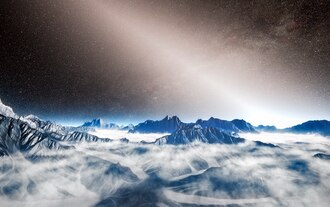
複雑な構造と分布
惑星間塵雲は均一な霧のような分布ではなく、非常に複雑な構造を持っています。背景となる密度に加え、以下のような特有の形態が確認されています。
- ダストトレイル(塵の航跡): 短周期彗星が起源とされる、少なくとも8つの筋状の構造。
- ダストバンド(塵の帯): 主小惑星帯の小惑星族(テミス族、コロニス族、エオス族など)に由来する帯状の構造。
- 共鳴リング: 惑星の重力共鳴によって形成される環状の構造。地球を含む各惑星が独自の「航跡」を伴う共鳴リングを持つと考えられています。
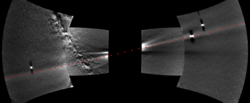
また、水星や金星の軌道上にも塵のリングが存在することが判明しています。特に金星の軌道上のリングは、未発見の小惑星や、太陽系形成時の原始惑星系円盤の残骸などが原因であると推測されています。
![An image of a protoplanetary disk, comparable to images of simulations of the Solar System's interplanetary dust cloud, which has been suggested to be imaged from beyond it in the Outer Solar System.[12]](/images/ad/d2/add24b45556e30c6a96babcc97d31ef4d08ee7d51f355744f5c61e45649ef4fc.jpg)
地球への到達と科学的分析
宇宙を漂う塵の一部は地球の大気圏に突入します。1951年にフレッド・ホイップルが提唱した通り、直径100マイクロメートル未満の微小隕石(マイクロメテオライト)は、大気上層で溶けることなく減速し、地表まで到達することがあります。
1970年代以降、気球やU-2偵察機を用いた成層圏での採取ミッションにより、これらの粒子が詳細に分析されました。その結果、一部の粒子は揮発性の低い構成要素と彗星の氷が凝集したナノ多孔質構造を持っており、希ガス分析や太陽フレアのトラック観測によって、その起源が地球外であることが証明されました。
現在では、テキサス州のジョンソン宇宙センターなどでこれらの粒子のキュレーションが行われており、太陽系外からの物質を含む貴重なサンプルとして研究に利用されています。
惑星間塵雲の概要まとめ
| 項目 | 詳細内容 |
|---|---|
| 主な構成成分 | 宇宙塵(微小粒子) |
| 代表的な粒子サイズ | 10~100 μm(地球軌道付近の赤外線放射粒子) |
| 主な供給源 | 小惑星・彗星の衝突、火星の砂嵐、星間物質 |
| 主な消失メカニズム | 放射圧、ポインティング・ロバートソン効果、昇華 |
| 観測手法 | 黄道光の観測、宇宙機による検出器(Pioneer, New Horizons等)、成層圏採取 |
Frequently Asked Questions
黄道光とは具体的に何が見えているのですか?
太陽系内の惑星間に漂う微小な塵の集まり(惑星間塵雲)が、太陽光を反射または散乱させることで光の帯として見えています。月がない暗い夜空で、黄道沿いに現れるのが特徴です。
なぜ原始的な塵は残っていないのですか?
放射圧やポインティング・ロバートソン効果などの物理的プロセスにより、塵の寿命は太陽系の年齢に比べて極めて短いためです。形成時の塵はとうの昔に排除され、現在は天体の衝突などで新しく供給された「後世代」の塵がほとんどを占めています。
火星の砂嵐が宇宙の塵になるというのは本当ですか?
はい、近年の研究で火星の砂嵐が黄道光の源となる塵の供給源である可能性が示唆されています。ただし、火星の重力をどのようにして脱出したのかというメカニズムについては、まだ完全には解明されていません。
宇宙塵をどのようにして採取しているのですか?
主に2つの方法があります。一つは、成層圏で気球や航空機を用いて大気中に漂う微小隕石を回収する方法。もう一つは、パイオニアやニューホライズンズのような宇宙探査機に搭載されたダストカウンターを用いて、直接衝突を検知する方法です。
惑星間塵雲は天体観測の邪魔になりますか?
はい。太陽系の惑星間塵雲は、太陽系外から届く「銀河外背景光」を遮るため、内太陽系からの観測を制限する要因となっています。
References
- "False Dawn". www.eso.org. Retrieved 14 February 2017.
- "What scientists found after sifting the dust in the solar system - bri". . NASA. 12 March 2019. Archived from the original on 26 May 2020. Retrieved 12 March 2019.
- , 1996
- Backman, D., 1997
- Morrison, D.A.; Clanton, U.S. (1979). "Properties of microcraters and cosmic dust of less than 1000 Å dimensions". Proceedings of Lunar and Planetary Science Conference 10th, Houston, Tex., March 19–23, 1979. 2. New York: Pergamon Press Inc.: 1649–1663. :1979LPSC...10.1649M. Retrieved 3 February 2022.
- Grün, E.; Zook, H.A.; Fechtig, H.; Giese, R.H. (May 1985). "Collisional balance of the meteoritic complex". Icarus. 62 (2): 244–272. :1985Icar...62..244G. :10.1016/0019-1035(85)90121-6. Retrieved 23 January 2022.
- Pavlov, Alexander A.; Pavlov, Anatoli K.; (1999). "Irradiated interplanetary dust particles as a possible solution for the deuterium/hydrogen paradox of Earth's oceans". Journal of Geophysical Research: Planets. 104 (E12): 30725–28. :1999JGR...10430725P. :10.1029/1999JE001120. 11543198.
- Hannter; et al. (1976). "Pioneer 10 observations of zodiacal light brightness near the ecliptic - Changes with heliocentric distance".
- Horányi, M.; Hoxie, V.; James, D.; Poppe, A.; Bryant, C.; Grogan, B.; Lamprecht, B.; Mack, J.; Bagenal, F.; S. Batiste; Bunch, N.; Chantanowich, T.; Christensen, F.; Colgan, M.; Dunn; Drake, G.; Fernandez, A.; Finley, T.; Holland, G.; Jenkins, A.; Krauss, C.; Krauss, E.; Krauss, O.; Lankton, M.; Mitchell, C.; Neeland, M.; Resse, T.; Rash, K.; Tate, G.; Vaudrin, C.; Westfall, J. (2008). "The Student Dust Counter on the New Horizons Mission" (PDF). Space Science Reviews. 140 (1–4): 387–402. :2008SSRv..140..387H. :10.1007/s11214-007-9250-y. 17522966. Retrieved 17 September 2022.
- Shekhtman, Svetlana (8 March 2021). "Serendipitous Juno Detections Shatter Ideas About Zodiacal Light". NASA. Retrieved 8 May 2022.
While there is good evidence now that Mars, the dustiest planet we know of, is the source of the zodiacal light, Jørgensen and his colleagues cannot yet explain how the dust could have escaped the grip of Martian gravity.
📸 フォトギャラリー