A painting of Apollo–Soyuz, a first milestone in international spaceflight
← ホームへ戻る

国際宇宙ステーション(ISS)の構造と運用人類が到達した宇宙の最前線

🗓 2026年8月10日

地球の低軌道上を時速約27,600kmという猛烈な速さで周回する国際宇宙ステーション(ISS)は、単なる宇宙船ではなく、人類が宇宙に建設した巨大な科学研究所です。1998年の最初のモジュール打ち上げ以来、アメリカ、ロシア、欧州、日本、カナダの5つの宇宙機関が協力し、国境を越えた科学的探究を続けてきました。

ISSは、地上から約413kmから422kmの高度を維持しており、約93分で地球を一周します。この環境で得られる最大の利点は、重力がほとんどない微小重力(マイクログラビティ)状態であり、地上では不可能な物理学、生物学、材料科学の実験を可能にしています。
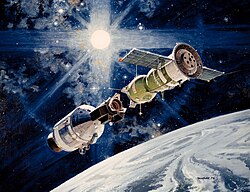
A painting of Apollo–Soyuz, a first milestone in international spaceflight

Key Facts

  • 運用開始: 1998年11月20日に最初のモジュールが打ち上げ
  • 最大サイズ: 全長約109メートル(トラス部分のみで94メートル)
  • 重量: 約450,000kgに達する巨大構造物
  • 軌道速度: 秒速7.67km(時速約27,600km)
  • 構成: 複数の加圧モジュールと太陽電池パドル、トラス構造で構成
  • 目的: 微小重力環境での科学研究、宇宙探査の技術実証、国際協力の推進

ISSを構成する主要モジュールと構造

ISSは、乗組員が船外活動なしで移動できる「加圧モジュール」と、太陽光発電や冷却システムを担う「非加圧構造(トラス)」に分かれています。

ロシア軌道セグメント(ROS)

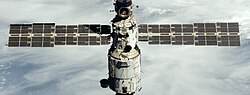
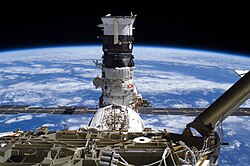
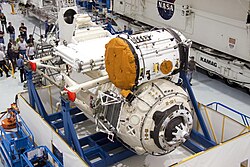
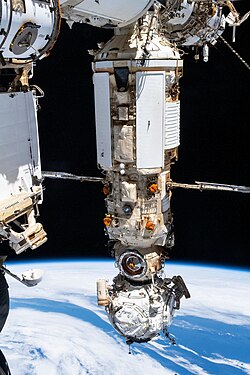
初期の基盤となったのは、1998年に打ち上げられたザーリャ(Zarya)です。その後、生命維持システムを担うズヴェズダ(Zvezda)や、最新の多目的研究モジュールであるナウカ(Nauka)、ドッキングハブのプリチャル(Prichal)などが追加され、ロシア側の機能が拡張されました。
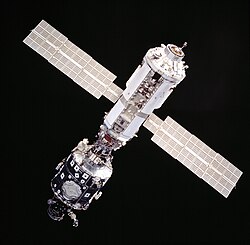
Zarya and Unity, the first two modules of the ISS, pictured in May 2000

Zarya as seen by Space Shuttle Endeavour during STS-88

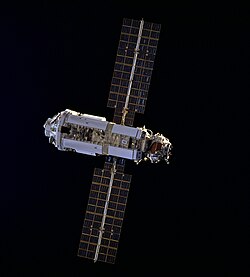
Zvezda as seen by Space Shuttle Atlantis during STS-106

Poisk with its own propulsion module (soon to be jettisoned)

Rassvet module with MLM-outfitting equipment (consisting of experiment airlock, RTOd radiators, and ERA workpost) at KSC

Nauka and Prichal docked to ISS

米国軌道セグメント(USOS)

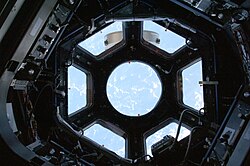
米国側は、接続拠点となるユニティ(Unity)から始まり、研究の中核となるデスティニー(Destiny)、そして各国のモジュールを繋ぐハーモニー(Harmony)へと発展しました。また、船外活動の拠点となるクエスト(Quest)エアロックや、居住性を高めるトランクイリティ(Tranquility)、そして地球を展望できるキューポラ(Cupola)が設置されています。
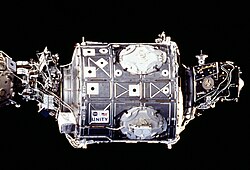
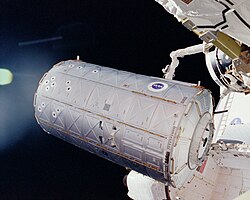
Unity as seen by Space Shuttle Endeavour during STS-88

The Destiny module being installed on the ISS

Quest Joint Airlock Module

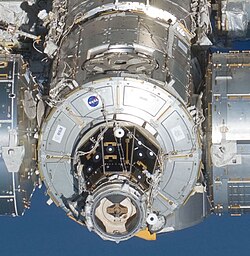
Harmony (center) shown connected to Columbus, Kibo, and Destiny. The dark PMA-2 faces the camera. The nadir and zenith locations are open.

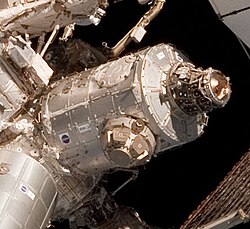
Tranquility in 2011

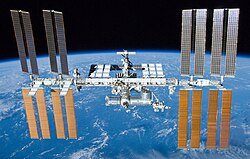
The ISS as seen from Space Shuttle Atlantis during STS-132, pictured in May 2010

The Cupola's windows with shutters open

国際的な研究モジュール

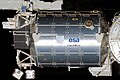
欧州宇宙機関(ESA)のコロンバス(Columbus)や、日本の宇宙航空研究開発機構(JAXA)が提供するきぼう(Kibō)は、ISSにおける最先端の研究拠点です。特に「きぼう」は、内部の実験室だけでなく、船外実験プラットフォームを備えている点が特徴です。
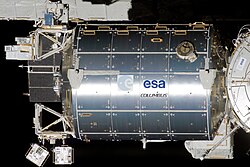
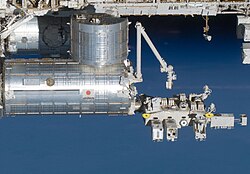
The Columbus module on the ISS

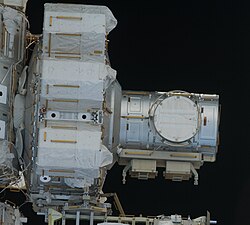
Kibō with its exposed facility on the right

拡張モジュールと特殊設備

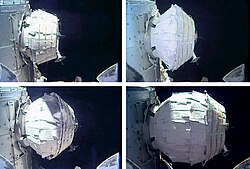
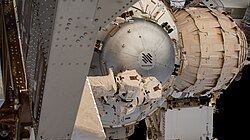
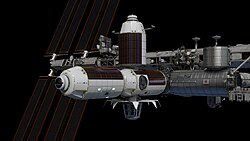
ISSは必要に応じて拡張されており、膨張式モジュールであるBEAMや、民間企業が提供するビショップ(Bishop)エアロックなどが導入されています。また、巨大な太陽電池パドルを支えるトラス構造(S0, S1, P1など)が、ステーション全体の電力を供給しています。
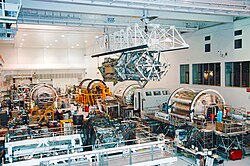
S3-S4 Truss being hoist to the payload transfer container inside the Space Station Processing Facility next to several other ISS modules (2007)

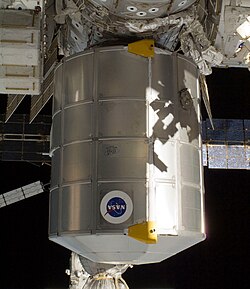
The Leonardo module hours after berthing

Progression of the expansion of BEAM

NanoRacks Bishop airlock module installed on the ISS

Early rendering of the Axiom Orbital Segment, made prior to assembly plan changes, with now only one module, the Payload Power Thermal Module (PPTM), being planned to dock with the ISS

宇宙での生活と科学研究

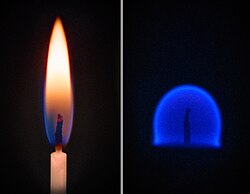
ISSでの生活は、地球上とは全く異なる物理法則に基づいています。例えば、燃焼現象は地上とは異なり、対流が起きないため球形の炎になります。また、植物の成長実験(XROOTSなど)では、土を使わない水耕栽培や噴霧耕による食料生産の可能性が探られています。
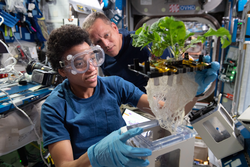
Jessica Watkins and Bob Hines working on XROOTS, an experiment using the Veggie facility of the station testing soilless hydroponic and aeroponic plant growth

A comparison between the combustion of a candle on Earth (left) and in a free fall environment, such as that found on the ISS (right)

乗組員の健康維持も重要な課題です。微小重力下では筋肉や骨が弱くなるため、バンジーコードで固定されたトレッドミルなどの専用トレーニング機器が不可欠です。食事や睡眠、共同生活は、ユニティなどの共有スペースで行われます。
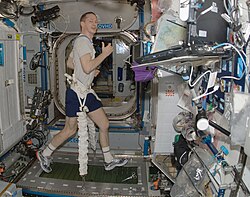
A man running on a treadmill, smiling at the camera, with bungee cords stretching down from his waistband to the sides of the treadmill

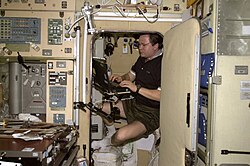
Cosmonaut Nikolai Budarin at work inside the Zvezda service module crew quarters

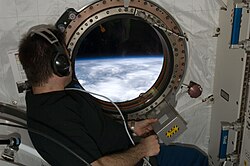
Engineer Gregory Chamitoff looking out of a window

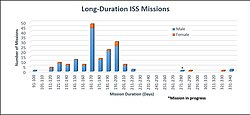
Chart of the number of ISS missions longer than 90 days, until 2020

Main dining desk in Unity

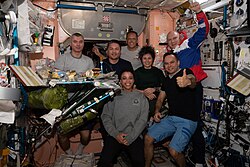
The Expedition 67 crew during a group dinner in Unity

生命維持とインフラ

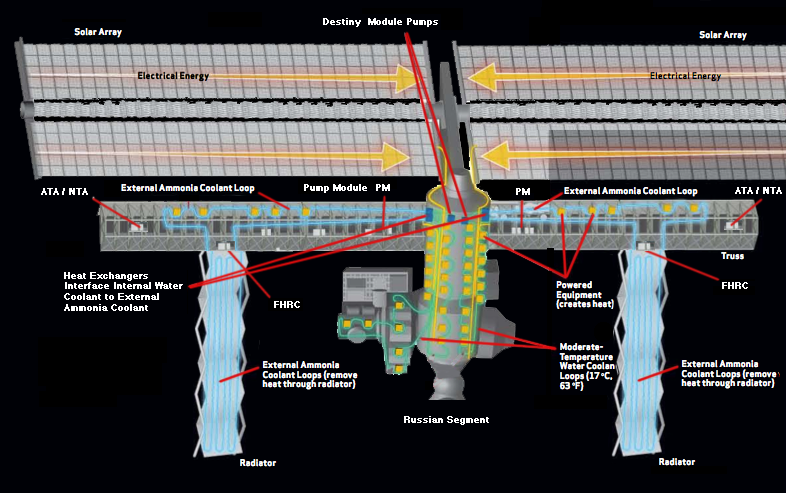
環境制御・生命維持システム(ECLSS)は、空気の浄化、水の回収・再利用、温度調節を行い、宇宙空間という過酷な環境で人間が生存できる空間を作り出しています。また、外部熱制御システム(EATCS)が、機器から発生する熱を効率的に宇宙空間へ放出しています。
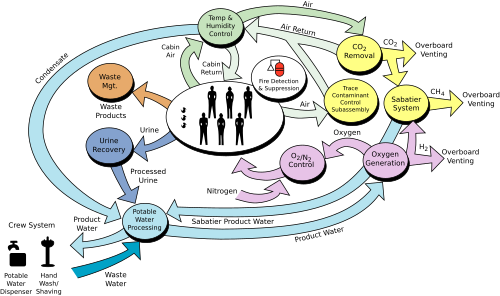
A flowchart diagram showing the components of the ISS life-support system.

ISS External Active Thermal Control System (EATCS) diagram

補給と運用管理

ISSは無人では維持できず、定期的な物資補給と人員交代が必要です。ロシアのプログレス、日本のこうのとり(HTV)、スペースX社のドラゴンなどの補給船が、食料、実験器具、予備部品(ORU)を運んでいます。

Rendering of the ISS and visiting vehicles as of 1 December 2025[update]. Live link at nasa.gov.

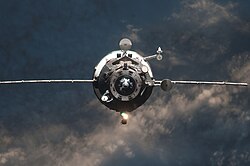
The Progress M-14M resupply vehicle approaching the ISS in 2012. Nearly 100 unpiloted Progress spacecraft have delivered supplies during the lifetime of the station.

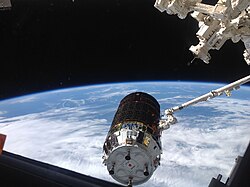
Japan's Kounotori 4 berthing

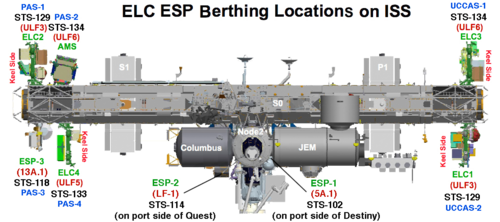
Spare parts are called ORUs; some are externally stored on pallets called ELCs and ESPs.

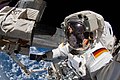
また、船外活動(EVA)を通じて、太陽電池パドルの修理や新設備の設置が行われます。カナダ製のロボットアームカナダアーム2デクストレは、これらの作業に欠かせないツールです。

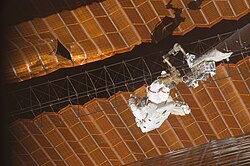
Two black and orange solar arrays, shown uneven and with a large tear visible. A crew member in a spacesuit, attached to the end of a robotic arm, holds a latticework between two solar sails.

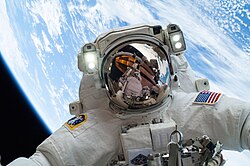
Mike Hopkins during a spacewalk

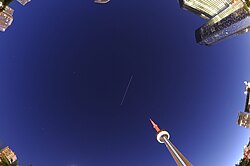
地上では、NASAのジョンソン宇宙センターをはじめとする各国の管制センターが24時間体制で運用をサポートしています。ISSは地上からも観測可能で、夜空を横切る明るい光の点として目にすることができ、専用のアプリなどでその位置を追跡できます。
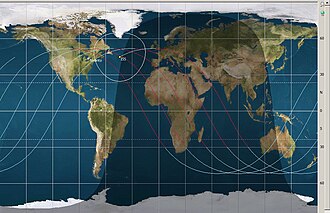
Orbits of the ISS, shown in April 2013

The ISS visible as a skytrack line drawn in the sky nearly overhead shortly after sunset by a long exposure photo

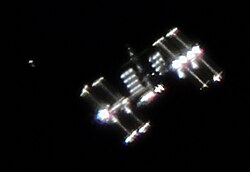
The ISS and HTV photographed from Earth by Ralf Vandebergh

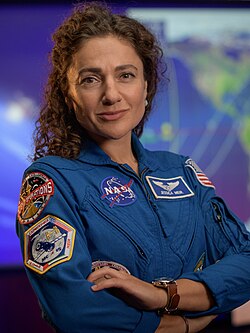
Jessica Meir, current commander

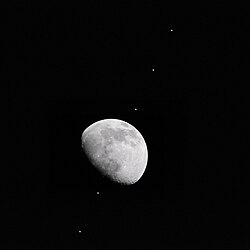
Composite of six photos of the ISS transiting the gibbous Moon

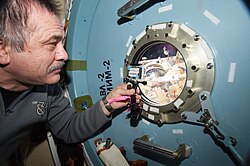
Pavel Vinogradov looks out of a Poisk hatch window at Alexander Misurkin on EVA.

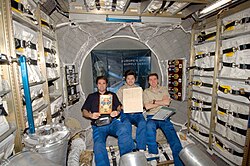
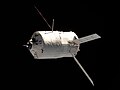
Original Jules Verne manuscripts displayed by crew inside the Jules Verne ATV (Automated Transfer Vehicle)

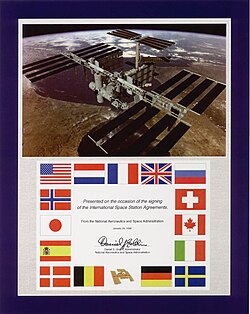
A Commemorative Plaque honouring Space Station Intergovernmental Agreement signed on 28 January 1998

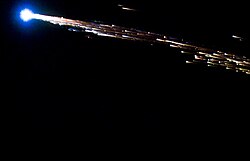
Many ISS resupply spacecraft have already undergone atmospheric re-entry, such as Jules Verne ATV.

International Space Station Emblem

ภาพประกอบบทความ

ภาพประกอบบทความ

ภาพประกอบบทความ

ภาพประกอบบทความ

ภาพประกอบบทความ

ภาพประกอบบทความ

ภาพประกอบบทความ

ภาพประกอบบทความ

ภาพประกอบบทความ

ISSの基本スペックまとめ

国際宇宙ステーション(ISS)主要諸元
項目 詳細データ
全長 / トラス長 約109m / 約94m
総重量 約450,000kg
平均高度 約413km 〜 422km
軌道速度 約7.67km/s (時速27,600km)
軌道周期 約92.9分
内部気圧 1気圧 (窒素79%, 酸素21%)

Frequently Asked Questions

ISSではどのようにして呼吸や水を確保していますか?

環境制御・生命維持システム(ECLSS)を用いています。空気は浄化され、水は尿や汗を含む水分を高度にろ過・再生して飲料水として再利用するサイクルが構築されています。

ISSの維持にはどのような宇宙船が使われていますか?

人員輸送にはソユーズやクルードラゴンが、物資補給にはプログレス、HTV-X、カーゴドラゴンなどが使用されています。これらが定期的にドッキングすることで、物資と人員の入れ替えが行われています。

微小重力環境で研究を行うメリットは何ですか?

対流や沈降といった重力の影響を排除できるため、純粋な物質の拡散や結晶成長、細胞の挙動などを観察でき、地上では不可能な新材料の開発や医学的知見の獲得が期待できます。

ISSは将来的にどうなる予定ですか?

現在は運用を継続していますが、将来的には退役し、安全に地球の大気圏へ再突入させて廃棄する計画(US Deorbit Vehicleなどの利用)が検討されています。同時に、民間による商業宇宙ステーションへの移行も進んでいます。

ISSは地上から見ることができますか?

はい、見ることができます。非常に大きな太陽電池パドルが光を反射するため、夜明け前や日没後に明るい星のような光が速い速度で移動する様子として観測できます。

References

  1. standard; past min. 2; past max. 13
  2. With the launch of the first module:
  3. : Междунаро́дная косми́ческая ста́нция (МКС), Mezhdunaródnaya kosmícheskaya stántsiya, : Station Spatiale Internationale (SSI), : Internationale Raumstation, : 国際宇宙ステーション, Kokusaiuchū sutēshon
  4. , designed for crew transport, made one crewed mission to the station in 2024, and one uncrewed in 2022, both experiencing malfunctions. is planned with the future of the craft unclear.
  5. Pirs was connected to the nadir port of Zvezda now occupied by Nauka.
  6. partially retracted
  7. partially retracted
  8. "Zarya" has several meanings: "daybreak" or "dawn" (in the morning) or "afterglow", "evening glow" or "sunset" (in the evening), but NASA and Roscosmos translate it as "sunrise."
  9. Privately funded travellers who have objected to the term include Dennis Tito, , Gregory Olsen, , and .
  10. ESA director Jörg Feustel-Büechl said Russia had no right to send “amateurs” to the ISS. A standoff at the Johnson Space Center occurred when NASA manager refused to train Tito alongside commander and his crew, who insisted Tito was adequately qualified.

📸 フォトギャラリー

A painting of Apollo–Soyuz, a first milestone in international spaceflight
Jessica Watkins and Bob Hines working on XROOTS, an experiment using the Veggie facility of the station testing soilless hydroponic and aeroponic plant growth
A comparison between the combustion of a candle on Earth (left) and in a free fall environment, such as that found on the ISS (right)
Original Jules Verne manuscripts displayed by crew inside the Jules Verne ATV (Automated Transfer Vehicle)
A Commemorative Plaque honouring Space Station Intergovernmental Agreement signed on 28 January 1998
S3-S4 Truss being hoist to the payload transfer container inside the Space Station Processing Facility next to several other ISS modules (2007)
Zarya and Unity, the first two modules of the ISS, pictured in May 2000
The ISS as seen from Space Shuttle Atlantis during STS-132, pictured in May 2010
Zarya as seen by Space Shuttle Endeavour during STS-88
Unity as seen by Space Shuttle Endeavour during STS-88
Zvezda as seen by Space Shuttle Atlantis during STS-106
The Destiny module being installed on the ISS
Quest Joint Airlock Module
Poisk with its own propulsion module (soon to be jettisoned)
Harmony (center) shown connected to Columbus, Kibo, and Destiny. The dark PMA-2 faces the camera. The nadir and zenith locations are open.
Tranquility in 2011
The Columbus module on the ISS
Kibō with its exposed facility on the right
The Cupola's windows with shutters open
Rassvet module with MLM-outfitting equipment (consisting of experiment airlock, RTOd radiators, and ERA workpost) at KSC
The Leonardo module hours after berthing
Progression of the expansion of BEAM
NanoRacks Bishop airlock module installed on the ISS
Nauka and Prichal docked to ISS
Early rendering of the Axiom Orbital Segment, made prior to assembly plan changes, with now only one module, the Payload Power Thermal Module (PPTM), being planned to dock with the ISS
A flowchart diagram showing the components of the ISS life-support system.
ISS External Active Thermal Control System (EATCS) diagram
Chart of the number of ISS missions longer than 90 days, until 2020
Jessica Meir, current commander
Rendering of the ISS and visiting vehicles as of 1 December 2025[update]. Live link at nasa.gov.
The Progress M-14M resupply vehicle approaching the ISS in 2012. Nearly 100 unpiloted Progress spacecraft have delivered supplies during the lifetime of the station.
Japan's Kounotori 4 berthing
Spare parts are called ORUs; some are externally stored on pallets called ELCs and ESPs.
Two black and orange solar arrays, shown uneven and with a large tear visible. A crew member in a spacesuit, attached to the end of a robotic arm, holds a latticework between two solar sails.
Mike Hopkins during a spacewalk
Orbits of the ISS, shown in April 2013
The ISS visible as a skytrack line drawn in the sky nearly overhead shortly after sunset by a long exposure photo
The ISS and HTV photographed from Earth by Ralf Vandebergh
Composite of six photos of the ISS transiting the gibbous Moon
Pavel Vinogradov looks out of a Poisk hatch window at Alexander Misurkin on EVA.
A man running on a treadmill, smiling at the camera, with bungee cords stretching down from his waistband to the sides of the treadmill
Cosmonaut Nikolai Budarin at work inside the Zvezda service module crew quarters
Engineer Gregory Chamitoff looking out of a window
Main dining desk in Unity
The Expedition 67 crew during a group dinner in Unity
Many ISS resupply spacecraft have already undergone atmospheric re-entry, such as Jules Verne ATV.
International Space Station Emblem
ภาพประกอบบทความ
ภาพประกอบบทความ
ภาพประกอบบทความ
ภาพประกอบบทความ
ภาพประกอบบทความ
ภาพประกอบบทความ
ภาพประกอบบทความ
ภาพประกอบบทความ
ภาพประกอบบทความ