地球の表面には、プレートの境界という一般的な火山形成地帯から離れた場所に、突如として現れる火山活動の拠点があります。これらはホットスポットと呼ばれ、周囲よりも異常に高温なマントルによって供給される火山的な領域を指します。ハワイやアイスランド、イエローストーンなどがその代表例であり、地質学的に非常に重要な役割を果たしています。
Key Facts
- 独立した位置: ホットスポットはプレート境界に依存せず、プレート内部に固定的に存在することが多い。
- 火山列の形成: プレートが移動することで、固定された熱源の上に次々と新しい火山が作られ、火山列(海山列)が形成される。
- 熱源の正体: 地球深部の核とマントルの境界から上昇する「マントルプルーム」が有力な説とされる。
- 多様な形態: 巨大なシールド火山から、海底に沈む海山まで、多様な火山形態を生み出す。
ホットスポットの発生メカニズム
ホットスポットがどのようにして形成されるかについては、主に2つの学説が存在します。一つは、地球の核とマントルの境界付近から、熱い物質が巨大な泡のように上昇してくるマントルプルーム説です。この熱い上昇流が地殻を突き破ることで火山活動が起こります。
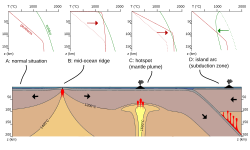
もう一つの説はプレート理論に基づいたもので、地下の温度が特に高いわけではなく、上部の地殻が極端に薄いか脆弱であるため、浅い場所からマグマが受動的に上昇しやすいという考え方です。現在では、地震波を用いたイメージング技術の向上により、マントルプルームの存在を裏付ける証拠が集まっています。
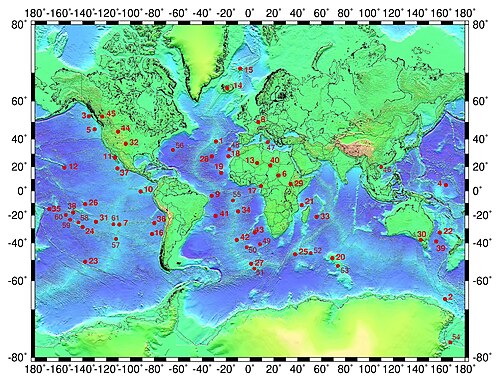
![An example of mantle plume locations suggested by one recent group.[9] Figure from Foulger (2010).[4]](/images/68/ef/68ef24a06173c4733ba5e0316c47e3b46bc244ff59ec72206640c47fd9bdbce6.png)
プルームの分類と影響
研究者のCourtillotらは、ホットスポットをその起源によって分類しています。核とマントルの境界から生じる「一次的ホットスポット」は、アイスランドやハワイのように大規模な火山州や直線的な火山列を形成します。一方、上部マントルと下部マントルの境界から生じる「二次的ホットスポット」は、サモアやタヒチのような島弧を形成しますが、規模は比較的小さくなります。
プレート移動と火山列の形成
ホットスポットの最大の特徴は、その位置がプレートの動きに影響されない点にあります。プレートが熱源の上をゆっくりと移動し続けるため、時間の経過とともに古い火山は熱源から離れて活動を停止し、新しい火山が次々と誕生します。これにより、海上に島々や海底に海山の列が形成されます。
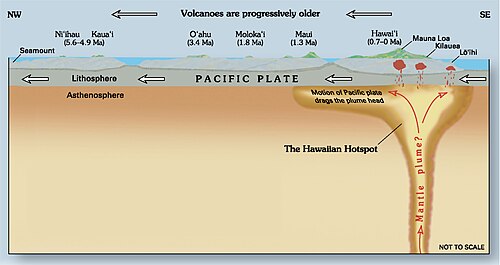
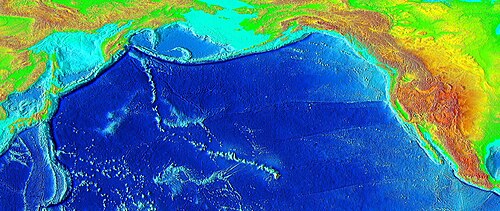
例えば、太平洋プレートがハワイのホットスポット上を移動したことで、数百万年にわたる壮大な海底山脈の軌跡が刻まれました。このプロセスにより、現在活動している火山から、完全に死火山となった古い海山までが一直線に並ぶことになります。
代表的な火山列の事例
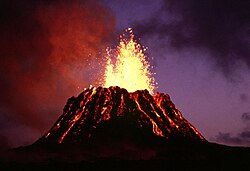
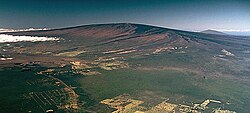
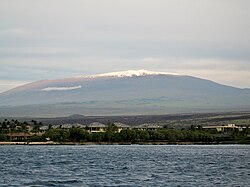
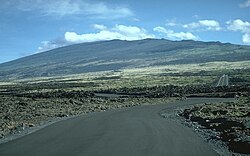
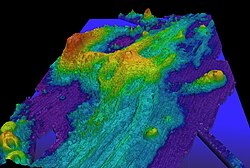
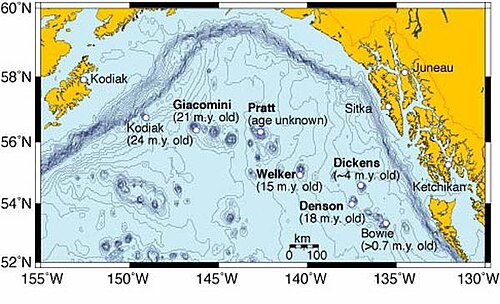
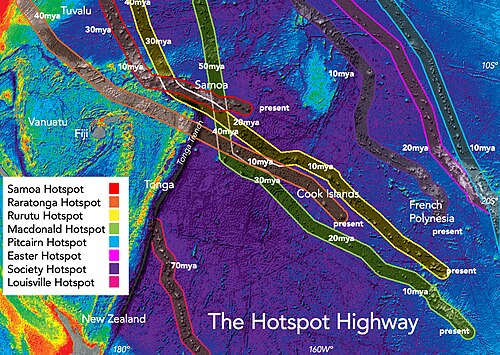
ハワイ・エンペラー海山列は、このメカニズムを説明する最も有名な例です。世界で最も活動的なシールド火山であるキラウエアや、巨大な規模を誇るマウナロア、そして最高峰のマウナケアなどがこの列に含まれます。また、アラスカ湾のコディアック・ボウイ海山列や、南太平洋のホットスポット・ハイウェイなども同様のプロセスで形成されたと考えられています。

世界各地のホットスポット分布
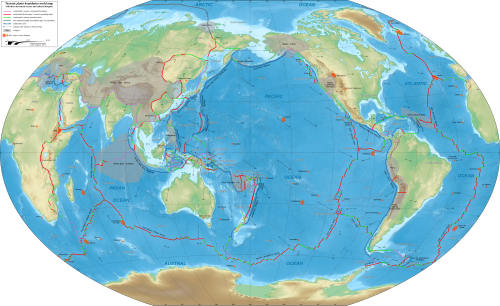
ホットスポットは特定のプレートに限定されず、世界中に点在しています。ユーラシアプレート上のアイスランドや、北米プレート上のイエローストーン、アフリカプレート上のエチオピア(アファール)など、大陸内部や海洋底などあらゆる場所で確認されています。
| プレート名 | 代表的なホットスポット | 形成される特徴的な地形 |
|---|---|---|
| 太平洋プレート | ハワイ、ルイビル | ハワイ・エンペラー海山列、ルイビル海嶺 |
| 北米プレート | イエローストーン | 大陸内部の巨大カルデラ |
| ユーラシアプレート | アイスランド | プレート境界と重複する火山地帯 |
| ナスカプレート | ガラパゴス、イースター島 | 海洋島および海山列 |
| アフリカプレート | アファール、レユニオン | 三重点付近の裂谷、レユニオン島 |
Frequently Asked Questions
ホットスポットと普通の火山は何が違うのですか?
通常の火山の多くは、プレートがぶつかり合う場所(沈み込み帯)や離れる場所(海嶺)などのプレート境界で発生します。しかし、ホットスポットはプレートの境界に関係なく、プレートの真ん中(プレート内部)で発生するのが特徴です。
なぜ火山が列になって並んでいるのですか?
地下にある熱源(ホットスポット)はほぼ固定されていますが、その上のプレートは常にゆっくりと移動しています。そのため、プレートが移動するにつれて、熱源の真上にあった場所がずれ、新しい場所で火山が噴火することを繰り返すため、結果として列状に並びます。
マントルプルームとは具体的に何ですか?
地球の深いところ(核とマントルの境界付近)から、周囲よりも温度が高いマントル物質が、巨大なキノコのような形で上昇してくる現象のことです。この上昇流が地表付近に達すると、圧力が下がることで岩石が溶け、マグマとなって噴出します。
ホットスポットはいつか消えてしまうのでしょうか?
個々の火山はプレートの移動によって熱源から離れると活動を停止し、死火山となります。しかし、地下の熱源であるプルーム自体が持続している限り、プレート上の新しい場所で火山活動は継続します。
References
- "The source of Yellowstone's heat". . 16 April 2018. Retrieved 14 June 2021.
- W. J. Morgan (5 March 1971). "Convection Plumes in the Lower Mantle". Nature. 230 (5288): 42–43. :1971Natur.230...42M. :10.1038/230042a0. 4145715.
- "Do plumes exist?". Retrieved 25 April 2010.
- Foulger, G.R. (2010). Plates vs. Plumes: A Geological Controversy. . .
- Wilson, J. Tuzo (1963). "A possible origin of the Hawaiian Islands" (PDF). Canadian Journal of Physics. 41 (6): 863–870. :1963CaJPh..41..863W. :10.1139/p63-094.
- "Hotspots: Mantle thermal plumes". . 5 May 1999. Retrieved 15 May 2008.
- Wright, Laura (November 2000). "Earth's interior: Raising hot spots". Geotimes. . Retrieved 15 June 2008.
- Koppers, A. A.; Becker, T. W.; Jackson, M. G.; Konrad, K.; Müller, R. D.; Romanowicz, B.; Steinberger, B.; Whittaker, J. M. (2021). "Mantle plumes and their role in Earth processes" (PDF). Nature Reviews Earth & Environment. 2 (6): 382–401. :2021NRvEE...2..382K. :10.1038/s43017-021-00168-6. Retrieved 21 November 2023.
- Courtillot, V.; Davaillie, A.; Besse, J.; Stock, J. (2003). "Three distinct types of hotspots in the Earth's mantle". Earth Planet. Sci. Lett. 205 (3–4): 295–308. :2003E&PSL.205..295C. 10.1.1.693.6042. :10.1016/S0012-821X(02)01048-8.
{{}}: Cite uses deprecated parameter|citeseerx=() - Donald Hyndman; David Hyndman (1 January 2016). Natural Hazards and Disasters. Cengage Learning. pp. 44–. .
📸 フォトギャラリー