高速液体クロマトグラフィー(HPLC)は、混合物の中に含まれる特定の成分(分析物)を分離し、それが何であるかを特定(同定)し、さらにその量を測定(定量)するための極めて強力な分析手法です。かつては「高圧液体クロマトグラフィー」と呼ばれていましたが、現在はその高い分解能から、医薬品開発、食品安全、環境モニタリング、法医学など、多岐にわたる分野で不可欠なツールとなっています。
基本的な仕組みは、液体に溶かした試料をポンプで高圧にかけ、充填剤が詰まったカラム(分離管)に通すことで、成分ごとの移動速度の差を利用して分離させるというものです。従来の重力による液体クロマトグラフィーとは異なり、高圧ポンプを用いることで、より微細な粒子を用いたカラムの使用が可能となり、分析時間の短縮と圧倒的な分離精度の向上を実現しました。
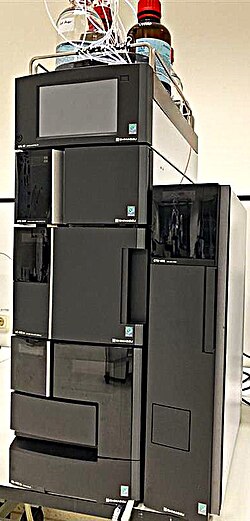
Key Facts
- 高分解能:微細な充填剤と高圧ポンプにより、類似した構造を持つ化合物でも精密に分離可能。
- 幅広い適用性:液体試料、または液体に溶解可能なあらゆる物質(医薬品、生物学的サンプル、化学物質など)に適用できる。
- 多様なモード:逆相、順相、サイズ排除、イオン交換など、分析対象に合わせて分離原理を選択できる。
- 高速化の進化:UHPLC(超高速液体クロマトグラフィー)の登場により、さらに高圧・高効率な分析が可能になった。
HPLCシステムの構成と動作メカニズム
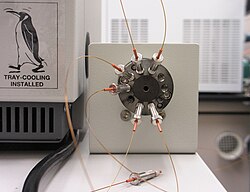
HPLC装置は、試料を運ぶ「移動相」を一定の流量で送り出すポンプ、試料を導入するインジェクター、分離が行われるカラム、そして分離された成分を検出する検出器で構成されています。
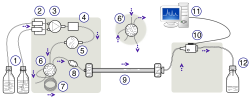
分析の精度を左右するのがカラムの設計です。一般的に直径2.1〜4.6mm、長さ30〜250mmの管に、1.5〜50μmという極めて小さな吸着粒子が充填されています。粒子が小さいほど表面積が増え、分析物との相互作用が強まるため、より高い分離能(化合物を見分ける能力)が得られます。
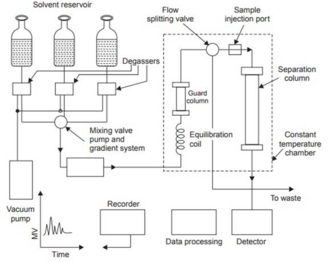
溶出モード:アイソクラティックとグラジエント
移動相の組成をどのように変化させるかによって、2つの溶出モードに分けられます。アイソクラティック溶出は、分析の間ずっと移動相の組成を一定に保つ方法で、単純な混合物の分離に適しています。一方、グラジエント溶出は、分析中に移動相の組成(例えば有機溶媒の比率)を段階的に変化させる手法です。これにより、固定相との相互作用が異なる多様な成分を含む複雑な混合物でも、効率的に分離して溶出させることができます。
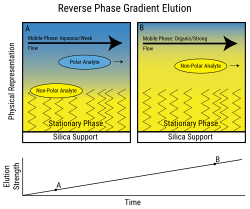
主要な分離手法:逆相クロマトグラフィー(RP-LC)
現代の分析で最も汎用されているのが逆相クロマトグラフィーです。この手法では、疎水性の高い物質ほどカラム内に長く留まる性質を利用します。固定相には、シリカゲルの表面にC18(オクタデシルシラン)などの直鎖状アルキル基を化学的に結合させた粒子が用いられます。
分離の原理は「疎水性相互作用」に基づいています。水などの極性溶媒(移動相)中では、疎水性の分析物はエネルギー的に安定しようとして固定相のアルキル鎖に吸着します。ここにアセトニトリルやメタノールなどの有機溶媒を加えることで、移動相の表面張力が低下し、分析物が固定相から離れて溶出します。C18のような長い炭素鎖を持つ固定相ほど、分析物を保持する力が強くなります。
その他の分離手法
- 順相クロマトグラフィー:逆相とは逆に、極性の高い物質ほど強く保持される手法。
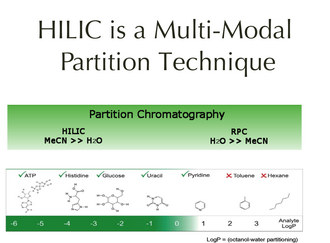
- HILIC(親水性相互作用液体クロマトグラフィー):極性の非常に高い化合物の分離に有効な手法。
- サイズ排除クロマトグラフィー(SEC):分子の大きさに応じて分離する手法。
- イオン交換・アフィニティクロマトグラフィー:電荷や特定の生物学的親和性を利用して分離する手法。
性能を決定するパラメータと最新技術
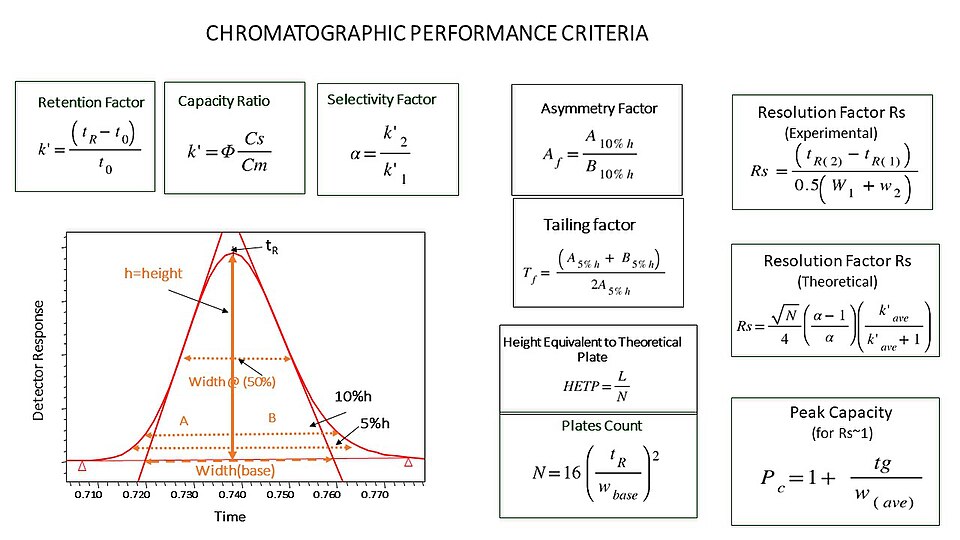
HPLCの性能は、カラムの内径、粒子のサイズ、孔径、およびポンプの圧力によって決定されます。特にポンプの圧力性能は重要であり、標準的なシステムでは50〜1400bar程度の圧力がかかります。
近年では、2μm以下の極微細粒子を使用するUHPLC(超高速液体クロマトグラフィー)が普及しています。UHPLCは最大120MPa(約1200気圧)という超高圧に耐える設計となっており、分析時間の劇的な短縮と、さらなる高分解能を実現しています。また、極めて少量の試料を扱うナノLCシステムなどの特殊な形態も存在します。
実社会における活用事例
HPLCはその信頼性の高さから、多くの専門分野で活用されています。
| 応用分野 | 具体的な活用内容 |
|---|---|
| 製造・品質管理 | 医薬品やバイオ製品の製造工程における純度試験や成分分析 |
| 法医学・薬物検査 | 尿中などの禁止薬物やパフォーマンス向上薬の検出 |
| 医学・ヘルスケア | 血清中のビタミンD濃度測定などの臨床診断 |
| 研究開発 | 複雑な生物学的サンプルの成分分離や合成化学物質の同定 |
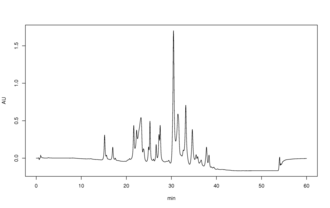
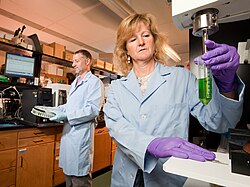
例えば、植物生理学の研究では、植物から抽出した色素などの天然物をHPLCで分析し、その組成を明らかにすることが行われています。
Frequently Asked Questions
HPLCと普通の液体クロマトグラフィーの違いは何ですか?
最大の違いは「圧力」と「充填剤のサイズ」です。HPLCは高圧ポンプを使用して移動相を強制的に流すため、非常に小さな粒子を用いたカラムを使用でき、その結果、分離速度と分解能が飛躍的に向上しています。
逆相クロマトグラフィーで「C18」とは何を意味しますか?
C18は、固定相であるシリカゲルの表面に結合している炭素鎖が18個の直鎖状アルキル基(オクタデシル基)であることを示しています。この鎖が長いほど疎水性が高まり、疎水性物質をより強く保持することができます。
グラジエント溶出はどのような時に使われますか?
成分の性質(極性など)が大きく異なる物質が混在している複雑な試料を分析する場合に使用します。移動相の組成を徐々に変化させることで、保持力の強い成分も適切な時間で効率よく溶出させることが可能です。
UHPLCになると何が変わるのでしょうか?
UHPLCは、より高圧に耐えられる装置設計により、2μm未満の超微細粒子カラムを使用できます。これにより、従来のHPLCよりもさらに鋭いピークが得られ、分析時間を大幅に短縮しつつ、より高い分離能を得ることができます。
References
- Kazakevich, Yuri; LoBrutto, Rosario, eds. (2007). HPLC for pharmaceutical scientists. Hoboken, NJ: Wiley-Interscience. .
- Ali, Abdu Hussen (20 June 2022). "High-Performance Liquid Chromatography (HPLC): A review". Annals of Advances in Chemistry. 6 (1): 010–020. :10.29328/journal.aac.1001026 (inactive 29 January 2026).
{{}}: CS1 maint: DOI inactive as of January 2026 () - Levin, Shulamit (January 2004). "Reversed Phase Stationary Phases in Pharmaceutical Sciences". Journal of Liquid Chromatography & Related Technologies. 27 (7–9): 1353–1376. :10.1081/JLC-120030606. 1082-6076. 97490509.
- Gerber, F.; Krummen, M.; Potgeter, H.; Roth, A.; Siffrin, C.; Spoendlin, C. (2004). "Practical aspects of fast reversed-phase high-performance liquid chromatography using 3μm particle packed columns and monolithic columns in pharmaceutical development and production working under current good manufacturing practice". Journal of Chromatography A. 1036 (2): 127–133. :10.1016/j.chroma.2004.02.056. 15146913.
- Bayne, Shirley; Carlin, Michelle (2017). Forensic Applications of High Performance Liquid Chromatography (1st ed.). CRC Press. .
- Seger, Christoph; Salzmann, Linda (1 August 2020). "After another decade: LC–MS/MS became routine in clinical diagnostics". Clinical Biochemistry. Advancement and Applications of Mass Spectrometry in Laboratory Medicine. 82: 2–11. :10.1016/j.clinbiochem.2020.03.004. 0009-9120. 32188572. 213186669.
- "Chromatography". web.njit.edu. Retrieved 5 August 2024.
- Unger, K. K., ed. (1 January 1979), Chapter 5 Silica columns–packing procedures and performance characteristics, Journal of Chromatography Library, vol. 16, Elsevier, pp. 169–186, :10.1016/S0301-4770(08)60809-X, , retrieved 5 August 2024
- Xu, Yan; Cao, Qing; Svec, Frantisek; Fréchet, Jean M.J. (15 April 2010). "Porous polymer monolithic column with surface-bound gold nanoparticles for the capture and separation of cysteine-containing peptides". Analytical Chemistry. 82 (8): 3352–3358. :2010AnaCh..82.3352X. :10.1021/ac1002646. 0003-2700. 2875083. 20302345.
- "Molecular Interaction of HPLC Stationary Phase". www.imtakt.com. Retrieved 8 August 2024.
📸 フォトギャラリー