Fungal hyphae cells Hyphal wallSeptumMitochondrionVacuoleErgosterol crystalRibosomeNucleusEndoplasmic reticulumLipid bodyPlasma membraneSpitzenkörperGolgi apparatus
← ホームへ戻る
菌類真菌菌糸子実体担子菌門

菌類(Fungi)の生態と多様性生命を支える不可欠な王国

🗓 2026年8月13日

私たちの足元や森の奥深く、あるいは食品の表面にまで存在する菌類は、植物や動物とは全く異なる独自の進化を遂げた真核生物のグループです。彼らは光合成を行わず、外部から有機物を吸収して生きる「吸収栄養」という戦略をとり、地球上の物質循環において分解者として極めて重要な役割を担っています。

かつては植物の一種と考えられていた時代もありましたが、現代の生物学では独立した「菌界(Kingdom Fungi)」として定義されています。その形態は、目に見えない微細な単細胞の酵母から、巨大なキノコ、そして地中で広大なネットワークを形成する菌糸体まで多岐にわたります。
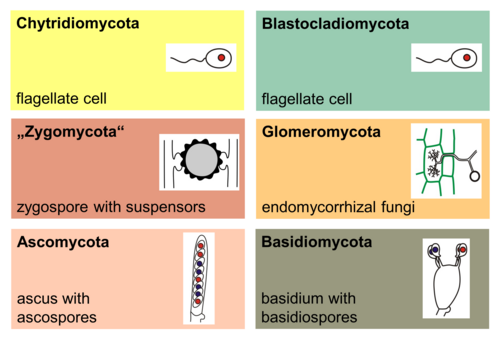
Main groups of fungi

Key Facts

  • 分類上の位置:真核生物ドメインに属し、系統的には植物よりも動物に近い関係にある。
  • 基本構造:多くの種が「菌糸」と呼ばれる糸状の細胞構造を持ち、その集合体を「菌糸体」と呼ぶ。
  • 栄養摂取:自らエネルギーを作れないため、酵素を放出して有機物を分解し、それを吸収して栄養とする。
  • 多様な形態:単細胞の酵母、糸状のカビ、そして生殖器官であるキノコ(子実体)などの形態を持つ。
  • 地球への貢献:枯死した生物を分解して土に還すほか、植物との共生を通じて生態系を維持している。

菌類の形態と生理学的特徴

菌類の多くは、菌糸という細長い管状の細胞で構成されています。この菌糸が複雑に絡み合うことで、効率的に栄養を吸収できる広大なネットワークが形成されます。細胞壁には植物のセルロースではなく、キチンという強固な多糖類が含まれているのが特徴です。
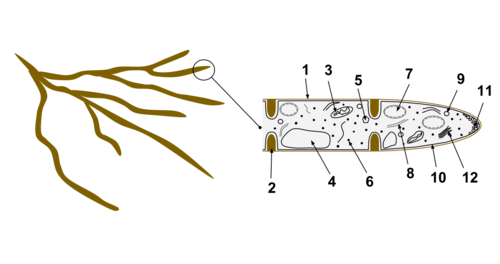
Fungal hyphae cells Hyphal wallSeptumMitochondrionVacuoleErgosterol crystalRibosomeNucleusEndoplasmic reticulumLipid bodyPlasma membraneSpitzenkörperGolgi apparatus

菌類の中には、単細胞で生活する酵母のような種も存在します。また、環境に応じて単細胞と糸状菌の形態を使い分ける「二形性」を持つ種もおり、これが病原性に関与する場合もあります。
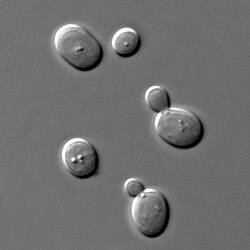
Microscopic view of five spherical structures; one of the spheres is considerably smaller than the rest and attached to one of the larger spheres

成長過程においては、菌糸の先端にある「スピッツェンケルパー(Spitzenkörper)」と呼ばれる構造が、細胞壁の合成と方向性を制御し、効率的な伸長を可能にしています。
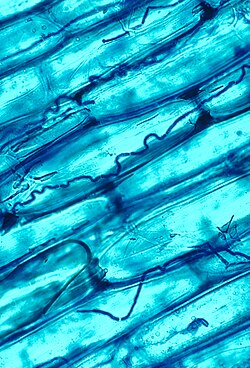
A microscopic view of blue-stained cells, some with dark wavy lines in them

マクロ構造と子実体

私たちが一般的に「キノコ」と呼ぶものは、菌類が生殖のために一時的に形成する子実体です。これは胞子を効率よく散布するための構造であり、傘や柄などの複雑な形状を持つものから、地衣類のように藻類と共生して地表に張り付くものまで様々です。
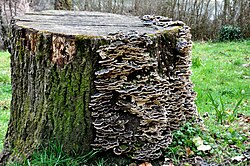
Bracket fungi on a tree stump

また、一部の菌類は生物発光能力を持ち、暗い森の中で光を放つことで昆虫を誘引し、胞子を運ばせる戦略をとっています。
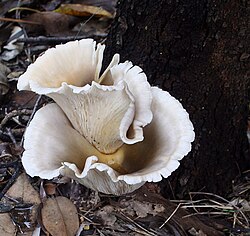
A whitish fan or funnel-shaped mushroom growing at the base of a tree.

分類と進化の歴史

菌類の歴史は古く、化石記録によればオルドビス紀中期(約4億6000万年前)には既に存在していたと考えられています。進化の過程で、胞子の形態や生殖方法に基づいて大きくいくつかの門に分類されます。
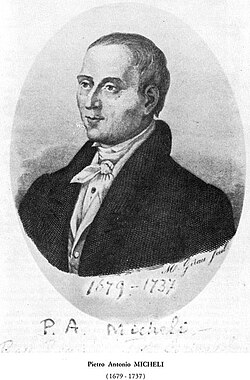
In 1729, Pier Antonio Micheli first published descriptions of fungi.

主要な分類グループ

  • 担子菌門 (Basidiomycota):典型的なキノコやサビ菌、すみれ菌などが含まれます。担子器という構造で胞子を形成します。
  • 子嚢菌門 (Ascomycota):酵母やアスペルギルス、トリュフなどが含まれます。子嚢という袋状の構造の中に胞子を作ります。
  • 接合菌類・ムコール菌類など:カビの多くが含まれ、より原始的な形態を持つグループです。
  • ツボカビ門 (Chytridiomycota):遊走子という鞭毛を持つ胞子を持ち、水圏環境に適応しています。
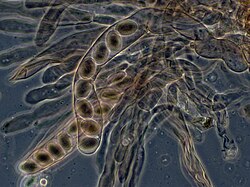
Microscopic view of numerous translucent or transparent elongated sac-like structures each containing eight spheres lined up in a row

特に担子菌と子嚢菌は、核が2つの状態で共存する「二核体(Dikarya)」という特有のライフサイクルを持つため、まとめてディカリアと呼ばれます。
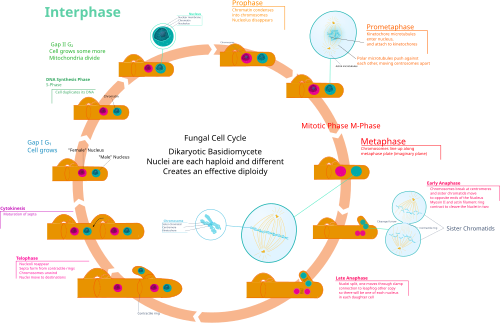
Fungal cell cycle showing dikaryons typical of higher fungi

生態系における役割と共生関係

菌類は単なる分解者ではなく、他の生物と密接な共生関係を築いています。代表的なのが菌根菌であり、植物の根に共生してリンなどのミネラルを供給する代わりに、植物から光合成産物(糖)を受け取ります。
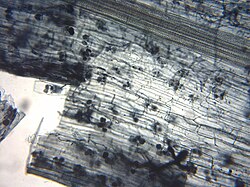
Microscopic view of a layer of translucent grayish cells, some containing small dark-color spheres

また、藻類やシアノバクテリアと共生して地衣類を形成し、極限環境(岩場や寒冷地)でも生存できる独自の生態系を構築しています。
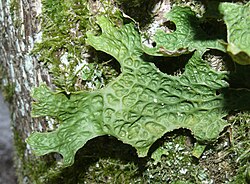
A green, leaf-like structure attached to a tree, with a pattern of ridges and depression on the bottom surface

寄生と病原性

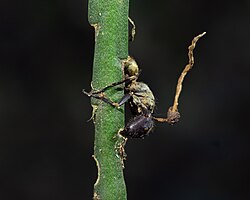
一方で、他の生物に寄生して栄養を奪う種も多く存在します。植物に「魔女のほうき」のような異常成長をさせる病原菌や、昆虫の行動を制御して死に至らしめる「ゾンビ蟻」のような寄生菌が知られています。
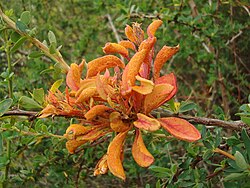
A thin brown stick positioned horizontally with roughly two dozen clustered orange-red leaves originating from a single point in the middle of the stick. These orange leaves are three to four times larger than the few other green leaves growing out of the stick, and are covered on the lower leaf surface with hundreds of tiny bumps. The background shows the green leaves and branches of neighboring shrubs.

Zombie ants, infected by the Ophiocordyceps unilateralis fungus, are predominantly found in tropical rainforests.

動物に対しても、皮膚真菌症などの感染症を引き起こす種が存在し、医療上の課題となっています。
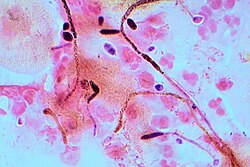
Gram stain of Candida albicans from a vaginal swab from a woman with candidiasis, showing hyphae, and chlamydospores, which are 2–4 μm in diameter

人間社会への影響と利用

菌類は人類にとって、恩恵と脅威の両面を持っています。医療分野では、青カビから抽出されたペニシリンに代表される抗生物質の開発に大きく貢献しました。

The mold Penicillium rubens was the source of penicillin G.[249]

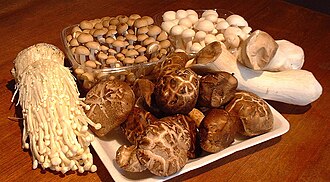
食品産業においても、パンやビールの発酵、ブルーチーズの熟成、あるいは食用キノコとして幅広く利用されています。
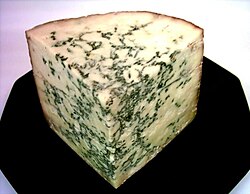
A corner of cheese with greenish streaks through it

A selection of edible Asian fungi

毒性とリスク

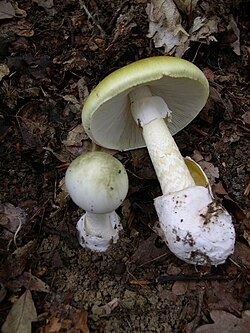
しかし、強力なマイコトキシン(菌類毒素)を産生する種も存在します。例えば、麦角菌が作るエルゴタミンは幻覚や壊疽を引き起こし、猛毒キノコであるタマゴテングタケなどは致死的な中毒症状をもたらします。

(6aR,9R)-N-((2R,5S,10aS,10bS)-5-benzyl-10b-hydroxy-2-methyl-3,6-dioxooctahydro-2H-oxazolo[3,2-a] pyrrolo[2,1-c]pyrazin-2-yl)-7-methyl-4,6,6a,7,8,9-hexahydroindolo[4,3-fg] quinoline-9-carboxamide

Two light yellow-green mushrooms with stems and caps, one smaller and still in the ground, the larger one pulled out and laid beside the other to show its bulbous stem with a ring

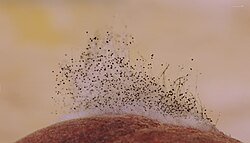
また、農作物や家屋を破壊するカビの繁殖は、経済的な損失や健康被害の原因となります。
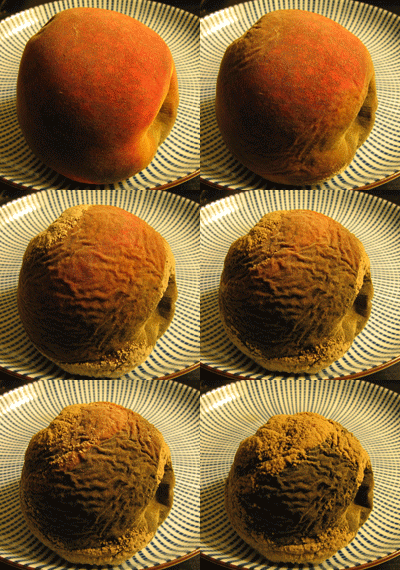
Time-lapse photography sequence of a peach becoming progressively discolored and disfigured

A pin mold decomposing a peach

菌類の多様性と応用まとめ

菌類の主要グループと特徴まとめ
グループ 代表例 主な特徴 人間への影響
担子菌門 シイタケ、サビ菌 担子器で胞子形成、大型の子実体 食用、植物病害
子嚢菌門 酵母、アオカビ 子嚢の中で胞子形成、単細胞種あり 発酵、抗生物質
接合菌類 クモノスカビ 急速な成長、接合胞子を形成 食品腐敗
ツボカビ門 ツボカビ類 鞭毛を持つ遊走子、水生 両生類への感染

現代では、菌類を用いたバイオレメディエーション(環境浄化)や、菌糸体を利用したレザー代替素材の開発など、持続可能な社会に向けた新しい活用法が研究されています。

Widespread white fungus in wood chip mulch in an Oklahoma garden[53]

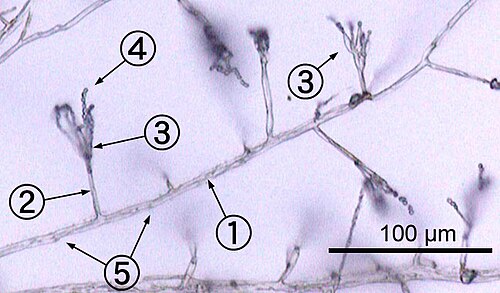
Monochrome micrograph showing Penicillium hyphae as long, transparent, tube-like structures a few micrometres across. Conidiophores branch out laterally from the hyphae, terminating in bundles of phialides on which spherical condidiophores are arranged like beads on a string. Septa are faintly visible as dark lines crossing the hyphae.

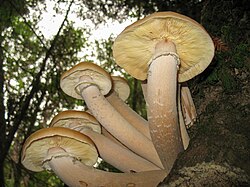
A cluster of large, thick-stem, light-brown gilled mushrooms growing at the base of a tree

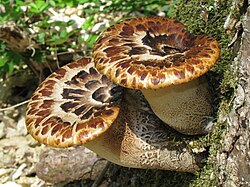
Two thickly stemmed brownish mushrooms with scales on the upper surface, growing out of a tree trunk

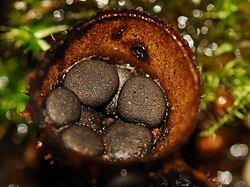
A brown, cup-shaped fungus with several greyish disc-shaped structures lying within

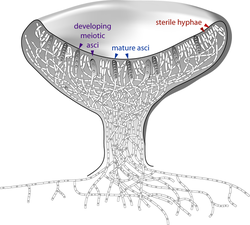
Cross-section of a cup-shaped structure showing locations of developing meiotic asci (upper edge of cup, left side, arrows pointing to two gray cells containing four and two small circles), sterile hyphae (upper edge of cup, right side, arrows pointing to white cells with a single small circle in them), and mature asci (upper edge of cup, pointing to two gray cells with eight small circles in them)

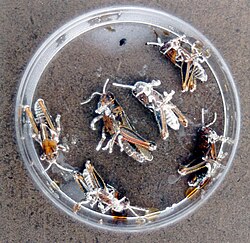
Two dead grasshoppers with a whitish fuzz growing on them

Frequently Asked Questions

菌類は植物の一種ですか?

いいえ、菌類は植物ではありません。植物は光合成を行いますが、菌類は有機物を外部から吸収して生きるため、生理学的に大きく異なります。系統的にはむしろ動物に近いグループに分類されます。

キノコとカビの違いは何ですか?

どちらも菌類ですが、キノコは菌類が生殖のために作る大きな「子実体」という構造を指します。一方、カビは主に菌糸が広がった状態や、微細な胞子を形成する形態を指します。つまり、多くのカビのような菌類も、条件が揃えばキノコのような構造を作ることがあります。

菌類が環境に与える最大のメリットは何ですか?

最大のメリットは「分解」です。枯れ葉や倒木などの複雑な有機物を分解して二酸化炭素やミネラルに戻すことで、他の植物が再び利用できる環境を整え、地球上の生命サイクルを維持しています。

すべてのキノコは毒がありますか?

いいえ、多くのキノコは無毒で、一部は非常に栄養価の高い食用となります。しかし、外見だけで毒の有無を判断するのは極めて危険であり、猛毒を持つ種も存在するため、専門的な知識なしに野生のキノコを摂取することは避けてください。

菌類はどのようにして増えますか?

主に「胞子」という微小な細胞を飛ばして増殖します。風や水、あるいは昆虫などの媒介者を利用して胞子を遠くへ運び、適切な環境に到達すると再び菌糸を伸ばして成長します。種によっては、出芽や断片化による無性生殖も行います。

References

  1. This reflects a modern sense of "Eumycota", which is sister to Aphelidiomyceta. It is distinct from the older sense used to separate fungi (now simply the kingdom "Fungi") from slime molds and water molds. The current "Eumycota" matches the 's definition of Fungi as an exclusively osmotrophic lineage.
  2. Alternatively, included in Mucoromycota as a subphylum.
  3. Alternatively, included in Mucoromycota as a subphylum. In rRNA-based analysis, groups with Dikarya to form .
  4. , , , or ; The first two pronunciations are favored more in the US and the others in the UK, however all pronunciations can be heard in any English-speaking country.
  5. In protein-based analyses, Mucoromyceta is a clade that also includes Mortierellomycota and Glomeromycota.

📸 フォトギャラリー

Fungal hyphae cells Hyphal wallSeptumMitochondrionVacuoleErgosterol crystalRibosomeNucleusEndoplasmic reticulumLipid bodyPlasma membraneSpitzenkörperGolgi apparatus
Fungal cell cycle showing dikaryons typical of higher fungi
A whitish fan or funnel-shaped mushroom growing at the base of a tree.
Bracket fungi on a tree stump
Widespread white fungus in wood chip mulch in an Oklahoma garden[53]
In 1729, Pier Antonio Micheli first published descriptions of fungi.
Monochrome micrograph showing Penicillium hyphae as long, transparent, tube-like structures a few micrometres across. Conidiophores branch out laterally from the hyphae, terminating in bundles of phialides on which spherical condidiophores are arranged like beads on a string. Septa are faintly visible as dark lines crossing the hyphae.
A cluster of large, thick-stem, light-brown gilled mushrooms growing at the base of a tree
Time-lapse photography sequence of a peach becoming progressively discolored and disfigured
Two thickly stemmed brownish mushrooms with scales on the upper surface, growing out of a tree trunk
Microscopic view of numerous translucent or transparent elongated sac-like structures each containing eight spheres lined up in a row
A brown, cup-shaped fungus with several greyish disc-shaped structures lying within
Main groups of fungi
Microscopic view of a layer of translucent grayish cells, some containing small dark-color spheres
Cross-section of a cup-shaped structure showing locations of developing meiotic asci (upper edge of cup, left side, arrows pointing to two gray cells containing four and two small circles), sterile hyphae (upper edge of cup, right side, arrows pointing to white cells with a single small circle in them), and mature asci (upper edge of cup, pointing to two gray cells with eight small circles in them)
A pin mold decomposing a peach
A microscopic view of blue-stained cells, some with dark wavy lines in them
A green, leaf-like structure attached to a tree, with a pattern of ridges and depression on the bottom surface
Zombie ants, infected by the Ophiocordyceps unilateralis fungus, are predominantly found in tropical rainforests.
A thin brown stick positioned horizontally with roughly two dozen clustered orange-red leaves originating from a single point in the middle of the stick. These orange leaves are three to four times larger than the few other green leaves growing out of the stick, and are covered on the lower leaf surface with hundreds of tiny bumps. The background shows the green leaves and branches of neighboring shrubs.
Gram stain of Candida albicans from a vaginal swab from a woman with candidiasis, showing hyphae, and chlamydospores, which are 2–4 μm in diameter
(6aR,9R)-N-((2R,5S,10aS,10bS)-5-benzyl-10b-hydroxy-2-methyl-3,6-dioxooctahydro-2H-oxazolo[3,2-a] pyrrolo[2,1-c]pyrazin-2-yl)-7-methyl-4,6,6a,7,8,9-hexahydroindolo[4,3-fg] quinoline-9-carboxamide
Microscopic view of five spherical structures; one of the spheres is considerably smaller than the rest and attached to one of the larger spheres
The mold Penicillium rubens was the source of penicillin G.[249]
A selection of edible Asian fungi
A corner of cheese with greenish streaks through it
Two light yellow-green mushrooms with stems and caps, one smaller and still in the ground, the larger one pulled out and laid beside the other to show its bulbous stem with a ring
Two dead grasshoppers with a whitish fuzz growing on them